
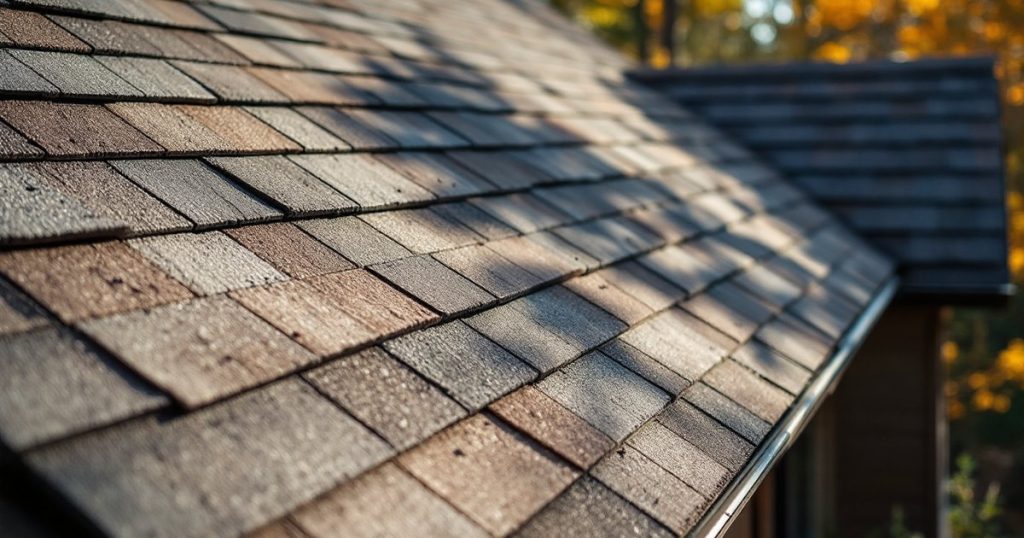
A CeDUR roofing review comes down to three findings: the product’s code documents support its Class A and Class 4 claims, an installed CeDUR roof has been quoted at about $9 to $13 per square foot, and the 50-year warranty is narrower than the headline suggests. It excludes hail, caps reimbursed labor at $200 per square, and ends entirely after any gust above 90 mph.
A search for CeDUR reviews mostly returns CeDUR’s own pages. This review instead works from the documents CeDUR files with code bodies and buyers: the QAI Laboratories code evaluation report CERus-1025 (revised July 2025), a May 2025 QAI fire test, the published installation recommendations, the product size sheet, and the sample 50-year limited warranty.
By The Roofing Brief Team. Last reviewed: October 2026.
CeDUR key numbers at a glance
CeDUR is a molded polyurethane shake sold as one field profile in three widths and four colors. It is 23.5 inches long with a 3/4 inch butt and is laid at a 10 inch exposure. The table below gives the figures most buyers search for, each with its source document. Where two CeDUR documents disagree, both numbers are shown.
| Metric | CeDUR figure | Source |
|---|---|---|
| Installed cost | About $9 to $13 per sq ft | Fixr cedar shake cost guide, updated January 2025 |
| Material cost | About $800 to $1,700 per square (100 sq ft) | CeDUR synthetic cedar shake roofing cost page |
| Installed weight | 170 lb per square (website states 180 lb) | CeDUR product size sheet; QAI CERus-1025 (1.7 lb per sq ft) |
| Fire class | Class A over one layer of ASTM D226 Type II felt, any slope | QAI CERus-1025, Table 3 |
| Impact class | UL 2218 Class 4 | QAI CERus-1025, Table 4 |
| Wind | Certified to 115 mph; warranted only below 90 mph | CeDUR FAQ; CeDUR 50-Year Limited Material Warranty, Section 3 |
| Slope range | 4:12 minimum to 21:12 maximum | QAI CERus-1025, Section 5.0 |
What is CeDUR and who makes it?
CeDUR is a synthetic cedar shake made by Elevation Building Products, LLC, a Colorado company that does business as CeDUR and manufactures in Aurora, Colorado. CeDUR says installations date back to 1998. The shakes are cast in polyurethane from more than 50 molds taken from heavy hand-split cedar, and they are solid with no hollow cavity on the back.
The polymer is the main technical difference from its best-known competitors. CeDUR’s FAQ states the product is polyurethane, while most other synthetic shakes use polyethylene. DaVinci describes its tiles as virgin resin, and Brava’s three-part specification describes recycled plastic. Each claim comes from the maker’s own literature.
The corporate name matters at the counter. CeDUR’s FAQ says distributors such as ABC Supply, QXO, SRS Distribution, Gulfeagle Supply, and Pacific Coast Supply list the product under Elevation Building Products. The February 2024 edition of the QAI report named the holder as Colorado Roofing Products, LLC; the July 2025 revision names Elevation Building Products.
CeDUR specs: size, weight, colors, and coverage
Every CeDUR field shake is 23.5 inches long and 3/4 inch thick at the butt, tapering to 1/8 inch at the head. It comes in 5 1/4, 7 1/4, and 12 1/4 inch widths. A bundle holds 7 of each width, and 8 bundles (168 pieces) cover one square at a 10 inch exposure with a 3/8 inch keyway, per the CeDUR product size sheet.
| Spec | Value | Source |
|---|---|---|
| Length | 23 1/2 in. | CeDUR product size sheet; QAI CERus-1025 Table 1 |
| Widths | 5 1/4, 7 1/4, 12 1/4 in. | QAI CERus-1025 Section 2.2 |
| Thickness | 3/4 in. butt tapered to 1/8 in. head | QAI CERus-1025 Section 2.2 |
| Weight per piece | 0.7 lb, 0.9 lb, 1.8 lb by width | QAI CERus-1025 Section 2.2 |
| Standard exposure | 10 in. (9 in. for 1 in. staggered courses) | CeDUR installation recommendations |
| Coverage | 8 bundles, 168 pieces per square; 36 bundles (4.5 squares) per pallet | CeDUR product size sheet |
| Hip and ridge | 3 pitch sizes, 12 pieces per bundle, about 10 ft per bundle | CeDUR product size sheet |
| Colors | Live Oak, Shiloh, Golden Cedar, Walden | QAI CERus-1025 Section 2.2 |
| Golden Cedar reflectance | Initial solar reflectance 0.23, emittance 0.87, SRI 21 (aged values pending) | Cool Roof Rating Council product 1292-0001, May 2017 |
CeDUR publishes two weights. The size sheet, the installation recommendations, and the QAI report all give 170 lb per square, while the website and FAQ say 180 lb. CeDUR’s lightness comparisons also conflict with each other. The cost page calls the shakes “four times lighter than traditional wood,” but the features page compares them with cedar at “250+ lbs/sq,” which would make CeDUR about 30 percent lighter. Engineers checking a re-roof should use the 1.7 lb per square foot figure from the code report.
The color changes after installation. CeDUR’s installation recommendations say the shakes shift color over four to eight weeks of sun and then stabilize at a weathered wood tone. The features page says 90 days. Before choosing a color, look at a roof that has weathered, not a new sample board.
How much does CeDUR roofing cost?
CeDUR roofing has been quoted at about $9 to $13 per square foot installed, or $900 to $1,300 per square, in the Fixr cost guide updated January 2025. CeDUR’s own cost page gives a wider and higher range: $800 to $1,700 per square for material plus $500 to $1,500 per square for installation. That works out to $1,300 to $3,200 per square before tear-off. Actual quotes may vary by region, roof complexity, and crew.
The CeDUR shake cost per bundle can be backed out of CeDUR’s own figures. Eight bundles cover a square, so $800 to $1,700 per square in material implies roughly $100 to $213 per bundle. That figure is our calculation, not a published price list. CeDUR does not publish list prices, so distributor quotes are the only firm number.
| Roof size | At $9 to $13 per sq ft installed (Fixr, 2025) | At $1,300 to $3,200 per square (CeDUR cost page, material plus labor) |
|---|---|---|
| 20 squares (2,000 sq ft of roof) | $18,000 to $26,000 | $26,000 to $64,000 |
| 30 squares (3,000 sq ft) | $27,000 to $39,000 | $39,000 to $96,000 |
| 40 squares (4,000 sq ft) | $36,000 to $52,000 | $52,000 to $128,000 |
Source note: rows multiply the published per-unit ranges by roof area and exclude tear-off, deck repair, and permits. CeDUR’s page also gives a project total of about $38,000 to $66,000, and it puts materials for a 1,500 square foot roof at $25,000 to $35,000. That materials figure is higher than its own per-square range would produce, so treat the CeDUR column as an upper bound.
Line items that raise a CeDUR quote
Most of the gap between a $9 and a $13 per square foot CeDUR quote comes from requirements written into CeDUR’s installation recommendations and code report, not from the shake itself. A complete quote should list each of these items, so you can see where a cheaper bid saved money.
| Line item | When it applies | Source |
|---|---|---|
| Full tear-off to the deck | Always; CeDUR cannot go over an existing roof or on battens | QAI CERus-1025 Section 4.3; CeDUR FAQ |
| 15/32 in. plywood or 1 in. nominal board deck | Always; thinner decks must be upgraded | QAI CERus-1025 Section 4.1 |
| 18 in. No. 30 felt interlayment on every course | Slopes from 4:12 up to 6:12 | CeDUR installation recommendations; QAI Section 4.2.2 |
| Self-adhered ice barrier at the eaves, 24 in. inside the wall line | Where the average January temperature is 25°F or lower | CeDUR installation recommendations |
| 36 in. high-temperature self-adhered membrane in the valleys, then 26 gauge metal | Every valley | CeDUR installation recommendations |
| Ring shank nails, about 400 per square, plus GE Silicone II for the 101 psf assembly | Nails always; adhesive for the high-uplift assembly | CeDUR product guide; QAI CERus-1025 Table 2 |
| Field-assembled ridge | Pitches above 14:12 | CeDUR product size sheet |
For the category picture across brands, see our synthetic cedar shake roofing cost and comparison guide.
Is CeDUR really Class A fire rated?
Yes. QAI code evaluation report CERus-1025 lists CeDUR as a Class A roof assembly under IBC Section 1505.1 and IRC Section R902.1 when installed over one layer of ordinary ASTM D226 Type II felt on 15/32 inch plywood, at any slope. In May 2025, QAI test report RJ9894F-2 also recorded Class A results in the intermittent flame and burning brand tests with no underlayment at a 5:12 slope.
That supports CeDUR’s “no special underlayment” claim, and it is a real advantage in this category. Under the 2022 QAI report CERus-1014, Brava Cedar Shake is listed in both a Class A and a Class C version over the same felt, so a buyer has to confirm which one is being quoted. Our explainer on what a synthetic shingle fire class rating actually covers explains why the class belongs to the whole assembly and not to the tile alone.
Two details deserve a closer read. The May 2025 test covered a “new formulation with rods,” so ask whether the shakes on your pallet are that formulation. CeDUR’s marketing also calls the product “noncombustible,” but the code report does not. It classifies the material as CC2 under ASTM D635, a burn-rate test for plastics, and lists a spontaneous ignition temperature of at least 650°F under ASTM D1929. Under the IBC, noncombustible is a material property established by ASTM E136 testing, and no E136 result appears in the report’s list of evaluated data.
For California wildfire zones, the QAI report states that CeDUR complies with CBC Section 705A and CRC Section R337.5 when installed as its Class A assembly. Local fire districts can add their own rules, so confirm with the building department before you order.
Hail and wind: what the ratings cover and what the warranty covers
CeDUR holds a UL 2218 Class 4 impact rating and a stated 115 mph wind certification. Both are laboratory results. The warranty is a separate document, and it excludes hail entirely and covers wind blow-off only below 90 mph during the first 10 years. A strong hail or wind rating lowers the chance of damage, but CeDUR does not promise to pay for that damage.
Hail
CeDUR’s FAQ describes its UL 2218 Class 4 test as a 2 inch steel ball dropped from 20 feet onto several points of the shake, with no damage reported. That is a rating, not coverage: Section 6 of the CeDUR warranty excludes “hail” by name among acts of nature, so hail repairs go through the homeowner’s insurance policy.
Section 4 of the warranty requires owners to claim any insurable damage through their insurance first and to notify CeDUR within 60 days of that insurance claim. CeDUR’s FAQ adds that Class 4 and Class A ratings “can help homeowners qualify for policy discounts, depending on the carrier.”
Wind
CeDUR’s FAQ certifies the product to 115 mph (3-second gust) at a mean roof height of 40 feet, and the installation recommendations cite ASTM E330 and UL 1897 for that figure. Above 115 mph, CeDUR treats the job as a high-wind application that needs its own design review.
The QAI report allows installation without professional design up to 130 mph ultimate design wind speed, Exposure B, on buildings 40 feet or less. It lists an allowable uplift of 101 psf with silicone bonding at the head laps (UL 580 and TAS 125, safety factor 2.0). It also states the product is not approved for Florida’s High Velocity Hurricane Zone.
The warranty language is narrower. Section 3 covers blow-off from winds below 90 mph during the first 10 years. It then says exposure “at any time to winds, including gusts, in excess of 90 mph shall extinguish all obligations of CeDUR under this Warranty.” Read literally, one gust above 90 mph would end coverage for every defect, not only wind damage. Hurricanes and tornadoes are excluded “regardless of wind speed.” CeDUR may apply the clause differently in practice, so ask for its interpretation in writing.
The CeDUR 50-year warranty, clause by clause
The CeDUR 50-Year Limited Material Warranty covers manufacturing defects that directly cause leaks. For the first 10 years, CeDUR will either supply replacement shakes or refund their price, and it will pay installation costs up to $200 per square. From year 11, the payout is limited to the product’s original cost multiplied by the months remaining until year 50, divided by 600. Labor is not covered after year 10.
| Clause | What the sample warranty says | Section |
|---|---|---|
| What is covered | Manufacturing defects that directly cause leaks, for 50 years | 1 |
| Years 1 to 10 | Replacement product or refund, plus install costs up to $200 per square at local rates, with written approval before work starts | 2 |
| Years 11 to 50 | Months remaining to year 50, divided by 600, times the original product cost | Proration schedule |
| Wind | Blow-off below 90 mph in the first 10 years; any gust above 90 mph ends all obligations | 3 |
| Hail, hurricane, tornado, ice dams, algae | Excluded | 6 |
| Transfer | Once, within 5 years of installation, $75 fee, filed within 30 days of sale | 5 |
| Claim notice | In writing to CeDUR in Aurora, Colorado, within 30 days of discovery; telling the installer does not count | 8 |
| Disputes | Binding arbitration in Denver; individual claims only; suit within 1 year | 11 |
The $200 per square labor cap is the clause most likely to matter on a real claim. If tear-off and reinstallation cost $500 to $1,500 per square, the low end of CeDUR’s own labor range, the owner pays the difference. By comparison, the DaVinci and Brava warranties summarized in our DaVinci vs Brava comparison both cap reimbursed installation at $350 per square in their first 10 years.
The warranty also voids coverage for installation that does not follow CeDUR’s instructions, which includes the fastener locations. A contractor who skips the 4:12 to 6:12 interlayment or the valley membrane may leave the owner without coverage. Keep the installation date, the invoice, and photos with the warranty.
CeDUR vs DaVinci vs Brava vs real cedar shake
All three synthetic shakes carry UL 2218 Class 4 ratings and need a 4:12 minimum slope. CeDUR differs from DaVinci and Brava in its polymer (polyurethane), its 3/4 inch butt, and its lighter weight per square. Its main weaknesses are the lower labor cap and the shorter transfer window in its warranty. Real cedar costs a similar amount installed but has no comparable manufacturer warranty.
| Factor | CeDUR | DaVinci Multi-Width Shake | Brava Cedar Shake | Real cedar shake |
|---|---|---|---|---|
| Material | Solid polyurethane | Polyethylene, virgin resin | Polymer from post-industrial recycled plastic | Western red cedar |
| Length and butt | 23.5 in.; 3/4 in. butt | 22 in.; 5/8 in. butt | 22 in.; widths 5, 7, 12 in. | Varies by grade |
| Weight per square | 170 lb at 10 in. | 298 lb at 10 in. | 290 lb at 10 in. (2.9 lb per sq ft) | Varies with moisture |
| Fire class | Class A over plain D226 felt | Class A (assembly per ICC-ES ESR-2119) | Class A or Class C version over D226 felt | Depends on fire-retardant treatment and assembly |
| Impact | UL 2218 Class 4 | UL 2218 Class 4 | UL 2218 Class 4 | Product specific |
| Warranty term | 50 years limited | Lifetime for individual owners; 50 years for entities | 50 years | Varies by mill or treater |
| Install cost cap, first 10 years | $200 per square | $350 per square | $350 per square | Not applicable |
| Hail in warranty | Excluded | Insurance first | Hail over 1.5 in. excluded | Not applicable |
| Transfers | One, within 5 years, $75 | Up to two, within 10 years | One, $100 | Not applicable |
| Installed cost | About $9 to $13 per sq ft | About $10 to $20 per sq ft | About $10 to $13.50 per sq ft | About $8 to $22 per sq ft |
Sources: QAI CERus-1025 (July 2025) and the CeDUR sample warranty; DaVinci Multi-Width Shake technical sheet and DaVinci product pages; QAI CERus-1014 (Brava, August 2022); DaVinci and Brava warranty terms as documented in our DaVinci vs Brava comparison; installed costs from Fixr (January 2025) for CeDUR and Brava and from The Roofing Brief for DaVinci and cedar. All cost figures are approximate, and actual prices vary by market.
Brand-level detail is in our DaVinci Roofscapes review. The grades, wood species, and wet-climate trade-offs of natural wood are covered in our cedar shake roofing guide.
Which shake should you pick?
CeDUR suits steep-slope homes in wildfire or hail country where the owner wants a heavy-shake look, a light roof, and Class A fire protection without a special underlayment. It is a weaker fit for Florida’s High Velocity Hurricane Zone, for slopes under 4:12, and for owners who plan to sell after year five and want the warranty to transfer to the buyer.
| Your situation | Leaning | Why |
|---|---|---|
| Wildfire zone, want Class A over standard felt | CeDUR or DaVinci | Both document Class A over felt; Brava requires its Class A version |
| Older framing or a historic structure | CeDUR | Lowest published weight of the three at 170 lb per square; CeDUR still asks owners of historic buildings to consult it first |
| Miami-Dade or Broward County (HVHZ) | Not CeDUR | QAI CERus-1025 excludes the High Velocity Hurricane Zone |
| Coastal or high-wind site above 130 mph design speed | Engineer review for any brand | CeDUR’s report requires design approval above that speed, and all three warranties cap wind well below it |
| Likely to sell within 10 years | DaVinci | Up to two transfers within 10 years, against CeDUR’s one within 5 |
| Lowest upfront price matters most | Compare CeDUR and real cedar quotes | Published installed ranges overlap; cedar adds maintenance and fire-treatment questions |
| Slope below 4:12 | None of these | All three synthetic shakes require 4:12 minimum |
How to vet a CeDUR quote before you sign
A CeDUR roof keeps its fire rating and warranty only if it is installed to the code report and CeDUR’s instructions, so a quote is worth checking against those documents. The steps below follow the order a contractor would build the roof, and each one points to the document that sets the requirement.
- Ask for the current code report. Request QAI CERus-1025 and confirm the revision date, since the July 2025 edition is listed as expiring in February 2027. Florida jobs also need Florida Product Approval FL#41604.
- Confirm a full tear-off and the deck. The quote should include removing every existing layer and installing or verifying a deck of 15/32 inch plywood or 1 inch nominal boards.
- Check slope-specific underlayment. Roofs from 4:12 up to 6:12 need 18 inch No. 30 felt interlayment on every course. Steeper roofs need one base layer of No. 30 felt or a shingle-grade synthetic.
- Confirm eave and valley membranes. In cold climates, look for a self-adhered ice barrier extending 24 inches inside the wall line, and look for a 36 inch high-temperature membrane under 26 gauge valley metal everywhere.
- Read the fastener schedule. Two nails go in each 5 1/4 and 7 1/4 inch shake and three in each 12 1/4 inch shake. Nails should be 11 gauge ring shank, 1 3/4 inch or longer, driven flush through the marked locations.
- Get color and accessories in writing. The quote should name the color, the hip and ridge size for your pitch, and starter quantities, and you should see a weathered CeDUR roof in person.
- Plan the warranty paperwork. Keep the purchase and installation dates, invoices, and photos. Defect notices must reach CeDUR in writing within 30 days, and any lawsuit must be filed within 1 year.
CeDUR pros and cons
CeDUR’s strengths are documented in its code report: Class A over plain felt, Class 4 impact, a 3/4 inch molded butt, and the lightest published weight of the major synthetic shakes. Its weaknesses are in the warranty: a $200 per square labor cap, no hail coverage, a 90 mph wind clause that can end all coverage, and a single transfer within five years.
- Pro: Class A over ordinary D226 felt at unlimited slope, with a May 2025 no-underlayment test (QAI).
- Pro: 170 lb per square, the lowest per-square figure in the comparison table above.
- Pro: Solid body with color throughout, and cut edges need no sealing, per CeDUR’s installation recommendations.
- Pro: Sold through national distributors, which makes field-shake replacements easier to find.
- Con: Warranty labor capped at $200 per square, and hail excluded entirely.
- Con: Any gust above 90 mph can end the warranty, even though the product is certified to 115 mph.
- Con: Not approved for Florida’s High Velocity Hurricane Zone.
- Con: CeDUR’s published weights, cost figures, and color-change timing conflict between documents.
The verdict: is CeDUR a good roof?
On paper, CeDUR is a strong synthetic shake for steep wildfire- and hail-exposed roofs. Its Class A and Class 4 claims are backed by a third-party code report, and its weight is the lowest in the category. The weak point is the warranty, which promises less than the “50-year” headline suggests. Price your roof assuming hail and severe wind are handled by insurance, not by CeDUR.
If the warranty matters most to you, compare the full CeDUR document against DaVinci’s and Brava’s before choosing on looks. If code compliance in a wildfire zone matters most, CeDUR’s documentation is among the cleanest in the category.
Frequently asked questions
How much does a CeDUR roof cost?
A CeDUR roof has been quoted at about $9 to $13 per square foot installed, according to Fixr’s January 2025 cost guide, or roughly $27,000 to $39,000 for a 30-square roof. CeDUR’s own cost page gives a higher range of $800 to $1,700 per square for material plus $500 to $1,500 per square for labor. Tear-off and deck repair are extra, and quotes vary by region.
Does the CeDUR warranty cover hail damage?
No. The CeDUR 50-Year Limited Material Warranty lists hail among the excluded acts of nature in Section 6. It also requires owners to pursue insurable damage through their insurer first and to notify CeDUR within 60 days of that claim. The UL 2218 Class 4 rating reduces the chance of hail damage, but repair costs fall to insurance, not to CeDUR.
Is CeDUR Class A without a special underlayment?
Yes, based on its code documents. QAI report CERus-1025 lists CeDUR as Class A over one layer of standard ASTM D226 Type II felt at any slope, and a May 2025 QAI test recorded Class A results with no underlayment at 5:12. The report classifies the material CC2 under ASTM D635 and does not use the term noncombustible, which comes from CeDUR’s marketing.
What wind speed is CeDUR rated for?
CeDUR is certified to 115 mph (3-second gust) at a 40 foot mean roof height, according to its FAQ. The QAI report allows installation without professional design up to 130 mph ultimate design wind speed in Exposure B. The warranty covers blow-off only below 90 mph during the first 10 years, and gusts above 90 mph can end coverage.
Can CeDUR be installed over an existing roof?
No. CeDUR’s FAQ and QAI report CERus-1025 both require removing all existing roofing and underlayment and inspecting the deck first. The shakes go directly on a 15/32 inch plywood or 1 inch board deck and cannot be installed on battens. CeDUR’s FAQ says improper installation voids the warranty, so an overlay bid should be treated as a red flag.
Is CeDUR better than DaVinci?
It depends on what matters most. CeDUR is lighter (170 against 298 lb per square for DaVinci Multi-Width Shake), has a thicker 3/4 inch butt, and documents Class A over plain felt. DaVinci’s warranty is stronger, with a $350 per square labor cap, lifetime coverage for individual owners, and up to two transfers within 10 years. Both carry UL 2218 Class 4 ratings.
Who makes CeDUR shakes?
CeDUR shakes are made by Elevation Building Products, LLC, doing business as CeDUR, at its plant on Himalaya Road in Aurora, Colorado, with follow-up inspections by QAI Laboratories. CeDUR says installations date back to 1998. Distributors including ABC Supply, SRS Distribution, and Gulfeagle Supply list the product under the Elevation Building Products name.
Sources: QAI Laboratories Code Evaluation Report CERus-1025, CeDUR Shakes (issued February 2024, revised July 2025, expiring February 2027); QAI Test Report RJ9894F-2, ASTM E108-20a (May 20, 2025); CeDUR Installation Recommendations; CeDUR Product Size and Coverage sheet; CeDUR Product Guide; CeDUR Fifty (50) Year Limited Material Warranty (sample); CeDUR FAQ and features, products, and cost pages (accessed October 2026); Cool Roof Rating Council rated product 1292-0001 (May 2017); QAI CERus-1014, Brava Roof Tile (August 2022); DaVinci Roofscapes Multi-Width Shake technical sheet and product pages; Fixr, Cedar Shake Roof Costs (updated January 31, 2025).