
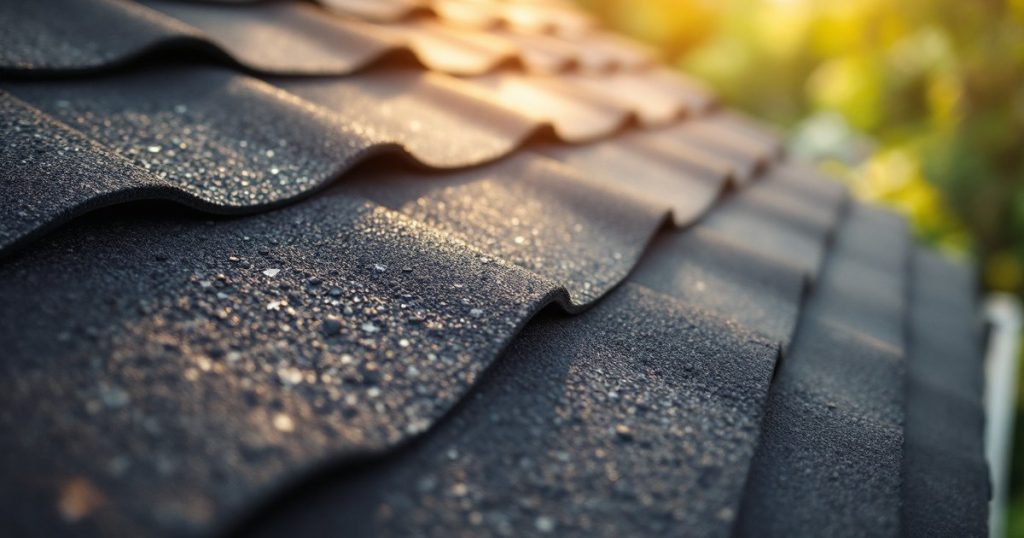
New roof shingles not laying flat usually means one of two things: sealant strips that have not activated yet, which fixes itself with sun and warmth, or something under the shingles that will never fix itself. Cold-weather installs are the most common harmless cause. Wavy decking, a layover on old shingles, high nailing, wrinkled felt and attic moisture are the causes that need a callback. The pattern of the unevenness tells you which one you have.
This page is a diagnostic guide for a roof that is already on. If you are still planning a winter job, our guide to roof repair in winter covers cold-weather work and hand-sealing on the job.
By The Roofing Brief Team. Last reviewed: October 2026.
Key numbers at a glance
These figures decide whether an uneven new roof is a waiting game or an installation problem. Each comes from a manufacturer bulletin, a trade association technical note, an ICC evaluation report or the 2021 International Residential Code (IRC). Product documents are revised often, so the current version for the exact shingle on your roof governs.
| Figure | What it means | Source |
|---|---|---|
| 40°F (4°C) | Air and surface temperature at or below which Owens Corning’s cold-weather procedures apply; its bulletin says shingles installed in the cold “may take longer to lay flat” | Owens Corning TB-10022497-A (April 2026) |
| 1/16 inch maximum | Gap Owens Corning calls for at field shingle end joints in cold weather so warm-weather expansion does not make shingles “buckle against one another” | Owens Corning TB-10022497-A |
| 1/8 inch | Recommended space at all roof sheathing panel edges and ends; also the typical size change of an unrestrained 4 x 8 panel as humidity swings | APA Technical Note D481 |
| 1 inch | Nailing this much higher than recommended “dramatically reduces the nails’ holding power” | GAF Steep Slope Pro Field Guide |
| 21:12 | Slope above which hand-sealing is required and installation follows the manufacturer’s steep-slope instructions | ICC-ES ESR-1475; 2021 IRC R905.2.6; ARMA |
| 2 layers | A roof recover is not permitted where the existing roof already has two or more applications of roof covering | 2021 IRC R908.3.1.1 |
Are new roof shingles supposed to lay flat right away?
New roof shingles are not always flat on day one. Asphalt shingles bond to the course below through a factory sealant strip that needs sun and heat to activate, so lower edges can sit slightly raised until it does. Owens Corning’s April 2026 cold-weather bulletin says shingles installed in cold weather “may take longer to lay flat.” Straight lines, bumps and dips are a different matter.
The distinction that matters is between edges and planes. Slightly raised tab edges spread evenly across the roof point to unsealed shingles. A roof surface that rises and falls in lines, waves or humps points to something under the shingles: the deck, the framing, an old layer of roofing or wrinkled underlayment. Shingles follow whatever they are nailed to, and GAF’s field guide puts it plainly: “Shingles will ‘telegraph’ or show distortions in the roof deck.”
Architectural (laminated) shingles also look uneven by design. Their two-layer construction creates shadow lines and varied thickness, which is a texture, not a defect. Judge flatness by looking along a course from the side, not by the color pattern.
How long does it take for new shingles to lay flat?
In warm, sunny weather, most new shingles seal and settle within a few weeks. ARMA describes the sealant bonding after “a few weeks of sufficient heat from sunlight.” In cold weather it can take far longer: GAF’s Steep Slope Pro Field Guide says shingles installed in cold weather “may not seal until the following spring.” Problems caused by the deck, framing, an overlay or underlayment do not improve with time at all.
Owens Corning lists the factors that change sealing time: geographic location, roof slope, roof orientation relative to the sun, and the average daily outdoor temperature during and after installation. A north-facing or shaded slope on a December install can stay unsealed for months while the south slope of the same roof seals in days of winter sun.
| When the roof went on | What is normal | When to call the roofer | Source |
|---|---|---|---|
| Warm, sunny weeks after install | Slightly raised tab edges that settle as the sealant activates | Edges still lifting after several weeks of warm sun, or any lines, humps or dips | ARMA cold-weather bulletin; Owens Corning TB-10022497-A |
| Air and surface at or below 40°F | Unsealed shingles that may look distorted or curled and take longer to lay flat; perimeter shingles hand-sealed | Shingles flapping or blowing off before spring, or perimeter shingles never hand-sealed | Owens Corning TB-10022497-A; GAF TAB-R-133 |
| Late fall or winter, shaded slopes | Sealing that may not happen until the following spring | No change after a full spring of warm days | GAF Steep Slope Pro Field Guide |
| Any season | Nothing: patterned ridges, dips and bumps are not part of settling | As soon as you see them; document first | APA D481; GAF Steep Slope Pro Field Guide |
Why new roof shingles are not laying flat: 7 causes ranked
The seven causes below are ranked from most common and least serious to least common. The first resolves on its own. The next five are installation or building problems that a roofer has to correct, and they rarely improve with time. The seventh, a true manufacturing defect, is uncommon by the manufacturers’ own account and is only worth pursuing after the other six are ruled out.
1. Cold weather: the sealant strips have not activated yet
Cold-weather installation is the most common reason new shingles do not lay flat, and it is usually temporary. GAF Technical Advisory Bulletin TAB-R-133 says that in very cold weather shingles may “become distorted and/or curl, preventing them from laying flat,” and may need to be hand sealed. Once the roof gets enough sun and warmth, the sealant bonds each course to the one below.
How to tell: the roof went on when the air or deck was at or below about 40°F, the raised edges are spread fairly evenly rather than in lines, shaded slopes look worse than sunny ones, and the roof looks better after a run of warm, sunny days. ARMA adds a storage clue: cold bundles “tend to keep the shape of the surface upon which they are stacked,” so shingles from a bundle that sat over a curb or a ridge can carry that bend onto the roof.
What should have been done: Owens Corning’s TB-10022497-A calls for hand-sealing every shingle along the entire roof perimeter with four 1-inch dabs of ASTM D4586 asphalt roof cement on laminated shingles, and a gap of no more than 1/16 inch at field shingle end joints so later expansion does not cause buckling. GAF TAB-R-114 says to hand-seal “in cold weather, fall or winter.” Ask your roofer whether the perimeter was hand-sealed.
Warranty note: GAF TAB-R-114 states that “failure of a shingle to seal due to insufficient heat is not a manufacturing defect,” and TAB-R-133 says blow-offs before the sealant activates are excluded from GAF’s shingle limited warranty. Unsealed shingles that lift in wind before spring are a hand-sealing question for the installer, not a product claim.
2. Wavy roof deck or sheathing
A wavy deck is the most common permanent cause. Plywood and OSB swell as they take on moisture, and panels butted tight with no expansion space can buckle upward along their edges. APA Technical Note D481 recommends 1/8 inch of spacing at all panel edges and ends and notes that an unrestrained 48 x 96 inch panel typically changes about 1/8 inch in width or length as relative humidity moves between 40% and 80%.
How to tell: the unevenness forms straight lines at regular spacing. Horizontal ridges about 4 feet apart up the slope line up with panel edges. Vertical lines or dips every 16 or 24 inches line up with rafters or trusses. APA warns that “many reported claims of panel buckling have, upon thorough field inspection, been traced to misaligned trusses or rafters,” and that thin panels at a given span buckle more readily than thicker ones. From the attic you may see swollen panel edges, missing edge clips or framing that is out of plane.
Why the gap matters (Roofing Brief arithmetic): using APA’s typical figure of 1/8 inch of movement per panel, a rafter run of four 48-inch panel rows (16 feet) can generate about 1/2 inch of combined growth up the slope, and a 40-foot eave of five 8-foot panels about 5/8 inch along it. With tight joints, that growth has nowhere to go but up, and the shingles show it.
What fixes it: panel edge support and spacing at install, usually with H-clips where edges fall between rafters. See our guide to H-clips for roof sheathing. Correct deck nailing matters too, and the 2021 IRC schedule is covered in our page on IRC roof deck fastening requirements. After shingles are on, correcting a buckled deck means removing shingles in that area. APA notes that buckling is “not a structural deficiency” but an appearance and serviceability issue, and that no correction technique is 100% effective.
3. New shingles installed over old shingles
A layover, also called a recover, puts new shingles on top of an existing roof. Every dip, curl and old shingle edge underneath can show through. ARMA’s cold-weather bulletin warns that when shingles are fastened to an uneven surface in cold weather, the uneven appearance may be “locked in” and the shingles “may not be able to completely relax” even after warm weather returns.
How to tell: look at the rake or eave edge for two stacked layers of shingles. Telegraphing from an old layer shows up as parallel horizontal lines that repeat at roughly the old roof’s exposure, commonly 5 or 5 5/8 inches, the exposures ICC-ES report ESR-1475 lists for standard and metric three-tab shingles. GAF’s field guide says roofing over buckled shingles “may telegraph buckles through the next roof layer, preventing proper sealing.”
What the code says: under 2021 IRC Section R908.3.1.1, “a roof recover shall not be permitted” where the existing roof is water soaked or deteriorated to the point it is not adequate as a base, where it is slate, clay, cement or asbestos-cement tile, or “where the existing roof has two or more applications of any type of roof covering.” Local amendments can be stricter. If your contract said tear-off and you find two layers, that is a contract issue. Our comparison of reroofing overlay vs tear-off covers when a layover is allowed at all.
4. High nailing, underdriven nails or tight end joints
Nailing errors make individual shingles lift, tent or flap rather than making the whole plane wavy. The 2021 IRC requires asphalt shingles to have “the minimum number of fasteners required by the manufacturer’s approved installation instructions, but not less than four fasteners per strip shingle” (Section R905.2.6), so nail placement outside the manufacturer’s zone is a code issue as well as a workmanship one.
What goes wrong: GAF’s Steep Slope Pro Field Guide lists three nail faults. Nailing just 1 inch higher than recommended, GAF says, “dramatically reduces the nails’ holding power over the shingle front.” Nailing in the sealant “not only results in high nailing but also damages the sealant.” And “underdriven nails can force a shingle to buckle.” ARMA adds that on laminated shingles nailed too high, the bottom layer is held only by adhesive and may delaminate. GAF also notes that shingles “jammed” together at their ends can buckle, which is why Owens Corning specifies a small end-joint gap in cold weather.
How to tell: scattered shingles lift or flutter in wind, small tents or bumps sit over nail locations, or buckles appear at end joints in hot weather. The pattern is random, not on a grid. Confirming it requires a roofer to lift tabs on each slope and check where the nails are: in the manufacturer’s nailing zone (the SureNail strip on Owens Corning Duration shingles, or the common bond double-layer area GAF TAB-R-133 recommends on laminates) or above it.
What fixes it: re-nailing or replacing the affected shingles, then hand-sealing them. Widespread high nailing across a roof is a bigger conversation. Fastener rules are in our guide to roofing nail sizes and code requirements, raised nail heads are covered in nail pops on shingles, and wind loss is in shingles blowing off the roof.
5. Wrinkled underlayment
Wrinkles in the underlayment telegraph through the shingles above them. GAF’s Steep Slope Pro Field Guide states that “felt underlayments will wrinkle and buckle when they get wet,” and that “sometimes felts that are flat when installed will buckle due to poor ventilation and moisture in attics.” GAF’s installation steps for its Tiger Paw roof deck protection say to install it without wrinkles: “Lay flat, cap nail flat. Do NOT stretch.”
How to tell: irregular ripples a few inches long that run at angles and do not line up with panel edges, framing or old shingle courses. They often trace back to rain falling on exposed felt before the shingles went on. If the contract or your photos from install day show asphalt-saturated felt, this cause moves up the list.
What fixes it: wrinkles trapped under shingles generally stay. The fix is removing shingles in the affected area and relaying the underlayment flat. Synthetic underlayment resists moisture wrinkling better than felt, which our comparison of roofing felt vs synthetic underlayment covers. Rain during the job is its own risk, explained in can a roof be replaced in the rain.
6. Poor ventilation and attic moisture
A roof that was flat at install and turns wavy during its first winter often has an attic moisture problem. APA Technical Note D481 says that if buckling “occurs after roofing, and after the building is occupied, excessive moisture from within, or inadequate ventilation, should be suspected.” Warm, moist indoor air condenses on cold sheathing, the panels swell, and the shingles follow.
How to tell: frost or damp spots on the underside of the sheathing, rusty nail tips, mold, wet insulation, or bath and kitchen fans that exhaust into the attic instead of outdoors. The waviness tends to appear between rafters and get worse in cold months. The 2021 IRC Section R806.2 sets the minimum net free ventilating area at 1/150 of the vented space, with a 1/300 exception only when its conditions are met. Our explainer on the attic ventilation 1/300 rule walks through the math.
What fixes it: correct the moisture source and the airflow first: duct fans outdoors, clear soffit vents blocked by insulation (APA calls for baffles at the eaves), and balance intake and exhaust. Sheathing may dry and flatten over a season, but APA cautions that buckled panels do not always recover fully. Ventilation also affects warranty eligibility. Owens Corning’s Platinum Protection warranty, for example, requires the roofing system to be “installed over a ventilated roof deck.”
7. A defective shingle (rare)
Manufacturing defects are the least likely cause of shingles not laying flat. GAF’s Steep Slope Pro Field Guide says “it is very uncommon for shingles to buckle due to their manufacturing,” and tells installers to file a claim with GAF if buckles occur and the cause is unknown. Rule out the six causes above before treating this as a product problem.
How to tell: distortion is confined to shingles from one bundle or production lot, the deck and attic check out, nail placement is correct, and there is no old layer underneath. Keep a shingle wrapper or note the lot code printed on it, because a manufacturer will ask for product identification and may request samples.
What happens next: manufacturer claims go through the warranty process on the shingle maker’s website. A standard limited warranty covers manufacturing defects on its stated terms; it does not pay for installation errors. More on the split between product and labor coverage is in our guide to roofing warranties explained.
The spacing test: match the pattern to the cause
The fastest way to tell the causes apart is to measure how far apart the waves are. Building materials come in fixed modules, so a pattern that repeats at a known module points to the layer underneath. Look along the roof in low morning or evening light, when shadows exaggerate ridges, and estimate the spacing against the shingle courses or a known roof dimension.
| Pattern you see | Spacing | Matches | Likely cause |
|---|---|---|---|
| Horizontal ridges up the slope | About every 4 feet | 48-inch sheathing panel width | Panel edges buckled: no 1/8 inch gap or no edge support (cause 2) |
| Vertical ridges along the eave | About every 8 feet | 96-inch panel length (end joints) | Panel ends butted tight (cause 2) |
| Vertical lines or dished bays | Every 16 or 24 inches | Rafter or truss spacing | Framing out of plane or sheathing deflecting between supports (cause 2 or 6) |
| Fine horizontal lines | About every 5 to 5 5/8 inches | Old shingle exposure | Layover telegraphing (cause 3) |
| Irregular diagonal ripples | No fixed spacing | Nothing in the structure | Wrinkled underlayment (cause 5) |
| Single lifted tabs or tents | Random | Individual fasteners | High, underdriven or misplaced nails (cause 4) |
| Raised edges everywhere, no lines | Uniform | Sealant strips | Unsealed shingles, usually cold weather (cause 1) |
Module sizes are from APA (48 x 96 inch panels), standard 16 and 24 inch framing layouts, and the shingle exposures listed in ICC-ES ESR-1475. A roofer or home inspector can confirm from the attic, where panel edges, clips and framing are visible.
Diagnostic decision table: symptom, cause, who fixes it, time to resolve
Use this table to decide what to ask for. “Who fixes it” assumes the roof is new and the problem was present or appeared within the first months; responsibility in your case depends on your contract and warranty terms. Time to resolve describes whether the problem goes away on its own, not how long a repair crew takes.
| What you see | Most likely cause | Who fixes it | Time to resolve |
|---|---|---|---|
| Edges slightly raised across the roof after a cold-weather install, better after sunny days | Sealant not yet activated | No repair needed; installer confirms perimeter hand-sealing | Resolves with warm sun; may take until spring (GAF) |
| Straight ridges about 4 feet apart up the slope | Sheathing edges buckled | Installing roofer if deck work was in the contract; otherwise a deck repair change order | Does not self-resolve; shingles must come off in that area |
| Lines or dips every 16 or 24 inches | Framing misalignment or deck deflection | Roofer and framer; a structural review if sagging is visible | Does not self-resolve |
| Fine parallel lines, two layers visible at the edge | Layover on old shingles | Roofer, especially if the contract promised a tear-off | Permanent; only a tear-off removes it |
| Individual tabs lifting or tenting at nails | High, underdriven or misplaced nails | Installing roofer under the workmanship warranty | Fixed when shingles are re-nailed or replaced and hand-sealed |
| Irregular ripples with no pattern | Wrinkled felt underlayment | Installing roofer | Usually permanent until the area is relaid |
| Waviness appears in the first winter, attic frost or damp sheathing | Attic moisture and ventilation | Roofer plus a ventilation or insulation contractor | A season or more after the moisture source is fixed; may not fully recover (APA) |
| Isolated distortion with every installation cause ruled out | Possible shingle defect | Manufacturer, through its warranty claim process | Set by the manufacturer’s claim process |
When does the manufacturer require hand-sealing?
Hand-sealing means bonding shingles to the course below with dabs of asphalt roof cement instead of relying on the factory sealant strip. Manufacturers require or recommend it on very steep slopes, in cold weather, in high-wind areas and after repairs. If your roof falls into one of these cases and the shingles were not hand-sealed, unsealed or lifting shingles are an installation issue to raise with the roofer.
| Situation | What the documents say | Source |
|---|---|---|
| Slope steeper than 21:12 | Hand-sealing is required; four spots under each laminated shingle, two under each three-tab tab; IRC defers to manufacturer instructions above 21:12 | ICC-ES ESR-1475 (GAF); ARMA; 2021 IRC R905.2.6 |
| Cold weather | Hand-seal all shingles along the entire roof perimeter at or below 40°F; GAF says hand-seal “in cold weather, fall or winter” | Owens Corning TB-10022497-A; GAF TAB-R-114 |
| Colder climates or wind regions where sealing is doubtful | Shingles “must be hand-sealed” with at least three 1-inch spots, to the satisfaction of the code official | ICC-ES ESR-1475 |
| High-wind areas, mansard roofs, rakes | Hand-seal; GAF lists “shingles up the rake of the roof for added wind protection” | GAF TAB-R-114; IKO Bulletin R-1 |
| Repairs and new accessories | Hand-seal while performing repairs and after installing power vents, diverters or skylights | GAF TAB-R-114 |
| Wind-blown dust or sand areas | Hand-seal, because dirt can coat the sealant before it bonds | GAF TAB-R-114; GAF Steep Slope Pro Field Guide |
| Shingles distorted by deck imperfections or buckles | IKO notes hot melt adhesive is normally used when shingles do not lay flat, because roof cement does not bond fast enough to restrain the distortion | IKO Bulletin R-1 |
More cement is not better. Owens Corning, GAF and IKO all warn that excess roof cement can blister shingles, and Owens Corning says it should not squeeze out past the leading edge. IKO also notes that shingles are stiff and easily damaged when lifted below roughly 50°F, so hand-sealing an existing roof is best done in mild weather.
What is normal in the first weeks, and what needs a callback?
Some unevenness on a new roof is normal for a few weeks, especially after a cool-season install. Lines, humps, dips, nail tents and shingles lifting in wind are not normal at any point. The checklist below separates the two so you can decide whether to wait or call now.
| Normal while the roof settles | Call the installer |
|---|---|
| Slightly raised lower edges spread evenly across the roof | Straight ridges or dips that repeat at a regular spacing |
| Shaded slopes lagging behind sunny slopes | Bumps or tents over individual nails |
| Shadow lines and varied thickness on architectural shingles | Shingles lifting, flapping or missing after wind |
| Gradual improvement after warm, sunny days | No improvement after several weeks of warm sun, or a roof that looks worse over time |
| Hand-sealed perimeter shingles bonded at the edges | Two layers visible at the edge when the contract said tear-off, or attic frost, damp sheathing or new ceiling stains |
If you are unsure whether the roof was installed correctly overall, a post-installation inspection covers flashing, ventilation, nailing and cleanup as well as flatness. Our roofing inspection checklist lists what to look for. For the steps that apply to a brand-new roof, use our full post-installation inspection checklist.
How to document shingles not laying flat for a workmanship warranty claim
Good documentation turns “it looks wavy” into a claim a contractor or manufacturer can act on. Photograph the problem the same way over time, gather the job paperwork, read the warranty terms, and notify the installer in writing before anyone else touches the roof. The steps below are in the order they usually matter.
- Photograph from fixed spots. Shoot from the ground or a window at the same locations and time of day, ideally in low morning or evening light that shows ridges. Repeat weekly so you can show whether the roof is improving or not.
- Record the install dates and weather. Note when each slope was shingled and pull daily temperatures for the nearest weather station from NOAA’s Climate Data Online. A cold-weather install supports the “wait for sealing” explanation; a warm-weather install weakens it.
- Gather the paperwork. Keep the contract (tear-off or layover, deck replacement and underlayment type), invoice, permit and final inspection record, the shingle product name, a bundle wrapper or lot code, and any warranty registration certificate.
- Read the workmanship warranty. Check its length, what it calls a defect, any written-notice requirement, and whether cosmetic issues are included or excluded.
- Notify the installer in writing. Send an email describing what you see, the pattern and spacing, with photos and dates, and ask for an inspection. Keep it factual.
- Do not let anyone else alter the roof first. Repairs by another contractor can complicate coverage. Owens Corning’s Platinum Protection warranty, for example, excludes improper or faulty installation by an installer other than an Owens Corning Platinum Preferred Contractor.
- Escalate if needed. If the installer does not respond, options include an independent inspection, the local building department that issued the permit, the manufacturer if you hold a registered system warranty, and your state’s contractor licensing board where one exists.
Who pays to fix new roof shingles not laying flat?
Installation causes are generally the contractor’s responsibility under the workmanship warranty, and manufacturing defects fall under the shingle maker’s limited warranty. Enhanced manufacturer system warranties can add workmanship coverage, but only when the roof was installed by a qualifying contractor and registered, and their wording may not cover purely cosmetic waviness.
| Coverage | What it generally covers | Waviness and unsealed shingles | Source |
|---|---|---|---|
| Contractor workmanship warranty | Installation errors, for the term and on the conditions written in the contract | Depends on the wording; many cover only leaks or failures, others include appearance | Your contract |
| Standard shingle limited warranty | Manufacturing defects on the stated terms | GAF says failure to seal from insufficient heat “is not a manufacturing defect” and excludes blow-offs before the sealant activates | GAF TAB-R-114; GAF TAB-R-133 |
| Owens Corning Platinum Protection | Workmanship for the first 25 years on a single-family home when installed by a Platinum Preferred Contractor | Covers application errors “that cause leaks or materially affect the performance” of the roof; appearance alone may not qualify | Owens Corning Platinum Protection Limited Lifetime Warranty |
| GAF Golden Pledge | Includes coverage for misapplication of GAF products and covered flashings when installed by a qualifying GAF contractor | Depends on the terms of the certificate issued for your roof | GAF Golden Pledge Limited Warranty |
Warranty terms change over time, so the certificate and terms issued for your specific roof govern. When in doubt, ask the contractor and the manufacturer the same written question and keep both answers.
Frequently asked questions
How long does it take for new shingles to lay flat?
In warm, sunny weather, new shingles usually seal and settle within a few weeks; ARMA describes the sealant bonding after “a few weeks of sufficient heat from sunlight.” After a cold-weather install, GAF says shingles may not seal until the following spring. Lines, humps and dips caused by the deck, an overlay or underlayment do not flatten with time and need a roofer.
Why are my new roof shingles not flat?
The most common reason is cold weather: the heat-activated sealant strips have not bonded yet, and Owens Corning says cold-weather shingles may take longer to lay flat. Permanent causes include buckled sheathing, new shingles laid over old ones, high or underdriven nails, wrinkled felt underlayment and attic moisture. A regular, repeating pattern points to something under the shingles.
Are shingles supposed to lay flat?
Yes. Once the sealant activates, asphalt shingles should lie flat in straight courses, bonded to the course below. Architectural shingles have shadow lines and varied thickness by design, which is different from lifting or waviness. GAF warns that very cold weather can leave shingles distorted or curled so they do not lay flat until warmer weather lets them relax and seal.
How can you tell if your roof was installed correctly?
Look for straight courses, flat planes with no repeating ridges, no exposed or raised nails, and sealed edges after a few warm weeks. Check paperwork: a passed final permit inspection, the scope you paid for (tear-off, deck repairs, underlayment), and a registered warranty. From the attic, look for daylight, damp sheathing and blocked vents. A third-party inspection can confirm nail placement.
Will a wavy new roof leak?
Not necessarily. APA describes buckled sheathing as an appearance and serviceability issue rather than a structural deficiency, and a wavy roof can stay watertight. Unsealed or lifted shingles are more exposed to wind, though, and GAF excludes blow-offs that happen before the sealant activates. Ask the installer to fix lifting shingles before a windy season.
Does the roofer’s warranty cover shingles that are not laying flat?
It depends on the contract wording. Installation causes such as high nailing, a buckled deck or wrinkled underlayment usually fall under the contractor’s workmanship warranty, while some warranties cover only leaks or performance problems, not appearance. Shingle makers treat slow sealing in cold weather as normal, not a defect. Document the problem and notify the installer in writing.
Sources
- Owens Corning, Technical Bulletin TB-10022497-A, Cold Weather Shingle Installation, April 2026.
- Owens Corning, Platinum Protection Limited Lifetime Warranty (workmanship and eligibility terms).
- GAF, Technical Advisory Bulletin TAB-R-133, Temperature Extremes and Fiberglass Asphalt Shingles (rev. February 2024).
- GAF, Technical Advisory Bulletin TAB-R-114, Hand-Sealing Shingles (rev. April 2024).
- GAF, Steep Slope Pro Field Guide, sections on decks, roof deck protection and analyzing roof problems.
- GAF, Golden Pledge Limited Warranty (sample).
- ICC Evaluation Service, ESR-1475, GAF Shingle Roof Covering Systems (reissued October 2025, revised February 2026).
- Asphalt Roofing Manufacturers Association (ARMA), Recommendations for Installation of Asphalt Roofing Shingles in Cold Weather; Application of Asphalt Shingles on Slopes Greater than 21:12.
- APA, The Engineered Wood Association, Technical Note D481, Buckling of Wood Structural Panel Sheathing.
- IKO, Residential Information Bulletin R-1, Manual Sealing of Asphalt Shingles (rev. August 2010).
- International Code Council, 2021 International Residential Code, Sections R806.2, R905.2.5, R905.2.6 and R908.3.1.1.
- NOAA National Centers for Environmental Information, Climate Data Online.