
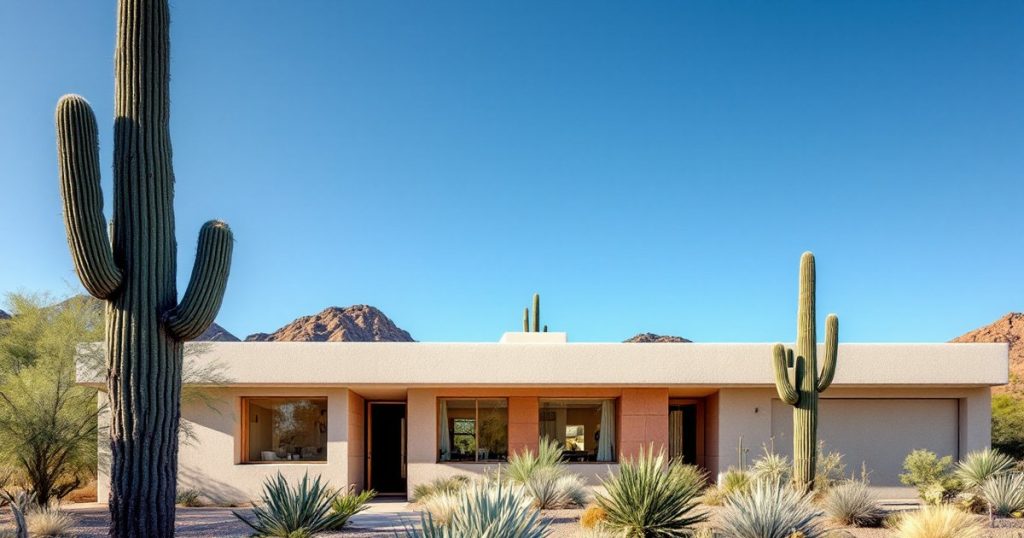
A new roof in Arizona costs about $11,100 to $15,100 for a standard asphalt shingle replacement in the Phoenix metro, and $26,368 in Phoenix or $27,493 in Tucson for the larger, fully specified 30-square shingle job priced in the 2025 Cost vs. Value Report. Standing-seam metal runs $41,202 in Phoenix and $44,713 in Tucson for the same roof size. Both cities come in 14 to 21 percent under the national averages, and the main reason is labor: Arizona roofers earn a median $22.76 an hour, about 85 percent of the U.S. median, per BLS May 2025 data.
By The Roofing Brief Team. Last reviewed: October 2026.
The numbers below come from primary sources: Bureau of Labor Statistics wage tables, the Cost vs. Value city reports for Phoenix and Tucson, Arizona statutes, the City of Phoenix building code, and our own count of ten years of NOAA storm reports. Ranges are conditional, and your bid will depend on roof size, pitch, material, and what the crew finds under the old covering.
Key numbers at a glance
The figures most Arizona homeowners come looking for are the total for a typical asphalt job, the jump to metal or tile, and how much lower Arizona runs than the rest of the country. Each row below carries its source, and each total describes a specific project size, so compare like with like before you hold a bid up against it.
| Figure | Arizona value | U.S. comparison | Source |
|---|---|---|---|
| Standard asphalt replacement, Phoenix metro | $11,100 to $15,100 (about $13,000 typical) | National average near $10,000 for a smaller standard job | The Roofing Brief metro cost data (aggregated 2026 price guides); Fixr |
| 30-square asphalt shingle replacement, full spec | Phoenix $26,368; Tucson $27,493 | $31,871 | Cost vs. Value Report 2025 (JLC) |
| 30-square standing-seam metal replacement | Phoenix $41,202; Tucson $44,713 | $51,865 | Cost vs. Value Report 2025 (JLC) |
| Roofer median hourly wage | $22.76 (Arizona); $22.96 (Phoenix metro); $21.17 (Tucson) | $26.65 | BLS OEWS, May 2025, SOC 47-2181 |
| Share of resale value recouped, asphalt roof | Phoenix 77.5%; Tucson 67.3% | 67.5% | Cost vs. Value Report 2025 (JLC) |
| Thunderstorm wind reports falling in July to September | 88% (1,328 of 1,507, 2016 to 2025) | 41% nationally (73,233 of 180,310) | NOAA Storm Events Database, Roofing Brief tally |
How much does a new roof cost in Arizona by material?
In Arizona, asphalt shingles are the cheapest full replacement, concrete tile and foam sit in the middle depending on the roof, and standing-seam metal costs roughly 56 to 63 percent more than shingles for the same 30-square roof in the Cost vs. Value data. A tile roof can often be fixed with new underlayment alone, which is a separate and much smaller job than a full replacement.
Arizona-specific prices exist for asphalt and metal because the Cost vs. Value Report prices those two projects in Phoenix and Tucson. For tile and spray foam, the best published figures are national installed ranges, so the table pairs them with the per-square-foot math rather than inventing an Arizona number.
| Roof type | Arizona data point | Installed cost per sq ft | Example: 2,000 sq ft of roof | Source |
|---|---|---|---|---|
| Asphalt shingles, budget to architectural | Phoenix standard job $11,100 to $15,100 | $3 to $6 (national) | $6,000 to $12,000 | HomeGuide; Roofing Brief metro data |
| Asphalt shingles, full spec (CvV) | Phoenix $879 per square; Tucson $916 per square | About $8.79 to $9.16 | About $17,600 to $18,300 | Cost vs. Value 2025, divided by 30 squares |
| Standing-seam metal | Phoenix $1,373 per square; Tucson $1,490 per square | $9 to $16 (national); about $13.73 to $14.90 (CvV Arizona) | $18,000 to $32,000 | HomeGuide; Cost vs. Value 2025 |
| Concrete tile, full tear-off | No Arizona-only published figure | $7 to $19 (national) | $14,000 to $38,000 | HomeGuide |
| Clay tile, full tear-off | No Arizona-only published figure | $8 to $25 (national) | $16,000 to $50,000 | HomeGuide |
| Tile underlayment replacement (lift and relay) | Tiles reused, underlayment replaced | $0.75 to $4.00 (national) | $1,500 to $8,000 | HomeGuide |
| Spray polyurethane foam (flat roofs) | Used on flat and low-slope roofs | $3.50 to $7.00 (national) | $7,000 to $14,000 | HomeGuide |
The Cost vs. Value asphalt project is not a bare-minimum reroof. It assumes tear-off to the sheathing, 30 squares (3,000 sq ft) of 235-pound fiberglass shingles with at least a 25-year warranty, new felt or synthetic underlayment, galvanized drip edge, a hip roof, flashing at two skylights, and a vented ridge. That is why it lands well above the $11,100 to $15,100 standard job seen across the Phoenix metro. For deeper material detail, see our guides to tile roof replacement and lift-and-relay and foam roof cost and recoat cycles.
Why roofs cost less in Arizona than the national average
Arizona roofs cost less mostly because roofing labor costs less. BLS puts the Arizona roofer median at $22.76 an hour in May 2025 against $26.65 nationally, a ratio of 0.85, and the mean at $24.33 against $27.95, a ratio of 0.87. Labor is a large share of any roofing bill, so a 13 to 15 percent wage gap carries straight into the quote.
The Cost vs. Value numbers line up with that gap. The Phoenix asphalt job costs 0.83 of the national figure and the Tucson job 0.86. Metal runs 0.79 in Phoenix and 0.86 in Tucson. Arizona employed about 3,420 roofers in May 2025, roughly 2,700 of them in the Phoenix-Mesa-Chandler metro.
| Area | Roofer median wage | Ratio to U.S. median | CvV asphalt job cost | Ratio to U.S. job cost | Source |
|---|---|---|---|---|---|
| United States | $26.65 | 1.00 | $31,871 | 1.00 | BLS OEWS May 2025; CvV 2025 |
| Arizona statewide | $22.76 | 0.85 | Not published statewide | Not published | BLS OEWS May 2025 |
| Phoenix-Mesa-Chandler | $22.96 | 0.86 | $26,368 | 0.83 | BLS OEWS May 2025; CvV 2025 |
| Tucson | $21.17 | 0.79 | $27,493 | 0.86 | BLS OEWS May 2025; CvV 2025 |
Wages are not the whole story. Tucson roofers earn less than Phoenix roofers, yet Tucson’s Cost vs. Value roof prices higher, which points to materials, overhead, and a smaller contractor pool (about 340 roofers in the Tucson metro) also moving the number. For every state’s wage figures, see our roofer salary by state data, and for how Phoenix compares with other large cities, see roof replacement cost by metro.
What changes the price of a new roof in Arizona?
In Arizona the price moves most with roof type (pitched tile, pitched shingle, or flat foam), whether tile can be reused, local permit fees, and whether the job follows a storm claim. Heat and the monsoon shape material choices more than snow or hail do, and state tax rules change how the contract is billed.
| Driver | Effect on your Arizona quote | Source |
|---|---|---|
| Roofer wages about 85% of U.S. median | Lower labor share than most states; bids often run below national averages | BLS OEWS May 2025 |
| Tile you can reuse | An underlayment-only lift and relay can cost a fraction of a full tile tear-off | HomeGuide tile cost data |
| Flat or low-slope roof | Spray foam is priced per sq ft and recoated on a cycle, so lifetime cost matters more than the first bid | HomeGuide; Roofing Brief foam cost guide |
| City permit fees | Phoenix charges about $646 on a $12,000 reroof, among the highest of 26 metros tracked | PermitCalculator 2026, via our permit cost data |
| Monsoon wind (July to September) | Most storm damage and claims cluster in late summer; storm-claim contracts carry extra legal terms | NOAA Storm Events; A.R.S. 32-1158.02 |
| Extreme heat and UV | Heat and UV load the roof surface for months; coated systems such as foam need periodic recoats that add lifetime cost | NWS Phoenix 2024 climate summary |
| Transaction privilege tax rules | A roof replacement is generally billed without prime contracting tax; tax is paid on materials instead | A.R.S. 42-5075; Arizona Department of Revenue |
Tile roofs: underlayment, not tile, usually sets the bill
Roof tiles typically outlast the underlayment beneath them, per HomeGuide, so an Arizona tile roof that leaks may still have sound concrete or clay tile on top of a worn-out water barrier. In that case a lift and relay (lifting the tile, replacing underlayment, and resetting the same tile) may solve the problem for $0.75 to $4.00 per square foot, per HomeGuide, instead of $7 to $25 for new tile.
Ask the contractor to state the underlayment type, number of layers, and how many broken tiles the bid allows for. Tile roofs need minimum slopes and extra underlayment on lower pitches under IRC Section R905.3, so a low-slope tile roof may cost more to redo correctly.
Flat roofs: foam and coatings on a recoat schedule
For Arizona homes with flat or low-slope roofs, spray polyurethane foam is one of the main replacement options alongside membranes. HomeGuide prices foam roofs at $3.50 to $7.00 per square foot installed. Foam is protected by a topcoat that must be renewed periodically, so compare the recoat price and interval in each bid, not only the first install price.
Permits and building codes
Arizona does not adopt one statewide residential building code, so each city or county sets its own code edition, permit rules, and fees. Phoenix adopted the 2024 Phoenix Building Construction Code, which includes the 2024 International Residential Code, effective August 1, 2025.
Phoenix’s design table under that code sets a 105 mph design wind speed, no ground snow load, and no ice-barrier underlayment requirement. Higher-elevation jurisdictions such as Flagstaff and Prescott set their own design criteria, so confirm local rules with your building department. For fee comparisons, see our roof permit cost by metro data.
How Arizona taxes a roof replacement contract
Under A.R.S. 42-5075, income from a contract to maintain, repair, replace, or alter existing property is not subject to Arizona’s prime contracting tax when the contract includes no modification work. The statute defines “replacement” as removing one component or system from service and installing a new one that does the same job, which describes a reroof.
The Arizona Department of Revenue treats materials used on these projects as taxable when the contractor buys them, so the tax is usually built into the materials price. If a roofing bid shows a separate prime contracting tax line for a straight reroof, ask why.
Monsoon wind, not hail, drives Arizona roof damage
Arizona is a wind state for roofs. In NOAA’s Storm Events Database for 2016 to 2025, Arizona logged 1,507 thunderstorm wind reports and 351 hail reports, a ratio of about 4.3 to 1. Nationally the ratio is about 2.1 to 1, and in Texas hail reports outnumber wind reports. Eighty-eight percent of Arizona’s wind reports fell in July, August, and September, against 41 percent nationwide.
Hail still happens. Arizona recorded 267 reports of hail 1 inch or larger in those ten years, compared with 11,043 in Texas. The Flagstaff area logged hail up to 2.5 inches. Those figures come from our tally of county-level NOAA records, with duplicate reports removed.
| Arizona metro (counties) | Hail reports | Largest hail | Thunderstorm wind reports | Wind reports at 58 kt or more | Source |
|---|---|---|---|---|---|
| Phoenix (Maricopa, Pinal) | 125 | 2.0 in | 805 | 193 | NOAA Storm Events 2016 to 2025 |
| Tucson (Pima) | 48 | 1.75 in | 230 | 44 | NOAA Storm Events 2016 to 2025 |
| Prescott Valley (Yavapai) | 38 | 1.75 in | 65 | 17 | NOAA Storm Events 2016 to 2025 |
| Lake Havasu City (Mohave) | 20 | 1.75 in | 108 | 14 | NOAA Storm Events 2016 to 2025 |
| Yuma (Yuma) | 1 | 1.0 in | 67 | 15 | NOAA Storm Events 2016 to 2025 |
| Flagstaff (Coconino) | 32 | 2.5 in | 8 | 1 | NOAA Storm Events 2016 to 2025 |
Heat is the other steady load. The National Weather Service recorded 70 days at or above 110°F and 143 days at or above 100°F at Phoenix Sky Harbor in 2024, the most 110-degree days on record there. That heat, plus the late-summer monsoon, is why many homeowners schedule a reroof for the cooler, calmer months.
Storm-damage roofs: Arizona contract rules that protect you
If your new roof follows a storm insurance claim, A.R.S. 32-1158.02 adds rules to the contract. You can cancel within 72 hours of the insurer denying the claim, or for any reason within four business days of signing. The down payment cannot exceed 50 percent of the contract.
The same statute bars the contractor from paying, promising to pay, or rebating your deductible, from acting as your adjuster, and from starting non-emergency work before the insurer approves or denies the claim. The estimate must describe the damage, give the square footage, and say whether the roof was physically accessed.
How to get an accurate Arizona roof quote
A fair Arizona roof price comes from comparing bids that describe the same scope: same square count, same underlayment, same tear-off assumptions, from contractors properly licensed by the Registrar of Contractors. These steps put every bid on equal footing.
- Check the license. Search the contractor on the Arizona Registrar of Contractors site. Residential roofing is the R-42 classification, which covers tile, shingles, metal, urethane foam, and coatings under A.A.C. R4-9-103. Unlicensed contracting is a class 1 misdemeanor under A.R.S. 32-1164.
- Get the roof measured in squares. One square is 100 sq ft of roof surface. A bid that does not state squares cannot be compared with another bid.
- Name the system. For tile, ask whether the bid is a lift and relay or a full tear-off, and which underlayment. For flat roofs, ask the foam thickness, topcoat type, and recoat interval.
- Confirm the permit. Ask who pulls the permit and whether the fee is in the price. Fees vary widely by city.
- Read the payment terms. On storm-claim jobs the down payment is capped at 50 percent by statute. On any job, tie later payments to completed stages.
- Know your backstop. If a licensed residential contractor fails to do the work properly, Arizona’s Residential Contractors’ Recovery Fund may pay eligible homeowners up to $30,000 (A.R.S. 32-1133), with a $200,000 limit per license (A.R.S. 32-1139). It does not cover unlicensed contractors.
Our verified contractor lists for Phoenix, Tucson, Prescott Valley, Lake Havasu City, and Yuma show license status alongside other checks.
Which roof should you pick in Arizona?
The right Arizona roof depends on the roof shape you already have and how long you plan to stay. Pitched tile homes often need only underlayment, flat-roof homes are usually choosing between foam and other low-slope systems, and shingle homes are weighing a cheaper shingle job against a pricier metal roof.
| Your situation | Usual best-value move | Why |
|---|---|---|
| Tile roof leaking, most tile intact | Lift and relay with new underlayment | Reuses the tile; $0.75 to $4.00 per sq ft versus $7 to $25 for new tile (HomeGuide) |
| Tile badly broken or deck damaged | Full tear-off and new tile or a lighter material | Underlayment alone will not fix structural or widespread tile damage |
| Flat or low-slope roof | Spray foam with a scheduled recoat, or a membrane | Foam is $3.50 to $7.00 per sq ft installed; compare lifetime cost with recoats |
| Shingle roof, selling within a few years | Asphalt shingle replacement | Phoenix asphalt recoups 77.5% at resale versus 59.7% for metal (CvV 2025) |
| Shingle roof, staying long term | Get both asphalt and standing-seam metal bids | Metal costs about 56% more in Phoenix (CvV 2025) but is priced for a longer service life |
| Storm-damaged roof with an open claim | Wait for the insurer’s decision before non-emergency work | Required under A.R.S. 32-1158.02; you keep cancellation rights |
Solar, tax credits, and Arizona programs
The federal Residential Clean Energy Credit (Section 25D) ended for systems installed after December 31, 2025, under Public Law 119-21, so a solar roof completed in 2026 does not qualify for the federal homeowner credit. Asphalt and metal roofs had already stopped qualifying for the Section 25C credit after 2022, and 25C itself ended for property placed in service after 2025.
Arizona still has a state income tax credit for solar energy devices under A.R.S. 43-1083: 25 percent of the device cost, capped at $1,000 per residence. If you plan solar, it often makes sense to replace an aging roof first so the array does not have to come off later. Check current Arizona Department of Revenue guidance and a tax professional before relying on any credit.
Frequently asked questions
How much does it cost to replace a roof in AZ?
A standard asphalt shingle replacement in the Phoenix metro typically runs $11,100 to $15,100, per our 2026 metro cost data. The 2025 Cost vs. Value Report prices a fully specified 30-square asphalt job at $26,368 in Phoenix and $27,493 in Tucson, and standing-seam metal at $41,202 and $44,713. Tile and foam roofs vary with whether tile can be reused.
Will insurance cover a 20 year old roof?
It depends on the policy and the cause of damage. Homeowners policies generally cover sudden damage, such as a monsoon windstorm, not wear and tear from age. Many policies pay older roofs at actual cash value, which subtracts depreciation, so a 20-year-old roof may pay out far less than replacement. Read your declarations page and ask your insurer how roof age is handled.
Is it cheaper to put a metal roof or shingles?
Shingles are cheaper to install. In the 2025 Cost vs. Value Report, a 30-square standing-seam metal roof costs $41,202 in Phoenix versus $26,368 for asphalt shingles, about 56 percent more. Nationally, HomeGuide puts standing seam at $9 to $16 per square foot and asphalt at $3 to $6. Metal can make sense over a longer ownership horizon.
How much does it cost to replace a roof on a 2,200 square foot house in California?
Start with roof area, not floor area. A 2,200 sq ft single-story house with a 4:12 pitch has roughly 2,320 sq ft of roof before overhangs, since the pitch adds about 5 percent. At HomeGuide’s national $3 to $6 per square foot for asphalt, that is about $7,000 to $14,000, and California’s higher roofer wages (mean $32.41 an hour, BLS May 2025) push bids up. Our California roof replacement cost guide has state-specific figures.
Do roofers need a license in Arizona?
Yes. Arizona requires a Registrar of Contractors license for roofing work, with only a narrow exemption for casual or minor work under $1,000 that needs no building permit (A.R.S. 32-1121). Residential roofing is the R-42 classification. Contracting without a license is a class 1 misdemeanor with a minimum $1,000 fine for a first offense (A.R.S. 32-1164).
When is the best time to replace a roof in Arizona?
Fall through spring is often easiest. Eighty-eight percent of Arizona’s thunderstorm wind reports from 2016 to 2025 fell in July through September, when monsoon storms can interrupt an open roof, and Phoenix logged 70 days at or above 110°F in 2024. Booking outside monsoon season also avoids the post-storm rush when contractors are busiest.
Sources
- U.S. Bureau of Labor Statistics, Occupational Employment and Wage Statistics, May 2025: Roofers (SOC 47-2181), Arizona, Phoenix-Mesa-Chandler MSA, Tucson MSA, California, and U.S. estimates.
- JLC / Zonda, Cost vs. Value Report 2025: Phoenix, AZ and Tucson, AZ city reports; Roofing Replacement (Asphalt Shingles) and Roofing Replacement (Metal) project descriptions; national averages.
- NOAA National Centers for Environmental Information, Storm Events Database, 2016 to 2025 detail files (county-level hail, thunderstorm wind, and tornado reports, duplicates removed), tallied by The Roofing Brief.
- National Weather Service Phoenix, 2024 Year in Review climate summary for Phoenix Sky Harbor.
- City of Phoenix Planning and Development, 2024 Phoenix Building Construction Code implementation notice and 2024 IRC amendments, Table R301.2.
- Arizona Revised Statutes 32-1121, 32-1133, 32-1139, 32-1158.02, 32-1164, 42-5075, and 43-1083 (azleg.gov).
- Arizona Administrative Code R4-9-103, residential contractor license classifications (R-42 Roofing).
- Arizona Department of Revenue, MRRA contracting guidance.
- HomeGuide, Roof Replacement Cost, Metal Roof Cost, and Tile Roof Cost guides, 2026.
- Public Law 119-21, sections 70505 and 70506; IRS FAQ FS-2025-05 on sections 25C and 25D.
- American Wood Council, Arizona code adoption summary.
Reviewed by The Roofing Brief Team. Last reviewed: October 2026. Prices are estimates from the named sources and change with roof size, pitch, material, and market conditions; tax and insurance points are general information, so confirm them with your insurer, the Registrar of Contractors, or a tax professional. For national context, see our roof replacement cost guide and the per-size breakdowns for a 1,500 square foot house and a 30-square roof.