
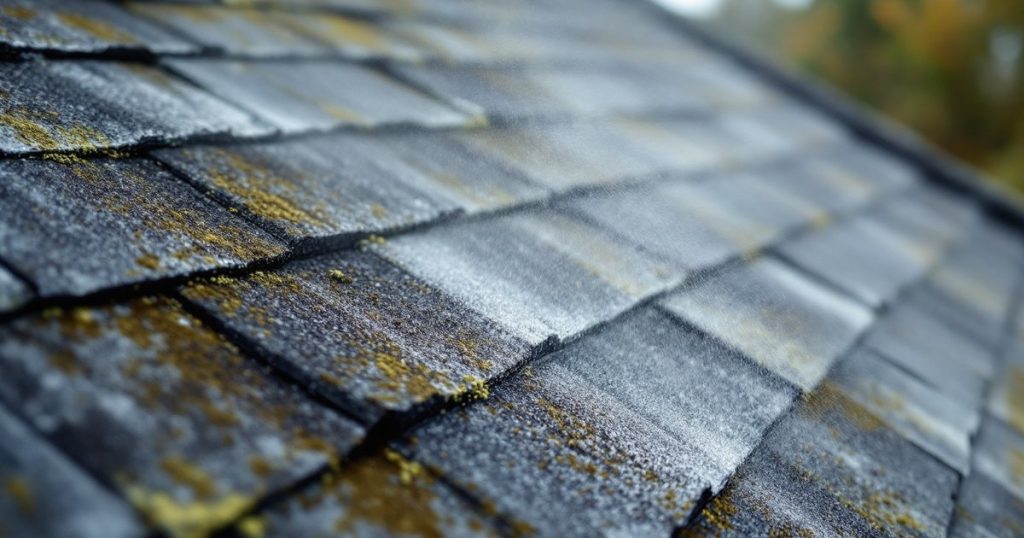
Shingle roof cleaning is done with a gentle, low-pressure spray of diluted household bleach (sodium hypochlorite) and water, left on the roof for about 15 to 20 minutes and then rinsed off with a garden hose. That is the method published by the Asphalt Roofing Manufacturers Association (ARMA), GAF, Owens Corning and CertainTeed. All of them say not to pressure wash asphalt shingles, and ARMA also says not to use a brush or broom on algae.
This page covers how to do the job: the method, the mix, safety and how often to clean. For prices, see our roof washing cost guide. For ranked products, see our best roof cleaner picks.
By The Roofing Brief Team. Last reviewed: October 2026.
Key numbers at a glance
These are the figures people usually want before they clean an asphalt shingle roof. Each one comes from a named manufacturer, trade association or government document, checked October 12, 2026. If your shingle maker’s own instructions differ, follow theirs.
| Figure | Value | Source |
|---|---|---|
| Published bleach-to-water ratios | 1:1 (ARMA 2012, Owens Corning) to 1:4 (GAF), with 1:3 from CertainTeed | ARMA; Owens Corning; GAF TAB-R-102 (9/19/2024); CertainTeed Shingle Applicator’s Manual, 16th ed. |
| Time on the roof before rinsing | 15 to 20 minutes (ARMA); up to 20 minutes (GAF); about 10 to 20 minutes (Owens Corning) | ARMA technical bulletin; GAF TAB-R-102; Owens Corning algae guidance |
| Pressure washer | Not recommended by ARMA, GAF, Owens Corning or CertainTeed | Each maker’s published guidance |
| Strength of household bleach | Most contains 5% to 9% sodium hypochlorite | CDC, Cleaning and Disinfecting with Bleach |
| Fall protection trigger for roofing crews | 6 feet above a lower level in residential construction | OSHA 29 CFR 1926.501(b)(13) |
| Typical professional roof wash | About $250 to $1,300; national averages about $461 to $675 | Our roof washing cost guide (Angi, Fixr, This Old House 2026 data) |
What is the best way to clean asphalt shingles?
The best way to clean asphalt shingles is a low-pressure “soft wash”: spray a diluted bleach solution gently onto the roof, let it work for 15 to 20 minutes without letting it dry, then rinse with low-pressure water. ARMA calls a bleach and water mix “the most effective method of cleaning algae and moss from a roof,” and GAF, Owens Corning and CertainTeed publish versions of the same method.
What the shingle needs protecting from is friction and force. Asphalt shingles are covered in mineral granules that shield the asphalt from sunlight. ARMA’s maintenance guidance warns that a pressure washer “will cause granule loss and very likely premature failure of the roof system.” Its current technical bulletin adds that scrubbing “may loosen and remove granules.” The chemistry does the work, and the water only carries it off.
Before you start, work out what is on the roof. Black or brown streaks are usually the cyanobacteria Gloeocapsa magma. Green, fuzzy clumps are moss. Crusty grey-green patches are lichen. If the whole roof is evenly faded with bare spots, that is granule wear and cleaning will not fix it. Our algae streaks diagnostic guide covers how to tell them apart.
Cleaning methods compared: soft wash, oxygen bleach, commercial cleaners and pressure washing
Only one method appears in every maker’s guidance: a bleach and water solution applied and rinsed at low pressure. Oxygen bleach, vinegar and branded cleaners can work, but ARMA’s bulletin says “other cleaning chemicals or methods should not be used without the approval of the shingle manufacturer.” Pressure washing is advised against by all four sources.
| Method | What it is | Manufacturer or ARMA position | Main watch-out | Source |
|---|---|---|---|---|
| Bleach soft wash | Household bleach (sodium hypochlorite) and water, sometimes with trisodium phosphate (TSP), sprayed at low pressure | Published by ARMA, GAF, Owens Corning and CertainTeed | Harms plants if runoff is not managed; the roof gets slippery | ARMA; GAF TAB-R-102; Owens Corning; CertainTeed manual |
| Water-only low-pressure wash | Garden hose or low-pressure soft-wash sprayer with no chemicals | Described in Owens Corning’s May 2026 maintenance article | Lifts loose dirt but does not kill algae or moss | Owens Corning, Cleaning Asphalt Roof Shingles |
| Oxygen bleach (sodium percarbonate) | Powdered oxygen bleach mixed with water | Not in the ARMA, GAF, Owens Corning or CertainTeed guidance we reviewed | Needs your shingle maker’s approval under ARMA’s guidance | ARMA technical bulletin |
| Commercial roof cleaners | Branded moss and algae products, many based on quaternary ammonium | CertainTeed’s manual names Safer’s Moss and Algae Cleaner and Shingle Shield Roof and Deck Cleaner; ARMA says to contact the shingle maker first | ARMA’s manual warns some chemicals “may contribute to rapid roof system failures” | CertainTeed manual; ARMA Residential Asphalt Roofing Manual (2014) |
| Vinegar | Diluted white vinegar | Not in any of the four sources’ guidance | Never mix with bleach; the CDC warns that mixing cleaners can release dangerous vapors | CDC |
| Brushing or scrubbing | Brush, broom or scrubber on the shingle surface | ARMA: do not use “any type of brush or broom” on algae. CertainTeed’s homeowner page lets a pro gently use a soft-bristled broom. | Friction removes granules | ARMA; CertainTeed |
| Pressure washing | Gas or electric pressure washer | Advised against by ARMA, GAF, Owens Corning and CertainTeed | Granule loss; Owens Corning’s warranty excludes damage from power washing | ARMA; GAF; Owens Corning warranty Pub. No. 10023873-I |
For a cleaner sold by brand name, check two things before buying. The label should list roofs or asphalt shingles, and your shingle maker should not object to it. Our best roof cleaner comparison sets the main products against ARMA’s guidance.
Bleach-to-water mixing ratios from ARMA and shingle makers
The published mixes run from 1 part bleach to 1 part water (ARMA’s 2012 guidance and Owens Corning) down to 1 part bleach to 4 parts water (GAF). CertainTeed sits between them at 1 to 3. ARMA’s current bulletin gives no single ratio. It says mixing directions “may vary among shingle manufacturers and depend on the amount of discoloration.” The safest choice is your own shingle maker’s recipe.
| Source and date | Bleach : water | Additive | Time on the roof | Rinse |
|---|---|---|---|---|
| ARMA, Algae Discoloration of Roofs technical bulletin (posted June 2024) | Varies by manufacturer | None listed | At least 15, no more than 20 minutes | Gently spray with water |
| ARMA, Algae and Moss Prevention and Cleaning (February 2012) | 50:50, laundry-strength liquid chlorine bleach | None listed | 15 to 20 minutes; longer if needed, but do not let it dry | Thoroughly, with low-pressure water |
| GAF, TAB-R-102 Blue-Green Algae Staining (9/19/2024) | 1 gallon bleach to 4 gallons water | 1 cup TSP or a phosphate-free substitute | Up to 20 minutes | Low-pressure water |
| Owens Corning, algae guidance (February 2023, based on its technical bulletin) | 1:1, one gallon each | None listed | About 10 to 20 minutes | Flush the roof and nearby greenery thoroughly |
| CertainTeed, Master Craftsman Shingle Applicator’s Manual, 16th ed. | 1 part bleach to 3 parts water | A pinch of TSP | Not stated | Gently spray with water |
| ARMA, older printed bulletin (archived copy) | 1 gallon bleach to 5 gallons water, up to 2.5 gallons each | 1 cup TSP | Not stated | Gently spray with water |
A 2023 consumer post on GAF’s RoofViews blog gives a much weaker mix, 1 cup of bleach to 4 gallons of water. GAF’s technical bulletin TAB-R-102 says it “supersedes any prior GAF Technical Advisory Bulletins on this topic,” so we follow the bulletin’s 1 gallon to 4 gallons. GAF also accepts a phosphate-free substitute in place of TSP.
How strong is the mix that actually hits the roof?
The strength of the sprayed solution depends on the bleach you start with. The CDC says most household bleach contains 5% to 9% sodium hypochlorite. Diluting it with the published ratios gives a working solution of roughly 1% to 4%. Some contractor blogs publish much stronger mixes that are not in any maker’s guidance.
| Recipe | Share of bleach in the sprayer | With 6% bleach | With 8.25% bleach |
|---|---|---|---|
| ARMA 2012 or Owens Corning, 1:1 | 50% | 3.0% | about 4.1% |
| CertainTeed, 1:3 | 25% | 1.5% | about 2.1% |
| GAF, 1 gallon in 5 total | 20% | 1.2% | about 1.7% |
| 12.5% pool chlorine at 75% chlorine, 25% water (seen on contractor blogs) | 75% | about 9.4%, far above any maker recipe | |
Source: Roofing Brief arithmetic. Working strength equals label strength times the share of bleach in the mix. Read the sodium hypochlorite percentage on your own bottle. Stronger is not better: the maker recipes kill the growth in a 15 to 20 minute dwell, and a stronger mix does more harm to plants and anyone standing below.
How to clean an asphalt shingle roof, step by step
To clean an asphalt shingle roof: identify the growth, check your warranty, protect the plants, mix your shingle maker’s recipe, spray it gently from a ladder or walkboards, wait 15 to 20 minutes, rinse with a garden hose and let rain finish the job. The ten steps below follow the ARMA, GAF, Owens Corning and CertainTeed guidance.
- Identify what is on the roof. Streaks, moss, lichen and granule wear each call for a different response. ARMA notes that algae has usually been present for “several months or longer” by the time you can see it.
- Check your warranty first. If your shingles are algae-resistant and the algae warranty is still in force, call the manufacturer before you clean (see the warranty section below). If you clean, ask for the maker’s written cleaning instructions.
- Pick a cool, overcast, calm day. ARMA’s 2012 guidance says not to let the solution dry on the roof, because dried solution may not rinse off fully. Wind carries spray onto plants, cars and neighbors.
- Protect plants and property. Owens Corning says to cover all vegetation directly under the roof before spraying and to flush the greenery afterward. Move cars, furniture and pets, and close nearby windows.
- Set up safe access and gear. ARMA advises working from a ladder or walkboards where possible, not on the roof surface. Wear eye protection and rubber gloves (ARMA), plus slip-resistant footwear and fall protection on the roof (Owens Corning).
- Mix the solution in a garden pump sprayer. Use your shingle maker’s ratio from the table above. Add only the TSP the recipe calls for. Never add ammonia, vinegar or another cleaner to bleach.
- Apply it gently. ARMA says the solution “should be gently dispersed on the roofing surface.” Wet the streaks or moss evenly without blasting. Do not scrub.
- Let it work for 15 to 20 minutes. Stay off the treated area. ARMA warns that treatment and rinsing make the roof “slippery and potentially hazardous to walk on.”
- Rinse with low-pressure water, aiming down the slope. A GAF RoofViews article notes that spraying upward against the shingles “can cause shingles to lift and possibly warp.” Then rinse the plants again and remove the covers.
- Let weather finish the job, and re-treat if needed. ARMA says algae “will disappear and wash away with subsequent rains.” Moss loosens over time and can be cleared with a leaf blower aimed down the slope. Heavy moss may need more than one treatment.
Moss has its own steps, including how to clear dead clumps without pulling granules off. Our moss removal guide covers them in detail.
Can you pressure wash a shingle roof?
No. ARMA, GAF, Owens Corning and CertainTeed all advise against pressure washing asphalt shingles. ARMA’s technical bulletin says high-pressure systems “are likely to damage asphalt roofing and should not be used to remove algae or for any other purpose.” GAF’s TAB-R-102 says pressure washing “may dislodge granules, which can lead to premature shingle failure.”
CertainTeed’s applicator manual says high-pressure washing “should never be used for algae removal” because it can remove granules and shorten roof life. Owens Corning’s May 2026 maintenance article says a pressure washer can “displace granules on the shingles and potentially void any manufacturer warranties.”
None of the maker documents we reviewed sets a maximum psi for rinsing. They describe a garden hose or a “low-pressure” sprayer. If a contractor’s quote mentions a pressure washer, ask them in writing what rinse pressure they use on shingles and whose instructions they follow.
Will cleaning your roof void the shingle warranty?
Cleaning with a method your shingle maker publishes should not, in general, cause warranty problems. Damage from power washing or off-label chemicals may not be covered. Owens Corning’s Standard Product Limited Lifetime Warranty (Pub. No. 10023873-I, August 2026) excludes damage from “power washing” and from “the application of cleaning solutions not in accordance with our algae removal instructions.” Read your own warranty for its exact exclusions.
Algae-resistant shingles change the order of steps. CertainTeed says its algae-resistant shingles carry a 10 or 15 year algae warranty, depending on the product, and that it will pay “the reasonable cost to replace or clean the affected shingles” without proration. Its manual says CertainTeed may clean algae stains instead of repairing or replacing the shingles.
GAF’s bulletin lists 10-year StainGuard, 25-year StainGuard Plus and 30-year StainGuard Plus PRO algae warranties on qualifying products. Owens Corning’s warranty covers brown-black Gloeocapsa magma staining on algae-resistant shingles, with a 25-year term when approved hip and ridge shingles are used. For the first 10 years it pays non-prorated costs and defines “repair” as “cleaning or otherwise removing any algae growth.” It does not cover mold, lichen or green algae. If your roof is still inside one of these periods, filing a claim may get the cleaning paid for. Paying a cleaner first can make the claim harder to document. Our shingle algae warranty comparison lays out the terms side by side.
Fall protection and safety on a wet roof
The biggest danger in roof cleaning is falling, not the chemicals. ARMA and GAF both say the solution makes the roof slippery, and ARMA recommends that “only trained professionals” work on roofs. For roofing crews, OSHA 29 CFR 1926.501(b)(13) requires guardrails, safety nets or personal fall arrest systems for workers 6 feet or more above a lower level in residential construction.
Some roof-cleaning work may instead fall under OSHA’s general industry rules, depending on how the job is classified. Those rules, 29 CFR 1910.28(b)(1), set the trigger at 4 feet for unprotected sides and edges. Either way, a crew at the eave of a single-story house is usually above the trigger height. A contractor who climbs onto a wet, treated roof without a harness and anchor is not following either rule.
OSHA rules cover employers, not homeowners, but a fall from the same height does the same damage. For DIY work, stay on a properly set ladder, never walk on a treated roof, and keep eyes and skin protected from bleach. The CDC also warns never to mix bleach with other cleaners. Our DIY roofing injury report covers how homeowners get hurt on roofs.
Protecting plants and managing runoff
Bleach runoff can scorch grass, shrubs and flower beds, so manufacturers say to protect vegetation before you spray and rinse it afterward. Owens Corning says to cover all ground vegetation under the roof and then “thoroughly flush” the roof and the greenery. GAF’s bulletin says, “Be sure to protect any shrubs below.” CertainTeed notes that “most of the solution will be running down the rain spout.”
In practice, that means three things. Cover beds and shrubs under the eaves, soak them with plain water before and after treatment, and watch where each downspout empties. Make sure runoff is not draining into a pond, vegetable bed or storm drain. Many local stormwater rules limit what can go into storm drains, so check with your municipality before you treat a large roof.
Zinc and copper strips: what ARMA says about adding them later
ARMA does not recommend adding zinc or copper strips to an existing shingle roof. They have to be fastened with exposed nails, which “can cause leaks over time,” or slid under shingles by breaking the sealant bond, “which may eventually result in wind damage.” ARMA suggests strips or algae-resistant copper-granule shingles when the roof is replaced.
That is a minority view among roof cleaners, many of whom sell strip installs as add-ons. If you want strips on your current roof anyway, ask your shingle maker in writing whether the method will affect wind or leak coverage. For a new roof, every major maker sells algae-resistant shingles. CertainTeed’s StreakFighter, GAF’s Time-Release Algae-Fighting Technology and Owens Corning’s StreakGuard all use copper-bearing granules.
How often should you clean an asphalt shingle roof?
Clean an asphalt shingle roof when algae, moss or lichen appears, not on a fixed calendar. No manufacturer document we reviewed sets a cleaning interval. ARMA, Owens Corning and CertainTeed all say the results of bleach cleaning are temporary and that discoloration may come back. How often depends on shade, humidity and nearby trees.
Treat moss quickly. ARMA’s guidance says moss can lift shingle edges, raise the risk of blow-off and, in severe cases, cause leaks. Owens Corning says it has not seen evidence that algae affects shingle performance, so algae is mostly about looks. ARMA does note that algae reduces how well reflective “cool” roofs work.
Prevention stretches the time between cleanings. ARMA recommends trimming branches, clearing debris with a leaf blower aimed down the slope, keeping gutters clean and not letting an upper downspout drain onto a lower roof. Our asphalt roof maintenance checklist puts these into a twice-yearly routine.
DIY or hire a pro? Which one should you pick
DIY is reasonable on a single-story roof you can treat entirely from a ladder, using your maker’s recipe. Hire a professional for two-story or steep roofs, heavy moss, or any job that means walking on the roof. ARMA, GAF and Owens Corning all encourage using professionals, mainly for fall safety. If your algae warranty is still active, call the manufacturer before you hire anyone.
| Your situation | Recommendation | Why |
|---|---|---|
| Black streaks, algae-resistant shingles still under algae warranty | Call the manufacturer before cleaning | CertainTeed’s warranty covers the reasonable cost to clean; Owens Corning’s algae remedy includes cleaning |
| Black streaks, single-story roof you can reach from a ladder | DIY with your maker’s bleach recipe | Matches ARMA and manufacturer methods without walking the roof |
| Two-story or steep roof, or you would need to walk on it | Hire a pro who uses fall protection | The roof becomes slippery; OSHA requires fall protection for crews |
| Thick moss lifting shingle edges | Pro treatment, then an inspection for lifted or unsealed shingles | ARMA says moss can lift shingle edges and raise blow-off risk |
| Loose leaves, needles or dirt only | Leaf blower aimed down the slope, then a plain-water rinse | ARMA’s non-abrasive debris method; Owens Corning’s water-only soft wash |
| Rust stains | Diluted oxalic acid, with plants protected, or replace the stained shingles | CertainTeed’s manual, which also warns against muriatic acid for cement or mortar stains |
| Roof near the end of its life, granules worn away | Skip cleaning and plan a replacement with algae-resistant shingles | Cleaning cannot restore lost granules |
| A contractor plans to pressure wash | Find a different contractor | All four sources advise against pressure washing shingles |
What does professional shingle roof cleaning cost?
Professional roof washing usually costs about $250 to $1,300 for a single-family home. National averages range from about $461 (Angi, 2026) to $675 for a 1,500 square foot roof (This Old House, 2026). Soft washing, the method for asphalt shingles, is typically priced at $0.30 to $0.75 per square foot. Steep pitches, extra stories and heavy moss push quotes higher.
Our roof washing cost guide breaks those figures down by method and roof size. The soft wash roof cleaning cost guide prices the asphalt shingle method by square footage. When comparing quotes, ask each contractor to name the chemical, the dilution, how they protect plants and their fall protection setup.
Frequently asked questions
What is the best way to clean a shingle roof?
The best way to clean a shingle roof is a low-pressure soft wash with diluted household bleach. Spray it gently, leave it on for 15 to 20 minutes without letting it dry, and rinse with a garden hose. ARMA, GAF, Owens Corning and CertainTeed all publish this method, with ratios from 1:1 to 1:4 bleach to water. Do not scrub or pressure wash.
Is it okay to pressure wash a shingle roof?
No. ARMA says high-pressure washing is likely to damage asphalt roofing and should not be used for any purpose. GAF says it may dislodge granules and lead to premature shingle failure. CertainTeed and Owens Corning give similar warnings, and Owens Corning’s limited warranty excludes damage caused by power washing. Use a low-pressure soft wash instead.
How much should I pay to have my roof cleaned?
Most homeowners pay about $250 to $1,300 to have a roof professionally washed. National averages run from about $461 (Angi, 2026) to $675 for a 1,500 square foot roof (This Old House, 2026). Soft washing asphalt shingles is typically priced at $0.30 to $0.75 per square foot. Steep, two-story or heavily mossed roofs usually cost more.
Are you supposed to clean shingles?
You do not need to clean shingles on a schedule, but you should treat moss when it appears. ARMA says moss can lift shingle edges and raise the risk of blow-off and leaks. Algae streaks are mostly cosmetic; Owens Corning says it has not seen evidence that algae affects shingle performance. Cleaning algae is a choice about how the roof looks.
Can you use vinegar on asphalt shingles?
Vinegar does not appear in the cleaning guidance from ARMA, GAF, Owens Corning or CertainTeed. ARMA’s bulletin says other chemicals should not be used without the shingle maker’s approval. Never mix vinegar with bleach: the CDC warns that mixing household bleach with other cleaners can release vapors that are dangerous to breathe.
Will cleaning my roof void the shingle warranty?
Cleaning with your manufacturer’s published method generally should not cause warranty problems, but damage from power washing or off-label chemicals may be excluded. Owens Corning’s warranty excludes damage from power washing and from cleaning solutions not in line with its algae removal instructions. If your algae-resistant shingles are under warranty, contact the maker before cleaning.
How often should an asphalt shingle roof be cleaned?
No manufacturer sets a fixed interval. Clean when algae, moss or lichen appears. ARMA, Owens Corning and CertainTeed all say bleach cleaning is temporary and discoloration may return, faster on shaded, humid roofs. Trimming branches, clearing debris with a leaf blower aimed down the slope and keeping gutters clear, as ARMA recommends, can lengthen the time between cleanings.
Sources
- ARMA, Algae Discoloration of Roofs (technical bulletin)
- ARMA, Algae and Moss Prevention and Cleaning for Asphalt Roofing Systems
- ARMA, Residential Asphalt Roofing Manual, 2014 Edition
- GAF, TAB-R-102 Blue-Green Algae Staining on Shingled Roof Surfaces (9/19/2024)
- Owens Corning, Why Are There Dark Streaks on My Roof?
- Owens Corning, Cleaning Asphalt Roof Shingles (May 2026)
- Owens Corning, Standard Product Limited Lifetime Warranty, Pub. No. 10023873-I (August 2026)
- CertainTeed, Master Craftsman Shingle Applicator’s Manual, Sixteenth Edition
- CertainTeed, What Type of Maintenance Does My Roof Require?
- OSHA, 29 CFR 1926.501 Duty to Have Fall Protection
- OSHA, 29 CFR 1910.28 Duty to Have Fall Protection and Falling Object Protection
- CDC, Cleaning and Disinfecting with Bleach