
By The Roofing Brief Team. Last reviewed: October 2026.
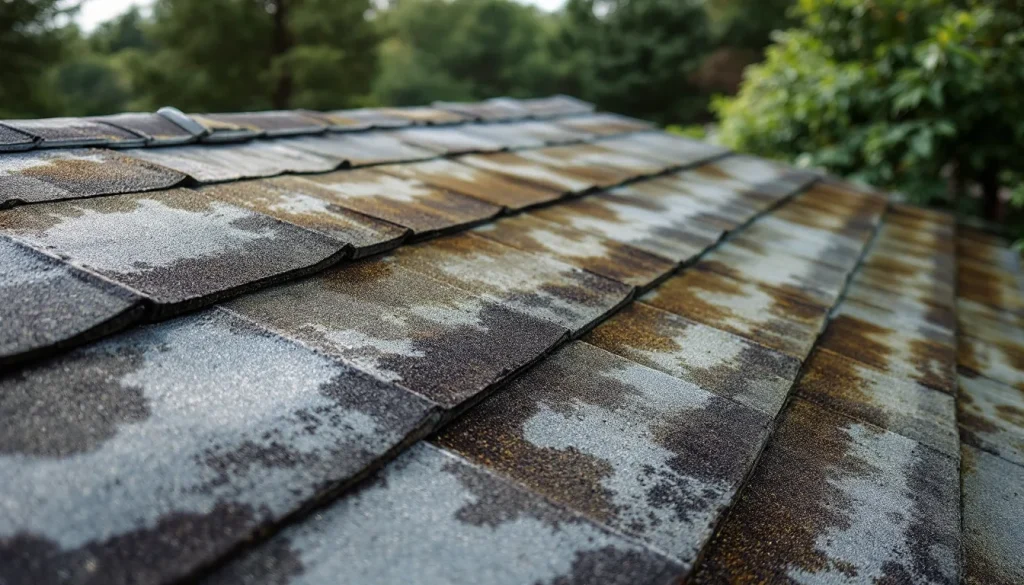
Algae on roof shingles shows up as black streaks that are usually not dirt, not mildew, and not the early sign of a roof failure. They are most often colonies of a cyanobacterium called Gloeocapsa magma (blue-green algae), which spreads through the air and grows where dew keeps the shingles damp. GAF says the stains usually cover more area on the lower part of the roof and taper toward the ridge, and that they usually show up on northern exposures, which get less sun. The good news: the Asphalt Roofing Manufacturers Association (ARMA) says there is no scientific evidence that algae damages asphalt shingles, and Owens Corning says it has not seen evidence that algae affects shingle performance. A gentle bleach soft wash lightens the streaks for a while. Algae-resistant shingles are the long-term fix when you reroof.
The short version
- The black streaks are usually Gloeocapsa magma, a cyanobacterium. The dark color is a protective sheath it forms against UV, per GAF.
- The streaks are cosmetic. ARMA says there is no scientific evidence that algae damages asphalt shingles, though it does cut the effectiveness of reflective “cool” roofs.
- Clean with your shingle maker’s bleach and water recipe, applied gently and left on for 15 to 20 minutes under ARMA’s guidance, then rinsed at low pressure. Never pressure wash a shingle roof.
- ARMA does not recommend adding zinc or copper strips to an existing roof. It suggests strips or algae-resistant shingles when the roof is replaced.
- Next roof: buy algae-resistant (AR) shingles with copper-bearing granules, such as GAF StainGuard Plus, Owens Corning StreakGuard or CertainTeed StreakFighter.
- If the streaks sit alongside visible granule loss, that is a separate issue. See our roof granules in gutter guide.
What it actually is
Gloeocapsa magma is a photosynthetic cyanobacterium carried by airborne spores. GAF’s technical bulletin TAB-R-102 says the spores land on a roof and take root, and that the dark color comes from a sheath the organism forms to protect itself from UV rays. It needs moisture and suitable temperatures, and GAF says dew is the main moisture source. It is often said to feed on the limestone filler used in many asphalt shingle formulations, but none of the ARMA or manufacturer documents we reviewed makes that claim, so treat it as background rather than settled fact.
ARMA says algae discoloration is most widespread in the Gulf States and along the Northwest and Eastern Seaboards, but that it occurs to varying degrees in all regions of the U.S. and southern Canada, especially in warm, humid conditions. Owens Corning says it is most widespread in the eastern United States.
On the pattern: GAF says the stains usually cover more area on the lower section of the roof and taper as they reach the ridge. Algae spores also spread from roof to roof, which is why ARMA notes it is common to see streaking across a whole neighborhood.
How to tell which case you have
Several things can put dark marks on a roof. The response is different for each.
- Algae streaks. Dark brown to black discoloration, often in streaks, worst on north and shaded slopes, with no raised texture. ARMA says algae can be mistaken for soot, dirt, moss or tree droppings.
- Lichen. Crusty, slightly raised patches, often grey-green. ARMA groups algae, moss and lichen together for cleaning with a diluted solution, and CertainTeed says moss and lichen are harder to keep in check than algae.
- Moss. Green, fuzzy growth. ARMA says moss, unlike algae, can harm shingle performance by lifting shingle edges, and in severe cases can cause leaks.
ARMA notes that moss and tree droppings typically produce only localized discoloration. If the discoloration is uniform across the whole roof with bare-looking areas, that may be granule wear, and no amount of cleaning brings it back. At that point you are looking at signs you need a new roof, not a cleaning project.
| If you see | Then |
|---|---|
| Dark streaks with no raised texture, worst on north slopes, roof has years left | Soft wash with your maker’s recipe, 15 to 20 minutes dwell, low-pressure rinse; professional washing runs about $250 to $1,300 |
| Green, fuzzy or crusty raised patches | Treat as moss or lichen: ARMA says moss can lift shingle edges and cause leaks, so check for lifted tabs |
| Uniform wear with bare-looking areas | Granule wear: cleaning will not restore it, so price a roofer inspection |
| AR shingles still inside the algae warranty | Call the maker before paying a washer (CertainTeed pays the reasonable cost to clean or replace, without proration) |
| Reroofing in a humid or shaded spot | Specify AR shingles: GAF 10, 25 or 30 year, Owens Corning 25 year, CertainTeed 10 or 15 year algae terms |
Cost to clean: what a soft wash costs in 2026
A low-pressure soft wash is the method shingle makers publish for asphalt roofs. ARMA, GAF, Owens Corning and CertainTeed all advise against pressure washing shingles.
Our roof washing cost guide puts professional roof washing at about $250 to $1,300 for a typical single-family home, with national averages from about $461 (Angi, 2026) to $675 for a 1,500 square foot roof (This Old House, 2026). Soft washing is typically priced at $0.30 to $0.75 per square foot. Steep pitches, extra stories and heavy growth push quotes higher. The soft wash roof cleaning cost guide breaks the price down by roof size.
On chemistry:
- Sodium hypochlorite (household bleach) and water. This is the method ARMA, GAF, Owens Corning and CertainTeed publish. ARMA’s 2012 guidance calls a 50:50 bleach and water mix “the most effective method of cleaning algae and moss from a roof.” Runoff has to be managed so it does not harm landscaping.
- Other chemistries, such as oxygen bleach (sodium percarbonate) or branded cleaners. ARMA’s current bulletin says “other cleaning chemicals or methods should not be used without the approval of the shingle manufacturer.” Ask your shingle maker before using one.
ARMA’s bulletin “Algae Discoloration of Roofs” says, “DO NOT use a power washer or any type of brush or broom to clean algae from the roof surface.” If a contractor pulls out a pressure washer for an asphalt shingle roof, find a different contractor.
DIY soft wash: when it is worth it
You can do this yourself on a low-pitch, single-story roof if you can reach the whole area from a ladder with a pump sprayer. Use your shingle maker’s own recipe. The published mixes run from 1 gallon of bleach to 4 gallons of water (GAF) to 50:50 (ARMA 2012), and every one caps the dwell time at 20 minutes.
| Source | Bleach : water | Additive | Time on the roof |
|---|---|---|---|
| ARMA (2012) | 50:50, laundry-strength bleach | None listed | 15 to 20 minutes; do not let it dry |
| ARMA technical bulletin (2024) | Varies by shingle maker | None listed | At least 15, no more than 20 minutes |
| GAF TAB-R-102 (9/19/2024) | 1 gallon bleach to 4 gallons water | 1 cup TSP or a phosphate-free substitute | Up to 20 minutes |
| Owens Corning | 1:1 | None listed | About 10 to 20 minutes |
| CertainTeed Shingle Applicator’s Manual | 1 part bleach to 3 parts water | A pinch of TSP | Not stated |
Do not substitute pool chemicals. Liquid pool chlorine is a stronger sodium hypochlorite solution, and “pool shock” is often calcium hypochlorite, a different chemical. Neither appears in any shingle maker’s recipe. Mixing 12.5% pool chlorine one part to two parts water, a recipe seen on some contractor sites, works out to about 4.2% sodium hypochlorite at the nozzle. That is at the top of what the 1:1 maker recipes produce and roughly two to three times the GAF and CertainTeed mixes (see the strength table below).
Apply the solution gently with a pump sprayer, let it work for the time your maker gives, then rinse with a garden hose at low pressure, aiming down the slope. Cover plants first and flush them with water afterward, as Owens Corning advises. Work on a cool, calm, overcast day so the solution does not dry on the roof. For the full step-by-step shingle roof cleaning method, including safety gear and runoff control, see our guide on how to clean an asphalt shingle roof.
What you do not do: climb on a wet treated roof, pressure wash, or use a brush. ARMA warns the solution makes the roof “slippery and potentially hazardous to walk on” and recommends that only trained professionals work on roofs. If the roof is steep or more than one story, hire it out. Our roof safety guide covers the basics.
How long the clean lasts (and why streaks come back)
A bleach wash lightens or removes the existing growth. It does not stop new spores from landing. ARMA says the effectiveness of cleaning “is only temporary, and the discoloration may recur,” and Owens Corning and CertainTeed say the same. None of the documents we reviewed gives a typical number of years before streaks return. It depends on shade, humidity and how much algae is on nearby roofs. Our report on roof algae and black streaks by region ranks where that risk runs highest.
Zinc and copper strips: what ARMA says
Zinc and copper discourage algae growth, which is the same principle behind algae-resistant shingles. Owens Corning says experts first noticed the effect because algae staining was reduced or absent beneath metal vents and flashing. ARMA still does not recommend adding strips to an existing roof.
Adding strips to the roof you already have is a different matter. ARMA’s guidance says, “Adding zinc or copper strips to an existing roof is not recommended since this will require either applying the strips with exposed nails (which can cause leaks over time) or breaking the sealant bond (which may eventually result in wind damage) to slide the strips under the shingles.” ARMA says strips, or shingles with algae-resistant copper granules, may be used “when it is time to replace a roof.”
If a contractor offers to add strips to your current roof, ask your shingle manufacturer in writing whether that installation affects your wind or leak coverage before you agree.
Algae-resistant (AR) shingles: the next-roof fix
If your roof is already in the back half of its life (see asphalt shingle roof lifespan), paying $250 to $1,300 for repeat washes (see the cost section above) may not be worth it. The long-term option is AR shingles when you replace, which carry the algae warranty terms listed below.
AR shingles use copper-bearing granules that release copper over time to inhibit algae. Each maker’s current program, from its own documents:
- GAF. Time-Release Algae-Fighting Technology. GAF’s TAB-R-102 lists a 10-year StainGuard, 25-year StainGuard Plus (including Timberline HDZ) and 30-year StainGuard Plus PRO (Timberline UHDZ) algae protection limited warranty on qualifying products.
- Owens Corning. StreakGuard Protection. Owens Corning lists a 25-year Algae Resistance Limited Warranty for its Oakridge, Duration, Woodcrest and Woodmoor lines, available regionally, when approved Owens Corning hip and ridge shingles are installed.
- CertainTeed. StreakFighter. CertainTeed says its AR shingles carry a 10 or 15 year algae warranty depending on the product, and that every CertainTeed shingle is available in an AR version “for a nominal cost over non-AR shingles.”
- Other makers. Atlas, IKO and TAMKO also sell algae-resistant lines with terms that differ from the GAF 10, 25 and 30 year programs, the Owens Corning 25 year program and the CertainTeed 10 or 15 year programs above. Check each maker’s current limited warranty for the algae term on the exact product you are quoted.
Owens Corning notes that AR shingles do not address green algae or moss, so shade and debris control still matter. In humid or shaded locations, it is worth asking for AR shingles on any replacement quote.
Why north-facing slopes streak worst
GAF says blue-green algae generally grows on the northern exposures of a roof because they receive less sunlight. Those slopes stay damp with dew for longer, and the organism needs moisture to grow. South-facing slopes on the same roof can stay much cleaner. For clearing streaks on the shaded side, compare the best roof cleaner picks.
Shade adds to this. ARMA recommends trimming back tree branches so more sunlight reaches the roof and less debris collects on it, clearing debris with a leaf blower aimed down the slope, and keeping gutters clear.
What about chlorine bleach from the grocery store?
Household bleach is what the maker recipes are written for. The CDC says most household bleach contains 5% to 9% sodium hypochlorite, so check the percentage on your bottle. Working strength at the nozzle is label strength times the share of bleach in the mix:
| Recipe | Share of bleach | With 6% bleach | With 8.25% bleach |
|---|---|---|---|
| ARMA 2012 or Owens Corning, 1:1 | 50% | 3.0% | about 4.1% |
| CertainTeed, 1:3 | 25% | 1.5% | about 2.1% |
| GAF, 1 gallon in 5 total | 20% | 1.2% | about 1.7% |
Source: Roofing Brief arithmetic from the published recipes and the CDC’s 5% to 9% range. Stronger is not better. The maker recipes are designed to work within a 15 to 20 minute dwell, and a stronger mix adds risk to plants and anyone below. Never mix bleach with ammonia, vinegar or other cleaners; the CDC warns that mixing cleaners can release dangerous vapors.
Pressure washing: why it is the wrong move
Asphalt shingles rely on their mineral granules to shield the asphalt from sunlight. ARMA says a pressure washer “will cause granule loss and very likely premature failure of the roof system,” and that high-pressure systems “should not be used to remove algae or for any other purpose.” GAF’s TAB-R-102 says pressure washing “may dislodge granules, which can lead to premature shingle failure.” Owens Corning’s limited warranty excludes damage caused by power washing.
Some cleaning companies offer pressure washing because it is fast. ARMA, GAF, Owens Corning and CertainTeed all advise against it on asphalt shingles, so decline it and ask for a low-pressure soft wash that follows your shingle maker’s instructions.
What about the streaks if the roof is under warranty
If your shingles are algae-resistant and still inside the algae warranty period, contact the manufacturer before paying for cleaning. CertainTeed says it will pay, without proration, “the reasonable cost to replace or clean the affected shingles” during its algae warranty period. Owens Corning’s AR remedy covers repair, replacement or recovery, and its warranty defines “repair” as “cleaning or otherwise removing any algae growth.” Terms, proration and claim steps vary by maker and product, so check the original installation paperwork or your warranty registration.
Will algae streaks hurt resale value?
They can affect how a home looks to buyers. Owens Corning describes algae as mainly an aesthetic problem that can change how the home looks from the street. We have not found a published study that puts a number on the effect on sale price, so we do not give one.
If the roof is already in the back half of its life and streaks are heavy, some sellers price in a roof allowance instead of cleaning. A roofer can tell you how much service life the roof likely has left.
Will algae streaks fool a home inspector?
A competent home inspector can usually tell algae staining from granule loss. Expect staining to be noted with a recommendation to clean. What matters more is any granule loss visible alongside the streaks, which is a separate problem. If you are buying a home with streaks, get a roofer’s opinion in addition to the inspector’s.
Common mistakes that make it worse
- Pressure washing. ARMA, GAF, Owens Corning and CertainTeed all advise against it. Covered above.
- Walking on a wet treated roof. ARMA warns the treated surface is slippery and hazardous.
- Using a stronger mix than your maker’s recipe. It is not in any published guidance. Rinse nearby surfaces such as skylight frames and siding along with the roof.
- Skipping the landscape rinse. Bleach runoff can harm plants. Cover them first and flush them afterward.
- Hiring a power-washing company that does not follow shingle maker instructions. Ask what chemical, dilution and rinse pressure they use.
- Lifting shingles to add zinc or copper strips. ARMA says not to add strips to an existing roof.
Frequently asked questions
Do algae streaks shorten my roof’s life?
ARMA says there is no scientific evidence that algae damages asphalt shingles, and Owens Corning says it has not seen evidence that algae affects shingle performance. Algae is mainly a cosmetic issue, although ARMA notes it reduces the effectiveness of reflective cool roofs. Moss is different: ARMA says moss can lift shingle edges and cause leaks.
Can I just paint the streaks?
Painting is not a published fix for algae on asphalt shingles. Owens Corning’s limited warranty lists painting and coatings among the alterations whose resulting damage it does not cover. Clean the streaks with your shingle maker’s recipe instead, and choose algae-resistant shingles when you reroof.
How long does the soft wash take?
The bleach solution itself stays on the roof for 15 to 20 minutes under ARMA’s guidance before it is rinsed off. ARMA says algae will then disappear and wash away with later rains, so the roof may keep lightening for some time after the cleaning. Job length depends on roof size, pitch and access.
Will the chemical hurt my gutters or downspouts?
CertainTeed notes that most of the cleaning solution will run down the rain spout, so plan for it. Flush the gutters, downspout outlets and nearby plants with plain water after the roof rinse, and make sure runoff does not drain into a pond, vegetable bed or storm drain.
Should I clean before or after replacing the roof?
If the roof is being replaced soon, cleaning is usually not worth it; ask for algae-resistant shingles on the new roof. If replacement is years away, a soft wash with your maker’s recipe lightens the streaks for a while. ARMA does not recommend adding zinc or copper strips to an existing roof.
Bottom line
Algae streaks are a cosmetic, fixable problem. Clean with your shingle maker’s bleach recipe at low pressure, plan on algae-resistant shingles at the next replacement, and do not pressure wash or climb on a wet treated roof. If the streaks come with granule loss, missing shingles or interior leaks, that is a different conversation. Check our signs you need a new roof guide and consider getting a quote on roof repair costs.