
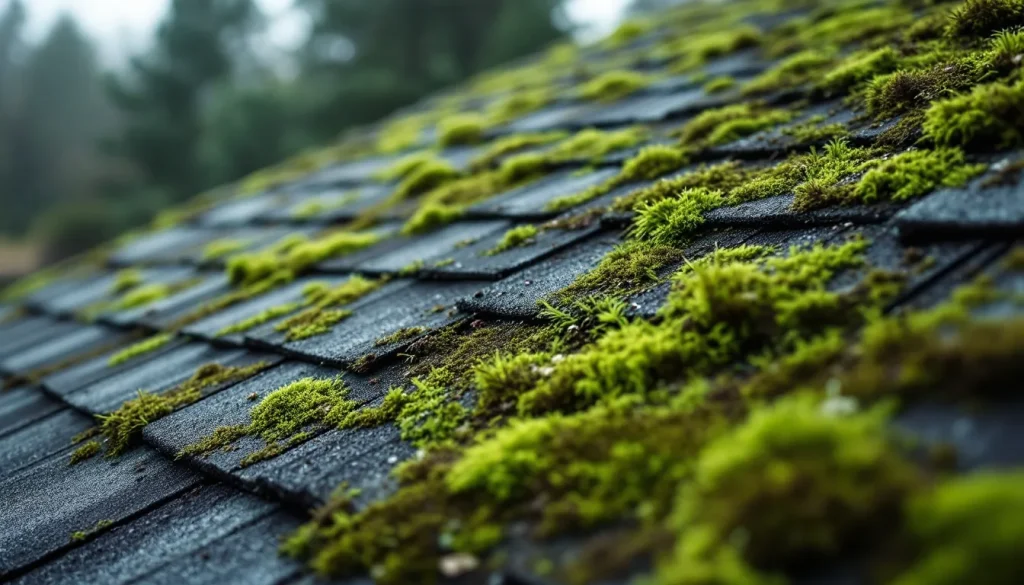
To remove moss from roof shingles safely in 2026, use the soft-wash method, install zinc strips to prevent regrowth, and absolutely no pressure washing. Pressure washing strips granules from asphalt shingles, reduces remaining roof life, and voids most manufacturer warranties (GAF, Owens Corning, and CertainTeed all have written language to this effect). The job takes a few hours and costs $30 to $150 in materials if you do it yourself, or $400 to $800 if you hire a pro. Here is the right way, the products that actually work, and the prevention setup that buys you 5 to 15 years before moss returns.
The short version
- Soft-wash method only. No pressure washing on asphalt shingles. Pressure washing voids GAF, Owens Corning, and CertainTeed warranties.
- The three-step process: apply zinc sulfate or dilute bleach solution, let sit 24 to 48 hours, gentle rinse from above.
- DIY cost: $30 to $150 in materials. Pro cost: $400 to $800 for a typical 2,000 sq ft roof.
- Zinc strips installed at the ridge prevent moss regrowth for 5 to 15 years. Copper strips last longer (20+ years) but cost 3 to 5 times more.
- Moss shortens asphalt shingle life by 20 to 30 percent by holding moisture against granules and lifting shingle tabs.
- Tree trimming is the most cost-effective prevention. Moss needs shade and moisture. Removing canopy reduces both.
The Short Answer: 3-Step Removal + Prevention
- Apply moss killer. Wet & Forget, Spray & Forget, zinc sulfate solution, or dilute bleach (50:50 with water). Soft-spray application to the roof from a ladder using a pump sprayer or hose-end attachment.
- Wait 24 to 48 hours. The moss browns and dies. Some products work in 24 hours; others need 48.
- Rinse gently from above. Garden hose with a spray nozzle at standard household pressure. Spray downhill, never uphill against shingle tabs.
- Install zinc or copper strips at the ridge to prevent regrowth. This is the part most homeowners skip and then have to repeat the removal job every 3 to 5 years.
Total time: 2 to 4 hours of active work, spread over 2 to 3 days. Cost: $30 to $150 in materials.
Why Moss Matters (Shortens Roof Life by 20 to 30%)
Moss on asphalt shingles is not just cosmetic. It actively shortens roof life through three mechanisms:
- Moisture retention. Moss holds water against the shingle surface for days after rain. The granule-asphalt bond degrades faster under chronic moisture.
- Tab lifting. Moss grows under and between shingle tabs, slowly prying them up. Lifted tabs allow water under the shingles and accelerate wear.
- Granule loss. Moss roots dig into the granule layer. When moss is finally removed, granules come with it.
NRCA and shingle manufacturer field data indicate moss-covered shingles lose 20 to 30 percent of their service life compared to clean shingles. On a 25-year architectural shingle, that translates to 5 to 7 years of lost life. The economic case for removal and prevention is straightforward.
Moss is most common in the Pacific Northwest (Oregon, Washington), the Northeast (especially shaded properties in New England), and the South where humid microclimates exist. Arid Southwest properties rarely see moss but may see algae streaks.
For the bigger picture on shingle service life and what shortens it, see our asphalt shingle roof lifespan guide.
Why You Cannot Pressure-Wash an Asphalt Shingle Roof
Pressure washing is the wrong tool for moss removal on asphalt shingles. Three reasons:
- Granule stripping. A pressure washer at 2,000 to 3,000 PSI removes the mineral granule layer that protects asphalt from UV. Lose the granules and the shingle bakes out in 3 to 5 years.
- Water under shingles. Pressure-washing wand directed at the tab edge forces water uphill under shingles, past underlayment, and into the deck. Pressure washing produces interior leaks the same week.
- Warranty void. GAF, Owens Corning, CertainTeed, and most other major shingle manufacturers have explicit language voiding the warranty if the roof is pressure-washed. Save the marketing materials in case you need to file a claim.
The same logic applies to power washers, even at lower PSI settings. The horizontal force at the spray tip is what does the damage, not just the pressure rating. Stick with garden-hose pressure and the soft-wash method.
Step 1: Soft-Wash Application (Zinc Sulfate Solutions)
The right application method depends on what product you are using. The most common DIY options:
| Product | Active Ingredient | Dilution | Cost (treats 2,000 sq ft) |
|---|---|---|---|
| Wet & Forget | Benzalkonium chloride | 1 part to 5 parts water | $30 to $60 |
| Spray & Forget | Quat ammonium | Ready-to-use | $35 to $70 |
| Zinc sulfate | Zinc sulfate monohydrate | 2 to 4 oz per gallon | $25 to $50 |
| Dilute bleach | Sodium hypochlorite | 50:50 with water | $15 to $25 |
| Bayer Moss & Algae Killer | Potassium salts | Per label | $35 to $65 |
Application:
- Work in cool, overcast conditions if possible. Mid-morning or early evening on a cloudy day. Avoid direct sun and high heat.
- Pre-wet plantings and shrubs below the roof line to prevent runoff damage.
- Apply with a pump sprayer (2 gallon) or hose-end attachment from a ladder. Stay off the roof if possible.
- Soak the moss thoroughly. Walk-on saturation, not a light mist. The product needs sustained contact with the moss for 24 to 48 hours.
- Allow runoff to flow off the roof. Do not rinse immediately.
Bleach is the most cost-effective option but the most damaging to landscaping. Zinc sulfate and proprietary products are gentler on plantings and last slightly longer in residual effect. Wet & Forget claims residual protection for up to a year after application, which is consistent with field reports from working pros.
Step 2: Let It Sit (24 to 48 Hours)
This is the step most homeowners get wrong. They apply the killer, see moss still green an hour later, and start scrubbing or rinsing. Wrong move.
The kill chemistry takes time:
- Bleach: 4 to 12 hours for visible browning.
- Zinc sulfate: 24 to 48 hours.
- Wet & Forget: 24 to 72 hours, longer for heavy infestations.
- Spray & Forget: 24 to 48 hours.
Moss has a waxy outer cuticle that takes time for the active ingredient to penetrate. Wait the full window, even if some moss appears dead earlier.
If rain falls within the first 4 hours of application, reapply once the roof dries out. After 12 hours of dry contact, light rain does not undo the treatment.
Step 3: Gentle Rinse from Above
After 24 to 48 hours, the moss should be brown, dry, and brittle. Rinse with a standard garden hose at household pressure.
Rules:
- Spray downhill. Always rinse from the ridge toward the eaves. Spraying uphill against shingle tabs forces water under them.
- Use a fan-pattern nozzle, not a jet. Wide pattern, low velocity. If the spray would damage your hand at 6 inches away, it is too strong for the shingles.
- Skip the scrub brush. Mechanical agitation strips granules. Let the chemical do the work; the brush only does damage.
- Multiple passes are fine. Two or three gentle rinses are better than one aggressive one.
Most dead moss falls off in the rinse. Some may remain stuck to the shingles for weeks afterward. It will continue to dry out and slough off naturally with subsequent rains. Do not attempt to scrub stubborn patches.
Products That Work (Wet & Forget, Spray & Forget, Dilute Bleach)
An honest comparison of the four most-used DIY products:
| Product | Cost (2,000 sq ft) | Speed | Landscape Safety | Residual Effect |
|---|---|---|---|---|
| Wet & Forget | $30 to $60 | 2 to 4 days | Good (still pre-wet plants) | 6 to 12 months |
| Spray & Forget | $35 to $70 | 1 to 3 days | Good | 6 to 12 months |
| Zinc sulfate (granular dissolved) | $25 to $50 | 2 to 4 days | Excellent | 3 to 6 months |
| Dilute bleach (50:50) | $15 to $25 | 4 to 12 hours | Poor (kills plants) | 2 to 3 months |
Wet & Forget is the most-recommended pro product for DIY use. Spray & Forget is similar formulation, slightly different application. Both are widely available at big-box stores. The diluted-bleach approach is cheapest but the most damaging to landscaping and produces the shortest residual.
Industrial pros often use sodium hypochlorite at higher concentrations (12 to 15 percent commercial strength) for stubborn infestations. This is professional-grade chemistry and not appropriate for DIY application. Stick with the consumer products listed above.
Zinc Strip Installation (Prevents Regrowth for 5 to 15 Years)
The single most cost-effective prevention measure: install zinc strips at the ridge of the roof. As rain runs down the roof, it picks up trace amounts of zinc that kill moss spores before they establish.
The setup:
- Zinc strips are 2.5 to 3 inch wide, sold in 50-foot rolls. Cost: $20 to $40 per roll covering 50 linear feet of ridge.
- Strips are installed under the ridge cap shingles or along the highest point of the roof. The bottom edge of the strip is exposed to weather, so rain washes over zinc and onto the field shingles below.
- Strips are typically nailed or screwed at intervals along the ridge.
- One strip per 50 linear feet of ridge is the minimum recommendation; high-moss-pressure properties may want strips every 25 to 30 feet down the slope.
Installation:
- If installing at the ridge of an existing roof, lift each ridge cap shingle and slide the zinc strip under, leaving 1.5 to 2 inches exposed below the cap.
- Nail the strip in place with 1-1/4 inch galvanized roofing nails.
- Re-seat the ridge cap shingles with polyurethane sealant under the lifted edges.
- If installing strips farther down the slope, position them just under a shingle course so the leading edge protrudes 1.5 to 2 inches.
Field service life: 5 to 15 years depending on rainfall (more rain washes more zinc off, shortening the strip’s life). Replacement is straightforward when the strip becomes visibly worn.
Copper Strip Alternative (Lasts Longer, Costs More)
Copper strips work the same way as zinc, releasing trace metal ions that kill moss. The differences:
| Metric | Zinc Strips | Copper Strips |
|---|---|---|
| Cost per 50 ft roll | $20 to $40 | $80 to $150 |
| Service life | 5 to 15 years | 20 to 30 years |
| Moss kill effectiveness | High | Higher (copper is more biocidal) |
| Cost per year of protection | $2 to $6 | $3 to $7 |
| Visibility (after weathering) | Patinas to grey | Patinas to green |
Copper is the right choice for properties with heavy moss pressure (deep shade, high moisture, historic moss problems) or where the ridge area is highly visible (the green patina of weathered copper is often considered attractive).
Zinc-coated steel and aluminum strips also exist as lower-cost alternatives. The zinc coating wears off in 3 to 5 years and the steel rusts, so these are false economy. Use solid zinc or solid copper.
Trimming Trees: The Light + Moisture Factor
Moss needs two things to thrive: shade and moisture. Removing one or both is the most effective long-term prevention.
Tree trimming guidelines:
- Trim back any branches overhanging the roof to at least 10 feet of clearance.
- Open up the canopy above the moss-prone slopes to allow direct sunlight to dry the roof surface daily.
- Pay particular attention to the north slopes of the roof, which see the least sun and are typically the worst for moss.
- Tree work cost: $300 to $1,500 for a typical residential property. ROI is multiple cycles of moss prevention.
Trees also drop debris (leaves, needles, twigs) on the roof, which holds moisture and feeds moss growth. Even partial canopy reduction makes a noticeable difference in moss recurrence.
For ongoing roof care after moss removal, see our roof maintenance schedule for the annual tasks that prevent moss, debris buildup, and gutter overflow damage.
Cleaning Gutters After Moss Removal
After moss removal, the gutters will be full of dead moss, granules, and debris. Cleaning is non-optional:
- Dead moss can clog gutters and downspouts, causing overflow that damages fascia and siding.
- Granules in gutters indicate roof wear and should be documented (photo + date) as part of roof aging tracking.
- Standing water in clogged gutters provides moisture for new moss growth.
Gutter cleaning after moss removal is typically more involved than routine cleaning. Plan on 1 to 2 hours of additional work or $150 to $300 if hired out separately. Some moss removal pros include gutter cleaning in the package price; ask explicitly.
When to Hire a Pro
Moss removal is DIY-friendly within specific limits. Hire a pro when:
- The roof pitch is over 6/12. Walking on a steep roof to spray or rinse is dangerous without a harness system.
- The roof is two stories or taller. Falls from height kill. Pros have the equipment and training.
- The infestation is severe. Heavy moss that has lifted shingle tabs needs careful application and may require shingle re-seating after removal.
- You want a multi-year service contract. Several pros offer annual zinc treatment refresh programs at $150 to $400 per year.
- You are also installing zinc or copper strips. Combined removal + strip install is typically priced at $600 to $1,200 and is more cost-effective than two separate jobs.
Pro moss removal pricing in 2026 for a typical 2,000 sq ft asphalt shingle roof:
- Treatment only: $300 to $500.
- Treatment + rinse: $400 to $700.
- Treatment + rinse + zinc strip install: $700 to $1,300.
- Annual maintenance contract: $150 to $400 per year.
OSHA 1926.501 requires fall protection above six feet for employers. Any pro who shows up without a harness, anchor, and lifeline is cutting corners on safety. Pass on them.
Manufacturer Warranty Considerations
The major asphalt shingle manufacturers have explicit positions on moss treatment and pressure washing:
| Manufacturer | Pressure Washing | Chemical Treatment | Algae Resistance |
|---|---|---|---|
| GAF | Voids warranty | Allowed if pH-safe and rinsed | StreakGuard available on many product lines |
| Owens Corning | Voids warranty | Allowed with manufacturer-approved products | StreakGuard Protection on Duration series |
| CertainTeed | Voids warranty | Allowed with approved products | StreakFighter on Landmark series |
| Tamko | Voids warranty | Allowed with caution | Limited algae-resistance line |
Algae-resistance is a separate feature from moss-resistance. Most modern algae-resistant shingles use copper granules embedded in the surface to release copper ions over time. These products resist algae streaks (Gloeocapsa magma) but do not fully prevent moss in heavy-pressure environments. Zinc strips at the ridge are still recommended.
Keep treatment receipts and product labels in your roof maintenance file. If you ever need to file a warranty claim, documenting that you used manufacturer-approved care products supports your case.
Insurance and Algae Streaks (Cosmetic Only)
One distinction worth knowing: algae streaks (the black or dark stains, particularly on north-facing slopes) and moss are different organisms with different implications.
- Algae streaks (Gloeocapsa magma). Cosmetic only. Do not damage shingles or shorten roof life materially. Removal is for appearance, not function.
- Moss. Active damage to shingles. Removal is for function and appearance. Recurrence is expected without prevention.
Homeowners insurance does not cover routine moss removal or algae cleaning. These are maintenance activities, not damage from a covered peril. Some carriers will reduce premiums for documented roof maintenance programs, but most do not.
If moss has caused actual roof damage (lifted shingles, decking rot from chronic moisture, gutter overflow damage to siding), the resulting damage is typically still not covered because the underlying cause was neglect, not a covered peril.
For homeowners considering roof replacement after years of moss damage, our signs you need a new roof guide and new roof cost guide walk through the decision and budget framework.
FAQs
What is the best way to remove moss from a roof?
Soft-wash application of a moss killer (Wet & Forget, Spray & Forget, zinc sulfate, or dilute bleach), wait 24 to 48 hours, gentle rinse from above with a garden hose. Then install zinc or copper strips at the ridge to prevent regrowth. Total cost: $30 to $150 in materials.
Can I pressure-wash moss off my roof?
No. Pressure washing strips granules from asphalt shingles, forces water under shingle tabs causing leaks, and voids GAF, Owens Corning, and CertainTeed warranties. Use the soft-wash method only.
Does bleach kill roof moss?
Yes. A 50:50 dilution of household bleach in water kills roof moss in 4 to 12 hours. The downside: bleach damages landscaping below the roof line and has shorter residual effect (2 to 3 months) than proprietary products. Pre-wet plants and rinse them after treatment.
How often do you need to clean moss from a roof?
Without prevention (zinc strips, trimmed trees), expect to remove moss every 2 to 4 years on a moss-prone property. With zinc strips installed at the ridge, 5 to 15 years between full cleanings. With copper strips, 20+ years.
Will moss damage my roof?
Yes. Moss holds moisture against shingles, lifts shingle tabs, and accelerates granule loss. NRCA and manufacturer field data indicate moss-covered asphalt shingles lose 20 to 30 percent of service life compared to clean shingles.
How much does it cost to have moss professionally removed?
$400 to $800 for a typical 2,000 sq ft asphalt shingle roof in 2026. Add $300 to $500 for zinc strip installation at the same visit, which is the most cost-effective combined package.
Does moss removal void my roof warranty?
Soft-wash chemical treatment using manufacturer-approved products does not void warranties. Pressure washing voids the warranty under GAF, Owens Corning, CertainTeed, and Tamko terms. Keep treatment receipts and product labels in your roof maintenance file.