
Editorial note (June 17, 2026, verified): Independent verification completed. Corrections applied to Florida HB 715, Utah S280 (was S330), Oklahoma HB 1628 grandfather window, Minnesota CE hours, Massachusetts Specialty CSL CE, South Carolina bond range, California SB 607, Virginia CE applicability, and Arizona KB-1 classification framing. Specific bond amounts, CE hour requirements, and license classifications should still be confirmed with the relevant state licensing board before use in a binding context.
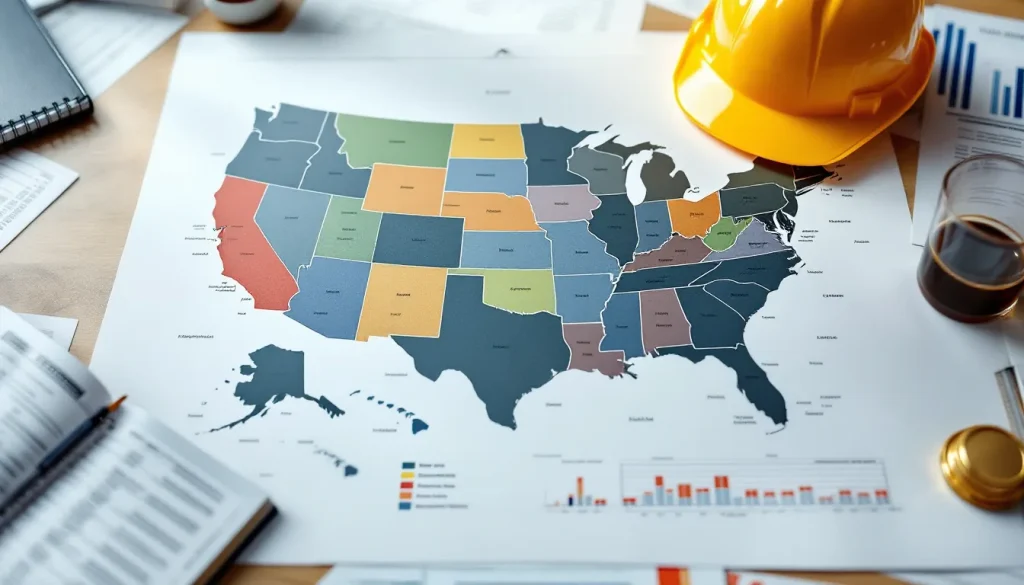
The state roofing code licensing report 2026 from The Roofing Brief Research Team compiles, for all 50 US states and the District of Columbia, the contractor-licensing authority, the roofing-specific license class where one exists, bond and continuing-education requirements, the currently adopted International Residential Code (IRC) edition, and the wind, hail, and energy-code overlays that determine which jobs can legally be permitted and insured. The licensing landscape is genuinely scattered: roughly half of US states impose a statewide contractor license, the other half delegate to counties and cities, and the building-code picture splits between IRC 2024 early adopters, a large IRC 2021 middle, and a long tail still on IRC 2018 or older. This is the reference compilation no single state board publishes.
Headline findings
- Of 50 US states, 27 require a statewide contractor license that covers (or specifically classifies) roofing work; 23 leave licensing to municipalities or impose only a home-improvement registration that confers no skill credential.
- Only 10 states designate a roofing-specific specialty class (California C-39, Florida CRC and RRC, Hawaii C-39, Nevada C-15a, Arizona R-42, Utah S280, Minnesota Residential Roofer, Oklahoma Residential Roofing Endorsement effective July 1, 2026, Louisiana Residential Roofing, Wisconsin Dwelling Contractor Roofing endorsement).
- IRC 2024 statewide adoption is still rare in mid-2026. North Carolina, Virginia, Washington, and Maryland sit in the front review wave; most adoptions are expected to land in late 2026 or 2027. IRC 2021 is the most common base, in force in roughly 20 states. IRC 2018 still anchors residential code in another large block including Texas (residential), Oklahoma, Mississippi, Arkansas, Kentucky, Alabama, and Wisconsin.
- Florida is the only state running a wholly state-authored code: the Florida Building Code 8th Edition (2023) is in force statewide as of December 31, 2023, with the 9th Edition (2026) scheduled to take effect December 31, 2026. The High Velocity Hurricane Zone (HVHZ) covers Miami-Dade and Broward counties only.
- California’s Title 24 Part 6 cool-roof and energy provisions moved to the 2025 edition effective January 1, 2026, retaining prescriptive cool-roof solar reflectance and thermal emittance requirements for low-slope and steep-slope reroofs.
- ASCE 7-22 wind speed maps now anchor design wind loads in Florida, the Gulf Coast, the Atlantic Coast, the central Plains tornado alley, and Hawaii. Texas Tech University’s Wind Science and Engineering data continues to feed the underlying tornado-region inputs.
- Class 4 impact-resistant shingle insurance discounts are available in at least 26 states by state-level mandate, regulator-published guidance, or carrier-filed schedule. Discounts range from 5 percent to 35 percent of the wind-and-hail premium component.
- Florida’s Assignment of Benefits (AOB) and one-way attorney-fees reforms enacted under HB 837 (2023) and SB 2A (2022) remain the strictest in the country. Residential roofing-specific cancellation rights tightened further under HB 715 (2025), signed May 19, 2025, which narrowed the 10-day cancellation window to contracts executed within 180 days of a declared state of emergency in the affected area.
Methodology and sources
The Roofing Brief Research Team compiled this report by querying each state’s contractor licensing board, building-code adoption page, and (where applicable) energy-code or insurance-department records during the week of June 16, 2026. Bond, continuing-education, and license-class data were taken directly from state board rules and statutes. Building-code editions were cross-referenced against the International Code Council’s Master I-Code Adoption Chart, the Insurance Institute for Business and Home Safety (IBHS) state code adoption rating, and individual state code council bulletins. Wind-speed and seismic data come from ASCE 7-22 and the published Florida Building Code wind maps. Insurance and AOB references come from state department of insurance bulletins, particularly the Florida Office of Insurance Regulation, the Texas Department of Insurance, the Oklahoma Insurance Department, and the National Association of Insurance Commissioners. All figures and code editions were verified the week of publication.
The state contractor licensing landscape: a structural overview
US roofing-contractor regulation is built in three layers: a statewide license issued by a contractor board or department of licensing, a municipal license or permit (for the full data set, see the 2026 Permit and Inspection Database) at the city or county level, and a home-improvement registration that is essentially a consumer-protection filing with no skill-test component. The split between these layers determines almost everything else about how a roofing contractor runs a business: bonding cost, advertising rights, lien rights, the legal threshold above which a job requires a permit, and the level of scrutiny attached to insurance-claim work.
Statewide license with a roofing-specific class
Ten states issue a license that explicitly classifies roofing as a distinct specialty. California’s Contractors State License Board (CSLB) issues the C-39 Roofing Contractor classification. Florida’s Construction Industry Licensing Board (CILB) issues two: the Certified Roofing Contractor (CRC), valid statewide, and the Registered Roofing Contractor (RRC), valid only in the local jurisdiction that issued the underlying competency exam. Hawaii’s Department of Commerce and Consumer Affairs (DCCA) issues a C-39 Roofing Contractor specialty subclass. Nevada’s State Contractors Board (NSCB) issues the C-15a Roofing classification. Arizona’s Registrar of Contractors (ROC) issues the R-42 Residential Roofing specialty. Utah’s Division of Professional Licensing (DOPL) issues the S280 Roofing specialty. Minnesota’s Department of Labor and Industry (DLI) issues a stand-alone Residential Roofer license. Wisconsin’s Department of Safety and Professional Services (DSPS) issues a Dwelling Contractor Restricted credential with a roofing-specific scope. Louisiana’s State Licensing Board for Contractors (LSLBC) added a Residential Roofing classification with a new lowered $7,500 project threshold effective January 1, 2026. Oklahoma’s Construction Industries Board (CIB) is rolling out a Residential Roofing Endorsement under HB 1628, requiring a passing exam score effective July 1, 2026.
Statewide license that absorbs roofing into a broader builder class
Roughly 17 states require a statewide license that covers roofing within a broader residential-builder, general-contractor, or specialty-contractor classification without naming roofing on its own. North Carolina, South Carolina, Georgia, Tennessee, Mississippi, Alabama, Virginia, West Virginia, Maryland, Delaware, Michigan, Oregon, Idaho, New Mexico, North Dakota, Montana, and Alaska sit in this band. The license is mandatory above a project-value threshold (often $30,000 to $50,000 for residential), but the credential does not test roofing-specific knowledge.
Local-only or registration-only states
The remaining states impose either a home-improvement-contractor registration that is essentially a consumer filing, or no state credential at all and delegate to local building departments. Texas, Pennsylvania, Massachusetts, New York, New Jersey, Connecticut, Rhode Island, New Hampshire, Maine, Vermont, Ohio, Illinois, Indiana, Iowa, Missouri, Kansas, Nebraska, Colorado, Wyoming, South Dakota, and Kentucky form this group. In Texas, the Texas Department of Licensing and Regulation (TDLR) regulates no roofing trade license at all; permits flow through municipal building departments, with Houston, Dallas, San Antonio, Austin, and Fort Worth each running their own. In Ohio, Illinois, Indiana, Missouri, and Colorado, municipal permits at the city level remain the only enforcement mechanism.
Building code adoption: IRC 2024 status by state in mid-2026
The International Residential Code is republished on a three-year cycle. The 2024 edition was completed in mid-2024 and made available for adoption through 2025. State-level adoption typically lags publication by 12 to 36 months. As of June 2026, no state had adopted IRC 2024 outright for statewide residential use, but several were in active review.
Active review and front-wave adopters
North Carolina, Virginia, Washington, Maryland, and Oregon sit in the front review wave for IRC 2024 with adoption decisions expected in late 2026 or early 2027. North Carolina’s Building Code Council has the most advanced 2024-cycle review, with the proposed 2024 NCRC under public comment in 2026. Virginia’s Department of Housing and Community Development opened review on the 2024 Virginia Construction Code (USBC) on a similar timeline.
IRC 2021 in force statewide
IRC 2021 anchors residential code in roughly 20 states. Florida operates the Florida Building Code 8th Edition (2023), which derives from the I-Codes 2021 cycle but is state-authored and amends substantially upward for wind, attachment, and secondary water barrier requirements. California’s Residential Code (CRC) 2022 derives from IRC 2021. Washington, Oregon, Utah, Colorado (where adopted locally), Montana, New Mexico, South Carolina, Maryland, Massachusetts (Ninth Edition), Connecticut (2022 State Building Code), New Jersey, and several Northeast states sit on IRC 2021.
IRC 2018 or older still in force
A long tail of states still anchor residential roofing to IRC 2018 or older. Texas operates under IRC 2018 for residential through Texas Industrialized Building Code Council rules, with municipal jurisdictions free to adopt newer. Oklahoma, Mississippi, Arkansas, Alabama, Kentucky, Wisconsin, Idaho, Louisiana, and North Dakota sit on IRC 2018. Wyoming and Missouri have no statewide residential code at all and leave adoption fully to municipalities. Hawaii operates under county-by-county adoption with Honolulu still on IRC 2018 as of mid-2026.
Florida Building Code and HVHZ requirements
Florida runs the most stringent and most centrally administered building code in the country. The Florida Building Code (FBC) 8th Edition (2023) took effect statewide on December 31, 2023, replacing the 7th Edition (2020). The Florida Building Commission adopts and amends the code through Chapter 553, Florida Statutes. The 9th Edition (2026) is scheduled to take effect December 31, 2026. Both editions incorporate ASCE 7-22 wind loads and Florida-specific roof attachment, sheathing nailing pattern, and secondary water barrier requirements.
The High Velocity Hurricane Zone (HVHZ) covers Miami-Dade and Broward counties only. HVHZ applies stricter testing, product approval, and installation standards under Chapter 15A and Chapter 16 of the FBC. Roofing products installed in the HVHZ must carry a Miami-Dade Notice of Acceptance (NOA) or a Florida Product Approval that includes HVHZ compliance. Outside HVHZ, the rest of coastal Florida sits in the Wind-Borne Debris Region (WBDR), which has its own product approval threshold but admits a broader product set. Inland Florida sits below the WBDR line and follows base FBC wind provisions.
Roof permit, inspection, and 25 percent rule provisions also vary by jurisdiction within Florida. The 25 percent rule, which required full reroofing when more than 25 percent of a roof was damaged, was relaxed under SB 4-D in 2022 for roofs installed under the 2007 or later FBC. The rule’s interaction with insurance-driven claims remains a frequent source of dispute and is covered in The Roofing Brief’s Florida AOB roofing reform briefing.
California Title 24 cool-roof requirements
California’s Title 24 Part 6 Building Energy Efficiency Standards moved to the 2025 edition effective January 1, 2026. Cool-roof prescriptive requirements under Sections 110.8 and 140.3 require a minimum aged solar reflectance and thermal emittance for low-slope and steep-slope reroofs in most California climate zones. Compliance is documented through Cool Roof Rating Council (CRRC) product labels. Title 24 also requires HERS verification of attic ventilation and insulation values on reroof projects that touch the deck. The 2025 edition retained the 2022 cool-roof structure with incremental tightening for low-slope nonresidential reroofs in inland climate zones.
Hurricane states: wind-zone and uplift requirements
Florida, the Gulf Coast (Alabama, Mississippi, Louisiana, Texas), and the Atlantic Coast from Georgia north through North Carolina, South Carolina, Virginia, Maryland, Delaware, New Jersey, and the Eastern Long Island portion of New York operate under ASCE 7-22 wind speed maps with site-specific design wind speeds ranging from 130 mph (Risk Category II) to 180 mph and higher in HVHZ Florida. Wind-borne debris regions extend inland up to roughly 1 mile from the coast. Texas operates a separate Texas Department of Insurance (TDI) windstorm certification program for the 14 first-tier coastal counties through the Texas Windstorm Insurance Association (TWIA), which requires inspection and a Certificate of Compliance (WPI-8) for insurability.
Hail states: Class 4 IR shingle insurance discount availability
Class 4 impact-resistant (IR) asphalt shingles, certified under UL 2218 Class 4 (the highest of four classes), qualify for an insurance premium discount in at least 26 states. The discount applies to the wind-and-hail component of the homeowners premium and ranges from 5 percent to 35 percent depending on carrier and state. Texas, Oklahoma, Kansas, Missouri, Colorado, Nebraska, South Dakota, North Dakota, Iowa, Minnesota, Arkansas, Louisiana, Mississippi, Alabama, and Tennessee all have major carriers filing IR discounts. Oklahoma’s Insurance Department publishes an official IR-shingle discount bulletin. Texas’s TDI maintains a comparable bulletin. California, Florida, and the Atlantic Coast states see narrower IR adoption because the dominant peril is wind rather than hail. Background on the underlying product testing is collected in The Roofing Brief’s Class 4 impact-resistant shingle guide.
State-by-state contractor licensing table (all 50 states plus DC)
| State | Authority | License or Class | Bond | CE Hours | Statewide? |
|---|---|---|---|---|---|
| Alabama | AL HBLB / LCB | Residential Roofer (HBLB) above $10K; General Contractor (LCB) above $50K | None statewide; insurance required | None statewide | Threshold |
| Alaska | AK DCBPL | General Contractor / Specialty | $10K-$25K | None | Yes |
| Arizona | AZ ROC | R-42 Residential Roofing (KB-1 is dual residential/commercial GC, which also covers roofing) | $9K-$100K, scaled | None statewide | Yes |
| Arkansas | AR CLB | Residential Roofing Contractor | None set; financial statement | None | Above $2K |
| California | CSLB | C-39 Roofing Contractor | $25,000 (SB 607; bond effective Jan 1, 2023) | None for renewal | Yes |
| Colorado | None statewide | Municipal (Denver, Boulder, Colorado Springs, Aurora) | Varies by city | Varies by city | No |
| Connecticut | CT DCP | Home Improvement Contractor registration | None; GL required | None | Yes (HIC) |
| Delaware | DE DOR | Contractor License | Varies; GL required | None | Yes |
| Florida | DBPR / CILB | Certified Roofing Contractor (CRC); Registered Roofing Contractor (RRC) | None statewide; financial responsibility under Rule 61G4-15.005 | 14 hrs biennial | Yes |
| Georgia | GA SLBGC | Residential Basic / Residential General | $25K-$150K (or financial statement) | None | Yes |
| Hawaii | DCCA Contractors Board | C-39 Roofing Contractor | $5K-$300K, case-by-case | None for C-39 | Yes |
| Idaho | ID DOL / Bureau of Occupational Licenses | Contractor Registration | None; GL required | None | Yes (registration) |
| Illinois | IL IDFPR | Roofing Industry Licensing Act license | $10K | None | Yes |
| Indiana | None statewide | Municipal permit only | Varies | Varies | No |
| Iowa | IA Workforce Development | Construction Contractor Registration | None; insurance required | None | Yes (registration) |
| Kansas | None statewide | Municipal permit; some counties register | Varies | Varies | No |
| Kentucky | None statewide | Municipal permit | Varies | None | No |
| Louisiana | LSLBC | Residential Roofing (new $7,500 threshold Jan 1, 2026) | None; GL $100K minimum | 6 hrs annually | Yes |
| Maine | None statewide | Home Construction Contract Act applies; no license | None | None | No |
| Maryland | MHIC | Home Improvement Contractor | None; guaranty fund | None | Yes (HIC) |
| Massachusetts | BBRS / OCABR | CSL Construction Supervisor + HIC Home Improvement Contractor | None; HIC guaranty fund | 12 hrs / 2 yrs (general CSL); 6 hrs / 2 yrs (Specialty CSL Roof Covering) | Yes |
| Michigan | LARA | Residential Builder; Maintenance & Alteration (Roofing) | None; insurance required | 21 hrs / 3 yrs | Yes |
| Minnesota | MN DLI | Residential Roofer | $15K recovery fund | 7 hrs annually (Residential Roofer) | Yes |
| Mississippi | MSBOC | Residential Builder above $50K | None; financial statement | None | Above $50K |
| Missouri | None statewide | Municipal permit; St. Louis, KC license roofers | Varies | Varies | No |
| Montana | MT CRD | Independent Contractor Registration | None; workers’ comp | None | Yes (registration) |
| Nebraska | NE DOL | Contractor Registration | None statewide; municipal varies | None | Yes (registration) |
| Nevada | NSCB | C-15a Roofing | $1K-$500K, scaled | None statewide | Yes |
| New Hampshire | None statewide | No state license | None | None | No |
| New Jersey | NJ DCA | Home Improvement Contractor registration | None; GL $500K | None | Yes (HIC) |
| New Mexico | NMRLD CID | GB-2 Residential General; GB-98 specialty | $10K (homeowner recovery) | None | Yes |
| New York | None statewide | NYC DCA HIC; county-level elsewhere | $20K NYC HIC trust fund | None statewide | No |
| North Carolina | NCLBGC | Limited / Intermediate / Unlimited (Building classification) | $175K / $500K / $1M (or financials) | 8 hrs annually | Above $40K |
| North Dakota | ND SOS | Contractor License above $4K | None; insurance | None | Above $4K |
| Ohio | None statewide | Municipal permit; commercial under OCILB | Varies | None statewide | No |
| Oklahoma | OK CIB | Roofing Contractor Registration; Residential Roofing Endorsement eff July 1, 2026 (HB 1628) | $5K-$10K + GL | 10 hrs CE during grandfather window Jan 1, 2027 – Jan 1, 2028 (HB 1628); 4 hrs annually thereafter | Yes |
| Oregon | OR CCB | Residential General; Residential Specialty | $15K (specialty); $20K (general) | 8-16 hrs / 2 yrs (tenure-based) | Yes |
| Pennsylvania | PA AG HICPA | Home Improvement Contractor registration | None; GL $50K minimum | None | Yes (HIC) |
| Rhode Island | RI CRB | Contractor Registration | None; insurance | 5 hrs CE | Yes (registration) |
| South Carolina | SC LLR | Residential Specialty Contractor (Roofing) | $5K (registered) / $10K (licensed) | None for specialty | Yes |
| South Dakota | None statewide | Sales-tax license; municipal permit | None | None | No |
| Tennessee | TN BCBLB | Contractor License above $25K | None; financial statement | None | Above $25K |
| Texas | None statewide | Municipal permit (Houston, Dallas, San Antonio, Austin, Fort Worth) | Varies by city | None | No |
| Utah | DOPL | S280 Roofing | $50K | 6 hrs / 2 yrs | Yes |
| Vermont | None statewide | Residential Contractor Registration (over $10K) | None | None | Yes (registration) |
| Virginia | DPOR Board for Contractors | Class A / B / C with RBI or ROC specialty | $50K bond (or financial) | 3 hrs / 2 yrs (qualifying individual) | Yes |
| Washington | WA L&I | Contractor Registration (General or Specialty) | $30K general; $15K specialty | None | Yes (registration) |
| West Virginia | WV DOL | Contractor License (above $2,500) | None; GL required | None | Yes |
| Wisconsin | WI DSPS | Dwelling Contractor + Restricted Roofing endorsement | None; insurance | 12 hrs / 2 yrs | Yes |
| Wyoming | None statewide | Municipal permit | Varies | None | No |
| DC | DCRA / BBL | Basic Business License (Home Improvement Contractor) | $25K bond | None | Yes |
State-by-state building code adoption table
| State | Residential Code | Commercial Code | Wind Design Basis | Notable Amendments |
|---|---|---|---|---|
| Alabama | IRC 2021 (state minimum) | IBC 2021 | ASCE 7-22 coastal | Coastal counties layer hurricane provisions |
| Alaska | IRC 2018 (Anchorage 2021) | IBC 2021 | ASCE 7-16/22 | Snow load dominates design |
| Arizona | IRC 2018 (locally up to 2021) | IBC 2018-2021 | ASCE 7-22 desert wind | Phoenix at IRC 2018 with amendments |
| Arkansas | IRC 2018 | IBC 2018 | ASCE 7-16 | Tornado hardening voluntary |
| California | CRC 2022 (from IRC 2021) | CBC 2022 | ASCE 7-22 + state amendments | Title 24 cool-roof; WUI Chapter 7A |
| Colorado | No statewide; municipal IRC 2021 typical | Municipal | ASCE 7-22 hail/wind | Denver, Boulder lead adoption |
| Connecticut | 2022 State Building Code (IRC 2021) | 2022 SBC (IBC 2021) | ASCE 7-16/22 | Coastal wind-borne debris |
| Delaware | IRC 2018 (state); county amendments | IBC 2018-2021 | ASCE 7-16 coastal | Sussex County coastal overlay |
| Florida | FBC 8th Edition (2023) | FBC 8th Edition (2023) | ASCE 7-22 + state wind map | HVHZ Miami-Dade/Broward; 9th Ed Dec 31, 2026 |
| Georgia | IRC 2018 with state amendments | IBC 2018 | ASCE 7-16 coastal | Chatham, Glynn coastal overlay |
| Hawaii | IRC 2018 (county adoption; Honolulu 2018) | IBC 2018 | ASCE 7-22 hurricane | Honolulu County review for 2021 |
| Idaho | IRC 2018 | IBC 2018 | ASCE 7-16 | Seismic in eastern Idaho |
| Illinois | No statewide; municipal varies | Municipal | ASCE 7-16/22 | Chicago Building Code separate |
| Indiana | Indiana Residential Code 2020 (IRC 2018 base) | IBC 2014 base | ASCE 7-16 | Code lag well known |
| Iowa | No statewide residential | IBC 2018 commercial | ASCE 7-16 | Tornado risk; voluntary FORTIFIED uptake |
| Kansas | No statewide | Municipal | ASCE 7-22 tornado | Wichita, Topeka, KCK enforce IRC |
| Kentucky | KY Residential Code 2018 | KBC 2018 | ASCE 7-16 | Tornado strap voluntary |
| Louisiana | IRC 2018 (state minimum) | IBC 2018 | ASCE 7-22 coastal | State Uniform Construction Code Council |
| Maine | IRC 2015 (MUBEC); voluntary in towns under 4,000 | IBC 2015 | ASCE 7-10 | Code lag noted by IBHS |
| Maryland | IRC 2021 (MBPS) | IBC 2021 | ASCE 7-16/22 coastal | Eastern Shore wind overlay |
| Massachusetts | Massachusetts Ninth Edition (IRC 2021) | Ninth Edition (IBC 2021) | ASCE 7-16/22 | Stretch energy code overlay |
| Michigan | 2015 MRC base (IRC 2015) with 2021 amendments | 2015 MBC | ASCE 7-10 | Code lag widely cited |
| Minnesota | MN Residential Code (IRC 2020-base) | IBC 2020-base | ASCE 7-16 | Snow and wind hybrid |
| Mississippi | IRC 2018 (coastal counties only mandatory) | IBC 2018 | ASCE 7-22 coastal | Inland counties voluntary |
| Missouri | No statewide | Municipal | ASCE 7-22 | St. Louis, KC, Springfield enforce |
| Montana | IRC 2021 | IBC 2021 | ASCE 7-22 snow | Snow load dominates |
| Nebraska | NE State Code IRC 2018 | IBC 2018 | ASCE 7-16 | Tornado voluntary |
| Nevada | IRC 2018 (state minimum) | IBC 2018 | ASCE 7-16 | Clark County newer |
| New Hampshire | IRC 2018 (state minimum) | IBC 2018 | ASCE 7-16 | Local adoption optional |
| New Jersey | NJ UCC (IRC 2021) | NJ UCC (IBC 2021) | ASCE 7-16/22 coastal | Coastal AE/VE flood overlay |
| New Mexico | NMRBC 2018 (IRC 2018) | IBC 2018 | ASCE 7-16 | Energy code Title 14 overlay |
| New York | NY UCC (IRC 2020) | NY UCC (IBC 2020) | ASCE 7-16/22 coastal | NYC code separate; Long Island coastal |
| North Carolina | NCRC 2018 (2024 review under way) | NCBC 2018 | ASCE 7-22 coastal | OBX wind-borne debris |
| North Dakota | IRC 2021 (state minimum) | IBC 2021 | ASCE 7-16 | Snow load dominates |
| Ohio | Ohio Residential Code 2019 (IRC 2018 base) | OBC 2017 | ASCE 7-16 | Cleveland, Columbus, Cincinnati amendments |
| Oklahoma | IRC 2018 (state minimum) | IBC 2018 | ASCE 7-22 tornado | OKC and Tulsa enforce |
| Oregon | ORSC 2023 (IRC 2021 base) | OSSC 2022 | ASCE 7-22 coastal | Energy code Reach 2030 |
| Pennsylvania | UCC IRC 2018 | UCC IBC 2018 | ASCE 7-16 | Local opt-out historically broad |
| Rhode Island | RI State Building Code (IRC 2018) | IBC 2018 | ASCE 7-16/22 coastal | Coastal wind-borne debris |
| South Carolina | IRC 2021 (state) | IBC 2021 | ASCE 7-22 coastal | Coastal counties WBDR overlay |
| South Dakota | No statewide | Municipal | ASCE 7-16 tornado | Sioux Falls, Rapid City enforce |
| Tennessee | IRC 2018 (state minimum) | IBC 2018 | ASCE 7-16 | Tornado voluntary FORTIFIED |
| Texas | IRC 2018 residential (jurisdictional) | IBC 2024 commercial (TDI) | ASCE 7-22 + TDI WPI-8 coastal | 14 coastal counties TWIA inspection |
| Utah | IRC 2021 (state amendments) | IBC 2021 | ASCE 7-22 seismic | Wasatch fault seismic overlay |
| Vermont | VT RBES (IRC 2015 base) + 2024 stretch | IBC 2015 | ASCE 7-10 | Energy code stronger than building code |
| Virginia | VRC 2021 (USBC) | VCC 2021 | ASCE 7-22 coastal | 2024 USBC under review |
| Washington | WSRC 2021 | WSBC 2021 | ASCE 7-22 coastal | Energy code among strictest |
| West Virginia | IRC 2018 (state minimum) | IBC 2018 | ASCE 7-16 | Local opt-out broad |
| Wisconsin | Uniform Dwelling Code (IRC 2015 base) | IBC 2015 | ASCE 7-10 | Code lag widely cited |
| Wyoming | No statewide | Municipal | ASCE 7-16/22 | Cheyenne, Casper enforce IRC 2018 |
| DC | DC Construction Codes 2017 (IRC 2015 base) + 2022 amendments | DC Construction Codes 2017 | ASCE 7-16 | Code update under DOB review |
What this means for the audiences this report serves
For homeowners
Verify the contractor’s state credential before signing. In California, ask for the CSLB C-39 number and confirm it on the CSLB online lookup. In Florida, distinguish between a CRC (statewide) and an RRC (local only). In states with no statewide license (Texas, Ohio, Illinois, Indiana, Missouri, Colorado, Wyoming, the New England states except Massachusetts, and the Mid-Atlantic registration-only states), shift the vetting load to insurance certificates, manufacturer credentials, BBB record, and references. The full vetting checklist is in The Roofing Brief’s best roofing contractor near you guide, and the right pre-contract probes are listed in questions to ask any roofing contractor.
For contractors
Multi-state operators face a real compliance burden. A Florida CRC does not transfer to California, Texas, or any other state, although several states offer reciprocity for parts of the exam (Georgia, Tennessee, and South Carolina, for example, recognize NASCLA accreditation as a substitute for the trade portion). The contract documents that hold up across this patchwork are covered in The Roofing Brief’s roofing contract template, and pre-job permit timelines vary widely (see the roof permit cost and process guide). Bonds vary from no requirement at all in Maine and New Hampshire to a $50,000 floor in Utah and $25,000 in California after SB 607. Continuing education ranges from zero in California, Nevada, and Arizona to 14 hours biennially in Florida (with 1 hour of wind mitigation training) and 21 hours every three years in Michigan. Manufacturer credential planning matters more in states without strong licensing because the GAF Master Elite or Owens Corning Platinum Preferred badge becomes the operative consumer-trust filter.
For suppliers and distributors
Distributor credit policies, contractor-account onboarding, and manufacturer co-op program eligibility all hinge on license status. In statewide-license states, the credential is a clean filter. In local-only states, distributors typically substitute municipal permit history, insurance certificates, and credit bureau data. For private-equity-backed roll-ups acquiring across state lines, the licensing patchwork is one of the most underappreciated integration costs: every acquired branch needs its qualifying individual relicensed (or a new qualifier appointed) under the acquirer’s name, and the transition window is typically 30 to 120 days depending on state board policy.
Sources cited
California Contractors State License Board (CSLB) license classifications and SB 607 bond schedule. Florida Department of Business and Professional Regulation, Construction Industry Licensing Board, Chapter 489 Florida Statutes, Rule 61G4-15.005 and Rule 61G4-18.001. Florida Building Commission, Florida Building Code 8th Edition (2023) and 9th Edition (2026 schedule). North Carolina Licensing Board for General Contractors classifications and project-value tiers. Nevada State Contractors Board, NAC 624, classification C-15a. Arizona Registrar of Contractors, R-42 and KB-1 classifications, bond schedule. Utah Division of Professional Licensing, Utah Admin Code R156-55a, S280 Roofing. Oregon Construction Contractors Board CE rules. Washington Department of Labor and Industries Contractor Registration. Oklahoma Construction Industries Board, HB 1628 (effective July 1, 2026). Louisiana State Licensing Board for Contractors, Residential Roofing memo August 2025. Virginia Department of Professional and Occupational Regulation, Board for Contractors. Hawaii Department of Commerce and Consumer Affairs Contractors License Board. International Code Council Master I-Code Adoption Chart. Insurance Institute for Business and Home Safety state code rating. California Energy Commission Title 24 Part 6 (2025 edition effective Jan 1, 2026). ASCE 7-22 Minimum Design Loads. Texas Department of Insurance Texas Windstorm Insurance Association WPI-8. Oklahoma Insurance Department impact-resistant shingle bulletin. National Association of Insurance Commissioners.
Methodology note
This compilation was assembled from primary state board sources, the ICC adoption chart, and IBHS state code analyses during the week of June 16, 2026. State licensing rules change frequently. Oklahoma’s HB 1628 endorsement, Louisiana’s $7,500 residential roofing threshold, and California’s Title 24 2025 edition all took effect inside the 2025-2026 window and reset assumptions that older third-party guides still carry. Readers planning to bid, hire, or audit work across multiple states should confirm directly with the state board before relying on this table, and contractors moving across state lines should request a reciprocity confirmation in writing.