
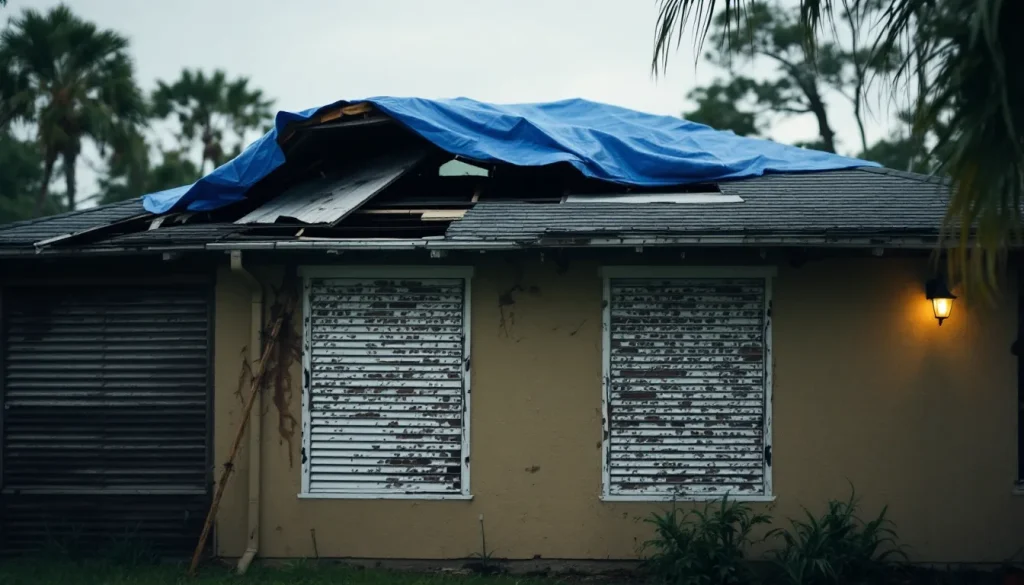
The florida (see our Florida residential roofing cooldown) aob roofing landscape changed permanently between 2019 and 2023 through a series of legislative reforms that all but eliminated the old Assignment of Benefits model. SB 76 (signed 2021) imposed pre-suit notice and itemized estimate requirements, capped attorney fees on AOB-related suits, and gave homeowners new cancellation rights. HB 837 (signed 2022) ended one-way attorney fee awards across most insurance litigation. SB 2-A (signed December 2022) finished the job by eliminating the statutory right to assign benefits for residential and commercial property insurance claims altogether for policies issued or renewed after specific dates. Today, the AOB-driven roofing claim playbook that powered much of Florida’s storm-restoration industry from 2010 to 2020 is essentially dead, and contractors who have not adapted face severe compliance and liability exposure.
This guide walks through what each reform changed, what is still legally allowed, what the practical workflow looks like under current rules, and how homeowners, contractors, and out-of-state operators should think about the post-AOB Florida market. It is written for roofing contractors operating in Florida, homeowners considering filing a claim, and anyone trying to make sense of how the state went from AOB-friendly to AOB-hostile in less than three years.
The short version
- Florida’s statutory right to assign property insurance benefits has been eliminated for residential and commercial policies issued or renewed under the post-SB 2-A regime.
- For pre-reform policies and limited remaining cases, SB 76 imposes a 10-business-day pre-suit notice, itemized estimate disclosure capped at 10x material cost, and 14-day cancellation rights.
- HB 837 eliminated the one-way attorney fee award that had made AOB litigation economically attractive for plaintiff firms.
- Direct repair (homeowner stays on the claim) is now the dominant compliant path. Contractors negotiate the claim with the carrier only with proper authority and disclosures.
- Citizens Property Insurance and private carriers handle claims differently under the new rules; Citizens has aggressive managed-repair pathways that displace traditional contractor scope.
The Short Answer: What HB 7065 + SB 76 Changed
Florida’s AOB reform did not happen in one bill. It happened across at least four major legislative actions over five sessions, plus regulatory follow-on from the Office of Insurance Regulation and the Department of Financial Services. The most important pieces:
| Law | Year | What it changed |
|---|---|---|
| HB 7065 | 2019 | First major AOB reform. Required written estimates, gave consumers right to rescind, capped attorney fees in some cases. |
| SB 76 | 2021 | Roofing-specific reforms. Pre-suit notice, itemized estimate cap at 10x material cost, prohibition on solicitation tied to public adjuster prohibitions. |
| HB 837 | 2022 | Sweeping civil litigation reform. Eliminated one-way attorney fee statutes that incentivized AOB litigation. |
| SB 2-A | December 2022 special session | Eliminated the statutory right to assign benefits for residential and commercial property insurance policies going forward. |
The combined effect is that the AOB economic model is no longer viable for new contracts in the way it was for the prior decade. Contractors who used to take a homeowner’s assignment, file a suit against the carrier for underpayment, and recover the contracted amount plus attorney fees under the one-way fee statute no longer have that recovery pathway. The legal infrastructure that supported tens of thousands of roofing claim cases per year has been dismantled. Operators who relied on AOB for revenue have either pivoted to direct contracting, exited the market, or shifted to other states.
What AOB Was Originally (and Why It Got Abused)
Assignment of Benefits was a long-standing legal doctrine in Florida that let a homeowner transfer their right to insurance proceeds to a third party, usually a contractor performing the repair. The contractor would then deal directly with the carrier, pursue payment, and (under the one-way attorney fee statute) recover their fees from the carrier if they prevailed in court.
In theory, AOB protected homeowners. They did not have to manage the claim process, they did not face out-of-pocket payment risk if the carrier underpaid, and they could focus on getting their roof fixed. In practice, the system was abused at scale. The pattern that emerged:
- A homeowner reports hail or wind damage.
- A storm-chasing contractor goes door-to-door and signs the homeowner to a contract that includes an AOB clause.
- The contractor files a claim against the carrier, often with inflated scope and pricing.
- The carrier pushes back or underpays.
- The contractor’s attorney files suit. Under the one-way fee statute, the contractor’s attorney fees are recoverable from the carrier even if the case settles for a fraction of the original demand.
- The carrier settles to avoid fees that often exceeded the underlying damages.
The result was a flood of AOB litigation. By 2017, Florida had more property insurance lawsuits than the rest of the United States combined. Insurance carriers exited the Florida market in waves, and the remaining carriers raised premiums dramatically. AOB reform became a top-tier legislative priority for the state’s property insurance crisis. The reforms below are the legislative response.
The 2021 SB 76 Roofing-Specific Changes
SB 76 was the first reform to target roofing specifically. Key provisions:
- Pre-suit notice requirement. A contractor or attorney must give the carrier at least 10 business days notice before filing suit. The notice must include the demand amount, the supporting estimate, and the disputed amount.
- Itemized estimate disclosure. The contractor’s estimate provided to the homeowner cannot exceed 10 times the cost of the materials at retail. This was designed to stop the practice of pricing roofs at 5x to 8x material cost with massive labor markups.
- 14-day cancellation right. A homeowner can cancel a residential roofing contract within 14 days of signing for any reason without penalty.
- Solicitation restrictions. A contractor cannot solicit work tied to an insurance claim through prohibited methods, including offering to pay or waive the deductible.
- Attorney fee cap on AOB suits. Attorney fees recoverable from carriers in AOB suits became subject to a multiplier calculated based on the ratio of the judgment to the original demand. Suits where the judgment was a small fraction of the demand recovered substantially smaller fees.
For roofing contractors operating in 2021 and 2022, SB 76 reshaped daily operations. The 10x material cost cap on estimates meant that line-item pricing had to be defensible against an audit. The pre-suit notice meant that disputes could no longer be turned into lawsuits without a documented attempt to resolve. The cancellation right meant that aggressive door-to-door tactics could be undone by the homeowner with no recourse.
The 2022 HB 837 Sweeping Tort Reform
HB 837 was the broader civil litigation reform. It was not specific to property insurance, but its impact on AOB roofing litigation was catastrophic for the AOB economic model. The key changes:
| HB 837 Provision | Pre-2022 rule | Post-2022 rule |
|---|---|---|
| One-way attorney fees in property insurance suits | Insured / assignee recovered fees from carrier if they prevailed | One-way attorney fee statutes for property insurance largely eliminated. Fees follow standard American rule (each side pays own). |
| Bad faith claims | Easier to bring | Higher threshold to bring; pre-suit notice and good-faith offer required |
| Comparative negligence | Pure comparative | Modified comparative (51 percent bar) |
| Statute of limitations for negligence | 4 years | 2 years |
The elimination of the one-way attorney fee statute was the single most important change for the AOB economic model. The whole point of the AOB-and-sue playbook was that the contractor’s attorney could recover their fees from the carrier even if they only won a small portion of the disputed amount. Take away the fee recovery, and the math behind filing thousands of small AOB suits per year stops working. Plaintiff law firms that specialized in AOB roofing work either pivoted to other practice areas or closed.
What’s Still Allowed Under New Rules
The combined reforms did not ban roofing contractors from working on insurance claims. They restricted how the work can be structured and how disputes can be litigated. Below is what remains legally allowed today:
- Direct contract with the homeowner. A contractor can contract directly with the homeowner for roof repair or replacement work and accept assignment of insurance proceeds for that specific work, subject to current statutory requirements.
- Estimate development and submission. A contractor can prepare a written estimate for the homeowner’s use in the claim and can communicate that estimate to the carrier on the homeowner’s behalf with proper authority.
- Field inspection alongside the carrier’s adjuster. A contractor can meet the carrier’s field adjuster on site and walk the roof with them to discuss scope.
- Supplemental claim documentation. A contractor can document additional damage discovered during the work and submit supplements to the carrier for additional payment.
- Final payment collection from the homeowner. The homeowner remains responsible for paying the contracted amount, with insurance proceeds being one source of those funds.
What is no longer allowed (or is now severely restricted):
- Full assignment of policy benefits to the contractor in lieu of direct payment to the homeowner.
- Acting as a public adjuster (negotiating claim scope and value) without a separate Florida public adjuster license.
- Soliciting work in ways that promise to pay or waive the homeowner’s deductible.
- Door-to-door solicitation tied to a specific weather event without the disclosures and cancellation rights now required.
- Filing suit against the carrier without first issuing a compliant pre-suit notice.
The Pre-Notice Requirement (10 business days before suit)
The 10-business-day pre-suit notice requirement applies to most claims against carriers under current Florida law. The notice must include specific elements:
| Pre-suit notice element | What it must include |
|---|---|
| Demand amount | Specific dollar amount the insured (or assignee) is demanding |
| Disputed amount | The difference between what the carrier paid and what is being demanded |
| Estimate or evidence | The itemized estimate or other evidence supporting the demand |
| Policy identification | The policy number and the carrier’s identifying claim number |
| Attorney information (if represented) | The attorney of record’s contact details |
The carrier then has 10 business days to respond, either by paying the demanded amount, offering a different amount, or stating the basis for denial. Suits filed before the 10-business-day period expires are subject to dismissal. The pre-suit notice serves as a forcing function to resolve disputes without litigation; the system was designed to handle the kinds of disputes that previously turned into immediate lawsuits.
Attorney Fee Award Changes (this is the big one)
The one-way attorney fee statute (the previous Florida Statute Section 627.428 framework) had been the structural pillar of AOB litigation economics for decades. Under the pre-reform rule, an insured who prevailed against a carrier in property insurance litigation was entitled to recover their attorney fees from the carrier as a matter of statute. This created an asymmetric incentive: plaintiff attorneys could pursue marginal cases knowing that even a small recovery would trigger fee shifting.
HB 837 (and SB 2-A subsequently) restructured this framework. Under current rules, attorney fee recovery in property insurance disputes follows the standard American rule with limited exceptions. Each party pays their own attorney fees unless a specific contract provision or remaining narrow statutory exception applies. The economic incentive to file marginal property insurance suits has largely been removed.
For roofing contractors operating today, the practical implication is that disputes with carriers are far more likely to be resolved through documentation, adjuster engagement, and (where needed) appraisal, rather than through litigation. Operators who relied on the threat of litigation as a negotiation tool have lost that pressure point.
Itemized Estimate Requirements (cannot exceed 10x material cost)
SB 76’s 10x material cost cap on the contractor’s estimate has been refined through follow-on regulation and case law. The cap applies to the total estimate provided to the homeowner; the labor, overhead, and profit components combined cannot push the total above 10x the documented retail material cost.
In practice, this is rarely a binding constraint for legitimate work. Industry-standard roofing pricing typically lands between 2x and 5x material cost depending on the system complexity, the geography, and the labor market. The 10x cap was designed to catch the extreme outliers, where storm-chasers had been pricing roofs at 8x to 12x material to maximize claim payouts.
| Roof system | Typical material-to-total ratio | Within 10x cap? |
|---|---|---|
| Asphalt shingle reroof, simple gable | 2.5x to 3.5x | Yes, comfortably |
| Concrete tile reroof, complex hip and valley | 3x to 5x | Yes |
| Metal standing seam, residential | 2x to 3.5x | Yes |
| Low-slope TPO commercial | 2x to 3x | Yes |
| Custom slate or copper | 1.5x to 2.5x | Yes (material itself is expensive) |
| Extreme storm-chaser pricing pre-reform | 8x to 12x | No, would exceed cap |
The cap is enforced through the carrier’s claim review process and through CILB complaints. A contractor who consistently submits estimates near or above the 10x threshold can be investigated by DBPR for unfair business practices under Chapter 489.
Cancellation Rights for Homeowners
The 14-day cancellation right introduced by SB 76 applies to residential roofing contracts. The contract must include the cancellation notice in writing, and the homeowner can cancel by delivering written notice to the contractor within the 14-day window without obligation to pay any portion of the contract.
Additional cancellation rights apply under specific circumstances:
- If the insurance carrier denies the claim in whole or substantial part, the homeowner can cancel without penalty.
- If the contractor fails to perform under the contract terms (delays, scope deviations), standard contract law remedies apply.
- The pre-existing Florida home solicitation sales 3-day cooling-off period also applies in many cases, giving homeowners overlapping cancellation rights for door-to-door contracts.
For contractors, these cancellation rights mean that aggressive door-to-door sales tactics now carry built-in cancellation risk that did not exist before. Operators have shifted toward homeowner-initiated lead generation and inbound channels to reduce cancellation exposure.
Direct Repair Path vs AOB Path
Under the current regulatory regime, the dominant compliant workflow is the direct repair path. The structure differs meaningfully from the old AOB model:
| Step | Old AOB path | Current direct repair path |
|---|---|---|
| Initial contract | Homeowner signs contract with AOB clause; benefits assigned to contractor | Homeowner signs direct contract with contractor for repair; no benefit assignment |
| Claim filing | Contractor (as assignee) files claim with carrier | Homeowner files claim with carrier; contractor provides documentation |
| Adjuster engagement | Contractor meets adjuster on site as the assignee | Contractor attends as homeowner’s representative under authority of homeowner |
| Scope negotiation | Contractor negotiates scope and price directly with carrier | Homeowner negotiates (with contractor input); public adjuster license required for paid negotiation |
| Payment path | Carrier pays contractor directly under the AOB | Carrier pays homeowner; homeowner pays contractor |
| Dispute resolution | Contractor sues carrier with attorney fee shifting | Pre-suit notice required; no fee shifting; appraisal is the common path |
The direct repair path requires more coordination and creates more friction, but it is the compliant model. Contractors who have built operations around it report that quality customer experience and clean documentation are now the primary competitive moats, rather than aggressive claim handling. Read our insurance claim filing guide for the homeowner-side workflow that complements this contractor-side workflow.
Storm Restoration Operator Implications
The reforms hit the storm-restoration segment harder than any other part of the Florida roofing industry. Multi-state storm-chasing operators who built their business on AOB economics had to fundamentally restructure or exit Florida. The realistic options were:
- Pivot to direct contracting with full pricing transparency. Compete on quality and price rather than on claim manipulation.
- Add a licensed public adjuster to the team. Public adjusters can legally negotiate claims for compensation; some operators created formal partnerships or hired in-house adjusters.
- Exit Florida and focus on storm work in Texas, Oklahoma, Tennessee, Kentucky, or other states with looser regimes. Many operators did this.
- Diversify into general residential reroofing. Move away from claim-driven revenue.
The Florida market post-reform has consolidated meaningfully. Operators with strong direct-to-consumer brand presence, clean compliance records, and capable manufacturer relationships have gained share at the expense of operators who relied on storm response. Operators considering Florida entry today should plan for direct-consumer marketing as the primary acquisition channel, not insurance claim conversion. Our Florida licensing guide covers the licensing prerequisites for any operator entering the market.
Homeowner Practical Guide: When AOB Still Makes Sense
For homeowners, the residual cases where AOB-style arrangements still make sense are narrow. Under current law for new policies, the statutory AOB right has been removed, but contractual arrangements that transfer specific rights to specific contractors for specific work remain possible within the constraints of the new framework.
Situations where it can still make practical sense to authorize a contractor to deal with the carrier (with proper licensing and disclosures):
- The homeowner is elderly, out of state, or otherwise unable to manage the claim process. A licensed public adjuster (not just the contractor) should be involved.
- The claim is complex with significant scope dispute that requires professional adjuster negotiation. A public adjuster can be retained for a percentage fee under Florida public adjuster rules.
- The contractor is willing to wait for direct payment from the carrier in a structured payment arrangement that does not constitute a full benefit assignment.
Situations where the homeowner should be wary of any AOB-style arrangement:
- The contractor is unwilling to put the contract terms in writing in detail.
- The contractor offers to “handle everything” without being a licensed public adjuster.
- The contractor offers to waive or rebate the deductible.
- The contractor pushes the homeowner to sign immediately after a storm without time to consider alternatives.
Contractor Liability Under New Rules
Contractor liability under the post-reform regime is broader than many operators initially recognize. The DBPR Construction Industry Licensing Board has taken the position that contractors who negotiate claim scope with carriers without a public adjuster license are engaged in unauthorized adjusting activity. Penalties include DBPR fines, license discipline, and potential criminal referral.
Specific liability exposures:
- Unlicensed public adjusting. Negotiating claim scope or value with a carrier for compensation, without a public adjuster license, is a violation of Florida insurance law.
- Unfair business practices under Chapter 489. Estimates exceeding the 10x material cost cap, solicitation in violation of restrictions, and failure to include statutory disclosures all expose the contractor to CILB action.
- Civil liability to the homeowner. Failure to perform under contract terms or failure to include cancellation notice can give the homeowner remedies including contract rescission and damages.
- Carrier subrogation and reverse-engineered fraud claims. Carriers have become more aggressive in pursuing contractors who they believe inflated scope or coordinated with public adjusters to extract excessive payments.
Carrier Claim Handling Differences (Citizens vs Private)
Citizens Property Insurance, Florida’s state-backed carrier of last resort, handles claims meaningfully differently from private carriers. Citizens has aggressively expanded its managed-repair program, in which the carrier engages preferred contractors directly to perform the repair work rather than paying cash to the homeowner.
| Dimension | Citizens Property Insurance | Private carriers |
|---|---|---|
| Managed repair program | Aggressive; preferred contractor network handles most roof claims | Varies by carrier; some offer it, some prefer cash settlement |
| Cash settlement option | Available but discouraged via deductibles and program structure | Usually default option |
| Contractor selection | Citizens network only for managed repair | Homeowner choice (with carrier scope agreement) |
| Scope dispute resolution | Internal escalation and appraisal | Field adjuster meet, supplements, appraisal |
| Time to first payment | Faster on managed repair; slower on cash settlement | Varies widely by carrier |
For independent roofing contractors, Citizens’ managed-repair structure has reduced the addressable market for Citizens-insured claims because the work goes to the preferred contractor network. Operators who want to access Citizens claims have generally pursued network membership, which has its own quality and pricing requirements.
Lawsuits Filed Under Old Rules vs New Rules
Cases filed before the effective date of each reform are governed by the rules in place at the time of filing. There remain a substantial number of open AOB cases working through the Florida courts under pre-reform rules, particularly cases tied to Hurricane Irma (2017), Hurricane Michael (2018), and earlier events.
For new claims and new contracts under current policies, the new rules apply. The distinction matters for contractors who are still owed payment on pre-reform AOB cases; those collection efforts proceed under the pre-reform framework. For new business, the new framework is the only legally compliant structure.
Operators tracking the legal environment should note that follow-on regulatory and judicial interpretation of the reforms continues to evolve. The DBPR, the Office of Insurance Regulation, the Department of Financial Services, and the Florida appellate courts have all issued interpretations that refine the operational rules. Compliance teams should monitor the rulemaking and case law on an ongoing basis, particularly through trade association updates and the Florida Bar Construction Law Section.
FAQs
Is AOB still legal in Florida?
The statutory right to assign property insurance benefits has been eliminated for residential and commercial property insurance policies issued or renewed under the post-SB 2-A framework. Contractual arrangements that transfer specific rights to a contractor for specific work remain possible within the constraints of current law, but the broad AOB framework that operated through the 2010s no longer applies to new policies.
Can a roofing contractor still negotiate with my insurance carrier?
A roofing contractor can attend a field adjuster meeting and discuss scope informally. Negotiating claim value for compensation generally requires a Florida public adjuster license. Contractors who routinely negotiate scope and value with carriers without a public adjuster license risk CILB discipline and potential insurance fraud exposure.
What is the 10x material cost rule in Florida roofing?
Under SB 76, the contractor’s estimate provided to the homeowner cannot exceed 10 times the documented retail cost of materials. Legitimate roofing projects typically run 2x to 5x material cost in total, so the cap is rarely a binding constraint for honest pricing. It exists to stop the practice of pricing roofs at 8x to 12x material cost to maximize claim payouts.
How long do I have to cancel a roofing contract in Florida?
Under SB 76, you have 14 days from signing to cancel a residential roofing contract for any reason without penalty. Additional cancellation rights apply if the insurance carrier denies the claim, if the contractor fails to perform, and (for door-to-door sales) under the 3-day federal cooling-off period. The cancellation notice must be in writing.
Can my roofing contractor pay or waive my deductible in Florida?
No. Florida law prohibits a contractor from paying, rebating, waiving, or absorbing any portion of the homeowner’s insurance deductible. Operators who advertise “no deductible” or “we’ll cover your deductible” are violating Florida law, and the homeowner who accepts the arrangement can also face insurance fraud exposure.
Do I need a public adjuster to file a roofing insurance claim in Florida?
Not necessarily. Many homeowners file claims directly with their carrier and work with the carrier’s field adjuster successfully. A public adjuster makes sense for complex claims with significant scope disputes, or for homeowners who do not have the time or expertise to manage the claim process. Public adjusters are paid a percentage of the settlement and are licensed by the Florida Department of Financial Services.
How has AOB reform affected roofing prices in Florida?
Reform has reduced the upward pricing pressure that came from claim inflation under the old AOB regime. Honest, well-run roofing operators report that pricing is now more closely tied to true labor and material costs. The carriers passing on the savings to homeowners has been more gradual, with rate stabilization showing up over multi-year cycles rather than immediately. Florida property insurance premiums remain among the highest in the United States despite the reforms.
What should I do if my roofing contractor pressures me to sign an AOB?
Decline and ask for a direct contract instead. Modern compliant Florida roofing operators offer direct contracts that do not require assignment of benefits. Any contractor pressuring you to sign an AOB despite the legal changes, or pressuring you to sign immediately after a storm without time to consider alternatives, is exhibiting warning signs that should make you walk away. Read our contractor selection guide for the full vetting checklist, and our insurance claim guide for the homeowner workflow under current rules.