
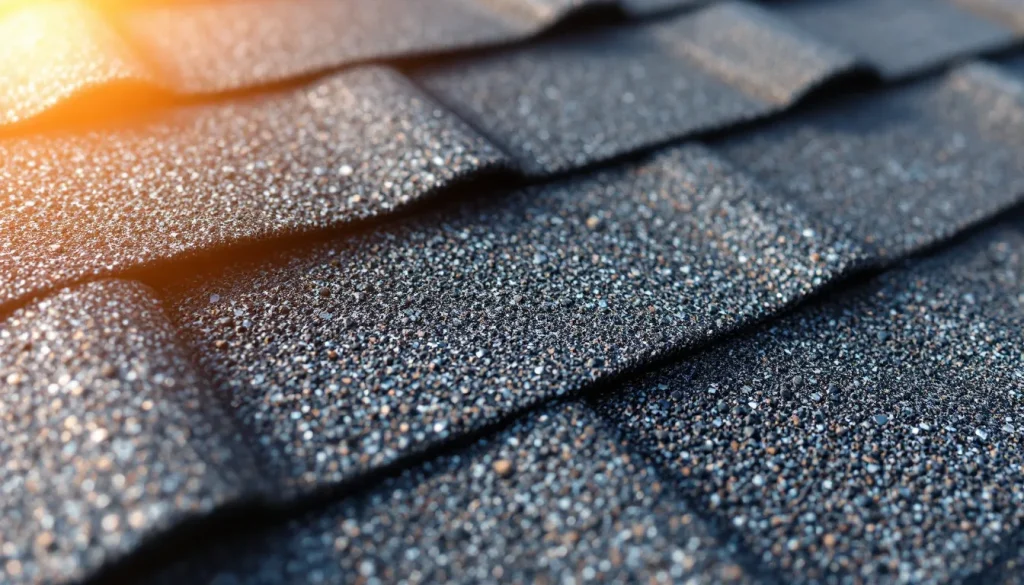
Genuine class 4 impact resistant shingles are asphalt shingles that have passed the UL 2218 Class 4 impact test, in which a 2-inch steel ball is dropped from 20 feet onto the shingle without causing rupture, splitting, fracture, or any other evidence of impact damage on either face. The Class 4 rating is the highest of four classes (Class 1 through Class 4) under UL 2218 and the threshold most insurance (for the full data set, see our the 2026 State of Roofing Insurance report) carriers require to offer a meaningful premium discount in hail-prone states. The discount runs 25% to 35% in Texas and Oklahoma, 20% to 25% in Colorado, 15% to 20% in Kansas and Nebraska, and 10% to 15% in Georgia and the Carolinas. The shingles cost roughly $30 to $80 more per square (100 square feet of roof) than equivalent standard architectural shingles, which means the payback on hail-prone roofs is usually 2 to 5 years on premium savings alone, even before counting the actual storm-damage protection.
The short version
- UL 2218 Class 4 = 2-inch steel ball dropped from 20 feet, no rupture or splitting on either face.
- FM Approvals 4473 is an alternate test (uses ice balls instead of steel) accepted by some carriers.
- Six major Class 4 product lines: GAF Timberline AS, OC Duration Storm, CertainTeed NorthGate, IKO Nordic, Atlas StormMaster, Malarkey Vista AR.
- Premium over equivalent standard architectural: $30 to $80 per square installed.
- Insurance discount: 25-35% in TX/OK, 20-25% CO, 15-20% KS/NE, 10-15% GA/NC. Verify with your carrier before installation.
- Class 4 does not equal hail-proof. It means resists the UL 2218 test. Real hail at 2.5 inches or larger can still damage Class 4 shingles.
The best Class 4 impact-resistant shingles, ranked by real-world hail performance
The best Class 4 impact-resistant shingles in 2026, ranked by the Insurance Institute for Business and Home Safety (IBHS) 2025 hail scorecard, are Owens Corning TruDefinition Duration and GAF Grand Sequoia (tied at 8.0), GAF Timberline AS II ArmorShield (7.9), Malarkey Legacy Scotchgard (7.8), and CertainTeed NorthGate ClimateFlex (7.7). All five hold a UL 2218 Class 4 rating and all five landed in the IBHS “Good” band, a score of 6.0 or higher. The ranking separates the products that resist real hail from the ones that pass the steel-ball test but score poorly against ice-ball impact.
| Rank | Product line | Manufacturer | IBHS 2025 score | UL 2218 | Best for |
|---|---|---|---|---|---|
| 1 (tie) | TruDefinition Duration (Storm / FLEX) | Owens Corning | 8.0 (Good) | Class 4 | Best all-round hail performer |
| 1 (tie) | Grand Sequoia AS (ArmorShield) | GAF | 8.0 (Good) | Class 4 | Designer profile plus top hail score |
| 3 | Timberline AS II ArmorShield | GAF | 7.9 (Good) | Class 4 | Most widely stocked in TX and OK |
| 4 | Legacy Scotchgard | Malarkey | 7.8 (Good) | Class 4 | Strongest Malarkey pick (not Vista AR) |
| 5 | NorthGate ClimateFlex | CertainTeed | 7.7 (Good) | Class 4 | Value pick in the Northeast and Mid-Atlantic |
Best Class 4 shingle by use case
- Best overall hail performance: Owens Corning TruDefinition Duration (Storm or FLEX) or GAF Grand Sequoia AS, tied at 8.0 on the IBHS 2025 scorecard.
- Best widely available pick: GAF Timberline AS II ArmorShield (7.9), the most stocked Class 4 shingle across the southern plains.
- Best value: CertainTeed NorthGate ClimateFlex (7.7), often the cheapest Good-rated Class 4 at the contractor level.
- Best Malarkey option: Legacy Scotchgard (7.8). Malarkey Vista AR is also UL 2218 Class 4 but scored 5.2 on IBHS ice-ball testing, the lowest on the 2025 scorecard, so Legacy is the stronger real-world choice within the brand.
- Best for high wind: GAF Timberline AS II and Owens Corning Duration Storm both reach a 130 mph wind rating with the enhanced 6-nail install. See our wind damage roof statistics by region for where wind, not just hail, drives the upgrade.
- Best premium aesthetic: Atlas StormMaster Slate or Shake, or GAF Grand Sequoia AS, for homeowners who want a designer profile with Class 4 protection.
How we ranked these: the order follows the IBHS 2025 impact-resistant shingle scorecard, which fires lab-grown ice balls from a pneumatic cannon to replicate real hail, a tougher and more predictive test than the UL 2218 steel-ball drop. The Roofing Brief has not independently lab-tested these shingles. Every rating cited here traces to UL, FM Approvals, IBHS, or the manufacturer’s published data sheet, and IBHS scores can shift as products are retested. For the full head-to-head against ordinary shingles, see our impact-resistant vs standard shingles comparison, and for what a Class 4 upgrade earns by state, see hail damage roof insurance claims by state. This ranked list sits alongside our full best asphalt shingles hub.
What UL 2218 actually tests
UL 2218 is the Underwriters Laboratories standard for impact resistance of prepared roof covering materials. It defines four classes by the size of steel ball used and the height of the drop, then specifies the acceptance criteria.
| Class | Steel ball size | Drop height | Equivalent kinetic energy |
|---|---|---|---|
| Class 1 | 1.25 inches | 12 feet | ~3.5 ft-lb |
| Class 2 | 1.5 inches | 15 feet | ~7.0 ft-lb |
| Class 3 | 1.75 inches | 17 feet | ~11 ft-lb |
| Class 4 | 2 inches | 20 feet | ~17 ft-lb |
The shingle is dropped on twice at the same spot. Both impacts must produce no evidence of fracture, crack, split, tear, or other damage (for the full data set, see our the 2026 Severe Weather Roof Damage Report) to either face. The test is performed at standard temperature; some products are also tested at low temperature for cold-weather performance.
A 2-inch steel ball at 20 feet of free fall produces roughly the impact energy of a 1.75-inch hailstone at terminal velocity. In real-world hail (for the full data set, see the 2026 Roofing Hail and Storm Loss Database), stones over 2 inches are increasingly common in the southern plains, and stones over 2.5 inches frequently exceed Class 4 protection. The rating is a useful threshold, not a guarantee.
FM 4473: the other rating you might see
FM Approvals 4473 (often called FM 4473) is an alternative impact resistance standard that uses ice balls instead of steel balls. The test methodology is otherwise similar. FM 4473 classifies shingles into Class 1 through Class 4, with Class 4 representing a 2-inch ice ball impact at terminal velocity (about 88 mph).
Most major manufacturers carry both UL 2218 Class 4 and FM 4473 Class 4 certifications on their impact-resistant products. Some insurance (see our Florida residential roofing demand shift) carriers will accept either certification. A few specify UL 2218 by name. Read your carrier’s discount qualification language to know which certification matters.
The 6 major Class 4 product lines
Most major asphalt (for the full data set, see our the 2026 Shingle Brand Comparison Report) shingle manufacturers offer at least one Class 4 product. The market leaders in 2026:
| Product | Manufacturer | UL 2218 / FM 4473 | Premium vs standard | Warranty | Typical insurance discount |
|---|---|---|---|---|---|
| Timberline AS II | GAF | UL 2218 Class 4 + FM 4473 Class 4 | $50-75/sq | Lifetime, 130 mph, 15-yr StainGuard Plus | 20-35% |
| Duration Storm | Owens Corning | UL 2218 Class 4 + FM 4473 Class 4 | $45-70/sq | Lifetime, 130 mph, 10-yr StreakGuard | 20-35% |
| NorthGate ClimateFlex | CertainTeed | UL 2218 Class 4 | $40-65/sq | Lifetime, 110 mph (130 SureStart), 15-yr StreakFighter | 20-30% |
| Nordic | IKO | UL 2218 Class 4 + FM 4473 Class 4 | $30-50/sq | Limited Lifetime, 110 mph (130 with 6-nail), 15-yr Algae Relief | 15-30% |
| StormMaster Slate / Shake | Atlas | UL 2218 Class 4 + FM 4473 Class 4 | $60-80/sq | Lifetime, 130 mph, 15-yr Scotchgard | 20-35% |
| Vista AR | Malarkey | UL 2218 Class 4 + FM 4473 Class 4 | $45-65/sq | Lifetime, 130 mph, NEX Polymer Modified | 20-35% |
GAF Timberline AS II
GAF (see our Owens Corning vs. GAF vs. CertainTeed guide)’s Class 4 entry in the Timberline family. SBS-modified asphalt formulation (the same impact-resistant chemistry used in commercial modified bitumen membranes). LayerLock technology nail zone for 130 mph wind. Sold through GAF’s standard contractor network. The most widely installed Class 4 shingle in TX and OK as of 2026.
The marketing distinction from base Timberline HDZ is the SBS-modified mat that flexes rather than fractures on impact. The visual difference is minimal; you cannot tell a Timberline AS II from a Timberline HDZ at curb appeal distance.
Owens Corning Duration Storm
OC’s flagship Class 4. SBS polymer modified. SureNail strip technology for wind. Available in the same Duration color palette so re-roofing one slope at a time blends visually with neighboring Duration installations. Direct GAF competitor in price and performance.
CertainTeed NorthGate ClimateFlex
CT’s Class 4 SBS-modified product. Lower wind rating than GAF/OC by default (110 mph baseline vs 130 mph), but reaches 130 mph with SureStart 6-nail enhanced wind install. Often slightly cheaper than GAF/OC at the contractor level, particularly in the Northeast and Mid-Atlantic where CT is regional leader.
IKO Nordic
IKO’s Canadian-engineered Class 4 product. SBS polymer modified asphalt. The price-leader of the Class 4 segment in most markets, particularly the South. Wind rating is 110 mph baseline (130 mph with 6-nail), aesthetics are similar to architectural-tier products. The catch: contractor coverage is uneven in some markets, and warranty (for the full data set, see our the 2026 Roofing Material Lifespan Report) coverage is limited lifetime rather than full lifetime.
Atlas StormMaster Slate / StormMaster Shake
Atlas’s premium-aesthetic Class 4 line. The Slate version mimics quarried slate appearance; the Shake version mimics cedar shake. Heavier than competitors and at the high end of pricing. Scotchgard algae resistance is a premium feature few competitors match.
Malarkey Vista AR
Malarkey is the technical leader in polymer-modified shingles. Their NEX Polymer Modified asphalt uses recycled rubber from end-of-life tires plus SBS modifier. The result is one of the most impact-resistant Class 4 shingles tested independently. Algae resistance from 3M-licensed copper-zinc granules. Distribution is regional (strong in PNW, MT, ID, and parts of CO/TX) and weaker elsewhere.
How insurance discounts actually work
The insurance discount for Class 4 shingles is not federal or uniform. It is a state (for the full data set, see our the 2026 State Roofing Code and Licensing Report)-level rate filing approved by the state department of insurance, then implemented carrier by carrier. The state defines whether Class 4 must be the only qualifying threshold or whether Class 3 also qualifies. The carrier files the rate plan with the DOI showing the actuarial basis for the discount, gets approval, and applies the discount to qualifying policies.
Discount ranges by state, mid-2026
- Texas: 25% to 35% on the wind/hail portion of premium. Mandated by TDI for Class 3 and Class 4 in most carriers.
- Oklahoma: 25% to 35% on wind/hail portion. Mandated.
- Colorado: 20% to 25% on wind/hail portion. Varies by carrier.
- Kansas: 15% to 20% on wind/hail portion. Voluntary by most carriers, but widely offered.
- Nebraska: 15% to 20% on wind/hail portion. Voluntary, widely offered.
- Missouri: 10% to 20% depending on carrier. Optional.
- Georgia, North Carolina, South Carolina: 10% to 15% on wind/hail. Optional, only some carriers offer.
- Florida: marginal, 5% to 10%. Florida insurance market dynamics favor age and condition over Class 4.
- Other states: typically not offered or under 5%.
The wind/hail portion of premium is the relevant base, not total premium. In TX a typical homeowner premium might be $3,000/year, of which $1,200 is the wind/hail portion. A 30% Class 4 discount on $1,200 is $360/year saved. On a $200/square Class 4 premium (over standard architectural) across a 30-square roof, the premium adder is $6,000. Payback period: 16.7 years. Once you add the actual hail damage prevented, the math compresses dramatically.
The “qualifying installation” gotcha
Some carriers require not just the shingle but a documented full system: Class 4 shingles plus enhanced ice-and-water shield, plus synthetic underlayment, plus 6-nail pattern. Read the discount qualification carefully. The contractor must document the install for the carrier; a Class 4 shingle installed with a 4-nail pattern may not qualify for the full discount.
Class 4 does not equal hail-proof
The hail size that fails UL 2218 Class 4 is roughly 1.75 inches. In real storms, hail commonly exceeds this. The 2024 and 2025 hail seasons in TX, OK, and CO included multiple events with stones over 3 inches. Class 4 shingles in those storms still showed damage, just less damage than non-IR products in the same impact zone.
A Class 4 roof in a 2.5-inch hailstorm typically loses 5% to 20% of granules in impact zones, with some bruising. A non-IR architectural roof in the same storm typically loses 30% to 60% of granules with multiple mat fractures requiring full replacement. Both might result in a claim, but the Class 4 roof is much more likely to survive with a localized repair instead of full replacement.
For documentation of post-storm damage assessment, see how much hail damage to replace a roof.
Polymer-modified asphalt: the technical reason Class 4 works
The fundamental technology behind almost all Class 4 asphalt shingles is polymer modification. Pure asphalt is brittle at normal ambient temperatures and shatters under impact. Adding styrene-butadiene-styrene (SBS) rubber or atactic polypropylene (APP) plastic to the asphalt mat changes its mechanical properties: it becomes more elastic, flexes under impact instead of fracturing, and retains flexibility down to lower temperatures.
SBS is the dominant modifier in residential Class 4 shingles (GAF, OC, CT, IKO all use SBS). Malarkey uses a proprietary NEX polymer system that includes recycled tire rubber. Atlas uses SBS plus an aluminum coil insert in some products. The differences in real-world impact resistance among major brands are small; the discount math and the warranty terms are usually the deciding factors.
The cold-weather wrinkle
SBS-modified shingles retain flexibility down to about 0 degrees F. At lower temperatures, even SBS asphalt begins to stiffen and impact resistance drops. For roofs in the northern plains, mountain west, and northern New England, ask the manufacturer for cold-temperature UL 2218 test results. GAF, OC, IKO, and Malarkey publish cold-temp results; CT and Atlas publish standard-temp only.
Beyond asphalt: other Class 4 options
Class 4 is not limited to asphalt shingles. The same UL 2218 / FM 4473 ratings apply to other roofing materials:
Class 4 metal roofing
Standing-seam metal panels in 24-gauge or thicker are generally Class 4 rated. Stone-coated steel tiles (Decra, Westlake Royal Roofing) are typically Class 4 with substrate. Aluminum is more impact-vulnerable than steel and may need thicker gauge to qualify.
For metal-specific tradeoffs, see metal vs asphalt shingle roof and metal roof cost.
Class 4 synthetic and composite
Polymer composite shingles (DaVinci, Brava, F-Wave) are typically Class 4 rated. Concrete tile is Class 4 in standard residential profiles. Clay tile is Class 3 to Class 4 depending on thickness.
Installation matters as much as material
A Class 4 shingle installed badly performs worse than a Class 3 shingle installed correctly. The install factors that matter most:
- 6-nail pattern (vs 4-nail) for wind and impact resistance
- Synthetic underlayment instead of 15-lb felt; see best synthetic underlayment brands
- Full ice and water shield in valleys, eaves, and around penetrations; see ice and water shield
- Starter strip at eaves and rakes
- Class A or higher fire rating maintained
- Manufacturer-specified ridge cap (not generic 3-tab cut into caps)
- Balanced attic ventilation; see attic ventilation
The carrier discount qualification often requires documentation of these install items. Hold your contractor to the documentation requirement at the time of install, not after.
What the discount math looks like over 20 years
Take a Dallas-area homeowner with a 30-square roof. Standard architectural install: $14,000. Class 4 install: $16,500. The $2,500 difference is your Class 4 premium.
Insurance side: standard policy is $2,800/year, of which $1,100 is wind/hail. 30% Class 4 discount on wind/hail saves $330/year. Over 20 years: $6,600 saved on premium alone.
Storm side: Dallas averages one hail event per 7 years that causes claim-level damage. Over 20 years, expect roughly 3 claims on a standard roof and 1 to 2 on a Class 4. Each avoided claim saves at minimum the deductible (often $2,500 to $5,000 in TX) plus the inflation impact on premiums after a claim.
Combined 20-year value: $6,600 premium savings plus $3,000 to $7,500 avoided deductibles plus avoided post-claim premium hikes. Total savings $12,000 to $20,000 against a $2,500 upfront cost. The math is decisive for any homeowner in the southern plains hail belt.
The math is less clean outside hail-frequent zones. In Atlanta or Charlotte the premium savings might be $50 to $100/year and the avoided-claim value is smaller. Class 4 still makes sense for homes in those markets but the payback is closer to 7 to 12 years.
FAQ
How do I verify a shingle is genuine Class 4?
Look for the UL 2218 Class 4 marking on the shingle wrapper and the product data sheet. Cross-check against the manufacturer’s published Class 4 product list. Ask the contractor for the product spec sheet at signing and verify the wrapper at delivery.
Can I get the discount if I install Class 4 over a Class 4-already roof?
The discount applies as long as a current-vintage Class 4 product is installed and the carrier’s documentation requirements are met. Most carriers do not care about prior-roof rating; they care about the current installed product.
Do Class 4 shingles last longer than standard shingles?
The SBS modification that drives impact resistance also tends to extend overall field life by 3 to 7 years compared to standard architectural shingles. Class 4 products typically carry the same or better warranty terms. The longevity benefit is real but secondary to the impact and discount benefits.
Will my carrier honor the Class 4 discount on a roof installed years ago?
If you have documentation of the Class 4 install (invoice with product line, wrapper photos, warranty registration), most carriers will apply the discount retroactively to the next renewal cycle. The carrier will not refund prior premium, but the discount applies going forward.
Are Class 4 shingles harder to repair after a storm?
Slightly. The SBS-modified mat is tougher to cut and lift compared to standard asphalt. Most experienced roofers handle it without issue, but a contractor unfamiliar with SBS shingles may charge more for repair labor.
What is the best Class 4 impact-resistant shingle?
On the IBHS 2025 hail scorecard, Owens Corning TruDefinition Duration and GAF Grand Sequoia tied highest at 8.0 in the Good band, followed by GAF Timberline AS II ArmorShield at 7.9 and Malarkey Legacy Scotchgard at 7.8. All are UL 2218 Class 4. The best choice for a given roof depends on local contractor coverage, price, and which product your carrier’s discount language accepts.
What is the difference between UL 2218 and IBHS hail ratings?
UL 2218 is a pass or fail steel-ball drop test: a 2-inch ball from 20 feet, with Class 4 the top pass. IBHS fires lab-grown ice balls from a cannon and scores products 0 to 10 across dents, tears, and granule loss. A shingle can pass UL 2218 Class 4 yet fall below the IBHS Good threshold of 6.0, which is why checking both ratings together is worthwhile.
Are Class 4 impact-resistant shingles worth it?
In hail-frequent states like Texas, Oklahoma, and Colorado, usually yes. The $30 to $80 per square premium often pays back in 2 to 5 years through wind and hail insurance discounts of 10% to 35%, before counting avoided storm claims and deductibles. Outside the hail belt the payback stretches to 7 to 12 years, so the case is weaker but still positive for most homeowners.
Bottom line
Class 4 impact-resistant shingles are SBS-modified asphalt products that pass UL 2218’s 2-inch steel ball test and qualify for 10% to 35% wind/hail insurance discounts depending on state. The six main product lines (GAF Timberline AS II, OC Duration Storm, CertainTeed NorthGate ClimateFlex, IKO Nordic, Atlas StormMaster, Malarkey Vista AR) all use similar polymer-modification chemistry and differ mainly in warranty terms, distribution, and contractor coverage. Premium over standard architectural is $30 to $80 per square installed, and the payback on premium savings alone is 2 to 5 years in TX, OK, and CO, longer elsewhere. Class 4 is not hail-proof; expect localized damage in storms with 2.5+ inch hail. For homeowners weighing the broader storm-protection picture, also see best roof for hurricane and actual cash value roof for how policy structure interacts with material upgrade. For the install spec side, our best synthetic underlayment brands guide pairs naturally with a Class 4 install.
Reviewed by The Roofing Brief Team. Last reviewed August 2026.