
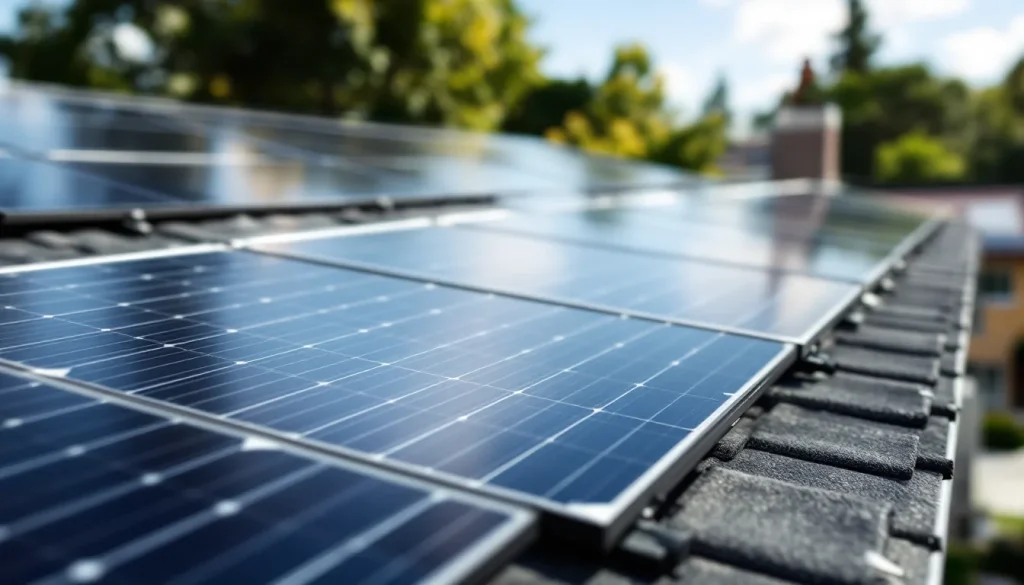
The solar policy news 2026 story is shaped by three moving parts: the federal Investment Tax Credit (ITC), which remains at 30 percent through 2032 under current law but faces ongoing Congressional pressure for early step-down; state-level net metering reform, which has reshaped the economics in California (NEM 3.0 fully phased in) and is queueing up for similar treatment in several other high-penetration solar states; and Section 201/301 tariffs on imported solar panels, which have shifted the supply mix toward domestic and Southeast Asian manufacturing while pushing per-watt installed prices higher in 2026 than they were in 2024. This piece walks through what is settled law, what is under active debate, what is changing at the state level, and what installers and homeowners should plan for in the next 12 to 24 months.
The federal Investment Tax Credit: stable but not permanent
The residential solar Investment Tax Credit currently provides a 30 percent credit against federal tax liability for residential solar systems placed in service through 2032. The credit then steps down to 26 percent for systems placed in service in 2033, 22 percent in 2034, and expires for residential systems starting in 2035 unless Congress renews. The current schedule traces back to the Inflation Reduction Act of 2022, which restored the ITC to 30 percent after the prior step-down sequence had reduced it to 26 percent.
The 30 percent figure is the headline. The arithmetic that matters to homeowners includes the 10 percent domestic content adder, which brings the effective credit to 40 percent on installations using qualifying US-made equipment. The domestic content rules require that the steel and iron components are 100 percent US-produced and that the manufactured products meet a percentage threshold of US-sourced content (40 percent for projects beginning construction in 2024, rising annually to 55 percent for 2027 and later). The IRS guidance issued in 2024 clarified the calculation methodology, but most residential systems qualify only through the use of US-assembled panels (Silfab Prime, Mission Solar, some Q CELLS production lines) and US-made racking. The detail is in our walk-through at solar roof tax credit 2026.
The Congressional pressure question is real. Multiple House budget proposals in 2025 and 2026 have included early step-down language for the ITC, though none have advanced to enacted law. The Senate has been more protective of the current schedule. The base case for residential solar planning is that the 30 percent credit holds through 2032. The risk case is an accelerated step-down enacted in a budget reconciliation package, which could compress the eligibility window without warning. Homeowners considering solar in 2026 should plan as if the 30 percent credit is available but not gamble on a 2030 or 2031 install date if the project is ready to go now.
California NEM 3.0: the playbook other states are studying
California’s net metering policy transitioned from NEM 2.0 to the Net Billing Tariff (commonly called NEM 3.0) in April 2023, and 2026 is the first full year where the new structure has been in effect long enough to assess the market response. Under NEM 3.0, residential solar exports to the grid are credited at the avoided cost of electricity rather than the retail rate, which dropped the effective export credit by roughly 75 percent compared to NEM 2.0. The policy intent was to shift the economics from grid-export solar toward solar-plus-storage, where the homeowner stores excess production for evening use rather than exporting it.
The market response in California has been a dramatic shift toward storage attach rates. Residential solar installs in 2026 in California carry battery storage in approximately 70 to 80 percent of new contracts, up from less than 20 percent under NEM 2.0. Tesla Powerwall 3, Enphase IQ Battery 5P, and Franklin aPower 2 are the dominant battery products. The all-in installed cost of a solar-plus-storage system in California in 2026 runs $35,000 to $55,000 before incentives for a 7 kW solar array paired with 13.5 kWh of storage, compared to $20,000 to $25,000 for solar-only under NEM 2.0. The federal ITC at 30 percent and the California Self-Generation Incentive Program (SGIP) for storage offset a portion of the increase. Our deeper coverage on the underlying mechanics is in net metering explained 2026.
The states that have signaled interest in NEM 3.0-style reform include Arizona (where APS and TEP have ongoing rate cases that have moved toward avoided-cost crediting), Nevada (where NV Energy’s residential tariff is structurally similar to California’s pre-NEM-3.0 transition), and Idaho (where Idaho Power filed for net metering reform in 2025). Massachusetts, New York, New Jersey, and Maryland have not signaled near-term NEM reform, though long-term trajectories are unclear. Installers in any state with utility-scale solar growth above 5 percent of generation should plan for net metering policy change within the next 5 to 10 years.
Section 201/301 tariffs and the panel supply chain
The Section 201 tariffs on imported crystalline silicon photovoltaic cells and modules, originally imposed in 2018 and extended in 2022, expired in February 2026. The Section 301 tariffs on Chinese solar products remain in effect and were expanded in 2024 to cover solar panels assembled in Southeast Asia (Vietnam, Thailand, Malaysia, Cambodia) with Chinese cells. The Commerce Department circumvention investigation that triggered the expansion concluded in late 2023, and the 2024 expansion captured roughly 80 percent of US panel imports under tariff at rates ranging from 21 to 271 percent depending on manufacturer.
The market response has been a sharp shift toward domestic manufacturing capacity additions. First Solar expanded its Ohio production capacity through 2025. Hanwha Q CELLS opened its Cartersville, Georgia ingot, wafer, cell, and module facility in 2024, the first fully integrated US solar manufacturing line. Silfab expanded its Bellingham and Burlington, Washington facilities and announced a South Carolina cell production facility. Mission Solar continues to produce panels in San Antonio, Texas. The aggregate effect is that US-manufactured panel availability has roughly tripled between 2022 and 2026, but US production capacity still covers less than 35 percent of US installation demand.
For homeowners, the tariff dynamic affects panel availability and per-watt pricing. Per-watt installed pricing in 2026 ($2.50 to $3.50) is higher than the pre-tariff pricing in 2022 ($2.20 to $3.00 in equivalent dollars), with the tariff-driven cost increase partially offset by manufacturing efficiency gains and the 30 percent ITC restoration. The 10 percent domestic content adder is the policy lever that bridges some of the gap by incentivizing US-made panel selection. The detailed cost breakdown is in solar installation cost 2026.
State SREC markets: where the dollars still flow
Solar Renewable Energy Credits (SRECs) are a state-level incentive mechanism in which the homeowner earns a certificate for each megawatt-hour of solar production. The certificate is then sold into a state-administered compliance market where electric utilities purchase SRECs to meet renewable portfolio standard (RPS) requirements. The SREC value varies by state, by year, and by market clearing dynamics, and the strong SREC states in 2026 are New Jersey, Massachusetts, Maryland, Pennsylvania, Illinois, Ohio, Delaware, and the District of Columbia.
New Jersey’s SREC II program transitioned into the Successor Solar Incentive (SuSI) program in 2022, which is divided into the Administratively Determined Incentive (ADI) for smaller residential systems and the Competitive Solar Incentive (CSI) for larger commercial systems. The 2026 ADI rates for residential ground-mount and rooftop systems run $85 to $90 per SREC for a 15-year fixed term, meaning a 7 kW residential system producing 8.5 megawatt-hours per year earns approximately $725 per year for 15 years. The contract is bankable and can be financed against in some installer financing structures.
Massachusetts SMART (Solar Massachusetts Renewable Target) replaced the prior SREC II program in 2018 and operates as a tariff-based compensation rather than a tradable credit. The 2026 SMART block rates are set by utility territory and project size, with residential rates running $0.18 to $0.25 per kilowatt-hour for the production above net metering offset, for a 10-year contract. The structural difference from SRECs is meaningful: SMART pays per kilowatt-hour of production at a known rate, while SRECs pay per megawatt-hour at a market-clearing rate that fluctuates with utility compliance demand.
Maryland’s SREC market has been in oversupply for several years and SREC prices have collapsed to roughly $40 per SREC in 2026, down from $400 in 2014. Pennsylvania faces a similar oversupply dynamic. Illinois Shines (Illinois’s Adjustable Block Program) is the bright spot in the Midwest, with strong demand for SRECs against an aggressive state RPS target. Ohio’s RPS was rolled back in 2019 and the SREC market has effectively closed for new entrants.
Inflation Reduction Act direct pay and transferability
The Inflation Reduction Act introduced two provisions in 2023 and 2024 that have begun to materially affect solar economics for non-traditional taxpayers. Direct pay allows tax-exempt entities (municipalities, schools, nonprofits, tribal governments) to receive the ITC as a direct cash payment rather than a tax credit. Transferability allows for-profit project owners to sell their ITC to a third-party buyer in exchange for cash, providing a way for project owners with insufficient federal tax liability to monetize the credit without a complex tax equity structure.
For residential homeowners, neither direct pay nor transferability directly applies, because the residential ITC under Section 25D requires the credit to be claimed against the homeowner’s own federal tax liability with carryforward of unused credit to subsequent tax years. The relevance to residential is indirect: the transferability market has lowered the cost of capital for commercial and utility-scale solar, which has put downward pressure on equipment prices at the supplier level, which feeds through to residential installer cost structures.
Time-of-use rate restructuring
Beyond net metering policy, the underlying utility rate structures in many states have moved toward time-of-use (TOU) pricing, where the per-kilowatt-hour rate varies by time of day. The peak hours (typically 4 PM to 9 PM in summer) carry rates 2 to 3 times the off-peak rate (typically midnight to 6 AM). For solar-only homeowners, the economics depend on how much production aligns with peak hours, which is generally poor because solar production peaks at midday while utility peak demand is in the late afternoon and evening. For solar-plus-storage homeowners, the TOU structure favors charging the battery on off-peak electricity (when grid power is cheap) and discharging during peak hours (when grid power is expensive).
California, Arizona, Nevada, and parts of Texas have moved to mandatory TOU rates for residential solar customers. New York, Massachusetts, and New Jersey offer voluntary TOU rate options. The trend is toward broader TOU adoption as utilities seek to recover infrastructure costs from peak-demand customers. Homeowners considering solar in 2026 should pull their utility’s TOU rate schedule and model the production-and-consumption alignment before sizing the system.
Property tax exemptions and assessment
State property tax treatment of solar systems varies. Twenty-eight states plus the District of Columbia exempt the added home value from solar installation from property tax assessment. The exemption is meaningful because residential solar adds approximately $15,000 to $25,000 to home value at sale (NREL studies have shown a typical 4 percent premium on solar-equipped homes), and a property tax assessment on that value at 1 to 2 percent annually would meaningfully erode the solar economics.
States without solar property tax exemption include several Southeast states. Homeowners in non-exemption states should consult with a local tax assessor before installation to understand the assessment methodology. Some installers will provide a memo from their tax counsel addressing the property tax question as part of the contract documentation.
Interconnection queue reform
For larger residential and small-commercial systems, the utility interconnection process has become a meaningful project timeline driver. FERC Order 2023 (issued in 2023) required transmission utilities to overhaul their interconnection queue management, replacing the first-come-first-served process with a cluster study approach that batches similarly-situated projects. The order applies to transmission-level interconnection but has trickled down to distribution-level interconnection through state public utility commission action.
For typical residential rooftop solar systems below 25 kW, the interconnection process is generally consolidated into a fast-track review within 30 to 60 days. For larger systems, ground-mount installations, and systems with battery storage, the interconnection process can extend to 90 to 180 days in some utilities. Installers should disclose the expected interconnection timeline in writing and provide updates if the timeline extends.
Permitting reform and SolarAPP+
The federal Department of Energy’s SolarAPP+ program has been adopted by approximately 300 jurisdictions as of 2026, providing instant permitting for code-compliant residential solar systems. The program reduces the permitting timeline from 4 to 8 weeks down to same-day or next-day approval. The cities with the highest SolarAPP+ adoption include Tucson, Pleasant Hill (CA), Loveland (CO), and several California municipalities. Texas, Florida, and the Mid-Atlantic have lagged in adoption.
For homeowners, the practical implication is that installation timelines in SolarAPP+ jurisdictions can compress significantly. The full install-to-PTO (permission to operate) timeline can drop from 90-120 days to 30-45 days. Ask your installer whether your jurisdiction is SolarAPP+ enabled.
The 2026 policy outlook
The base case for the next 12 to 24 months: federal ITC holds at 30 percent through 2032 under current law. California NEM 3.0 continues to drive solar-plus-storage adoption. More states queue up for net metering reform, with Arizona and Nevada most likely to enact changes in 2026 or 2027. Section 301 tariffs on Chinese-origin panels and Southeast Asian circumvention products remain in effect. US manufacturing capacity continues to scale through 2027 with announced facility commissioning. SREC markets in New Jersey, Massachusetts, and Illinois remain strong; markets in Maryland, Pennsylvania, and Ohio remain weak or closed.
The risk cases worth tracking: an accelerated ITC step-down in a budget reconciliation package. A Supreme Court ruling that narrows agency authority to administer the IRA implementation. State-level rollback of solar mandates in newly-elected administrations. Utility rate cases that reduce net metering credit in markets currently offering full retail.
What homeowners should plan for
If you are considering solar in 2026, the 30 percent ITC is available and the math works for most rooftop applications. Size the system to your actual consumption pattern rather than chasing maximum export credit, because net metering policy is moving toward avoided-cost compensation across the country. Consider storage if your utility has moved to TOU rates or NEM 3.0-style export crediting. Verify the contractor’s understanding of your local utility’s interconnection process and timeline. Read the financing contract carefully for escalator language if you are pursuing a PPA or lease. Our broader installer comparison is in solar install companies comparison and the installer vetting framework is in solar installer near you. The 25-year warranty implications are in solar roof warranty 2026.
The contractor-side reading
For contractors operating in 2026, the policy dynamics are pushing the business model in two directions. The dealer-installer national networks have built their cost structure around grid-export-favorable net metering and are restructuring as state policies move toward avoided-cost crediting. The regional integrated installers with strong local utility relationships and storage installation experience are taking market share in states with NEM 3.0-style reform. The EPC-only installers focused on cost discipline and direct-to-customer engagement are taking share in markets where homeowners are increasingly sophisticated about pricing. Our broader coverage is in the 2026 Roofing Contractor Industry Report, which addresses the contractor consolidation patterns more broadly.
The bottom line
Solar policy news in 2026 is mostly continuity at the federal level (30 percent ITC through 2032) and disruption at the state level (NEM 3.0 in California, queueing reform in several other states, mixed SREC market dynamics). The underlying cost structure is influenced by tariffs and US manufacturing expansion, which have pushed per-watt installed pricing higher than the 2022 baseline but still keep solar economically viable in most markets. The decision frame for homeowners and contractors is to plan against the current policy environment, hedge for plausible near-term changes, and prioritize installations and contracts that hold their value across policy regimes. The 30 percent federal credit is the anchor. Everything else is the moving picture around it.