
By The Roofing Brief Team | Last reviewed: October 2026
A cosmetic damage exclusion on a roof is a policy endorsement that removes coverage for hail (and, on many forms, wind) damage that changes how the roof looks but does not stop it from keeping out the elements, such as dents in a metal panel with no puncture, open seam or leak. The exact test lives in the endorsement’s definition, and the filed wordings differ: Texas form HO-145 asks whether water can penetrate “over an extended period of time,” ISO form HO 06 44 asks whether the roof still works “to the same extent as it did before,” and some carrier metal-roof forms pay only if hail opens a hole.
That wording gap decides real claims. On July 27, 2026, the U.S. Court of Appeals for the Eighth Circuit revived a Minnesota school district’s claim for two hail-dented metal roofs that had never leaked, because the “same extent” wording can reach a roof that hail has weakened against snow or wind loads. A leak-only wording would likely have ended that case.
Key numbers at a glance
These are the dates, form numbers and percentages that define cosmetic damage exclusions in the US market as of October 2026. Each row comes from a regulator, rating bureau, court or trade-press record linked in the source column.
| Figure | Value | Source |
|---|---|---|
| First state-prescribed cosmetic roof exclusion | Texas HO-145 (homeowners) and TDP-022 (dwelling), effective May 2, 1998 | TDI Commissioner’s Bulletin B-0030-98 |
| Texas 1998 mandatory credit for a UL 2218 Class 4 roof | 4% to 35% of the basic homeowners premium, by rating territory | TDI Bulletin B-0030-98, Homeowners Manual Rule N |
| AAIS homeowners cosmetic damage exclusion filed | Early February 2013; optional for the 330 companies using AAIS homeowners programs | Insurance Journal, March 11, 2013 |
| ISO homeowners cosmetic exclusions | HO 06 43 04 16 (all exterior surfacing) and HO 06 44 04 16 (roof surfacing only) | FC&S (PropertyCasualty360), June 13, 2016 |
| States where ISO HO 06 44 was first available | 20 (AZ, CO, ID, IL, IA, KS, KY, MI, MN, MO, ND, NE, NV, OH, OK, OR, SD, TN, UT, WI) | FC&S, June 13, 2016 |
| Most recent federal appeals ruling | Cannon Falls Area Schools v. Hanover, No. 25-3315 (8th Cir. July 27, 2026): summary judgment for the insurer vacated | Eighth Circuit opinion |
What counts as cosmetic damage to a roof?
Cosmetic damage to a roof is marring, pitting, denting, scratching or discoloration that alters appearance while the roof covering still keeps water and other elements out. ISO’s HO 06 44 04 16 lists “marring,” “pitting” and “other superficial damage”; the AAIS 2013 form adds “scratching,” “denting” and “discoloration.” Anything that lets water through, or breaks the covering’s ability to shed weather, is functional damage and stays covered under every wording reviewed here.
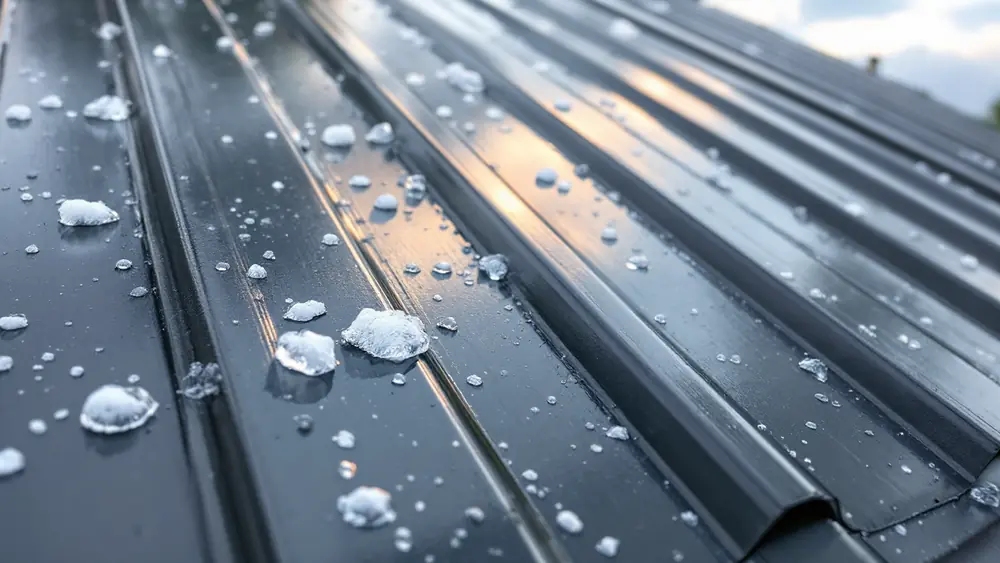
Where the line falls depends on the material. Metal disputes dominate because a 24 or 26 gauge steel panel can take a deep dent without tearing, while hail that bruises an asphalt shingle often fractures its mat, which every wording treats as functional. The table sorts common roof components by how the two sides usually argue them under a typical exclusion.
| Roof component | Usually argued cosmetic | Usually argued functional | Inside the “roof” definition? |
|---|---|---|---|
| Standing seam or exposed-fastener steel panel | Round dents with paint intact, seams locked | Punctures, cracked or crazed coating exposing steel, seam disengagement, dents that pull fasteners | Yes: “metal or synthetic sheeting” (ISO HO 06 44) |
| Stone-coated steel panel | Shallow dents with granules in place | Bare steel exposed where granules and coating spall, panel locks bent open | Yes: “cladding” or “sheeting” |
| Class 4 (UL 2218) asphalt shingle | Granule scuffs with mat intact | Fractured mat, torn tabs, bruises that crack the reinforcement | Yes: “shingles or tiles”; Texas HO-145 applies only to credit-receiving impact-resistant roofs |
| Concrete or clay tile | Surface chips, glaze scuffs | Cracked or broken tile, exposed underlayment | Yes: “shingles or tiles” |
| Flashing, ridge cap, roof vents | Dents in soft metal caps | Split vent hoods, crushed turbine vents, bent flashing that opens a joint | Flashing yes on ISO and Texas forms; vent covers and gutters added by some carrier and pool forms |
| Gutters and downspouts | Dents along the face | Split seams, crushed outlets that stop drainage | No on ISO HO 06 44; yes on the Colorado CSD Pool form (01 01 25) and on exterior-surfacing forms such as HO 06 43 |
Hail size sets how often the question comes up. The National Weather Service classes a storm as severe at 1 inch hail, and UL 2218 rates impact resistance with steel balls from 1.25 inches (Class 1) to 2 inches (Class 4), so a Class 4 panel can pass the test and still dent. Our guide to what size hail damages each roof type covers the thresholds by material.
The actual wording: 10 cosmetic damage exclusions compared
No single “cosmetic damage exclusion” exists. Rating bureaus (ISO, AAIS), the Texas Department of Insurance and individual carriers each file their own text, and the functional test in that text is what a court reads. The 10 wordings below come from filed forms, the forms quoted in court opinions, and trade-press reproductions; the last column ranks how much coverage each test leaves.
| Form or policy | Perils and scope | Damage still covered when | How strict | Source |
|---|---|---|---|---|
| Texas HO-145 / TDP-022 (May 2, 1998) | Hail only; roof coverings incl. underlayment and flashings | Water can penetrate, or the covering fails “to keep out elements over an extended period of time” | Least strict: future failure counts | TDI B-0030-98 |
| TWIA Form 420 (revised May 1, 2015) | Hail only; same roof covering definition | Same text as HO-145 | Least strict | TWIA Form 420 |
| ISO HO 06 44 04 16 | Windstorm or hail; roof surfacing incl. flashing and materials under the surface | Roof no longer functions as a barrier “to the same extent as it did before” | Middle: degree of function | FC&S, 2016 |
| ISO HO 06 43 04 16 | Windstorm or hail; roof, siding, doors, windows | Same “same extent” test | Middle, wider scope | FC&S, 2016 |
| AAIS cosmetic damage exclusion (2013) | Wind and hail; wall, roof, door and window surfacing | Damage impairs the ability to keep elements from entering “to the same extent that it did before” | Middle, wider scope | Adjusting Today |
| Hanover commercial form (Cannon Falls) | Wind and/or hail; roof surfacing | Same “same extent” test; weakened load capacity can qualify | Middle | 8th Cir., July 27, 2026 |
| Liberty Insurance metal form (Iyengar) | Hail; “metal materials” | “Penetration of water” or failure of the metal to keep out the elements | Strict | As quoted by the 8th Cir. |
| State Farm Lloyds metal roof endorsement (Farris) | Hail; metal roof covering | Damage results in “the penetration of water through the metal roof covering” | Strict: leak test | MDJW summary, Feb. 2021 |
| Allstate Vehicle and Property metal form (Amphay) | Hail; metal roof | Damage “results in water leaking through the surface of a metal roof” | Strict: leak test | As quoted by the 8th Cir. |
| State Farm Lloyds metal endorsement (Love) | Hail; individual metal roof components | Hail creates an opening that “completely penetrates through” a component | Strictest: puncture test | Property Insurance Coverage Law Blog |
The scope column matters as much as the test. ISO’s HO 06 44 defines roof surfacing as “shingles or tiles,” “cladding,” “metal or synthetic sheeting or similar materials covering the roof” and “roof flashing,” plus every material used to secure the surface or applied under it for moisture protection. A Colorado Special Districts Property and Liability Pool endorsement (edition 01 01 25) goes further and adds “vent covers and gutters,” so dented gutters would also fall outside coverage on that form.
Why the wording decides the claim: court rulings since 2015
Courts read the definition word by word. Without any exclusion, two courts (the Seventh Circuit in 2015 and the District of Kansas in 2016) held that hail dents on metal roofs are covered “physical loss,” which is why carriers filed exclusions. With an exclusion, leak-test wordings have generally favored insurers, while the “same extent” wording has produced split results.
| Case | Court and date | Wording at issue | Result |
|---|---|---|---|
| Advance Cable Co. v. Cincinnati Ins. Co., 788 F.3d 743 | 7th Cir., 2015 (Wisconsin law) | No cosmetic exclusion | Hail dents to a metal roof were covered physical loss; no bad faith found |
| Great Plains Ventures v. Liberty Mut. Fire Ins. Co. | D. Kan., Feb. 11, 2016 | No cosmetic exclusion | Hail indentations on metal seam roofs covered |
| Farris v. State Farm Lloyds, No. H-19-3872 | S.D. Tex., Feb. 4, 2021 | Leak test (metal) | Summary judgment for the insurer; insured’s own expert found no penetration or water intrusion |
| Amphay v. Allstate; Iyengar v. Liberty | N.D. Tex., Mar. 13, 2023; W.D. Tex., 2023, adopted Mar. 15, 2024 | Leak or penetration test | Described by the 8th Circuit as requiring evidence of a present leak or intrusion |
| J&S Welding v. Liberty Mut., 693 F. Supp. 3d 823 | W.D. Tenn., 2023; aff’d 6th Cir., July 22, 2024 | Similar “same extent” wording | Insurer won because the insured disclosed no metal roofing expert |
| Calfox, Inc. v. Certain Underwriters at Lloyd’s | D. Colo., Mar. 11, 2024 | “Same extent” wording | Shorter lifespan alone not enough; summary judgment denied on evidence that hail holes may let water seep into the shingle below |
| Love v. State Farm Lloyds | W.D. Tex., June 17, 2026 | Puncture test | Summary judgment denied; jury to decide whether coverage is “largely illusory” |
| Cannon Falls Area Schools v. Hanover, No. 25-3315 | 8th Cir., July 27, 2026 (Minnesota law) | “Same extent” wording | Insurer’s win vacated; a roof weakened against snow or wind loads may fall outside the exclusion even without a leak; one judge dissented |
The Eighth Circuit drew two limits in Cannon Falls. A shorter expected lifespan alone does not take damage outside the exclusion, and weakening that is “insubstantial, unmeasurable, or inconsequential” can still be excluded. The ruling binds federal courts in Arkansas, Iowa, Minnesota, Missouri, Nebraska, North Dakota and South Dakota, and the case returned to the district court to rule on the school district’s engineering testimony.
Practical takeaway from the cases: in Farris and J&S Welding the insured lost on evidence, not wording. A claim under any exclusion needs a written opinion from an engineer or metal roofing specialist that addresses the exact functional test in the form. Our page on metal roof hail damage covers how dents, coatings and seams are inspected.
Which states allow cosmetic damage exclusions? Texas, California and others
Most states let insurers file cosmetic exclusions as optional endorsements, and the record shows only Texas writing its own rules for them. No state statute banning cosmetic exclusions turned up in October 2026 searches of regulator sites; the table lists what each named regulator or filing record actually says.
| State | What the record shows | Source |
|---|---|---|
| Texas | HO-145 may attach only to a policy receiving an impact-resistant roof credit, is void unless signed by the insured, and insurers must tell buyers cosmetic loss may be excluded. Carrier forms (State Farm Lloyds, Allstate, Liberty) are filed separately. | TDI B-0030-98 |
| Texas (2023 bill) | HB 1234 would have required a written acknowledgment from anyone rejecting “cosmetic metal roof coverage.” It passed the House on May 2, 2023, was referred to Senate Business and Commerce on May 5, 2023, and did not become law. | Texas Legislature Online |
| Texas (discounts) | Impact-resistant credit amounts are “established by the insurance company on a company-by-company basis”; TWIA requires UL 2218 labeling and TDI form PC068. A September 16, 2026 TDI bulletin encourages, but does not require, “actuarially supported” discounts. | TDI roofing discounts page; FOX 4, Sept. 18, 2026 |
| Minnesota | Commerce: “State law does not address policy exclusions for cosmetic damage from hail or wind.” The Cannon Falls ruling applies Minnesota law. | Minnesota Department of Commerce consumer alert |
| AZ, CO, ID, IL, IA, KS, KY, MI, MN, MO, ND, NE, NV, OH, OK, OR, SD, TN, UT, WI | First states where ISO HO 06 44 04 16 was available in 2016; HO 06 43 in the same states except Kansas | FC&S, June 13, 2016 |
| Connecticut; Oklahoma; Rhode Island | United Policyholders reported during the early rollout that Connecticut rejected the exclusion and Oklahoma and Rhode Island approved it | United Policyholders (advocacy source) |
| California | Not on ISO’s 2016 HO 06 44 list; no California statute or Department of Insurance bulletin on cosmetic exclusions found in October 2026. California homeowners can search insurer form filings in SERFF Filing Access for the word “cosmetic.” | FC&S, 2016; Roofing Brief search, Oct. 2026 |
Texas homeowners have one extra check that other states lack: under the HO-145 rules, an insurer that cannot produce the signed endorsement, or a copy of it, holds a void exclusion. Ask for the signed copy before arguing the merits. Many policies also carry a separate percentage wind and hail deductible, which Minnesota Commerce says can be 1% or more of the home’s value; our hail damage roof claim guide walks through.
Cosmetic damage exclusion roof cost: the premium credit vs the repair bill
The cost of a cosmetic damage exclusion is the roof you may pay for yourself, set against a premium credit that applies only to part of the premium. AAIS told Insurance Journal in 2013 that the credit “would be a small percentage of the premium as it relates to wind and hail.” The only published schedule we found is Texas’s 1998 table, which tied the exclusion to an impact-resistant roof credit.
| Texas rating territory (1998 manual) | Class 1 credit | Class 2 credit | Class 3 credit | Class 4 credit |
|---|---|---|---|---|
| 9 | 1% | 2% | 3% | 4% |
| 1, 8, 10, 11 | 2% | 4% | 5% | 7% |
| 7 | 4% | 8% | 12% | 15% |
| 5, 6, 13, 14, 17 | 4% | 9% | 13% | 17% |
| 2, 4 | 6% | 12% | 17% | 23% |
| 12, 16C, 19C, 19N | 7% | 14% | 21% | 28% |
| 3 | 9% | 17% | 26% | 34% |
| 15C, 15N, 16N, 18, 20 | 9% | 17% | 26% | 35% |
Source: TDI Bulletin B-0030-98, Homeowners Manual Rule N-1. These were mandatory credits on the basic premium in 1998; TDI now says each insurer sets its own amount, so treat the table as the historical benchmark, not a current quote. A policyholder who declined to sign HO-145 could be issued the policy without the roof credit.
The worked example below prices the trade on a 2,000 sq ft roof (20 squares) under standing seam steel, using the 2026 Roofing Cost Report range of $10 to $18 per sq ft installed and a $3,500 annual premium, close to the more than $3,500 average Texas premium for 2026 cited by Gov. Greg Abbott’s office. All figures are Roofing Brief estimates; real credits apply to a carrier-defined base premium, which is often smaller than the total bill.
| Line | Low credit (4%) | Mid credit (17%) | High credit (35%) |
|---|---|---|---|
| Annual premium | $3,500 | $3,500 | $3,500 |
| Annual credit ($3,500 x rate) | $140 | $595 | $1,225 |
| Credits collected over 10 years | $1,400 | $5,950 | $12,250 |
| Standing seam replacement (20 squares x $1,000 to $1,800 per square) | $20,000 to $36,000 | $20,000 to $36,000 | $20,000 to $36,000 |
| Payout without exclusion: $28,000 midpoint minus a 2% deductible on $350,000 Coverage A ($7,000) | $21,000 | $21,000 | $21,000 |
| Payout with exclusion, dents only, no functional damage | $0 | $0 | $0 |
| Years of credits to equal one $21,000 lost payout | 150 | 35.3 | 17.1 |
The math favors accepting the exclusion only where credits are high and dent-only storms are rare. One cosmetic-only hail event in 17 years wipes out even the 35% credit. The American Adjuster Association describes a Colorado Safeco policy where the premium gap was $40 against a metal roof replacement of more than $25,000; that is one reported case, not a market average.
Cosmetic damage exclusion roof pros and cons
The exclusion is a trade of hail-dent coverage for a lower premium or for eligibility to insure a metal or impact-resistant roof at all. The trade was explicit from the start: Texas HO-145 may attach only to a policy that is receiving an impact-resistant roof credit.
| Side | Point | Specific |
|---|---|---|
| Pro | Premium credit | Texas 1998 schedule: 4% to 35% for Class 4; current credits set per insurer |
| Pro | Functional damage stays covered | Every form reviewed pays when hail lets water penetrate; HO-145 also pays for failure “over an extended period of time” |
| Pro | Access to coverage | State Farm’s impact-resistant roofing page says that for qualifying metal products “an exclusion of certain damages to metal roof products will be a part of your policy” |
| Con | Dents are not repaired | A dent-only standing seam claim pays $0 against a $20,000 to $36,000 replacement on 20 squares |
| Con | Resale and HOA exposure | Adjusting Today (Adjusters International) notes HOA bylaws may require repair whether or not insurance pays |
| Con | Leak-test forms are narrow | Puncture-only wording in Love v. State Farm Lloyds (2026) raised a jury question over whether coverage is “largely illusory” |
| Con | Hard to remove mid-term | Under Texas HO-145 rules, the endorsement attaches at inception, renewal, or when the roof credit starts; dropping it usually means dropping the credit or changing policies |
How to check your policy for a cosmetic damage exclusion
A cosmetic damage exclusion shows up as a numbered endorsement on the declarations page forms list, such as ISO HO 06 44 04 16 or Texas HO-145, not in the main policy jacket. A search of the full policy PDF for the 6 terms in step 2 finds most versions, including carrier forms with no form number in the title.
- Pull the current declarations page and forms list. Look for HO 06 43, HO 06 44, HO-145, TDP-022, TWIA-420, or any carrier form titled “cosmetic,” “metal roof” or “roof surfacing.”
- Search the full PDF for “cosmetic,” “marring,” “pitting,” “roof surfacing,” “metal roof” and “superficial.” Carrier forms do not always use the word “cosmetic” in the title, while ISO forms carry a 10-character number such as HO 06 44 04 16.
- Copy the exact functional test. Note whether it says “penetration of water,” “to the same extent,” “over an extended period of time” or “completely penetrates,” and match it to the 10-row comparison table above: Texas HO-145 is the broadest test, puncture-only metal forms the narrowest.
- Check the scope. Roof only (HO 06 44), roof plus siding, doors and windows (HO 06 43, AAIS), or metal only (State Farm Lloyds, Allstate, Liberty metal forms).
- Check for a stacked ACV endorsement. ISO HO 04 93 10 00 settles wind and hail roof losses at actual cash value, so a functional claim may also be depreciated. Our page on actual cash value roof settlements shows the depreciation math.
- In Texas, request the signed endorsement. TDI’s 1998 rules make HO-145 void unless signed by the insured or kept on file in signed form.
- Get two renewal quotes in writing. Ask the agent for the annual premium with and without the exclusion, and for the roof credit amount by UL 2218 class.
Roof exclusions that look like a cosmetic damage exclusion
A “roof exclusion” can mean any of 5 different endorsements, and each one changes a hail check differently. The cosmetic exclusion removes appearance-only damage; the others, such as ISO HO 04 93 for actual cash value, cut what a covered loss pays or drop the peril entirely.
| Endorsement | What it does | Example form | Dent-only hail roof pays | Leaking hail roof pays |
|---|---|---|---|---|
| Cosmetic damage exclusion | Removes appearance-only damage | ISO HO 06 44 04 16; Texas HO-145 | $0 | Repair or replacement, per the settlement terms |
| ACV roof surfacing settlement | Deducts depreciation on wind and hail roof losses | ISO HO 04 93 10 00 | Depreciated value | Depreciated value |
| Roof payment schedule | Pays a percentage that falls with roof age | Carrier-filed schedules | Scheduled percentage | Scheduled percentage |
| Windstorm or hail exclusion | Drops the peril; buy separate wind coverage | In Texas, TWIA writes wind and hail in designated coastal areas | $0 | $0 from the main policy |
| Percentage wind and hail deductible | Raises your share of every storm claim | 1% or more of dwelling value (Minnesota Commerce example) | Loss minus deductible | Loss minus deductible |
The worst stack is a cosmetic exclusion plus ACV plus a 2% deductible. On a $350,000 Coverage A that deductible is $7,000, so a functional claim on a 15 year old roof can net little even when the damage clears the cosmetic test. The impact-resistant shingle discount by state report lists which states pair roof credits with these endorsements.
What to do after a hailstorm if your policy has the exclusion
File for the storm anyway. Gutters, vents, siding, screens and any functional roof damage may still be covered, and the insurer has to apply the exact definition in your form, not a general “cosmetic” label. In Texas, Insurance Code Sec. 542.056(c) requires an insurer that rejects a claim to “state the reasons for the rejection” in its written notice, generally due within 15 business days of receiving the items it asked for.
- Fix the storm date. Pull the hail report for your county from the NOAA Storm Events Database; severe hail is 1 inch or larger per the National Weather Service.
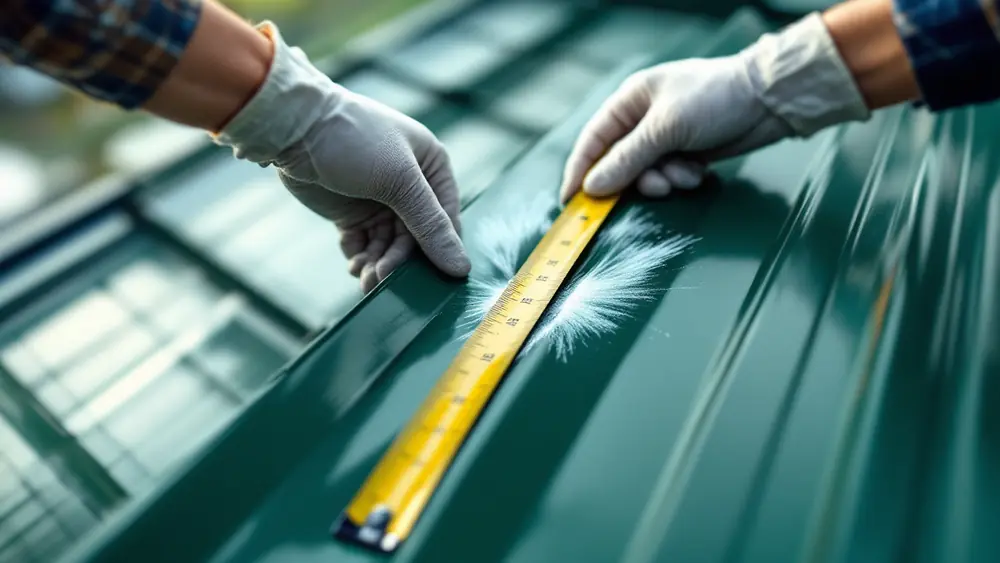
- Photograph every slope with a scale. Shoot dents next to a tape measure, recording diameter to the nearest 1/4 inch, and close-ups at seams, fasteners, ridge caps and panel ends where coating cracks show first.
- Check for functional signs the forms name. Under Texas HO-145 and ISO HO 06 44, these count: water staining in the attic, cracked or crazed coating exposing bare steel, disengaged seams, backed-out fasteners, fractured shingle mats.
- Hire an engineer for metal roofs with heavy denting. Under “same extent” wording, Cannon Falls makes reduced snow or wind load capacity a live argument; under a leak-test wording, the report needs penetration evidence.
- Ask for the policy language relied on, in writing. If the denial cites the exclusion, request the form number and edition date (for example HO 06 44 04 16, the April 2016 ISO edition) and compare it to your forms list.
- Use the appeal path. The appraisal condition in the ISO HO 00 03 form, a licensed public adjuster or a state insurance department complaint are the usual next steps; our denied roof claim guide covers the timeline.
What not to say to the adjuster: do not describe your own roof as “cosmetic,” “minor” or “just dents,” because “cosmetic” is a defined policy term the insurer must prove. Give facts you can document (storm date from the NOAA Storm Events Database, hail size in inches, what you saw in the attic), and do not guess at roof age or earlier storms without records. Our page on the insurance adjuster roof inspection explains what happens on the roof visit.
Should you accept a cosmetic damage exclusion?
Accept it when the credit is above roughly 20% of premium, the roof is built to shrug off dents, and you will not fix dents you could live with. Decline it, or shop another carrier, when the roof is soft metal in hail country or an HOA requires a uniform roof.
| Your situation | Recommendation | Why |
|---|---|---|
| Standing seam or exposed-fastener steel in a territory with frequent 1 inch+ hail | Decline if a quote without it exists | Dent-only losses are the likely claim, and they pay $0 under every wording |
| Class 4 shingles, Texas carrier offering a credit above 20% | Accept, after reading the test | Shingles usually fail functionally (mat fracture) rather than cosmetically, so the excluded share is smaller |
| Credit under 5% of premium | Decline | At 4% on $3,500, 150 years of credits equal one $21,000 dent-only payout |
| Form uses a puncture or leak-only test | Treat as near-total loss of hail roof coverage | Courts in Farris and Amphay required evidence of a present leak or penetration |
| HOA requires matching, undented roofs | Decline | The HOA can require repair even when the policy pays nothing |
| Selling within 5 years | Decline on metal roofs | Visible dents stay with the house, and the policy pays nothing toward them before a sale |
| Insurer will write a metal roof only with the exclusion | Accept, then budget a self-insured roof fund | Setting aside the annual credit each year builds a repair reserve for the excluded dents |
Before you sign, compare the price of the roof itself. At the 2026 Roofing Cost Report range of $10 to $18 per sq ft installed, a dent-only loss on a 2,000 sq ft standing seam roof is a $20,000 to $36,000 decision; see our standing seam metal roof cost breakdown. For damage to siding, gutters and AC units under exterior-surfacing forms like HO 06 43, see hail damage to a house.
Frequently asked questions
What is considered cosmetic damage to a roof?
Cosmetic roof damage is marring, pitting, denting, scratching or discoloration that changes appearance while the roof still keeps water out. ISO form HO 06 44 lists marring, pitting and other superficial damage; the AAIS form adds denting and discoloration. A dent with intact paint and locked seams is usually cosmetic; a puncture, cracked coating exposing steel or a fractured shingle mat is functional and stays covered.
What does cosmetic damage exclusion mean?
It means the insurer will not pay for wind or hail damage that only affects how the roof looks. Coverage returns when the damage meets the form’s functional test: water penetration under leak-test forms, reduced barrier performance “to the same extent as it did before” under ISO and AAIS forms, or failure “over an extended period of time” under Texas HO-145. Read the exact definition in your endorsement.
What not to say to an insurance adjuster about a roof?
Do not call the damage “cosmetic,” “minor” or “just dents,” because cosmetic is a defined policy term the insurer applies. Do not guess the storm date or the roof’s age; look up the date in the NOAA Storm Events Database and bring installation records. State what you observed, such as attic stains or exposed steel, and ask for any denial and the form relied on in writing.
What does a roof exclusion mean on an insurance policy?
A roof exclusion is an endorsement that removes or limits roof coverage. The 5 common types are a cosmetic damage exclusion (no pay for appearance-only damage), an ACV roof surfacing endorsement such as ISO HO 04 93 (depreciated payout), a roof payment schedule (percentage by roof age), a windstorm or hail exclusion (no wind or hail coverage), and a percentage wind and hail deductible.
How much does a cosmetic damage exclusion save on premium?
Insurers set the credit individually, and AAIS described it in 2013 as a small percentage of the wind and hail portion of the premium. The only published schedule is Texas’s 1998 table, which gave a UL 2218 Class 4 roof 4% to 35% off the basic premium by territory, with HO-145 attachable only to credit-receiving policies. Ask your agent for written quotes with and without it.
Is a cosmetic damage exclusion legal in Texas and California?
In Texas, yes: TDI prescribed HO-145 in 1998, and it must be signed and tied to an impact-resistant roof credit; carriers also file their own metal-roof forms. A 2023 bill requiring written rejection acknowledgments, HB 1234, did not pass. For California, no statute or Department of Insurance bulletin on these exclusions turned up in October 2026; check the insurer’s filed forms in SERFF.
Does a cosmetic damage exclusion apply to asphalt shingles?
It can. ISO HO 06 44 defines roof surfacing to include “shingles or tiles,” and Texas HO-145 applies to any impact-resistant roof covering receiving a premium credit, including Class 4 shingles. In practice disputes center on metal, because hail that dents steel without tearing it usually fractures an asphalt shingle’s mat, which counts as functional damage under every wording.
Sources
- Texas Department of Insurance, Commissioner’s Bulletin B-0030-98 (HO-145, TDP-022, roof covering credit tables), effective May 2, 1998.
- Texas Windstorm Insurance Association, Form 420, Exclusion of Cosmetic Damage to Roof Coverings Caused by Hail, revision filed February 17, 2015.
- United States Court of Appeals for the Eighth Circuit, Cannon Falls Area Schools, ISD 252 v. The Hanover American Insurance Co., No. 25-3315, filed July 27, 2026.
- FC&S (PropertyCasualty360), “Roof Surfacing Cosmetic Damage Exclusion,” June 13, 2016 (ISO HO 06 43 and HO 06 44 text and state list).
- Insurance Journal, “Will Wind/Hail Cosmetic Damage Exclusion Endorsements Become the Norm?” March 11, 2013.
- Minnesota Department of Commerce, consumer alert on wind and hail limits.
- Texas Legislature Online, HB 1234 (88th Legislature) history.
- Texas Department of Insurance, Products qualifying for impact-resistant roofing credits, as of February 24, 2023.
- State Farm, Impact-resistant roofing materials (footnote 2 on metal roof exclusions).