
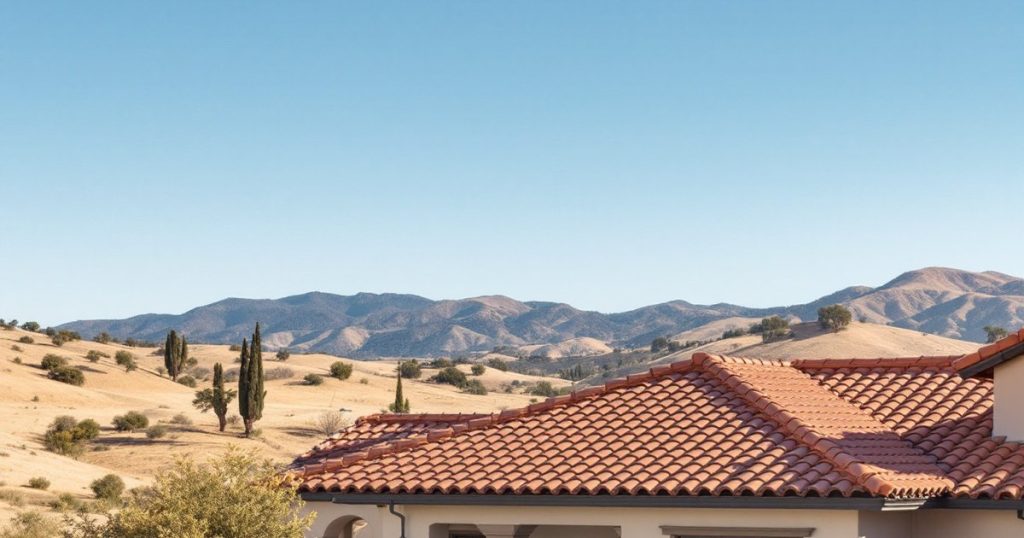
A new roof in California typically costs $8,000 to $22,000 for a 2,000 square foot asphalt shingle roof, or about $4 to $11 per square foot installed, with a statewide average near $15,000, according to HomeAdvisor’s California cost data (updated June 2026). A larger, more detailed job costs far more: Remodeling magazine’s 2025 Cost vs. Value report prices a 3,000 square foot asphalt tear-off at $27,975 in Fresno and $38,289 in San Francisco. Labor explains much of the premium over the rest of the country. California roofers earned a median $30.58 an hour in May 2025, about 15% above the U.S. median of $26.65 (BLS OEWS).
This page covers California only: what drives prices here, which state codes add cost, and how to read a California bid. For national averages, see our roof replacement cost guide. To compare California cities against other U.S. metros, see roof replacement cost by metro.
By The Roofing Brief Team. Last reviewed: October 2026.
Key numbers at a glance
These are the figures most California homeowners are looking for, each from a named source. Treat them as ranges. Your bid can land above or below them depending on roof size, pitch, material, tear-off layers and where you live in the state.
| Measure | California figure | Source |
|---|---|---|
| Typical new roof, 2,000 sq ft (all common materials) | $8,000 to $22,000; average about $15,000 | HomeAdvisor, California, June 2026 |
| Installed cost per square foot | $4 to $11 ($400 to $1,100 per square) | HomeAdvisor, California, June 2026 |
| 3,000 sq ft asphalt tear-off with two skylights | $27,975 (Fresno) to $38,289 (San Francisco) | Remodeling, Cost vs. Value 2025 |
| 3,000 sq ft standing seam metal roof | $48,068 (Fresno) to $64,936 (San Francisco) | Remodeling, Cost vs. Value 2025 |
| Median roofer wage, California vs. U.S. | $30.58 vs. $26.65 per hour (about 1.15 to 1) | BLS OEWS, May 2025, SOC 47-2181 |
| Typical re-roof permit | $255 to $500, set by each city or county | HomeAdvisor, California, June 2026 |
How much does a new roof cost in California in 2026?
Most California homeowners pay $8,000 to $22,000 to replace a 2,000 square foot roof, and the average lands near $15,000, per HomeAdvisor’s June 2026 California page. That works out to about $4 to $11 per square foot installed, including labor and materials. Roof size is the first multiplier, so the same per-foot rate produces very different totals on a small bungalow and a large two-story home.
Roof area is the surface of the roof, not the floor area of the house. A low-slope ranch roof is only slightly larger than its footprint, while a steep, cut-up roof can be much larger. Roofers price in squares, and one square equals 100 square feet.
| Roof area | Squares | California installed cost range | Source |
|---|---|---|---|
| 1,000 sq ft | 10 | $4,000 to $11,000 | HomeAdvisor, California, 2026 |
| 1,500 sq ft | 15 | $6,000 to $16,500 | HomeAdvisor, California, 2026 |
| 2,000 sq ft | 20 | $8,000 to $22,000 | HomeAdvisor, California, 2026 |
| 2,500 sq ft | 25 | $10,000 to $27,500 | HomeAdvisor, California, 2026 |
| 3,000 sq ft | 30 | $12,000 to $33,000 | HomeAdvisor, California, 2026 |
For line-by-line examples at specific sizes, see our guides to a 1,000 sq ft roof, a 1,500 square foot house and a 30-square roof.
Why California roof quotes range from $15,000 to $38,000
California cost guides disagree because they measure different jobs. HomeAdvisor’s figures describe a 2,000 square foot roof and reflect what homeowners report paying. Remodeling magazine’s Cost vs. Value report prices one fixed, fairly demanding job: tear off to bare sheathing, install 30 squares (3,000 square feet) of asphalt shingles on a hip roof, and custom-flash two skylights and a vented ridge.
Put both on a per-square-foot basis and the gap narrows. The table divides each Cost vs. Value job cost by its 3,000 square feet. That per-foot figure is our calculation, and it sits near the top of HomeAdvisor’s $4 to $11 range because the benchmark job includes a hip roof, skylights and full tear-off.
| Market | Asphalt job, 3,000 sq ft | Asphalt per sq ft (our calc.) | Standing seam metal job, 3,000 sq ft | Metal per sq ft (our calc.) | Source |
|---|---|---|---|---|---|
| San Francisco | $38,289 | $12.76 | $64,936 | $21.65 | Remodeling, Cost vs. Value 2025 |
| Los Angeles | $36,417 | $12.14 | $62,069 | $20.69 | Remodeling, Cost vs. Value 2025 |
| Pacific region average | $36,391 | $12.13 | $62,152 | $20.72 | Remodeling, Cost vs. Value 2025 |
| Sacramento | $31,775 | $10.59 | $54,356 | $18.12 | Remodeling, Cost vs. Value 2025 |
| Modesto | $31,528 | $10.51 | $55,266 | $18.42 | Remodeling, Cost vs. Value 2025 |
| Fresno | $27,975 | $9.33 | $48,068 | $16.02 | Remodeling, Cost vs. Value 2025 |
| U.S. national average | $31,871 | $10.62 | $51,865 | $17.29 | Remodeling, Cost vs. Value 2025 |
Two practical reads follow. A simple 20-square roof in the Central Valley can reasonably come in under $15,000, while a complex 30-square roof in the Bay Area can pass $35,000 without any sign of overcharging. When you compare quotes, compare the price per square for the same scope, not the totals.
California roof replacement cost by city
Coastal metros cost the most and Central Valley metros the least. In the 2025 Cost vs. Value data, the same asphalt job costs 37% more in San Francisco ($38,289) than in Fresno ($27,975). HomeAdvisor’s homeowner-reported averages show the same order: San Jose at $16,075 and Los Angeles at $16,500, versus $7,750 in Fresno.
| City | HomeAdvisor typical range (avg.) | Cost vs. Value asphalt job, 3,000 sq ft | Median roofer wage, May 2025 | Local roofer list |
|---|---|---|---|---|
| San Jose | $10,475 to $22,075 ($16,075) | Not surveyed | $36.85/hr | San Jose roofers |
| San Francisco | $8,750 to $18,675 ($13,625) | $38,289 | $35.74/hr | San Francisco roofers |
| Los Angeles | $9,500 to $23,600 ($16,500) | $36,417 | $30.56/hr | Los Angeles roofers |
| Sacramento | $7,625 to $16,025 ($11,500) | $31,775 | $30.44/hr | Sacramento roofers |
| Modesto | Not listed | $31,528 | $30.26/hr | Modesto roofers |
| San Diego | $6,400 to $15,975 ($11,025) | Not surveyed | $29.90/hr | San Diego roofers |
| Fresno | $6,075 to $9,950 ($7,750) | $27,975 | $30.00/hr | Fresno roofers |
Sources: HomeAdvisor California roof cost page (June 2026); Remodeling, Cost vs. Value 2025; BLS OEWS May 2025 metro estimates for SOC 47-2181, as published by O*NET OnLine. Wage rows use the metro area (for example, Los Angeles-Long Beach-Anaheim). HomeAdvisor city ranges cover smaller average jobs than the Cost vs. Value benchmark, so read the two columns separately.
Cost by roofing material in California
Material choice can double or triple a California roof price. On a 2,000 square foot roof, HomeAdvisor’s 2026 California data puts asphalt shingles at $5,875 to $24,400, metal at $5,000 to $37,600 and clay tile at $28,000 to $38,000. Tile and metal carry more weight in California than in most states because they are common on Spanish and Mediterranean homes and because they are widely available with Class A fire ratings.
| Material | California cost, 2,000 sq ft roof | California-specific note | Source |
|---|---|---|---|
| Asphalt shingles | $5,875 to $24,400 | Many lines carry a Class A listing; in cool-roof climate zones the shingle color must meet the reflectance rule or qualify for an exception | HomeAdvisor CA 2026; CDI; CRRC |
| Metal | $5,000 to $37,600 | Standing seam benchmark: $16.02 to $21.65 per sq ft in California Cost vs. Value markets | HomeAdvisor CA 2026; Remodeling CVV 2025 |
| Clay tile | $28,000 to $38,000 | Heavy-roof cool-roof exception applies only at 25 lb/sq ft or more; confirm installed weight with the manufacturer | HomeAdvisor CA 2026; CRRC 2025 code summary |
| Concrete tile | $26,000 to $36,000 | Same weight caveat as clay tile | HomeAdvisor CA 2026; CRRC 2025 code summary |
| Slate | $20,000 to $40,000 | Structural check often needed for weight | HomeAdvisor CA 2026 |
| Wood shingles | $12,000 to $16,700 | Wood roofing sold in California must be listed by the State Fire Marshal and pass weathering tests | HomeAdvisor CA 2026; Cal. Health and Safety Code 13132.7(j) |
For how Class A ratings are tested and which assemblies qualify, see our guide to Class A fire-rated roofs.
Why California roofing labor costs more
California roofers earned a median $30.58 an hour ($63,600 a year) in May 2025, versus $26.65 ($55,440) nationally, a ratio of about 1.15 to 1, per BLS Occupational Employment and Wage Statistics. Mean pay shows the same gap: $32.41 versus $27.95 an hour. California employed an estimated 21,190 roofers, about 16% of the 135,490 nationwide.
That 15% wage premium lines up closely with the cost premium in the 2025 Cost vs. Value data, where the Pacific region’s asphalt job ($36,391) runs 14% above the national average ($31,871). Labor is often half or more of a roof’s installed cost, so a wage gap carries straight through to the bid.
Inside California, wages are flatter than prices. Los Angeles, San Diego, Riverside, Sacramento, Fresno, Bakersfield, Stockton and Modesto all fall between $29.15 (Bakersfield) and $30.56 (Los Angeles) at the hourly median. Only the Bay Area breaks away: $35.74 in San Francisco-Oakland and $36.85 in San Jose. Fresno and San Francisco differ by 19% in median wage but 37% in Cost vs. Value job cost, so overhead, disposal fees, access and permits widen the coastal premium beyond labor alone. Our roofer salary by state report ranks California against every other state.
California code rules that change the price
Three state rules can add cost to a California re-roof: the Title 24 cool roof requirement, the fire classification rule in the Health and Safety Code, and the wildland-urban interface (WUI) code for fire hazard zones. Each one is triggered by how much of the roof you replace and where the house sits, so two identical houses can face different requirements.
| Rule | When it applies to a re-roof | What it requires | Source |
|---|---|---|---|
| Title 24 cool roof, steep slope (2:12 or steeper) | 50% or more of the roof replaced, in climate zones 4 and 8 to 15 | Aged solar reflectance 0.20 and thermal emittance 0.75, or SRI 16, using a CRRC-rated product | 2025 California Energy Code 150.2(b)1I, per CRRC chart (Dec. 2025) and CF1R-ALT-01-E reroof form |
| Title 24 cool roof, low slope (under 2:12) | 50% or more replaced, in climate zones 4 and 6 to 15 | Aged solar reflectance 0.63 and thermal emittance 0.75, or SRI 75; roof-deck insulation can trade off reflectance | 2025 California Energy Code 150.2(b)1I, per CRRC chart |
| Fire classification, very high fire hazard severity zone | Whole roof if more than 50% is replaced within one year; any covering applied in a repair must also meet the class | Entire roof covering at least Class A (limited local exceptions) | Cal. Health and Safety Code 13132.7(d) |
| Fire classification, other state responsibility areas (not moderate zones) | Same 50% in one year trigger | At least Class B | Cal. Health and Safety Code 13132.7(c) |
| Fire classification, all other areas | Same 50% in one year trigger | At least Class C | Cal. Health and Safety Code 13132.7(b) |
| Wildland-Urban Interface Code | Work in mapped fire hazard severity zones | Wildfire construction rules formerly in CBC Chapter 7A and CRC R337, now consolidated in Title 24 Part 7 | 2025 California WUI Code, effective Jan. 1, 2026 (City of San Diego code change report) |
Title 24 cool roof rules on a re-roof
When 50% or more of a home’s roof is replaced, California’s 2025 Energy Code requires a cool roof in certain climate zones. On steep-slope homes the rule covers climate zones 4 and 8 through 15, per the Cool Roof Rating Council’s December 2025 summary of section 150.2(b)1I. Those zones include the state’s reference weather stations at San Jose (zone 4), Burbank-Glendale (zone 9), Sacramento (zone 12) and Fresno (zone 13).
Several exceptions can remove the requirement on a steep-slope re-roof: ceiling insulation of at least R-38 (or a U-factor of 0.025 or lower), an attic radiant barrier meeting section 150.1(c)2, R-2 or more of continuous insulation at the roof deck, or no ducts in the attic in climate zones 2, 4, 9, 10, 12 and 14. Some cost guides still describe the residential re-roof rule as covering only zones 10 to 15. That is the new-construction list, and it misses zones 4, 8 and 9, which include San Jose and parts of the inland Los Angeles basin. Look up your zone by ZIP code with the California Energy Commission, and ask your roofer for the CRRC product ID on the CF1R-ALT-01-E form.
Fire ratings and the wildfire code
California Health and Safety Code 13132.7 sets a fire class for any roof where more than 50% of the area is replaced within one year: Class A in very high fire hazard severity zones, Class B in most state responsibility areas, and Class C elsewhere. The installer must give the owner the manufacturer’s certification of the roof covering’s class. Cities and fire districts can adopt stricter rules.
From January 1, 2026, the wildfire construction rules that used to sit in Chapter 7A of the California Building Code and section R337 of the Residential Code are consolidated into a new Part 7, the California Wildland-Urban Interface Code. Cities can add local amendments. San Diego, for example, proposed requiring noncombustible drip edge flashing in its WUI areas.
Permits
A full re-roof in California generally needs a building permit from the city or county, and the fee is set locally. HomeAdvisor puts typical California permit costs at $255 to $500. On a $12,000 job, our roof permit cost by metro data shows about $369 in Los Angeles. Many cities base the fee on job valuation, so a tile or metal roof can carry a higher permit fee than asphalt.
What changes the price of a roof in California
Size and material set the baseline, and California-specific factors move the bid from there. The table pairs each driver with its typical effect and the source behind it. Not every factor applies to every house, so ask each bidder to list which ones they priced in.
| Driver | Effect on a California bid | Source |
|---|---|---|
| Metro location | Same asphalt job costs 37% more in San Francisco than Fresno | Remodeling, Cost vs. Value 2025 |
| Bay Area labor | Median roofer wage $35.74 to $36.85/hr vs. $30.58 statewide | BLS OEWS, May 2025 |
| Material: metal vs. asphalt | Standing seam ran about 1.7 times the asphalt job in each California CVV market | Remodeling, Cost vs. Value 2025 |
| Climate zone 4 or 8 to 15 (steep slope) | May require a CRRC-rated cool product unless an exception applies | 2025 Energy Code 150.2(b)1I, via CRRC |
| Very high fire hazard severity zone | Entire covering must be Class A when more than 50% is replaced in a year | Health and Safety Code 13132.7(d) |
| Partial replacement under 50% | New covering must still meet the local fire class, but the whole-roof fire and cool roof triggers may not apply; confirm with the building department | H&S Code 13132.7; CF1R-ALT-01-E form |
| Permit | Typically $255 to $500, set by city or county | HomeAdvisor, California, 2026 |
| Season | Fall is often the best window; spring rain can delay work | HomeAdvisor, California, 2026 |
Insurance, wildfire and roof age in California
A new roof can affect both your premium and your ability to keep coverage in California. The California Department of Insurance’s Safer from Wildfires regulation requires insurers to recognize listed mitigation steps with a discount, and a Class A fire-rated roof is one of them. The department says most roofs qualify, including asphalt shingles, concrete, brick or masonry tiles, and metal shingles or sheets.
Nonrenewals are a real risk in California. Our insurance non-renewal and roof age report shows California at a 3.18% homeowner nonrenewal rate in 2024, second only to Florida (Weiss Ratings analysis of NAIC data). If an insurer will not renew, California Insurance Code section 678 requires written notice at least 75 days before the policy expires, with the specific reasons. Homeowners who cannot find coverage often move to the California FAIR Plan; see our FAIR Plan growth and roof condition report.
Hiring a roofer in California: license and contract rules
A California roof replacement must be done by a contractor licensed by the Contractors State License Board (CSLB), usually in the C-39 Roofing classification. The minor-work exemption covers only jobs under $1,000 total that also need no building permit (Business and Professions Code 7048), so it never covers a permitted re-roof. Every license must carry a $25,000 contractor’s bond, and C-39 roofers must carry workers’ compensation even with no employees, per the CSLB.
Use these steps to check a California bid before you sign:
- Look up the license number on the CSLB website and confirm it is active and in the C-39 (or a qualifying) classification.
- Confirm the workers’ compensation policy shows on the CSLB record; for a C-39 license it is required.
- Check the down payment. Home improvement contracts must state that the down payment may not exceed $1,000 or 10% of the contract price, whichever is less (Business and Professions Code 7159).
- Find the cancellation notice. Most home improvement contracts must include a three-day right to cancel, five days for senior citizens, and seven business days for repairs after a declared disaster (B&P Code 7159).
- Ask which climate zone and fire hazard zone the bidder used, and whether the price includes the cool roof product or exception paperwork and the Class A certification.
- Confirm the permit, tear-off, disposal and any solar panel removal and reinstall are written into the price.
Programs and tax credits for California roofs
There is no federal tax credit for a standard roof replacement on 2026 work. Asphalt and metal roofs stopped qualifying for the 25C credit after 2022, and Public Law 119-21 ended the 25C credit for property placed in service after December 31, 2025. It also ended the 25D residential clean energy credit, which once covered solar shingles, for expenditures made after that date. Check current IRS guidance and a tax professional.
State help is narrow. The California Wildfire Mitigation Program, created by Assembly Bill 38 (2019) and run jointly by Cal OES and CAL FIRE, funds home-hardening retrofits for homes in communities with high wildfire risk. It runs county by county in a pilot phase: as of June 2025, Lake, San Diego, Shasta and Siskiyou counties were being served, per the Georgetown Climate Center. Check with your county or CAL FIRE before assuming a grant is available. For other options, see our list of roof repair assistance programs.
Which roof should you pick in California?
The right California roof depends on fire zone, climate zone, budget and how long you plan to stay. Use this table as a starting point, then confirm code requirements with your building department and get at least three itemized bids for the same scope.
| Your situation | Usually the better fit | Why |
|---|---|---|
| Tight budget, valley or inland home, staying under 10 years | Architectural asphalt in a CRRC-rated cool color if your zone requires it | Lowest installed cost; Fresno and Modesto CVV asphalt jobs ran $9.33 to $10.51 per sq ft |
| Very high fire hazard severity zone | Class A assembly: asphalt, tile or metal with a Class A listing | Required under H&S Code 13132.7(d) when more than 50% is replaced; counts toward Safer from Wildfires discounts |
| Spanish or Mediterranean home with existing tile | Clay or concrete tile, reusing sound tile where the roofer allows | Matches the architecture; $26,000 to $38,000 for 2,000 sq ft per HomeAdvisor |
| Long ownership, hot inland zone, solar planned | Standing seam metal | Higher upfront cost ($16.02 to $21.65 per sq ft in CVV California markets) but suits solar mounting and reflective finishes |
| Low-slope roof in zones 4 or 6 to 15 | Reflective single-ply or coating meeting 0.63 aged reflectance, or added deck insulation | Low-slope cool roof rule under section 150.2(b)1I |
Find a vetted roofer in your California metro
We research and score licensed contractors metro by metro. These California pages list the contractors we researched and scored in each metro:
- Southern California: Los Angeles, San Diego, Riverside, Oxnard, El Centro
- Bay Area and North Coast: San Francisco, San Jose, Santa Rosa, Vallejo, Santa Cruz
- Central Coast: Salinas, San Luis Obispo, Santa Maria
- Central Valley: Sacramento, Fresno, Bakersfield, Stockton, Modesto, Visalia, Merced, Yuba City
- Northern California: Redding, Chico
Frequently asked questions
What is the average cost of replacing a roof in California?
The average California roof replacement costs about $15,000 for a 2,000 square foot roof, within a typical range of $8,000 to $22,000, per HomeAdvisor’s June 2026 California data. That equals about $4 to $11 per square foot installed. Larger or more complex jobs cost more: Remodeling’s 2025 Cost vs. Value report prices a 3,000 square foot asphalt tear-off at $27,975 in Fresno and $38,289 in San Francisco.
Is $30,000 too much for a roof?
In California, $30,000 can be fair or high depending on size and material. For a 3,000 square foot asphalt roof with skylights, it sits inside the 2025 Cost vs. Value range of $27,975 (Fresno) to $38,289 (San Francisco). For a simple 2,000 square foot asphalt roof, it is $15 per square foot, above HomeAdvisor’s $4 to $11 California range, so ask for itemized bids from other licensed roofers.
What is the 25% rule for roofing?
The 25% rule is a Florida Building Code rule: if 25% or more of a roof section is repaired or replaced, the whole section must meet current code. Since 2022, Florida Statutes 553.844(5) limit that for roofs built to the 2007 code or later. California has no 25% rule. Its triggers are 50%: the Health and Safety Code fire class rule and the Title 24 cool roof rule.
Will insurance cover a 20 year old roof in California?
It depends on your policy and insurer. Many policies cover sudden damage from a covered peril such as fire or wind on an older roof, but not wear and tear, and some settle older roofs at actual cash value. Insurers can decline to renew. California Insurance Code 678 requires at least 75 days’ written notice with specific reasons. A Class A roof also counts toward Safer from Wildfires discounts.
Do I need a permit to replace my roof in California?
Yes, a full roof replacement in California generally needs a building permit from your city or county, and the contractor usually pulls it. HomeAdvisor puts typical California permit fees at $255 to $500. Because a re-roof needs a permit, the $1,000 minor-work exemption in Business and Professions Code 7048 does not apply, so the roofer must hold a CSLB license.
Does California require a cool roof when I replace my roof?
In many cases, yes. If 50% or more of the roof is replaced, the 2025 Energy Code requires a CRRC-rated cool product on steep-slope roofs in climate zones 4 and 8 through 15, with aged solar reflectance of 0.20 and thermal emittance of 0.75 or SRI 16. Exceptions include R-38 ceiling insulation or an attic radiant barrier. Your building department confirms the requirement.
Sources
- HomeAdvisor, “How Much Does a New Roof Cost in California?”, updated June 17, 2026.
- Remodeling magazine (Zonda), Cost vs. Value Report 2025: Pacific region, Los Angeles, San Francisco, Sacramento, Modesto and Fresno; project specifications for Roofing Replacement, Asphalt Shingles and Metal.
- U.S. Bureau of Labor Statistics, Occupational Employment and Wage Statistics, May 2025, SOC 47-2181 Roofers (state, national and metro estimates; metro figures via O*NET OnLine).
- Cool Roof Rating Council, “2025 California Energy Code: Mandatory and Prescriptive Cool Roof Requirements,” December 4, 2025; City of Roseville, 2025 Residential Re-Roof CF1R-ALT-01-E form and instructions (revised January 1, 2026).
- California Health and Safety Code section 13132.7; Business and Professions Code sections 7048, 7071.6 and 7159; Insurance Code section 678.
- City of San Diego Fire-Rescue Department, Code Change Report, 2025 California Wildland-Urban Interface Code.
- California Department of Insurance, Safer from Wildfires.
- Contractors State License Board, Workers’ Compensation Requirements.
- Georgetown Climate Center, Adaptation Clearinghouse, California Wildfire Mitigation Program.
- Public Law 119-21, sections 70505 and 70506; Florida Statutes section 553.844(5).
Reviewed by The Roofing Brief Team. Last reviewed: October 2026. Cost figures are third-party estimates and code summaries change with each code cycle; confirm requirements with your local building department and get written bids from licensed contractors.