
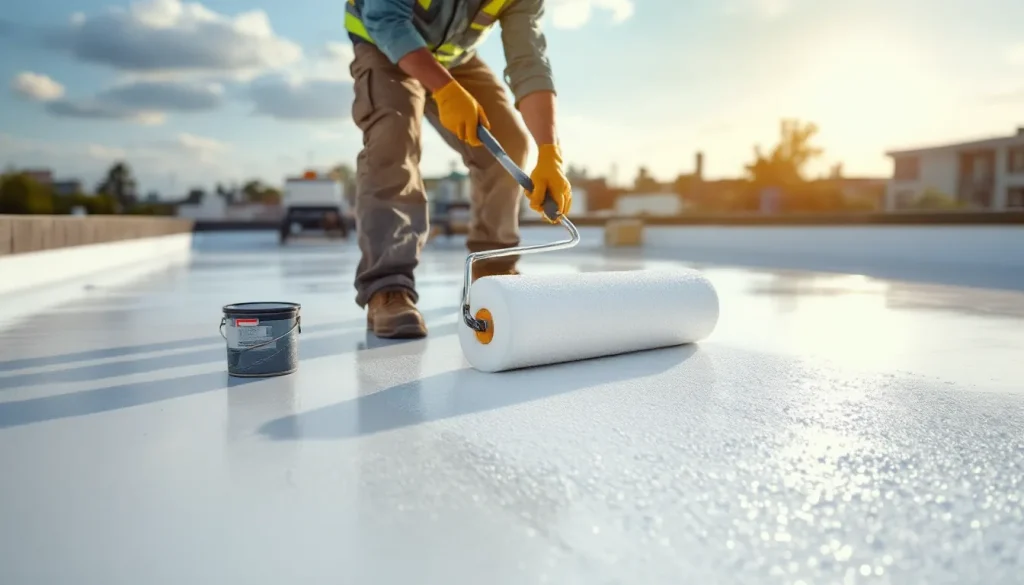
Elastomeric roof coating (see our roof coating types) is an acrylic, silicone, or polyurethane membrane applied as a liquid that cures to a flexible, waterproof skin. The 2026 installed cost ranges from $1.50 to $3.50 per square foot, lifespan averages 10 to 20 years depending on chemistry and application, and the right use case is restoring an aging commercial or low-slope residential roof rather than a steep-slope shingle roof. The category gets oversold to homeowners with asphalt shingle roofs where it actively shortens roof life by trapping moisture; it earns its reputation on commercial flat roofs, RV roofs, and mobile home metal roofs where it can extend service life by 10 to 15 years at one third the cost of full replacement.
The short version
- Elastomeric coating is a liquid-applied membrane: acrylic, silicone, or polyurethane chemistry.
- Installed cost: $1.50 to $3.50 per square foot (acrylic cheapest, polyurethane most expensive).
- Lifespan: 7 to 20 years depending on chemistry, substrate, and application thickness.
- Right use cases: commercial flat roofs, RV roofs, mobile home metal roofs, low-slope BUR restoration.
- Wrong use cases: asphalt shingle roofs (traps moisture, voids warranty), steep slopes, ponding water (acrylic).
- ASTM D6083 is the performance standard for liquid-applied elastomeric coatings.
The Short Answer: When Elastomeric Works Plus Cost
Elastomeric roof coating is a category, not a single product. The chemistry options are acrylic (water-based, cheapest, 7 to 12 year life), silicone (best ponding water performance, 15 to 25 year life), and polyurethane (highest durability and chemical resistance, 15 to 20 year life). The right choice depends on substrate, climate, slope, and ponding water exposure.
The installed cost in 2026 commercial and residential markets: acrylic elastomeric runs $1.50 to $2.50 per square foot installed; silicone elastomeric runs $2.50 to $4.00 per square foot; polyurethane elastomeric runs $3.00 to $5.00 per square foot. Each price includes substrate preparation, primer, two coats of elastomeric, and reinforcing fabric at seams and penetrations. DIY material-only costs are roughly half of installed cost.
Elastomeric coating is the right answer when you have a low-slope or flat commercial roof with 5 to 10 years of remaining life that you want to extend, or a residential metal mobile home or RV roof that needs sealing. It is the wrong answer when sold to homeowners with asphalt shingle roofs as “roof restoration” or “white roof coating” because it traps moisture under the shingles and accelerates failure.
The 3 Main Elastomeric Chemistries
| Chemistry | Cost Installed (per sq ft) | Lifespan | Best Use Case |
|---|---|---|---|
| Acrylic | $1.50 to $2.50 | 7 to 12 years | Sloped roofs, dry climates, budget projects |
| Silicone | $2.50 to $4.00 | 15 to 25 years | Ponding water, hot climates, recoatable |
| Polyurethane | $3.00 to $5.00 | 15 to 20 years | Foot traffic areas, chemical exposure |
| SBS-modified (hybrid) | $2.00 to $3.50 | 10 to 15 years | Low-slope BUR restoration |
Each chemistry has documented strengths and weaknesses verified through ASTM D6083 (the master performance standard for liquid-applied elastomeric coatings) and Cool Roof Rating Council (CRRC) listings for solar reflectance. The chemistry choice is not arbitrary; it should match the specific application requirements.
Acrylic Elastomeric: Cheapest, $1.50 to $2.50 per sq ft, 7 to 12 Year Life
Acrylic elastomeric is the most common chemistry on the residential market because it is water-based (cleanup with water), it is inexpensive (raw materials cost roughly $25 to $40 per 5-gallon pail), and it cures quickly. Brand examples include Henry 587 Tropi-Cool, GAF Liquid Applied Acrylic, APOC Acri-Brite, and Behr Premium Roof Coating.
The strengths: high solar reflectance (typically 80 to 88 percent when new), low odor during application, fast cure, and broad substrate compatibility. The weaknesses: poor ponding water resistance (acrylic re-emulsifies when standing water sits on it for more than 48 hours), reflectance drops 20 to 30 percent in the first 2 years from dirt pickup, and the lifespan in field exposure rarely matches manufacturer marketing claims.
The right acrylic use case: a sloped or low-slope (1:12 or steeper) commercial roof in a dry climate with good drainage. The wrong use case: a flat commercial roof with ponding water, where the acrylic will fail in 3 to 5 years.
Silicone Elastomeric: Best Ponding Water Resistance
Silicone elastomeric is the gold standard for ponding water performance and the dominant chemistry on commercial flat roof restoration. Brand examples include GE Silicones SCM Series, Gaco S20, APOC Solar Magic, Henry 587 HS Silicone, and Mule Hide 100 percent Silicone.
The strengths: silicone does not re-emulsify in standing water, UV durability outlasts other chemistries, and silicone is the only chemistry that can be recoated indefinitely without removing the previous coating layer (a major lifecycle cost advantage). The weaknesses: silicone picks up dirt and loses reflectance faster than acrylic (the surface goes from 88 percent reflectance to 60 percent or lower in 3 to 5 years), silicone is incompatible with most other coatings (anything applied over silicone tends to delaminate), and silicone is one of the most expensive chemistries.
Silicone deserves its own deep-dive guide; see silicone roof coating for the full technical breakdown including single-component vs two-component systems, substrate compatibility, and brand comparison.
Polyurethane Elastomeric: Highest Durability, $3 to $5 per sq ft
Polyurethane elastomeric is the toughest chemistry in the elastomeric category. It carries the highest tear resistance (ASTM D5147), highest tensile strength (ASTM D2370), and best chemical resistance of any liquid-applied roof coating. Two-component aromatic polyurethanes are the chemistry used in roof coatings; aliphatic polyurethanes are used as topcoats over aromatic for UV stability.
Brand examples include Henry 787 Polyurethane, GAF Premium Polyurethane, Garland 4000-LR, and Tropical Roofing Products Polyurethane. The cost premium (35 to 60 percent above acrylic) is justified by durability in foot traffic areas, around HVAC equipment, on parking decks, and on roofs with chemical exposure (restaurant grease, exhaust deposits).
Polyurethane is also the only elastomeric chemistry rated for vehicular traffic when applied at appropriate thickness with aggregate broadcast. This makes it the standard for plaza decks, parking decks, and helipad surfaces.
Where Elastomeric Coating Works Well
The applications where elastomeric coating delivers genuine value:
- Commercial flat roof restoration on EPDM, TPO, modified bitumen, BUR, or metal (typical use case)
- RV roof sealing and reflectance restoration (Dicor, EternaBond, and Liquid Roof are RV-specific brands)
- Mobile home metal roof restoration (extending life by 10 to 20 years on otherwise sound structures)
- Concrete tile roof restoration (specialty acrylics tinted to match tile color)
- Spray polyurethane foam (SPF) roof topcoat (the protective layer over SPF substrate)
- Low-slope shed and outbuilding roofs
In each case, the existing substrate must be structurally sound. Coating is restoration, not replacement. A failed substrate cannot be salvaged with coating; the structural problem must be addressed first.
Where Elastomeric Coating Does NOT Work
The applications where elastomeric coating is sold but should not be used:
- Asphalt shingle roofs (traps moisture, voids manufacturer warranty, accelerates shingle failure)
- Steep-slope (greater than 4:12 pitch) residential roofs (coating wears unevenly, runoff strips coating)
- Roofs with active leaks (coating is not a leak repair product)
- Roofs with widespread substrate failure (deteriorated EPDM, blistered BUR)
- Roofs with ponding water and acrylic chemistry (acrylic re-emulsifies)
- Cedar shake or wood shingle roofs
- Clay or concrete tile roofs in HVHZ (voids Miami-Dade NOA)
The biggest market abuse is the residential asphalt shingle “roof restoration” scam. Roofers (often door-to-door storm chasers) sell homeowners on a $4,000 to $8,000 elastomeric coating to “restore” a 15 to 20 year old asphalt roof. The coating traps moisture under the shingles, accelerates granule loss, and voids the shingle manufacturer warranty. The same roof would last another 5 to 10 years uncoated; the coating typically shortens remaining life to 2 to 4 years. See roofing scams for the full pattern.
Commercial Flat Roof Restoration Use Case
The largest legitimate use case (see our commercial roof restoration cost) for elastomeric coating is commercial flat roof restoration. A typical 25,000 square foot single-ply TPO or EPDM roof reaching 15 to 20 years of service life has two options: full replacement at $8 to $14 per square foot, or restoration coating at $2.50 to $4.50 per square foot. The coating extends life by 10 to 15 years if properly applied to a structurally sound substrate.
The qualifying criteria for a coating restoration: substrate is sound (no widespread blistering, splitting, or seam failure), there is at least 5 years of remaining substrate life expected, and the building owner is not planning to sell or substantially renovate within the next 10 years. If any of these fail, the economics favor full replacement.
The restoration process: power wash and clean substrate, repair seams and penetrations with reinforcing fabric and mastic, prime substrate (if required by coating manufacturer), apply coating at manufacturer-specified dry film thickness (typically 20 to 30 mils for silicone, 25 to 40 mils for acrylic). A 2-coat system delivers materially better performance than a 1-coat system on most substrates.
Mobile Home and RV Roof Use Case
Mobile home metal roofs and RV roofs are the legitimate residential applications for elastomeric coating. Both substrates are metal (typically galvanized steel or aluminum on mobile homes; aluminum or rubber EPDM on RVs) and benefit from the waterproofing and reflectance of a coating.
For mobile home metal roofs, the typical specification is a 100 percent acrylic elastomeric applied at 25 to 30 mils dry film thickness over a primed substrate. Cost ranges from $1.50 to $2.50 per square foot installed for a typical 700 to 1,200 square foot mobile home roof. Lifespan: 7 to 12 years before recoat needed.
For RV roofs, the specification depends on the original substrate. EPDM rubber RV roofs use Liquid Roof (the only chemistry compatible with EPDM rubber without delamination). Aluminum or fiberglass RV roofs accept standard elastomeric coatings. Cost ranges from $500 to $1,500 for materials on a typical 30 to 40 foot RV roof.
Installation Process: Cleaning, Primer, Coat 1, Coat 2
Proper elastomeric coating installation follows a four-step process. Skipping or shortcutting any step is the primary cause of coating failure within the warranty period.
- Substrate cleaning: Power wash at 2,500 to 3,000 PSI to remove loose dirt, biological growth, oxidation, and chalking. Allow 24 to 48 hours to dry fully before primer application.
- Repair and reinforcement: Repair seams, penetrations, and damaged areas with reinforcing polyester fabric embedded in coating or compatible mastic. This step is non-negotiable on commercial substrates.
- Primer application: Apply manufacturer-specified primer if required for the substrate. Silicone over most substrates requires primer; some acrylics are self-priming on cleaned EPDM or TPO.
- Coating application: Apply two coats of elastomeric at the manufacturer-specified wet film thickness, with the second coat applied perpendicular to the first. Allow proper dry time between coats per manufacturer specifications.
The total installation time for a 25,000 square foot commercial roof is typically 5 to 10 days depending on weather, drying conditions, and crew size. Temperature must remain above 50 F (and below 100 F substrate temperature) during application and cure; humidity must remain below 85 percent.
Brand Comparison: Henry, GAF Liquid Applied, APOC, GacoFlex
| Brand | Chemistry Options | Warranty Range | Notes |
|---|---|---|---|
| Henry | Acrylic, silicone, polyurethane | 5 to 15 years | Wide distribution, mid-tier quality |
| GAF Liquid Applied | Acrylic, silicone | 5 to 20 years | Tied to GAF roof system warranty |
| APOC | Acrylic, silicone, polyurethane | 5 to 15 years | Strong residential and RV presence |
| GacoFlex (Gaco) | Silicone, acrylic | 10 to 50 years | Premium silicone, longest warranties |
| Tropical Roofing Products | Acrylic, polyurethane | 10 to 20 years | Florida-focused, commercial market |
| Mule Hide | Acrylic, silicone | 10 to 20 years | Commercial contractor-focused |
| Karnak | Acrylic, asphalt-modified | 5 to 12 years | Legacy BUR coating brand |
| EternaBond / Dicor | RV-specific | RV market | RV roof sealing specialists |
Brand selection should follow chemistry and substrate first, brand second. A premium acrylic from one brand will outperform a budget silicone from another brand in most use cases. Verify the specific product carries ASTM D6083 listing and (for cool roof applications) Cool Roof Rating Council registration.
ASTM D6083 Performance Standard
ASTM D6083 is the master ASTM standard for liquid-applied acrylic coatings used in roofing. It specifies minimum performance for tensile strength (200 PSI minimum), elongation (100 percent minimum), permeance (50 perms maximum), tear resistance (40 lbf/inch minimum), and accelerated weathering resistance. Products that meet ASTM D6083 carry the documentation in their data sheet.
For silicone, the relevant standard is ASTM D6694 (single-component silicone). For polyurethane, ASTM D6694 and ASTM D6947 apply. The presence of a current ASTM listing on a product data sheet is the minimum credibility threshold for a commercial-grade coating; products without an ASTM listing are typically lower-grade residential acrylics.
Reflectivity and Cool Roof Rating (Energy Star)
Cool roof reflectivity is a major selling point for elastomeric coatings, particularly white acrylic and silicone. The Cool Roof Rating Council (CRRC) maintains a publicly searchable database of rated products with three-year aged solar reflectance values. Energy Star roof products meet a 65 percent initial solar reflectance and 50 percent three-year aged reflectance threshold for low-slope roofs.
The honest issue is that elastomeric coating reflectance degrades quickly in field conditions. A coating starting at 88 percent reflectance can drop to 60 percent within 2 years from dirt pickup, biological growth, and surface chalking. The three-year aged values on CRRC listings are more honest than the initial values for budgeting energy savings.
Typical energy savings from a cool roof coating on a commercial building: 7 to 15 percent reduction in air conditioning load during cooling season, equivalent to $0.15 to $0.40 per square foot per year in southern climates. The savings recoup the coating cost in 8 to 15 years on top of the lifespan extension value.
Repair vs Recoat Cycle
Elastomeric coatings have predictable maintenance cycles. The first recoat typically happens at 7 to 10 years for acrylic, 10 to 15 years for silicone, and 10 to 15 years for polyurethane. The recoat is materially cheaper than the initial coating because the substrate preparation is lighter (no major repairs, just cleaning).
The silicone advantage in the recoat cycle: silicone can be recoated with silicone indefinitely without removing the previous coating layer. Each recoat adds another 10 to 15 years of life. Acrylic and polyurethane recoat cycles eventually require substrate-down replacement because the buildup gets too thick.
Spot repair of elastomeric coatings between full recoats is straightforward: clean the area, apply reinforcing fabric over any damage, and brush or roll fresh coating over the repair. Most commercial maintenance contracts include annual inspection plus spot repair for $0.05 to $0.15 per square foot per year.
Manufacturer Warranty Realities (Typically 5 to 15 Years)
Manufacturer warranties on elastomeric coatings range from 5 years (entry-level acrylic) to 50 years (premium silicone systems with full manufacturer participation in installation specification). The marketed warranty length and the practical warranty length are usually different.
| Warranty Type | Coverage Level | Typical Length |
|---|---|---|
| Material-only warranty | Defective product replacement | 5 to 20 years |
| Material-plus-labor warranty | Defective product + labor to recoat | 10 to 25 years |
| NDL (no dollar limit) warranty | Full repair coverage without cap | 15 to 50 years |
| System warranty (contractor + manufacturer) | Joint coverage of install | 10 to 30 years |
The 30-year and 50-year silicone warranties typically require: manufacturer-trained applicator, pre-job substrate evaluation, manufacturer-specified dry film thickness verified by core sampling, and annual inspection during the warranty period. The marketed warranty length is meaningless if you do not meet the application requirements.
Cost vs TPO Membrane Replacement
The economic decision between coating restoration and full TPO replacement is the central question for commercial flat roof projects. The math:
| Option | Cost (25,000 sq ft) | Expected Life | Cost per Year |
|---|---|---|---|
| Acrylic elastomeric restoration | $50,000 to $75,000 | 10 years | $5,000 to $7,500 |
| Silicone elastomeric restoration | $80,000 to $110,000 | 15 to 20 years | $5,000 to $7,000 |
| Full TPO replacement (60-mil) | $225,000 to $325,000 | 20 to 25 years | $11,000 to $16,000 |
| Full TPO tear-off plus replacement | $300,000 to $425,000 | 20 to 25 years | $14,000 to $21,000 |
The per-year cost favors coating restoration when the existing substrate is sound. The decision tilts toward replacement when the substrate has structural failure, when the building is being sold within 5 years, or when the next coating cycle would conflict with planned tenant work. For TPO vs EPDM analysis see TPO vs EPDM roofing.
Real Commercial Roofing Operator Practices
The major commercial roofing platforms in the US (Tecta America, CentiMark, Tremco WTI, KPost, Baker Roofing, Maxwell Roofing, plus the various PE-backed regional roll-ups) all offer coating restoration as a standard service. Audax Group, Dunes Point Capital, MSouth Equity Partners, and Saw Mill Capital have all backed commercial roofing platforms in the 2022 to 2026 window with coating services as a core offering.
What separates serious commercial coating installers from residential storm-chasers: ASTM D6083 product specification on the proposal, manufacturer-specified dry film thickness with core sampling verification, written maintenance program included with the install warranty, and licensed and insured crews with documented coating training (NRCA Coating Specialist, manufacturer training certificates).
Frequently Asked Questions
How long does elastomeric roof coating last?
Acrylic: 7 to 12 years. Silicone: 15 to 25 years. Polyurethane: 15 to 20 years. Actual field life depends on substrate, application thickness, climate, and maintenance.
Can I put elastomeric coating on asphalt shingles?
No. Elastomeric coating on asphalt shingles traps moisture, accelerates granule loss, and voids the manufacturer warranty. The “roof restoration” pitch for asphalt shingles is one of the most common roofing scams.
What is the cost per square foot for elastomeric coating?
$1.50 to $3.50 per square foot installed in 2026. Acrylic is cheapest at $1.50 to $2.50; silicone $2.50 to $4.00; polyurethane $3.00 to $5.00.
How many coats of elastomeric do I need?
Two coats minimum for commercial-grade installation. The second coat should be applied perpendicular to the first for proper film thickness. Single-coat applications fail prematurely in 60+ percent of cases.
Does elastomeric coating stop roof leaks?
No. Coating is restoration, not leak repair. Existing leaks must be repaired before coating. Coating over an active leak source will fail at that point typically within months.
Is elastomeric coating waterproof?
Yes when properly applied at manufacturer-specified dry film thickness with reinforcement at seams and penetrations. The waterproofing comes from the film integrity, not the chemistry alone.
What is the difference between acrylic and silicone elastomeric?
Acrylic is cheaper, easier to apply, and works well on sloped roofs without ponding water. Silicone is more expensive, lasts longer, and is the only chemistry that handles ponding water without re-emulsifying. See silicone roof coating for the detailed silicone breakdown.
Can I apply elastomeric coating myself?
Yes for small RV, mobile home, or shed applications. No for commercial flat roof restoration where manufacturer warranties require trained applicators and DFT verification. Self-applied coating voids most manufacturer warranties.