
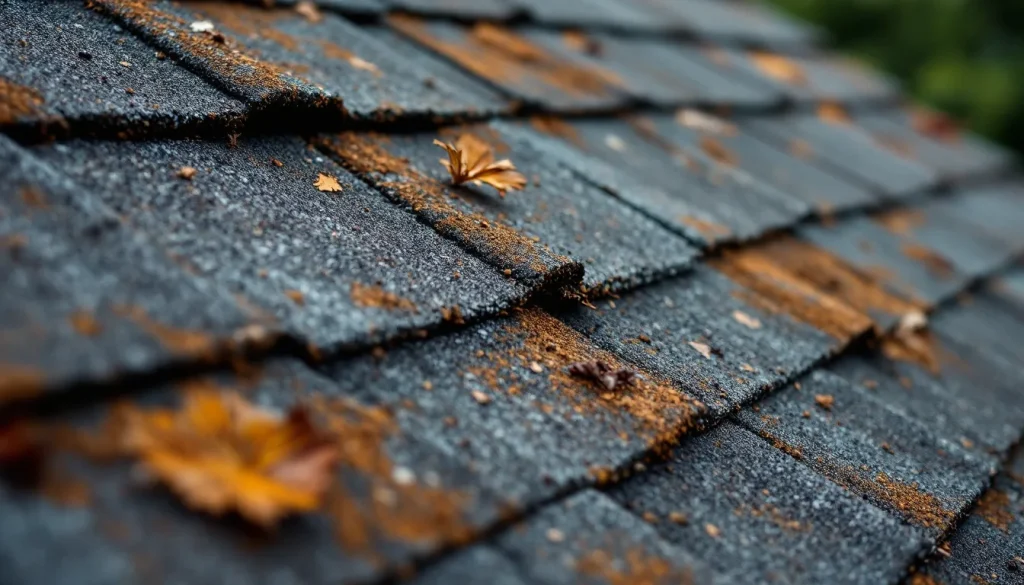
An asphalt shingle roof lifespan in 2026 ranges from 15 to 50 years depending on shingle tier: 3-tab basic shingles last 15 to 20 years, architectural mid-tier shingles last 25 to 30 years, and premium dimensional or designer shingles can reach 50 years under ideal conditions. The huge spread comes down to five factors that compound over time: shingle tier, installation quality, attic ventilation, climate exposure, and maintenance (see our shingle roofing services). A premium shingle installed badly on an unventilated roof in Phoenix can fail in 12 years. A mid-tier shingle installed correctly on a balanced-ventilation roof in the Pacific Northwest can run 35 years. The brand on the wrapper matters less than the five compounding factors below. In practice, asphalt shingle longevity, the real-world life expectancy you can actually plan around, tracks these five factors far more closely than the number printed on the warranty.
The short version
- 3-tab shingles: 15 to 20 years. Architectural: 25 to 30 years. Premium designer: 30 to 50 years.
- Manufacturer warranties (typically 30 or 50 years) are not the same as realistic lifespan. The warranty has prorated payouts after year 10.
- Attic ventilation is the single biggest controllable lifespan factor. Bad ventilation cuts life by 20% to 30%.
- Installation quality (nail pattern, starter strip, ridge cap, flashing) accounts for half of all premature failures.
- Climate matters less than people think. Phoenix vs Buffalo differ by ~15%, all else equal. Brand differs by ~10%.
- Most insurance carriers in 2026 cap coverage at 20 to 25 years of roof age regardless of condition.
The short answer: lifespan by shingle tier
Most homeowners conflate three numbers that should be kept separate: marketing lifespan (what the manufacturer puts on the wrapper), warranty length (what the warranty covers, with proration), and realistic field lifespan (what actually happens). The table below reconciles all three for the 2026 product lineups from GAF, Owens Corning, CertainTeed, IKO, Atlas, and Tamko.
| Shingle tier | Example products | Marketing claim | Realistic lifespan | Cost installed |
|---|---|---|---|---|
| 3-tab basic | GAF Royal Sovereign, OC Supreme, CT XT-25 | 25 years | 15-20 years | $3.50-5.50/sf |
| Architectural mid | GAF Timberline HDZ, OC Duration, CT Landmark | 30 to lifetime | 25-30 years | $5.00-8.00/sf |
| Premium dimensional | GAF Timberline UHDZ, OC Duration FLEX, CT Landmark PRO | Lifetime (50+) | 30-40 years | $6.50-10.50/sf |
| Designer/luxury | GAF Camelot II, OC Berkshire, CT Grand Manor | Lifetime (50+) | 35-50 years | $8.50-14.00/sf |
The realistic-lifespan column assumes proper installation, adequate attic ventilation, and the maintenance schedule in our roof maintenance schedule guide.
3-tab asphalt shingles (15 to 20 years)
3-tab shingles are the entry-level asphalt product: a single layer with three evenly-spaced tabs cut into the bottom edge. They were the dominant residential product from the 1950s to the late 1990s, when architectural shingles overtook them. Today 3-tab represents under 15% of new residential installs but still dominates rental properties, manufactured homes, and tear-and-reroof projects where budget is the priority.
What you get
- Lightest weight (190 to 240 lb per square)
- Lowest wind rating (typically 60 mph)
- Single-layer construction
- Shortest field lifespan
- Lowest install cost ($3.50 to $5.50 per square foot)
When 3-tab still makes sense
- Rental properties where the owner is optimizing for replacement cost cycle
- Outbuildings, garages, sheds
- Reroof on a budget where mid-tier is genuinely out of reach
- Manufactured housing applications
For most owner-occupied homes in 2026, the price (see our asphalt shingle roof cost installed) gap between 3-tab and architectural is only $1.50 to $2.50 per square foot, while the lifespan gap is 10 years. Pure math favors architectural.
Architectural / dimensional shingles (25 to 30 years)
Architectural shingles (also called dimensional or laminated shingles) are the dominant product in 2026, accounting for over 70% of new residential installs. They are two or three asphalt layers laminated together, with the bottom layer cut in a staggered pattern to create dimensional shadow lines.
What changed vs 3-tab
- Heavier (240 to 350 lb per square)
- Higher wind ratings (typically 110 to 130 mph with proper nailing)
- Multi-layer construction (better tear and impact resistance)
- Better algae warranties (Class A or AR)
- Longer field lifespan (25 to 30 years typical)
The big three architectural products
- GAF Timberline HDZ: market leader, 130 mph LayerLock, 30-year algae warranty
- Owens Corning Duration: SureNail strip, 130 mph wind, often cheaper than GAF
- CertainTeed Landmark: traditional design, 110 mph standard, 10-year StreakFighter
Premium / designer shingles (30 to 50 years)
Premium shingles split into two categories. Premium dimensional (GAF Timberline UHDZ, OC Duration FLEX, CertainTeed Landmark PRO) are thicker laminated architectural shingles with higher wind ratings and longer warranties. Designer/luxury shingles (GAF Camelot II, OC Berkshire, CertainTeed Grand Manor) are heavyweight multi-piece shingles that mimic slate, cedar shake, or tile.
What you pay for at this tier
- Weight: 400 to 480 lb per square (slate-look products run higher)
- Wind ratings to 150 mph
- Class 4 impact rating available (insurance discounts apply)
- Lifetime warranties with 50-year non-prorated periods on top-tier installs
- Designer aesthetics (depth, color blending, slate or shake mimicry)
The lifespan gain at this tier is real but conditional. A premium shingle installed on an under-ventilated roof in a hot climate will not outlast an architectural shingle on a properly ventilated roof. The factors below explain why.
Climate factor: sun and UV exposure
UV is the primary aging mechanism for asphalt shingles. Asphalt oxidizes when exposed to UV. As it oxidizes, the binder gets brittle, granules shed faster, and the shingle loses flexibility. Roofs in Phoenix, Las Vegas, Tucson, and Albuquerque typically age 15% to 25% faster than roofs in Seattle, Portland, or Buffalo of the same product.
Mitigation
- Lighter colors reflect more UV. White or light gray shingles age slower than dark brown or black.
- Cool-roof rated products (those with reflective granules) extend field life by 3 to 7 years in high-UV climates.
- Premium products with thicker asphalt mats have more material to oxidize, extending life.
Climate factor: temperature cycling
Freeze-thaw cycling is the second major aging mechanism. Every time a shingle’s surface temperature crosses freezing while wet, ice crystals expand in the asphalt binder, weakening it microscopically. Climates with frequent freeze-thaw (Denver, Chicago, Boston, Pittsburgh) age shingles faster than climates with stable cold (Minneapolis, Anchorage) or stable warmth (Miami, Houston).
The combined effect of UV and freeze-thaw is why “climate-matched” product selection matters. A shingle designed for Sun Belt UV may underperform in a freeze-thaw zone, and vice versa. Most national-brand architectural shingles are now formulated for both, but the cool-roof and cold-climate variants exist for a reason.
Climate factor: hail and wind
Hail and wind are not gradual aging mechanisms. They are discrete events that can knock 10 to 20 years off a roof’s life in one storm. Wind uplifts shingles, breaks seal tabs, and lets water in. Hail bruises asphalt mats, fractures the matrix, and accelerates granule loss.
Class 4 impact-rated shingles
In hail-prone states (TX, OK, KS, CO, NE, MO), Class 4 impact-rated shingles are the standard recommendation. They survive 2-inch hail in lab testing and typically earn 10% to 25% insurance discounts. Cost premium is 15% to 30% over standard architectural.
The wind rating gotcha
Manufacturer wind ratings (130 mph, 150 mph) assume specific nail patterns. A 4-nail pattern voids the high wind rating on most architectural shingles. The 6-nail pattern is required to qualify for the published wind warranty. Always specify 6-nail in the contract.
Installation quality (the #1 lifespan factor)
The single biggest controllable factor in asphalt shingle lifespan is installation quality. NRCA and ARMA estimate that 30% to 50% of premature roof failures trace to installation defects, not product defects.
What good installation looks like
- 6-nail pattern at the manufacturer-specified locations. Not 4-nail.
- Synthetic underlayment (see our felt vs synthetic underlayment guide). Felt is legal but reduces life expectancy.
- Ice and water shield at eaves, valleys, and penetrations in any freeze climate.
- Proper starter strip at eaves and rakes. Not chopped-up field shingles.
- Manufacturer ridge cap, not chopped field shingles.
- Step flashing at every roof-to-wall junction, not continuous flashing.
- New pipe boots and drip edge, not reused old ones.
The contract specifications above are what separate a 28-year install from an 18-year install on the same architectural shingle. For how to vet contractors on these specs, see our how to choose a roofing contractor guide.
Attic ventilation impact
Attic ventilation is the largest controllable lifespan factor after installation. Per ARMA technical bulletins and the IRC R806 building code, balanced attic ventilation extends asphalt shingle life by 20% to 30%. Unventilated or poorly ventilated attics void most manufacturer warranties.
The mechanism is heat. An unventilated attic in summer reaches 150 to 170 degrees F. The shingles above it run hotter, oxidize faster, and shed granules faster. A balanced ridge-and-soffit ventilation system drops attic temperature by 40 to 60 degrees F at peak, dramatically slowing shingle aging.
For the full calculation method (the IRC 1:300 rule), vent product selection, and cost to retrofit, see our attic ventilation guide.
Maintenance impact
A maintained asphalt roof outlasts an unmaintained one by 5 to 10 years. The maintenance items that matter most for lifespan are gutter cleaning (water backup damage), tree clearance (abrasion and shade-driven moss), sealant refresh (penetration-related leaks), and moss/algae treatment.
For the seasonal schedule and what it costs, see our roof maintenance schedule guide. The annual maintenance cost of $200 to $600 returns a 10x to 40x ROI in extended life. Skipped maintenance is the second-most-common reason warranty claims get denied (after improper ventilation).
Color choice and heat absorption
Color affects lifespan more than most homeowners assume. Dark shingles (black, dark brown, dark gray) absorb 80% to 90% of incoming solar radiation. Light shingles (white, light gray, beige) absorb 30% to 50%. The temperature difference at the shingle surface can be 30 to 50 degrees F at peak summer.
That temperature gap translates directly to oxidation rate and field lifespan. Light-colored architectural shingles in hot climates typically outlast dark-colored same-product shingles by 3 to 7 years. The aesthetics-vs-lifespan tradeoff is real and worth discussing during product selection.
Major brand comparison
GAF, Owens Corning, and CertainTeed are the big three U.S. asphalt shingle manufacturers, with IKO, Atlas, Tamko, and Malarkey rounding out the major regional players. Field lifespan differences between the big three are small (under 10%) when controlling for installation, ventilation, and climate. The differences that do matter are in warranty mechanics, color availability, and contractor certification programs.
| Brand | Top architectural product | Wind rating | Algae warranty | Review link |
|---|---|---|---|---|
| GAF | Timberline HDZ | 130 mph (LayerLock) | StainGuard Plus 25-yr | GAF Timberline HDZ review |
| Owens Corning | Duration | 130 mph (SureNail) | StreakGuard 10-yr | Owens Corning Duration review |
| CertainTeed | Landmark | 110 mph | StreakFighter 10-yr | CertainTeed Landmark review |
Manufacturer warranty vs realistic lifespan
Manufacturer warranties are written for the homeowner who reads only the headline. “Lifetime warranty” on most architectural shingles means a 10-year non-prorated period followed by 40 years of prorated coverage. By year 20 the warranty payout is typically 20% of replacement cost. By year 30 it’s often under 10%.
The actual warranty mechanics
- Non-prorated period (5 to 10 years typical). Full coverage minus tear-off and disposal. This is the real coverage window.
- Prorated period (years 11 to 50). Payout declines linearly with roof age.
- Algae warranty (10 to 25 years). Cosmetic only. Doesn’t fund replacement.
- Wind warranty (typically 5 to 15 years at the published wind speed). Often the first thing to expire.
- Workmanship coverage. Only available with certified installer programs (GAF Master Elite, OC Platinum Preferred, CT SELECT ShingleMaster).
For the average homeowner, the certified-installer workmanship coverage is more valuable than the product warranty. Workmanship coverage typically runs 25 to 50 years and covers installation defects (the biggest cause of premature failure).
Signs your asphalt roof is at end of life
Three signals indicate an asphalt roof is in the last 1 to 3 years of useful life: cup-curling at shingle edges, exposed bare matting where granules have shed completely, and recurring leaks despite repairs. Any two of those means it’s time to budget replacement. All three means schedule it now before the next storm forces an emergency replacement (typically 30% more expensive).
For the full visual checklist and decision framework, see our signs you need a new roof and how long does a roof last guides. For replacement cost planning, see how much does a new roof cost.
Lifespan extension through impact-rated upgrades
Beyond standard architectural shingles, two upgrade paths extend asphalt roof lifespan independent of brand or tier. The first is Class 4 impact-rated upgrades. The second is cool-roof certified products with reflective granules. Both are worth quantifying.
Class 4 impact-rated shingles in practice
Class 4 is the highest impact rating under the UL 2218 standard. To earn it, a shingle must survive a 2-inch steel ball drop from 20 feet without cracking. In real-world hail, Class 4 shingles routinely survive storms that destroy standard shingles in the same neighborhood. The lifespan gain is 5 to 10 years in hail-prone states because each hail event causes less cumulative damage.
Major Class 4 products include GAF Timberline AS II, Owens Corning Duration Storm, CertainTeed Landmark Solaris IR, and Malarkey Vista AR. Cost premium is 15% to 30% above standard architectural. Insurance discounts of 10% to 25% are common in TX, OK, KS, CO, NE, and MO. Most homeowners hit ROI on the upgrade within 5 to 8 years through reduced premiums alone.
Cool-roof certified products
Cool-roof rated shingles carry an Energy Star certification for solar reflectance (typically 0.25 or higher). The reflective granules drop attic peak temperatures by 5 to 15 degrees F and extend shingle field life by 3 to 7 years in hot climates. Products include GAF Timberline CS, Owens Corning Duration Premium Cool, and CertainTeed Landmark Solaris. Cost premium is 10% to 20%. The lifespan ROI is real; the cooling-cost ROI varies by climate.
Tear-off vs roof-over (and how it affects lifespan)
When the existing roof needs replacement, contractors have two options: tear off the old shingles down to the deck, or install (see our asphalt shingle roof services overview) the new shingles directly over the old ones (a “roof-over” or “overlay”). The decision has direct lifespan implications.
Tear-off advantages
- Full deck inspection before new shingles go on. Catches rot, soft spots, and structural issues.
- New underlayment installation (synthetic, per our felt vs synthetic underlayment guide).
- Lighter total roof weight (no doubled-up shingles).
- Better heat dissipation and ventilation.
- Manufacturer warranties: top-tier warranties typically require tear-off.
Roof-over disadvantages
- Double the weight on structural framing.
- Heat retained between layers, accelerating new shingle aging.
- Pre-existing deck problems hidden.
- Field lifespan typically 20% to 30% shorter than tear-off install of same product.
- Most carriers limit roof-over to a single overlay (third layer is code-prohibited in IRC).
For homes that have had one prior overlay, tear-off is the only option in 2026 building codes. For homes with only original shingles, roof-over saves $1,500 to $3,000 in tear-off and dump costs but typically shortens new-roof life by 5 to 8 years.
Insurance carrier roof age cutoffs
Insurance carriers in 2026 have tightened roof age underwriting significantly. The pattern across major carriers (State Farm, Allstate, Farmers, USAA, Progressive, Liberty Mutual) is:
| Roof age | Typical carrier action |
|---|---|
| 0-10 years | Full replacement cost coverage (RCV) |
| 10-15 years | RCV typically still available; some carriers shift to ACV |
| 15-20 years | Most carriers shift to actual cash value (ACV) |
| 20-25 years | ACV with inspection requirement; some carriers non-renew |
| 25+ years | Most carriers non-renew or require certified replacement |
This trend has two implications for lifespan planning. First, the practical “asset life” of an asphalt roof for many homeowners ends at year 20 to 25 because that’s when insurance economics shift. Second, premium shingles with documented 30+ year lifespans now have a harder time monetizing their longer life because the carrier may not cover them past year 20 anyway.
How to maximize asphalt shingle longevity and life expectancy
To get an asphalt roof to the top of its realistic range instead of the bottom, control the four factors that compound over time: product tier, installation specs, attic ventilation, and maintenance. The steps below, in priority order, are what separate a 30-year architectural install from an 18-year one on the same shingle. None of them depend on the brand printed on the wrapper.
- Buy at least mid-tier architectural. The price gap over 3-tab is usually $1.50 to $2.50 per square foot, and the realistic-lifespan gap is about 10 years. See our best asphalt shingles hub for current picks.
- Specify a 6-nail pattern in the contract. A 4-nail pattern voids the published high-wind rating on most architectural lines. Six nails is required to qualify for the wind warranty.
- Confirm balanced attic ventilation before install. Balanced ridge-and-soffit airflow can extend shingle life by roughly 20% to 30% and is a warranty condition for most manufacturers.
- Use synthetic underlayment and ice-and-water shield. Both cost little relative to the roof and reduce the leak paths that end roofs early.
- In hot or high-UV regions, favor a lighter color or a cool-roof product. The surface-temperature drop can add roughly 3 to 7 years in Sun Belt climates.
- Maintain annually. Gutter cleaning, tree clearance, sealant refresh, and moss treatment can add 5 to 10 years for $200 to $600 per year.
- Register the warranty and keep the paperwork. Proration and transfer rules decide what actually gets paid. See our roof warranty reality report for how payouts decline with age.
Asphalt shingle lifespan vs other roofing materials
Asphalt shingles are the shortest-lived mainstream roofing material, with a realistic field life of about 15 to 30 years depending on tier. Metal, tile, and slate last considerably longer but cost several times more upfront. The table below sets typical asphalt life against the main alternatives so the value comparison is clear before you commit.
| Roof material | Typical realistic lifespan | Relative upfront cost | Best-for |
|---|---|---|---|
| Asphalt shingle (3-tab) | 15-20 years | Lowest | Rentals, outbuildings, tight budgets |
| Asphalt shingle (architectural) | 25-30 years | Low | Most owner-occupied homes |
| Wood shake | 20-40 years | Moderate | Traditional and rustic aesthetics |
| Metal (standing seam) | 40-70 years | High | Long-hold owners, wildfire and snow zones |
| Clay or concrete tile | 50-100 years | High | Hot, dry, Southwest climates |
| Natural slate | 75-150+ years | Highest | Historic homes, multi-generational holds |
The longer-life materials only pay off if you keep the home long enough to amortize the premium, and in many regions insurance economics cap the practical value of any roof at 20 to 25 years of age regardless of material. For the full evidence base and sourcing behind these ranges, see our roof lifespan by material reference report, and for the metal alternative see best metal roofing for homes. Lifespan figures here are compiled from manufacturer specifications and published industry sources, not independent Roofing Brief lab testing, and real service life varies by installation, ventilation, climate, and maintenance.
Frequently asked questions
How long does an asphalt shingle roof actually last?
3-tab shingles: 15 to 20 years. Architectural shingles: 25 to 30 years. Premium dimensional: 30 to 40 years. Designer shingles: 35 to 50 years. All ranges assume proper installation, balanced attic ventilation, and routine maintenance.
Why does my neighbor’s roof look older than mine if we got the same shingles?
Five factors: shingle color (darker ages faster), tree exposure (shade promotes moss), attic ventilation, installation crew, and maintenance habits. Even identical products on identical houses age 30% to 40% differently based on those factors.
Does a 50-year warranty mean my roof will last 50 years?
No. A 50-year warranty typically means 10 years of non-prorated coverage followed by 40 years of prorated coverage that pays declining percentages. Realistic field lifespan even for top-tier products is 35 to 50 years, with insurance typically capping coverage at 20 to 25 years.
What kills an asphalt roof fastest?
Poor attic ventilation. An unventilated attic running at 150 to 170 degrees F in summer cuts shingle life by 20% to 30%. The next biggest factor is installation quality, then UV exposure, then maintenance habits, then climate.
Should I get the Class 4 impact-rated shingle upgrade?
If you live in TX, OK, KS, CO, NE, MO, or any other hail-prone state, yes. The 15% to 30% cost premium typically pays back through the 10% to 25% insurance discount within 5 to 8 years, and the lifespan extension is real (impact-rated shingles survive hail events that destroy standard shingles).
Does color really matter for shingle lifespan?
Yes. In hot climates, light-colored shingles outlast dark shingles by 3 to 7 years on the same product. In cold climates, the difference is closer to 1 to 2 years. Cool-roof rated products with reflective granules extend life further in any climate.
How do I know if my installer used good quality methods?
Look for the 6-nail pattern (not 4-nail), synthetic underlayment, ice and water shield at the eaves and valleys, manufacturer ridge cap (not field shingles), new pipe boots and drip edge, and step flashing at every roof-to-wall junction. The contract should specify all of those by name.
Will my insurance still cover my old asphalt roof?
Most carriers in 2026 shift from replacement cost (RCV) to actual cash value (ACV) coverage around year 15 to 20, and many non-renew roofs older than 25 years. Plan replacement around year 20 to maintain RCV coverage, especially in hail-prone or hurricane-prone states.
How long do architectural shingles last?
Architectural (dimensional) shingles typically last 25 to 30 years of realistic field life, with premium dimensional lines reaching 30 to 40 years. That assumes a 6-nail install, balanced attic ventilation, and routine maintenance. The marketing lifetime warranty is not the same as service life: it usually means about 10 years of non-prorated coverage followed by declining prorated payouts.
Is asphalt or metal roofing longer lasting?
Metal roofing lasts considerably longer. A standing-seam metal roof typically runs 40 to 70 years, roughly double the 25 to 30 years of an architectural asphalt roof. Metal costs several times more upfront, so the longer life mainly pays off for owners who hold the home long enough to amortize the premium or who face wildfire, heavy snow, or high-wind exposure.
How long does an asphalt shingle roof last in a hot climate like Arizona or Florida?
In high-UV Sun Belt climates, asphalt roofs often age about 15% to 25% faster than the same product in a mild climate, so an architectural roof rated for 25 to 30 years may realistically reach 20 to 25 years. Lighter colors and cool-roof rated shingles can recover roughly 3 to 7 years, and balanced attic ventilation matters more here than anywhere else.
What is the life expectancy of an asphalt shingle roof?
Life expectancy runs about 15 to 20 years for 3-tab, 25 to 30 years for architectural, and 30 to 50 years for premium and designer shingles. Real-world longevity depends far more on installation quality, attic ventilation, and maintenance than on the brand, which is why two identical roofs can differ by 30% to 40% in service life.
Reviewed by The Roofing Brief Team. Last reviewed August 2026.