
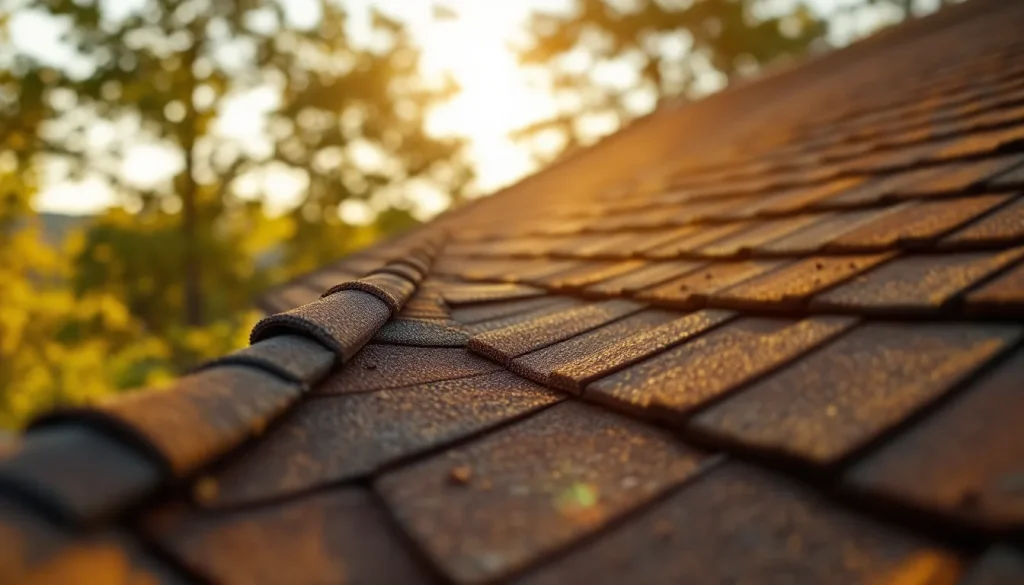
Ridge cap shingles cost $5 to $12 per linear foot installed in 2026, and skipping them (or using cut-down 3-tab shingles instead of pre-formed ridge cap) is the most common installation shortcut that voids the manufacturer warranty. Pre-formed ridge cap shingles are thicker, pre-bent to wrap a ridge without cracking, and tested separately to ASTM D3161 Class F (110 mph) or ASTM D7158 Class H (150 mph) wind ratings. The IRC and every major shingle manufacturer (GAF, Owens Corning, CertainTeed, Atlas) require their branded ridge cap product when you install their field shingles, or the system warranty drops from 50 years down to a basic 10-year material warranty. Here is everything you need to know about ridge cap selection, installation, code requirements, and the cost math on a real roof.
The short version
- Ridge cap shingles cost $5 to $12 per linear foot installed in 2026, or about $40 to $80 per bundle of pre-formed cap (covers 20 to 35 linear feet).
- Use the manufacturer’s pre-formed product (GAF Seal-A-Ridge, Owens Corning ProEdge, CertainTeed Mountain Ridge, Atlas Pro-Cut) to keep the system warranty intact.
- Cutting 3-tab shingles into ridge cap pieces voids the warranty on every major architectural shingle line sold today.
- Vented ridge cap (used over a ridge vent) and solid ridge cap use the same field shingles but different nailing patterns and fasteners.
- Code (IRC R905.2.8.3) requires two fasteners per cap piece, with the nail under the next cap so heads are covered.
- A typical 2,400 square foot suburban home has 40 to 80 linear feet of ridge, putting total ridge cap cost between $200 and $960 installed.
Short answer: what ridge cap shingles cost and why they matter
In 2026, installed ridge cap pricing breaks down as follows: pre-formed ridge cap material runs $1.80 to $3.50 per linear foot at the supply house, and labor runs $3.00 to $8.50 per linear foot depending on roof pitch, ridge height, and regional labor rates. A bundle of GAF Seal-A-Ridge covers about 20 linear feet and retails around $48 to $65 at distribution. Owens Corning ProEdge covers 33 linear feet per bundle at $58 to $72. CertainTeed Mountain Ridge covers 20 linear feet at $52 to $68.
The reason ridge cap matters out of proportion to its small surface area: the ridge is the highest, most wind-exposed line on the roof, and the cap is the last line of defense at the seam where the two roof planes meet. A failed ridge cap pulls off, exposes the underlayment, and within one to three rain cycles soaks the ridge board, the top course of field shingles, and the attic insulation below.
What ridge cap shingles actually do
Ridge cap shingles cover the horizontal ridge line at the peak of the roof, the hip lines on a hip roof, and the diagonal seams on dormer ridges. They serve four functions:
- Seal the ridge seam. The field shingles end about 1 to 2 inches short of the ridge line. Without cap, water blows directly into that seam.
- Cover the ridge vent. A continuous ridge vent (the most common attic ventilation method since 2005) leaves a 1.5 to 3 inch gap cut into the sheathing along the ridge. Ridge cap shingles cover the vent housing.
- Resist wind uplift. Wind pressure peaks at the ridge. A pre-formed cap is built to handle that loading; a cut 3-tab is not.
- Match the aesthetic. Pre-formed cap is profile-matched to the architectural shingle line so the ridge does not look like a different product.
Pre-formed ridge cap vs hand-cut from 3-tab
Before pre-formed ridge cap became standard around 2006, roofers cut 3-tab shingles into thirds at the slot lines and used the resulting 12 by 12 inch tabs as cap. This still happens on budget jobs, but it has three serious problems.
First, cut 3-tab is too thin. A 3-tab shingle is about 200 pounds per square; pre-formed cap is 320 to 450 pounds per square. The cap takes more wind loading and UV exposure than any other part of the roof, and the thinner cut 3-tab cracks at the bend within 5 to 8 years.
Second, cut 3-tab bends poorly. Asphalt shingles are not made to flex 60 to 120 degrees. Pre-formed cap is made on a different production line with more flexible asphalt blends and is pre-creased for the bend.
Third, and most important: cutting your own cap voids the system warranty. GAF, Owens Corning, CertainTeed, and Atlas all require their pre-formed cap product to keep the enhanced 50-year non-prorated warranty active. The fine print is clear about it.
| Cap type | Weight per square | Bend tolerance | Warranty | Cost per LF |
|---|---|---|---|---|
| Cut 3-tab (DIY method) | 200 lb | Cracks at bend within 5-8 yr | Voids manufacturer warranty | $1.10-$1.60 |
| Pre-formed standard cap | 320-380 lb | 60-90 degree bend, no crack | Full system warranty | $1.80-$2.80 |
| Pre-formed premium cap (high-profile) | 400-450 lb | Up to 120 degree bend | Full system warranty + enhanced wind | $2.80-$3.50 |
Pre-formed brand options compared
The four major shingle brands each sell ridge cap matched to their architectural shingle lines. They are not interchangeable for warranty purposes, but they are structurally similar.
| Brand product | Matched field shingle | Coverage per bundle | Wind rating | Retail (2026) |
|---|---|---|---|---|
| GAF Seal-A-Ridge | Timberline HDZ, Timberline UHDZ | 20 LF | ASTM D3161 Class F (110 mph) | $48-$65 |
| GAF TimberTex (premium) | Timberline HDZ, UHDZ, Camelot | 20 LF | D3161 Class F + D7158 Class H (150 mph) | $68-$92 |
| Owens Corning ProEdge | Duration, Oakridge, TruDef | 33 LF | D3161 Class F (110 mph) | $58-$72 |
| Owens Corning DecoRidge (premium) | Duration, TruDefinition Duration FLEX | 20 LF | D7158 Class H (150 mph) | $72-$95 |
| CertainTeed Mountain Ridge | Landmark, Landmark Pro | 20 LF | D7158 Class H (150 mph) | $52-$68 |
| CertainTeed Shadow Ridge | Landmark | 30 LF | D3161 Class F (110 mph) | $48-$62 |
| Atlas Pro-Cut Hip and Ridge | Pinnacle Pristine, StormMaster | 30 LF | D3161 Class F (110 mph) | $45-$58 |
If you are matching to an existing roof, the cap brand must match the field shingle brand for warranty purposes. If you mix (e.g., GAF Seal-A-Ridge on Owens Corning Duration field), both manufacturers can deny the warranty.
Vented ridge cap vs solid ridge cap
The cap shingles themselves are the same product whether you have a ridge vent below or a solid ridge. What changes is what is underneath and how the cap is fastened.
A vented ridge has a continuous slot cut through the roof sheathing 1 to 1.5 inches wide on each side of the ridge board. A plastic or aluminum ridge vent product (GAF Cobra, Owens Corning VentSure, CertainTeed Ridge Vent) sits over that slot, and the cap shingles nail through the vent into the deck below. Most roofs built or replaced after 2005 have continuous ridge venting. Read more on the system in our attic ventilation guide.
A solid ridge has no slot. The cap shingles nail directly through the underlayment into the ridge board. Solid ridge is still used on small roofs (under 600 sq ft attic), on roofs where the attic is fully conditioned and sealed (cathedral ceilings, spray-foam-encapsulated attics), or where eave-only venting is sufficient with soffit vents and gable-end vents.
| Configuration | Fastener length | Cap nailing | Underlayment under cap |
|---|---|---|---|
| Vented ridge (continuous ridge vent) | 2-1/2 inch ring shank | Through vent housing into deck | Optional, vent acts as flashing |
| Solid ridge | 1-3/4 inch coil nail | Through cap into ridge board | Full coverage required (15 lb felt or synthetic) |
| Hip line (hip cap) | 1-3/4 inch coil nail | Through cap into hip rafter | Full coverage required |
Hip cap: ridge cap used at hip joints
On a hip roof, the diagonal seams where roof planes meet are called hip lines. They use the same pre-formed cap product as the horizontal ridge, just installed differently. Hip cap starts at the eave (bottom of the hip) and works up to where the hip meets the main ridge. The first hip cap piece is double-layered for water shedding (one full piece plus a 6-inch starter piece beneath).
Hip lines need more cap material per square foot of roof than a simple gable. A 2,000 sq ft hip roof can have 100+ linear feet of hip plus 30 linear feet of main ridge, versus a 2,000 sq ft gable roof with only 30 to 40 linear feet of main ridge. Budget accordingly: hip roofs typically need 2.5 to 3x more cap material than gable roofs of the same footprint.
Installation sequence: when ridge cap goes on
Ridge cap is the last shingle product installed on the roof. The full sequence:
- Drip edge at eaves (under underlayment per IRC R905.2.8.5)
- Ice and water shield at eaves (24 inches past wall) and valleys
- Synthetic underlayment over the rest of the deck
- Drip edge at rakes (over underlayment)
- Starter shingles at eaves and rakes
- Step flashing at walls and kickout flashing at sidewall-to-eave transitions
- Field shingles, course by course up the roof
- Ridge vent installed over ridge slot (if applicable)
- Hip cap installed up the hip lines
- Ridge cap installed across the horizontal ridge, starting at the downwind end
The downwind end is important: cap is lapped so the prevailing wind blows over the lapped seam, not into it. A roofer who installs cap into the wind has built a wind funnel.
Nailing pattern and adhesive
IRC R905.2.8.3 specifies two nails per ridge cap piece, placed 1 inch from each edge and 5-1/2 to 6 inches from the exposed end of the cap. The next piece of cap, when installed with a 5-inch exposure, covers the nail heads. This is critical: if the nails are exposed, water enters at every nail head, and a roof with 80 linear feet of ridge has 192 exposed nail penetrations.
For wind zones above 110 mph (Florida HVHZ, coastal Carolinas, parts of Texas and Oklahoma), four nails per cap piece are required, plus a 2-inch diameter bead of asphalt roof cement under the leading edge of each cap. GAF, Owens Corning, and CertainTeed all spec this for their high-wind warranty endorsements.
Wind ratings: ASTM D7158 and what it means for cap
Ridge cap is wind-tested separately from field shingles because it sits in a different airflow zone. The two standards:
- ASTM D3161 tests cap at fixed wind speeds (60, 90, or 110 mph for Class A, D, and F respectively). The cap must not lift or tear after 2 hours at the rated speed.
- ASTM D7158 is a more recent (2008) standard that tests cap under real-world uplift loading. Class D is 90 mph, Class G is 120 mph, Class H is 150 mph.
Most premium cap products (GAF TimberTex, Owens Corning DecoRidge, CertainTeed Mountain Ridge) carry both ratings. Standard cap (GAF Seal-A-Ridge, Owens Corning ProEdge) carries D3161 Class F (110 mph) only. If you are in a coastal county or a wind-prone region, spec the D7158 Class H (150 mph) product. The premium upcharge is roughly $20 to $30 per bundle, or about $80 to $120 on a 2,400 sq ft house.
Warranty implications: the hidden cost of skipping pre-formed cap
This is where the cap conversation gets expensive. The warranty language across the four major brands says some version of: “This warranty applies only when the field shingles are installed with the manufacturer’s matching hip and ridge product.”
- GAF Golden Pledge / System Plus warranty: requires GAF Seal-A-Ridge or TimberTex (and 3 other GAF accessories). Without it, you fall back to the standard limited warranty (10 years prorated material only).
- Owens Corning Platinum / Preferred warranty: requires ProEdge or DecoRidge plus 3 other OC accessories. Without it, the Platinum 50-year non-prorated drops to the standard limited warranty.
- CertainTeed SureStart Plus / 4-Star / 5-Star: requires Mountain Ridge or Shadow Ridge. Without it, no enhanced warranty.
- Atlas Signature Select Scotchgard: requires Pro-Cut hip and ridge. Without it, the algae-resistance warranty also drops.
The math: a 2,400 sq ft roof costs $14,000 to $24,000 installed. The enhanced manufacturer warranty (50-year non-prorated with labor) is worth $4,000 to $8,000 in claims protection over the roof’s life. Saving $200 on cut 3-tab cap to forfeit a $4,000 warranty is a poor trade.
Cost by ridge linear footage
| Home size (sq ft) | Roof type | Typical ridge + hip LF | Cap material cost | Installed cost (range) |
|---|---|---|---|---|
| 1,200 (small ranch) | Gable | 30 LF | $54-$84 | $150-$360 |
| 1,800 (mid ranch) | Gable | 42 LF | $76-$118 | $210-$504 |
| 2,400 (2-story colonial) | Gable | 50 LF | $90-$140 | $250-$600 |
| 2,400 (hip roof) | Hip | 130 LF | $234-$365 | $650-$1,560 |
| 3,200 (large 2-story) | Gable + 2 dormers | 70 LF | $126-$196 | $350-$840 |
| 3,200 (large hip) | Hip + 2 dormers | 160 LF | $288-$448 | $800-$1,920 |
| 4,000 (custom) | Complex hip / gambrel | 200+ LF | $360-$560 | $1,000-$2,400 |
Color matching ridge cap to field shingles
Pre-formed cap is manufactured in the same colorway as the matching field shingle line, but the cap and field shingles are made in different batches. Slight shade variation can appear, especially with weathering wood, driftwood, and other multi-tone colors. Two rules:
- Order cap and field shingles from the same dealer at the same time, ideally from the same lot number on the bundle wrappers.
- For replacement-only cap (where field shingles stay), order cap from the same manufacturer line and accept that there will be a visible color delta of about 1 to 2 shades on the first year. UV will fade them together over 2 to 3 seasons.
DIY vs pro for ridge cap only
Some homeowners hire a roofer for the full roof but consider replacing only the cap themselves when it starts to fail. This is possible but has constraints:
- Ridge work is the highest, most fall-exposed part of the roof. OSHA requires fall protection above 6 feet. Most ridges are 15 to 25 feet up.
- Pulling the old cap may damage the ridge vent or the top course of field shingles, requiring partial replacement.
- If the cap failure is from poor original installation (cut 3-tab, wrong nail pattern), the field shingles may also be near end-of-life.
- A pro typically charges $400 to $1,200 for ridge cap replacement only on a 50-80 LF ridge, including dump fees.
For most homeowners, ridge cap replacement is a job to bundle with a full roof replacement or, at minimum, with a top-course shingle replacement. See our guide on choosing a roofing contractor.
Common ridge cap installation mistakes
- Cut 3-tab instead of pre-formed cap. The single biggest warranty-voiding mistake.
- Wrong-direction lap. Cap lapped into the prevailing wind catches uplift and peels off.
- Nail exposure. Nails placed too close to the cap’s exposed edge are not covered by the next cap piece.
- Skipping the adhesive bead at the leading edge in high-wind zones. Without the cement bead, even D7158 Class H cap can lift in a 130+ mph gust.
- Wrong fastener length. Using a 1-1/4 inch nail on a vented ridge will not penetrate into the deck because the ridge vent housing adds 1/2 to 3/4 inch of thickness. Use 2-1/2 inch ring shank.
- Skipping cap over the ridge vent housing. Some installers nail cap directly into the plastic vent without proper fastener length, and the cap tears off the vent in the first storm.
- Hip cap installed top-down instead of bottom-up. Hip cap must start at the eave and work up the hip so water sheds over the lap, not into it.
- Mixing manufacturer brands. GAF cap on Owens Corning field shingles voids both warranties.
Ridge cap and ridge ventilation: how they work together
A continuous ridge vent system relies on the cap shingle as the weather seal over the vent housing. Without proper cap, the vent’s open-air baffles become a direct path for wind-driven rain and snow infiltration. The two products are sold together as a system, and most ridge vent manufacturers (GAF Cobra, Owens Corning VentSure, CertainTeed Ridge Vent) publish a “use only with matched cap” install spec. Mixing a GAF Cobra ridge vent with a generic cap can leave 1/4 to 3/8 inch gaps along the vent’s top edge where the cap does not seal correctly. Wind-driven rain finds those gaps within the first season. The matched cap product is sized to the vent’s profile and seals flush.
Cap replacement vs full roof replacement: the decision tree
If your roof’s field shingles are 10 to 18 years old and the ridge cap has failed (granule loss, lifted edges, missing pieces), you have three options:
- Cap-only replacement. $400 to $1,200 for a 50 to 80 LF ridge. Works if the field shingles have at least 8 to 12 years of life remaining. Color match will be visible for the first 1 to 2 years until the new cap weathers in.
- Cap plus top course replacement. $700 to $2,000. Replaces the cap plus the top two courses of field shingles to provide a clean color-matched edge. Better aesthetically but more expensive.
- Full roof replacement. $14,000 to $24,000 for a typical 2,400 sq ft home. Only makes sense if the field shingles are also near end of life (typically 18+ years for architectural).
For a full walkthrough on when full replacement is justified vs targeted repair, read signs you need a new roof and how long does a roof last.
How ridge cap fits into the broader roof system
Ridge cap is one of several detail components that turn a stack of shingles into a watertight system. Each plays a specific role: starter shingles seal the bottom edge, drip edge protects the fascia, ice and water shield protects against ice dam backflow, kickout flashing protects the wall-eave intersection, and ridge cap seals the top. Skipping any one of them is the kind of decision that shows up as a leak 4 to 7 years later. For a full breakdown of how the components work together, read parts of a roof, and for the cost framing of the full replacement see roofing cost per square and how much does a new roof cost.
Frequently asked questions
Can I install ridge cap shingles myself?
Yes, if you are comfortable with ridge-height fall protection and you use the pre-formed product matched to your field shingles. The work itself is straightforward (two nails per piece, 5-inch exposure, downwind lap), but the access is dangerous. A typical 50 LF ridge takes a homeowner 4 to 6 hours including setup; a pro crew does it in 90 minutes.
How long do ridge cap shingles last?
Pre-formed ridge cap from a major manufacturer is rated to last as long as the field shingles, typically 25 to 50 years depending on the shingle line. Cut 3-tab cap typically fails in 5 to 8 years. Most cap failures are from installation error, not material wear.
Do I need ridge cap if I do not have a ridge vent?
Yes. Ridge cap is required on any sloped shingled roof to cover the seam where the two roof planes meet, whether or not there is a ridge vent below. The cap product is the same; only the underlayment and fastener length change.
Can I use ridge cap from a different brand than my field shingles?
Physically, yes. Warranty-wise, no. Every major shingle manufacturer requires their matching cap product to maintain the enhanced system warranty. Mixing brands voids the warranty on both products.
How much ridge cap do I need for my roof?
Measure the total horizontal ridge length plus any hip lines plus dormer ridges. Add 10% for waste. A typical 2,400 sq ft gable home needs 50 to 60 LF of cap. A 2,400 sq ft hip-roof home needs 130 to 150 LF.
What is the difference between ridge cap and hip cap?
Functionally none. They are the same pre-formed product. Ridge cap is the term used for the horizontal peak; hip cap is the term used for the diagonal hip lines. Some brands sell them as “hip and ridge” in the same bundle.
Why does my roof have exposed nail heads on the ridge cap?
It was installed incorrectly. Properly installed cap has nails 5-1/2 to 6 inches from the exposed end, covered by the next cap piece. Exposed nail heads on the ridge are an immediate leak source and a sign the cap was placed with the wrong exposure or the wrong nail position. Have it inspected; this is a common reason for roof leaks.
Does ridge cap come in cool-roof or reflective colors?
Yes. GAF TimberTex Cool Series, Owens Corning Duration COOL, and CertainTeed Solaris cap products carry Energy Star ratings for solar reflectance. The premium is $15 to $25 per bundle over standard cap, and the field shingles must also be cool-roof rated for the system to qualify for utility rebates.