
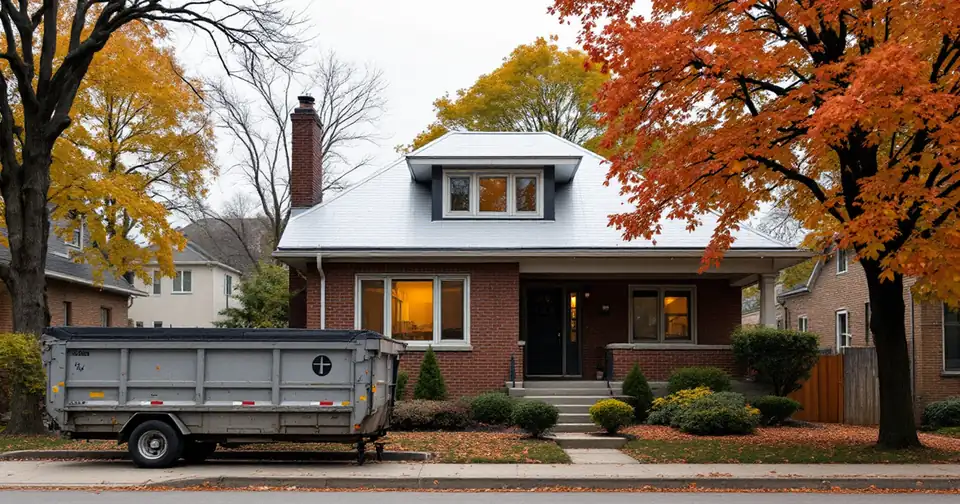
Roof replacement cost in Illinois usually runs about $11,600 to $19,900 for a 2,000 sq ft architectural shingle roof, a Roofing Brief estimate that starts from the national $5 to $8 per sq ft installed baseline and adjusts it for Illinois roofer wages, the highest of any state in the May 2025 BLS survey. Published averages run lower: This Old House puts the statewide average at $6,525 and Angi puts Chicago at $10,185. Inside Chicago, the city’s own building code adds reflectance and insulation rules that most price guides never mention.
This page covers what is true of Illinois specifically: wages, Chicago’s reroofing code, permit rules city by city, the 2025 changes to the roofing licensing law, and the hail and wind record by metro. For national ranges, start with our roof replacement cost guide. For how Chicago ranks against other big metros, see roof replacement cost by metro.
By The Roofing Brief Team. Last reviewed: October 2026.
Key numbers at a glance
These are the Illinois figures most homeowners come looking for, each tied to a named source. Ranges are typical, not quotes: roof size, pitch, layers, deck condition and material decide where a specific house lands.
| Measure | Illinois figure | Source |
|---|---|---|
| 2,000 sq ft architectural shingle roof, wage-adjusted estimate | About $11,600 to $19,900 | Roofing Brief estimate from the $5 to $8/sq ft site baseline and BLS OEWS May 2025 (arithmetic below) |
| Published statewide average | $6,525; most homeowners $5,081 to $16,643 | This Old House, Illinois, updated June 8, 2026 |
| Chicago average | $10,185; most jobs $6,049 to $14,515 | Angi, Chicago roof replacement cost guide, 2026 |
| Large standardized tear-off job, Chicago | $28,454 asphalt; $46,332 metal | Remodeling, Cost vs Value 2025 |
| Roofer median wage, Illinois vs U.S. | $37.45 vs $26.65 per hour (40.5% higher, highest state) | BLS OEWS, May 2025, SOC 47-2181 |
| Roofer median wage, Chicago metro | $39.47 per hour (48.1% above U.S.) | BLS OEWS, May 2025 |
| Chicago building permit, pitched (2:12 or steeper) reroof, residential up to 4 stories | Not required; low-slope roofs always need one | Chicago Department of Buildings, permit-not-required list |
| State roofing license | Required for any paid roofing work, no dollar threshold | 225 ILCS 335/9 |
How much does a new roof cost in Illinois?
A new roof in Illinois typically costs about $11,600 to $19,900 for 2,000 sq ft of architectural shingles once Illinois labor costs are factored in, by our estimate. Published Illinois figures disagree with each other by a wide margin, mostly because each source measures a different job, so read any single number with its method in mind.
Calculator-style guides start from national cost databases. This Old House builds its Illinois figures from RSMeans data and a 1,700 sq ft median home, which is why its $6,525 average sits well under typical bids for full tear-offs. Angi’s Chicago figure is a local cost-guide average for the city. Cost vs Value prices one large, fixed tear-off job in each market, so it is best for comparing Chicago with other cities rather than for budgeting a ranch house.
| Source | What it measures | Illinois or Chicago figure | Comparable national figure |
|---|---|---|---|
| This Old House (June 2026) | RSMeans-based estimate, median 1,700 sq ft Illinois home | $6,525 average; $5,081 to $16,643 | Not stated on the Illinois page |
| Angi (2026) | Reported project costs, Chicago | $10,185 average; $6,049 to $14,515 | HomeAdvisor national: $9,609 average; $5,902 to $13,378 (June 2026) |
| Cost vs Value 2025 | One large standardized asphalt tear-off | $28,454, Chicago | $31,871 national; $29,253 East North Central region |
| Cost vs Value 2025 | Same job in metal | $46,332, Chicago | $51,865 national |
| The Roofing Brief metro research (2026) | Compiled 2026 price guides for the Chicago metro | $8,300 to $30,700; midpoint about $18,900 | See our metro ranking |
The sources point in different directions. Angi’s Chicago average is about 6% above HomeAdvisor’s national average, while Cost vs Value prices its Chicago job about 11% below the national figure. Wages, covered next, are the one input that is measured the same way in every state.
Illinois pays roofers more than any other state
Illinois roofers earned a median $37.45 an hour ($77,900 a year) in May 2025, the highest state median in the country and 40.5% above the U.S. median of $26.65, per BLS Occupational Employment and Wage Statistics. The mean is $37.33 against $27.95 nationally, a 1.34 ratio. BLS counts about 5,300 roofers employed in Illinois.
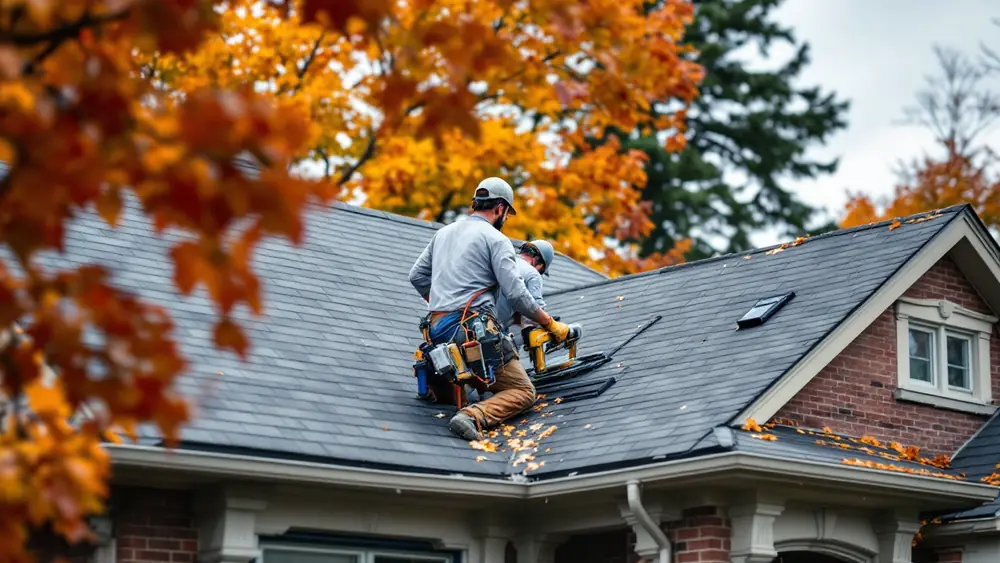
The premium is not uniform. Springfield and Peoria pay close to the Chicago level, while the Illinois side of the Quad Cities pays below the national median. That spread matters more to a bid than the statewide average does.
| Area (BLS OEWS, May 2025) | Roofer median hourly | Roofer mean hourly | Roofers employed | Median vs U.S. |
|---|---|---|---|---|
| United States | $26.65 | $27.95 | 135,490 | baseline |
| Illinois (statewide) | $37.45 | $37.33 | 5,300 | +40.5% |
| Chicago-Naperville-Elgin, IL-IN | $39.47 | $38.95 | 3,900 | +48.1% |
| Springfield, IL | $37.45 | $37.74 | 270 | +40.5% |
| Peoria, IL | $36.83 | $34.33 | 160 | +38.2% |
| Rockford, IL | $31.30 | $33.12 | 180 | +17.4% |
| Champaign-Urbana, IL | $28.92 | $29.53 | 70 | +8.5% |
| St. Louis, MO-IL | $28.25 | $31.20 | 1,110 | +6.0% |
| Davenport-Moline-Rock Island, IA-IL | $23.20 | $26.46 | 110 | minus 12.9% |
Source: BLS OEWS, May 2025, SOC 47-2181 (Roofers), state and metropolitan estimates, retrieved through the BLS public data API. BLS does not publish a roofer estimate for Bloomington-Normal. Illinois’s 10th percentile roofer earned $22.41 an hour and its 90th percentile $51.22. Our roofer salary by state report ranks every state.
What the wage premium can add to an Illinois bid
If labor is 40% to 60% of an installed roof, as Bob Vila’s cost guide estimates, Illinois’s 40.5% median wage premium could add roughly 16% to 24% to a nationally priced job. HomeAdvisor cites a much lower labor share of 15% to 25%, which would shrink the effect to about 6% to 10%. Either way, this is our arithmetic from BLS wages, not a quoted price, and wages are only one cost a contractor carries.
| Area | Median wage gap vs U.S. | Effect if labor is 25% of price | Effect if 40% | Effect if 60% | 2,000 sq ft architectural roof (Roofing Brief estimate) |
|---|---|---|---|---|---|
| U.S. baseline | 0% | 0% | 0% | 0% | $10,000 to $16,000 (20 squares at $5 to $8/sq ft) |
| Illinois statewide | +40.5% | +10.1% | +16.2% | +24.3% | $11,600 to $19,900 |
| Chicago metro | +48.1% | +12.0% | +19.2% | +28.9% | $11,900 to $20,600 |
| Peoria | +38.2% | +9.6% | +15.3% | +22.9% | $11,500 to $19,700 |
| Rockford | +17.4% | +4.4% | +7.0% | +10.5% | $10,700 to $17,700 |
| Champaign-Urbana | +8.5% | +2.1% | +3.4% | +5.1% | $10,300 to $16,800 |
| Quad Cities (IA-IL) | minus 12.9% | minus 3.2% | minus 5.2% | minus 7.8% | $9,200 to $15,200 |
Method: effect = labor share times the wage gap. The low end of each estimate applies the 40% effect to $10,000; the high end applies the 60% effect to $16,000. The $5 to $8 per sq ft baseline for architectural shingles comes from our 2026 Roofing Cost Report. Treat the result as a budgeting range, then let three itemized bids set the real number.
Illinois roof cost by material
Asphalt shingles are the cheapest mainstream roof in Illinois, at about $4.70 per sq ft in This Old House’s state figures, against $8.77 for metal and $15.41 for slate. In Cost vs Value’s Chicago job, metal costs about 1.6 times asphalt and recovers a smaller share at resale: 43.7% against 66.9%.
| Material | Illinois cost per sq ft (This Old House) | Typical total on a 1,700 sq ft home (This Old House) | Chicago standardized job (Cost vs Value 2025) | Chicago cost recouped at resale |
|---|---|---|---|---|
| Asphalt shingles | $4.70 | $5,081 | $28,454 | 66.9% (national 67.5%) |
| Metal | $8.77 | $9,467 | $46,332 | 43.7% (national 50.1%) |
| Wood shingles or shakes | $11.16 | $12,057 | Not priced | Not reported |
| Clay tile | $15.33 | $16,559 | Not priced | Not reported |
| Slate | $15.41 | $16,643 | Not priced | Not reported |
Sources: This Old House, “How Much Does a Roof Replacement Cost in Illinois?”, updated June 8, 2026; Remodeling, Cost vs Value Report 2025, Chicago. National architectural shingle pricing of $5 to $8 per sq ft installed and 3-tab at $4 to $6 come from our 2026 Roofing Cost Report. For the long-run comparison, see metal vs asphalt shingle roofs and metal roof cost.
Low-slope roofs need their own budget line in Illinois. The rear flat sections of Chicago bungalows and the flat roofs on two-flats and three-flats take membrane systems, and in Chicago they trigger a permit, a reflectance minimum and an insulation upgrade, covered below. Our flat roof replacement cost guide prices the membranes.
Cost by house and roof size in Illinois
A roof is priced on roof area, not living area. HomeAdvisor puts roof area at roughly 1.1 to 1.2 times the floor area beneath it, so a two-story house carries about half the roof of a one-story house with the same square footage. The table converts common Illinois house sizes to roof area and prices them two ways.
| House | Estimated roof area (1.1 to 1.2 times the footprint) | Squares | At national $5 to $8/sq ft | Illinois wage-adjusted (Roofing Brief estimate) | This Old House Illinois average |
|---|---|---|---|---|---|
| 1,000 sq ft, one story | 1,100 to 1,200 sq ft | 11 to 12 | $5,500 to $9,600 | $6,400 to $11,900 | $7,308 |
| 1,200 sq ft, one story | 1,320 to 1,440 sq ft | 13.2 to 14.4 | $6,600 to $11,500 | $7,700 to $14,300 | Not published |
| 1,500 sq ft, one story | 1,650 to 1,800 sq ft | 16.5 to 18 | $8,300 to $14,400 | $9,600 to $17,900 | $8,854 |
| 1,600 sq ft, one story | 1,760 to 1,920 sq ft | 17.6 to 19.2 | $8,800 to $15,400 | $10,200 to $19,100 | Not published |
| 2,200 sq ft, two story | 1,210 to 1,320 sq ft | 12.1 to 13.2 | $6,100 to $10,600 | $7,000 to $13,100 | Not published |
| 2,200 sq ft, one story | 2,420 to 2,640 sq ft | 24.2 to 26.4 | $12,100 to $21,100 | $14,100 to $26,300 | Not published |
| 3,000 sq ft, two story | 1,650 to 1,800 sq ft | 16.5 to 18 | $8,300 to $14,400 | $9,600 to $17,900 | $11,626 |
Method: roof area from HomeAdvisor’s 1.1 to 1.2 multiplier applied to the ground-floor footprint; wage adjustment of +16.2% at the low end and +24.3% at the high end from the BLS table above. This Old House assumes a 6:12 pitch and one-foot overhangs, and its multi-story rows use its own story mix. Steep pitches, dormers and a second layer of shingles push any row higher. Size-specific walkthroughs: 1,000 sq ft, 1,200 sq ft, 2,000 sq ft and 3,000 sq ft roofs, plus our cost per square guide.
Chicago has its own reroofing code
Chicago does not use the International Residential Code. Every building in the city, houses included, falls under the Chicago Building Code (Title 14B, based on the 2018 IBC) and the Chicago Building Rehabilitation Code (Title 14R). Section 14R-3-306 requires a roof replacement or recover to meet Chapter 15 of the building code, and Chapter 15 includes a solar reflectance rule that reaches many pitched shingle roofs, not only flat ones.
| Chicago reroof situation | What the code requires | Cost effect | Source |
|---|---|---|---|
| Low-slope roof (under 2:12) replaced or recovered | Roof covering with initial solar reflectance of 0.72, or 0.50 after three years installed | Limits membrane color and type to reflective products | Chicago Building Code 14B-15-1515.2.1 |
| Low-slope roof with qualifying ballast or a vegetative roof over half the area | Three-year reflectance of 0.30 or more (15 psf ballast across the roof, or more than 50% vegetated) | Opens dark ballasted systems and green roofs as alternatives | 14B-15-1515.2.1, Exceptions 1 and 2 |
| Pitched roof from 2:12 up to under 5:12 | Initial solar reflectance of 0.15 or more | Can rule out some shingle colors; check the product’s rating | 14B-15-1515.2.2 |
| Pitched roof 5:12 or steeper, or a historic building | No reflectance minimum | Any code-compliant color | 14B-15-1515.2.2, Exceptions 1 and 2 |
| Low-slope roof replacement | Insulation to new-construction levels unless parapets, curbs or thresholds make it infeasible; never reduce existing insulation | Adds rigid insulation, taller flashing and edge work | Chicago Building Rehabilitation Code 14R-3-306.1, Exception 2; Express Permit terms (Chicago Energy Transformation Code, Chapter C5 or R5) |
| Any roof replacement | Remove all existing layers down to the deck (an adhered ice barrier may stay under a new one) | Full tear-off and disposal | 14R-3-306.3 |
| Recover over two or more existing layers | Not allowed without an accepted condition report on the structure | Engineer or architect fee, or a tear-off | 14R-3-306.3.1; Express Permit terms |
The cool roof rule on Chicago shingle roofs
Chicago’s reflectance rule is usually described as a flat-roof requirement, but Section 14B-15-1515.2.2 also sets a 0.15 initial solar reflectance minimum for roofs pitched below 5:12. A 4:12 bungalow or Cape Cod roof falls inside that band. Compliance can be shown by ASTM E903 or E1918 testing, a portable reflectometer, a Cool Roof Rating Council label or an ENERGY STAR label.
Before choosing a color, ask the roofer for that exact shingle color’s initial solar reflectance from the Cool Roof Rating Council directory. If it does not reach 0.15, it does not comply on a roof between 2:12 and 5:12, permit or no permit. Our cool roof mandates by city tracker compares Chicago with New York and Philadelphia.
Flat roofs on two-flats and bungalows
A Chicago low-slope roof replacement always needs a building permit, must meet the 0.72 initial (or 0.50 aged) reflectance minimum, and must bring roof insulation up to new-construction levels where it physically fits. That combination is the main reason flat-roof bids in the city can run well above a simple membrane swap.
Exception 2 to Section 14R-3-306.1 excuses the added insulation only where existing parapets, equipment curbs, skylight curbs, window sills or door thresholds leave no room for it. Ask the bidder to state the insulation thickness, the R-value and how the flashing heights will be handled.
Chicago permits and fees
The Department of Buildings does not require a building permit for repair, recover or replacement of a roof pitched 2:12 or steeper on a residential building up to 4 stories, or for repairs under 25% of any roof. Any low-slope roof work and any structural repair needs a permit. Work done without a permit must still meet the Chicago Construction Codes.
| Chicago job | Building permit | Fee or added cost | Source |
|---|---|---|---|
| Pitched reroof (2:12 or steeper), residential up to 4 stories | Not required | None for the building permit | Chicago DOB permit-not-required list (Section 14A-4-402) |
| Low-slope roof replacement | Required (Express Permit Program eligible) | $450 per 5,000 sq ft in the 2026 amended fee tables | Chicago DOB 2026 Amended Permit Fee Tables, Table 14A-12-1204.2, as compiled by PermitCalculator |
| Recover over 2 or more layers, or structural repair | Required, with a condition report or structural documents | Higher permit fee plus professional fees | Chicago DOB Express Permit terms for reroofing |
| Dumpster or materials stored on the street, alley or sidewalk | Separate public way permit from CDOT | CDOT permit fee | Chicago DOB permit guidance |
| Owner 65 or older, income at or under 80% of area median, 10 years owned and occupied, 1 to 3 units | Building permit fee waived in full | Saves the permit fee on permitted work | Chicago DOB senior citizen fee waiver |
Fees adjust each January; the Department posted 2027 rates on September 28, 2026. Check the DOB fee calculator before you sign. For permit rules and Chicago’s contractor licensing in more detail, see our Illinois roofing license guide, which covers the Chicago general contractor license.
What changes the price of a roof in Illinois
Most of the gap between two Illinois quotes comes from a short list of state-specific items: the local labor market, whether your town requires a permit, how many layers are on the roof, energy code work on low-slope roofs, and Chicago’s reflectance rule. The table maps each driver to its effect and the rule or data behind it.
| Driver | Effect on your quote | Source |
|---|---|---|
| Roofer wages | Illinois median 40.5% above U.S.; Chicago 48.1%; Quad Cities 12.9% below | BLS OEWS, May 2025 |
| Two or more existing layers | A recover needs a structural condition report from an Illinois-licensed architect or structural engineer; most owners tear off instead | 225 ILCS 335/2(v), as amended by P.A. 104-427 |
| Energy code on a roof replacement | A replacement must follow the Illinois Energy Conservation Code (2024 IECC with Illinois amendments since November 30, 2025); on insulated low-slope roofs that can mean added insulation | 225 ILCS 335/2(w); Illinois Capital Development Board |
| Chicago reflectance rule | Reflective membrane on flat roofs; 0.15 minimum on roofs under 5:12 | Chicago Building Code 14B-15-1515 |
| Local code edition | Varies by town: Peoria and Bloomington use the 2018 IRC, Normal the 2021 IRC; since January 1, 2025 local codes must be at least as stringent as the IRC on structural design | City code pages; Illinois CDB, P.A. 103-0510 |
| Ice barrier at eaves | Required in Springfield and Normal; adds self-adhered membrane along every eave | City of Springfield and Town of Normal local design criteria |
| State license and contract terms | Licensed contractors carry a bond, liability insurance and workers’ compensation; written contract terms are mandatory | 225 ILCS 335/3, 5.5 |
| Storm season | Severe weather reports cluster in June through August; crews book up after hail and wind events | NOAA Storm Events Database, 2016 to 2025 |
Roof permits in other Illinois cities
Outside Chicago, each Illinois city and county sets its own roof permit rule, and they differ sharply: Peoria and Urbana do not require a permit for a straight shingle replacement, while Rockford requires one for all roofing work. One statewide rule applies everywhere: under 225 ILCS 335/5(a-3), no municipality or county may issue a roofing permit without proof of a current state roofing license. Our guide to roof repair in Naperville explains when that city requires a permit for repair work.
| City | Reroof permit rule | Fee | Source |
|---|---|---|---|
| Rockford | Permit required for all roofing work; application records the state license number and class | Varies | City of Rockford building permits page |
| Peoria | No permit for reroofing unless wood sheathing is replaced; 2018 IRC, 90 mph design wind, 20 psf ground snow load | None for a straight reroof | City of Peoria permit guidance and local design criteria |
| Springfield | Permit required; ice shield underlayment and a 30 psf ground snow load in local criteria; applications warn of coal mine subsidence | Varies | City of Springfield |
| Bloomington | Combined roof, window and siding permit before work starts; 2018 IRC | Value-based; about $127 on a $15,000 reroof | City of Bloomington |
| Normal | 2021 IRC with a 107 mph design wind speed and ice barrier required | Varies | Town of Normal |
| Champaign | Roof replacements recorded as alterations | $6 per $1,000 of value, $45 minimum | City of Champaign |
| Urbana | Shingle replacement or overlay alone needs no permit; re-sheathing or a pitch change does | $3 per $1,000, $55 minimum when required | City of Urbana |
These rules were compiled from city sources for our Illinois metro research and change with each fiscal year. Unincorporated county addresses can follow different rules than the city next door, so confirm with the office that covers your parcel. Our roof permit guide explains how permits work in general.
Licensing and contract rules that shape an Illinois bid
Illinois licenses roofing contractors statewide through the Department of Financial and Professional Regulation, with an exam-tested qualifying party, a $10,000 or $25,000 surety bond and minimum liability insurance. Public Act 104-427, effective August 15, 2025, added mandatory contract terms. These rules cost the contractor money, which shows up in the price, and they protect the homeowner.
| Rule | What it means for a homeowner | Source |
|---|---|---|
| License required for any paid roofing | No dollar threshold; check the license on IDFPR’s lookup before signing | 225 ILCS 335/9 |
| Written, signed contract | Must state scope, approximate dates, the insurer and surety, a 72-hour full-refund cancellation right and a statement that the contractor cannot pay or rebate your deductible | 225 ILCS 335/5.5 |
| No deductible rebates | A contractor may not advertise or promise to pay any part of an insurance deductible | 815 ILCS 513/18 |
| Insurance-funded contracts | You may cancel before midnight of the 5th business day after the insurer denies all or part of the claim (or the 30th business day after it receives proof of loss, whichever comes first) | 815 ILCS 513/18(e) to (h) |
| Home repair contracts over $1,000 | Written contract with total cost and itemized materials, plus the state’s consumer rights pamphlet | 815 ILCS 513/15, 513/20 |
License classes, exam details, fees, penalties and the Chicago general contractor license are covered in full in our Illinois roofing license guide. The statute text controls; this summary is not legal advice.
Hail, wind and snow across Illinois
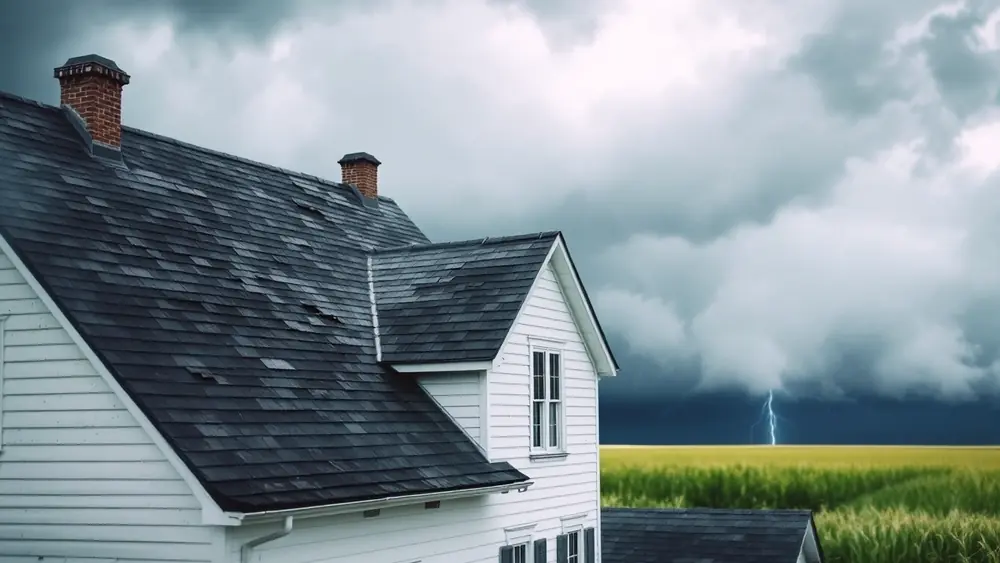
Wind, not hail, is the most common severe-weather threat to Illinois roofs. In every Illinois metro we tracked, NOAA’s Storm Events Database for 2016 to 2025 logs more severe wind reports than inch-plus hail reports, though central Illinois hail is frequent and large: Springfield’s record stone was 3.25 inches. Northern Illinois adds snow load and ice dams in winter.
| Metro (NOAA statistical area) | Hail reports | Hail 1 inch or larger | Largest stone (date, place) | Severe wind reports | Tornadoes |
|---|---|---|---|---|---|
| Chicago-Naperville-Elgin, IL-IN | 586 | 502 | 3.0 in (Apr 4, 2023, Boulder Hill) | 2,241 | 188 |
| Peoria | 230 | 149 | 3.0 in (Aug 20, 2022, Washington) | 406 | 49 |
| Springfield | 138 | 89 | 3.25 in (May 7, 2023, Chatham) | 213 | 21 |
| Champaign-Urbana | 86 | 54 | 2.5 in (Sep 19, 2022, Mahomet) | 285 | 28 |
| Rockford | 77 | 72 | 3.0 in (May 2, 2018, Rockford) | 170 | 19 |
| Bloomington | 64 | 44 | 2.5 in (May 15, 2025, Normal) | 152 | 18 |
Source: NOAA National Centers for Environmental Information, Storm Events Database, 2016 to 2025, compiled by metro statistical area in The Roofing Brief’s Illinois metro research. Counts are reports, not separate storms, and the Chicago area covers far more counties (including northwest Indiana) than Bloomington. Statewide, NOAA’s Storm Prediction Center counted 167 major hail events of 1 inch or larger in Illinois in 2025, ninth among states, as reported by the Insurance Information Institute.
Hail and wind push demand, and demand pushes price and lead time. State Farm ranked Illinois third for hail claims in 2025, even though Illinois claims fell 28% from 2024. Bloomington-Normal shows how concentrated the risk can be: on May 15, 2025, McLean County logged 26 hail reports in 25 minutes, 41% of its decade total. Our hail claims by state report has the full ranking.
Snow and ice show up in local codes rather than storm counts. Springfield’s local criteria call for a 30 psf ground snow load and ice shield underlayment, and Normal requires an ice barrier; Peoria’s criteria set 20 psf. Where an ice barrier is required, a bid that lists only “underlayment” is incomplete. Our ice dam membrane code guide shows how far it must run.
Will insurance pay for a new roof in Illinois?
Homeowners insurance in Illinois typically pays for roof damage from a covered peril such as wind or hail, not for age or wear. Older roofs are often settled at actual cash value, which subtracts depreciation, and some policies carry a separate roof payment schedule or cosmetic damage terms. Read the declarations page before filing, and call the insurer before signing a storm contract.
Illinois law adds two protections on insurance-funded roofs: a contractor cannot cover your deductible, and you may cancel the contract if the insurer denies the claim, within the deadlines in 815 ILCS 513/18. Our guides to what homeowners insurance covers on a roof and non-renewal over roof age go deeper.
Help paying for a roof in Illinois
There is no federal tax credit for a new roof installed in 2026. Public Law 119-21 ended the 25C home improvement credit for property placed in service after December 31, 2025, and asphalt and metal roofs had already dropped out of 25C after 2022. Check current IRS guidance and a tax professional for your situation. Help in Illinois is state and local, and income-tested.
| Program | What it offers | Who qualifies | Status (October 2026) |
|---|---|---|---|
| IHDA Home Repair and Accessibility Program (HRAP) | Up to $50,000 for health, safety, accessibility and energy repairs, with a roof-only option | Single-family owners at or under 80% of area median income, current on the mortgage | $15 million awarded to 34 local administrators on October 30, 2025; apply through the grantee serving your area |
| City of Chicago Home Repair Program | Roof or porch repairs at no repayment cost | Chicago homeowners at or under 50% of area median income | No new registration in 2026; 2024 and 2025 registrants remain on the waitlist |
| Chicago senior permit fee waiver | 100% of the building permit fee waived | Owners 65 or older, at or under 80% of area median income, 10 years owned and occupied, 1 to 3 units | Active; request before paying the fee |
Sources: Illinois Housing Development Authority release, October 30, 2025; City of Chicago Department of Housing; City of Chicago Department of Buildings. HRAP grantees include the City of Peoria, the City of Bloomington, Rebuilding Together Metro Chicago and organizations serving Will, Kane, DuPage, Lake and McHenry counties; some keep waiting lists.
Which roof should you pick in Illinois?
The right Illinois roof depends on where the house sits, the roof’s pitch, how long you will stay and what is already on it. Use the table to match your situation to a starting point, then price it with at least three itemized bids.
| Your situation | Starting recommendation | Why |
|---|---|---|
| Chicago house, roof pitched 2:12 to under 5:12 | Pick a shingle color rated 0.15 or higher for initial solar reflectance | Required by Chicago Building Code 14B-15-1515.2.2, with or without a permit |
| Chicago flat roof on a two-flat, three-flat or bungalow rear | Reflective membrane plus insulation, under a permit | 0.72 initial reflectance and new-construction insulation where it fits (14B-15-1515.2.1; 14R-3-306.1) |
| Roof already has two layers | Budget for a full tear-off | A recover needs a structural condition report (225 ILCS 335/2(v)); Chicago requires a tear-off to the deck for any replacement |
| Central Illinois hail belt: Peoria, Springfield, Bloomington-Normal | Price a UL 2218 Class 4 shingle next to the standard option | Peoria and Springfield each logged hailstones of 3 inches or more in 2016 to 2025 (NOAA); ask your insurer about a premium credit |
| Selling within about 5 years | Architectural asphalt shingles | Higher resale recovery in Chicago: 66.9% vs 43.7% for metal (Cost vs Value 2025) |
| Staying 25 years or more | Consider metal or a premium shingle | Longer service life can offset the higher upfront cost; see our roof lifespan guide |
| Recent wind or hail damage | Call your insurer before signing any contract | Settlement terms change your cost, and Illinois gives you cancellation rights if the claim is denied |
| Lower income or a long-time senior owner | Contact your local HRAP administrator; in Chicago, ask about the permit fee waiver | IHDA HRAP up to $50,000; Chicago waiver covers 100% of the permit fee |
How to price an Illinois roof replacement, step by step
An Illinois quote is easiest to compare when every bid covers the same scope. These steps put the state-specific items on paper before anyone starts tearing off shingles.
- Measure the roof in squares. Use roof area, not living area: footprint with overhangs, times the pitch factor. One square is 100 sq ft.
- Find your pitch. In Chicago, pitch decides the permit (under 2:12 needs one) and the reflectance rule (under 5:12 needs 0.15 or better).
- Verify the license. Search the company on IDFPR’s license lookup. The license number and exact licensed name must appear on the contract and bid (225 ILCS 335/5).
- Confirm the permit authority. Ask whether your city, village or county issues the permit, who pulls it and what it costs; Peoria and Rockford handle reroofs differently.
- Require an itemized bid. Each bid should list tear-off layers, disposal, ice barrier coverage, underlayment, flashing, ventilation, a per-sheet deck replacement price and, on flat roofs, insulation thickness and R-value.
- Check the contract terms. Look for the 72-hour cancellation clause, the deductible statement, and the named insurer and surety required by 225 ILCS 335/5.5.
- Settle the insurance question first. If a storm caused the damage, confirm whether the policy pays actual cash value or replacement cost before you sign.
- Close out the job. Keep the permit final (where one applies), the product’s reflectance rating in Chicago, and the manufacturer warranty registration with your house records.
Find a vetted roofer in your Illinois metro
Our Illinois metro rankings check contractors against public records, including IDFPR’s license register, and describe each market’s permit and storm conditions. Pick the page for your area: Chicago, Rockford, Peoria, Springfield, Champaign and Bloomington.
Metro East homeowners can use our St. Louis page, and the Illinois Quad Cities our Davenport page; any roofer working at an Illinois address still needs an Illinois license. For a neighboring-state comparison, see roof replacement cost in Indiana and roof replacement cost in Michigan. To the north, compare roof replacement cost in Wisconsin, and for the Upper Midwest, see our guide to Minnesota roof costs.
Verified roofers in Illinois metros
Pricing a roof is half the job; the other half is choosing who installs it. The Roofing Brief ranks manufacturer-certified roofers in 8 Illinois metros, scoring each on a published formula and checking the leaders against state licence and BBB records.
- Best roofers in Chicago, IL: five certified contractors ranked and checked against licence and BBB records, led by Aegis Construction Group (TRB Score 91.2).
- Best roofers in St. Louis, MO: five certified contractors ranked and checked against licence and BBB records, led by FM Roofing (TRB Score 95.5).
- Best roofers in Davenport, IA: four certified contractors ranked and checked against licence and BBB records, led by Roof Drs (TRB Score 71.8).
- Best roofers in Peoria, IL: five certified contractors ranked and checked against licence and BBB records, led by Roof Tiger PLLC (TRB Score 83.6).
- Best roofers in Rockford, IL: five certified contractors ranked and checked against licence and BBB records, led by RPM Contracting (TRB Score 93.9).
- Best roofers in Champaign, IL: five certified contractors ranked and checked against licence and BBB records, led by Freedom Roofing & Construction Inc (TRB Score 93.5).
- Best roofers in Springfield, IL: one certified contractor ranked and checked against licence and BBB records, led by Sutton's (TRB Score 92.0).
- Best roofers in Bloomington, IL: four certified contractors ranked and checked against licence and BBB records, led by Cupples Construction (TRB Score 90.1).
Frequently asked questions
How much does a new roof cost in Illinois?
A new roof in Illinois typically costs about $11,600 to $19,900 for 2,000 sq ft of architectural shingles, a Roofing Brief estimate that adjusts the national $5 to $8 per sq ft baseline for Illinois roofer wages, 40.5% above the U.S. median (BLS, May 2025). This Old House reports a lower statewide average of $6,525. Size, pitch, layers and material move any single job.
What is the average cost of replacing a roof in Chicago?
Angi puts the average Chicago roof replacement at $10,185, with most jobs between $6,049 and $14,515. Remodeling’s Cost vs Value 2025 prices a larger standardized asphalt tear-off at $28,454 in Chicago. Chicago roofer wages run 48.1% above the U.S. median, and flat roofs add permit, reflectance and insulation requirements, so many bids land above the Angi average.
What is the average cost to replace a roof on a 1,200 sq ft house in Illinois?
A one-story 1,200 sq ft house has roughly 1,320 to 1,440 sq ft of roof. At the national $5 to $8 per sq ft rate that is about $6,600 to $11,500; adjusted for Illinois roofer wages, about $7,700 to $14,300 (Roofing Brief estimate). A steep pitch, a second layer or deck repairs push it higher.
How much does it cost to replace a roof on a 2,200 sq ft house in Illinois?
It depends on stories. A one-story 2,200 sq ft house carries about 2,420 to 2,640 sq ft of roof, roughly $14,100 to $26,300 at Illinois wage-adjusted rates. A two-story 2,200 sq ft house has about half the footprint, so roughly $7,000 to $13,100. These are Roofing Brief estimates; itemized bids set the real price.
Will insurance cover a 20 year old roof in Illinois?
Insurance may cover a 20 year old roof if a covered peril such as wind or hail caused the damage, but not wear from age. Older roofs are often paid at actual cash value, which subtracts depreciation. In Illinois, a contractor cannot pay your deductible, and you can cancel an insurance-funded roofing contract if the claim is denied (815 ILCS 513/18).
Is it cheaper to replace a roof with shingles or metal in Illinois?
Shingles are cheaper upfront. This Old House puts Illinois asphalt at $4.70 per sq ft against $8.77 for metal, and Cost vs Value 2025 prices the same Chicago job at $28,454 in asphalt and $46,332 in metal. Asphalt also recovered more at resale in Chicago, 66.9% against 43.7%, though metal can last longer.
What time of year is cheapest to replace a roof in Illinois?
Late fall and early spring are often easier times to book an Illinois crew, because NOAA severe-weather reports in the Chicago and Rockford metros cluster in June, July and August, and Peoria’s in May through July. Winter installs are possible, but GAF recommends installing shingles at 40°F or above, and colder jobs may need hand-sealing. Any discount depends on the contractor’s backlog.
Do you need a permit to replace a roof in Illinois?
It depends on the city. Chicago requires no building permit for a pitched (2:12 or steeper) reroof on a residential building up to 4 stories but always requires one for low-slope roofs. Rockford requires a permit for all roofing work, while Peoria needs one only when sheathing is replaced. Any permit requires proof of a state roofing license.
Sources
- U.S. Bureau of Labor Statistics, Occupational Employment and Wage Statistics, May 2025, SOC 47-2181 Roofers: national, Illinois and metropolitan area estimates (BLS public data API).
- This Old House, “How Much Does a Roof Replacement Cost in Illinois?”, updated June 8, 2026.
- Angi, Chicago roof replacement cost guide, 2026.
- HomeAdvisor, “How Much Does Roof Replacement Cost?”, updated June 17, 2026.
- Remodeling, Cost vs Value Report 2025: Chicago, Illinois; East North Central region; national averages.
- Bob Vila, roof replacement cost guide (labor share).
- City of Chicago, Municipal Code Title 14B (Chicago Building Code), Sections 14B-1-100 and 14B-15-1515; Title 14R (Chicago Building Rehabilitation Code), Section 14R-3-306.
- City of Chicago Department of Buildings: “What types of work do not require a building permit? Roofing Work”; Express Permit Program Terms and Conditions for Reroofing; senior citizen permit fee waiver; 2027 fees alert, September 28, 2026.
- PermitCalculator, Chicago, citing the Department of Buildings 2026 Amended Permit Fee Tables, Table 14A-12-1204.2.
- Illinois Roofing Industry Licensing Act, 225 ILCS 335, Sections 2, 3, 5, 5.5 and 9, as amended by Public Act 104-427 (effective August 15, 2025).
- Home Repair and Remodeling Act, 815 ILCS 513, Sections 15, 18 and 20.
- Illinois Capital Development Board: Illinois Energy Conservation Code (2024 IECC as amended, effective November 30, 2025); Illinois Codes FAQ and building code requirements under Public Act 103-0510.
- NOAA National Centers for Environmental Information, Storm Events Database, 2016 to 2025; NOAA Storm Prediction Center 2025 hail counts as reported by the Insurance Information Institute; State Farm 2025 hail claims release.
- Illinois Housing Development Authority, Home Repair and Accessibility Program release, October 30, 2025.
- City of Chicago Department of Housing, Home Repair Program.
- Cities of Rockford, Peoria, Springfield, Bloomington, Champaign and Urbana and the Town of Normal, building permit and local design criteria pages, as compiled in The Roofing Brief’s Illinois metro research.
- GAF, installation guidance for cold weather.
- Public Law 119-21, section 70505.
Reviewed by The Roofing Brief Team. Last reviewed: October 2026. Prices, fees and code requirements change; confirm current figures with your contractor, building department and insurer before you sign.