
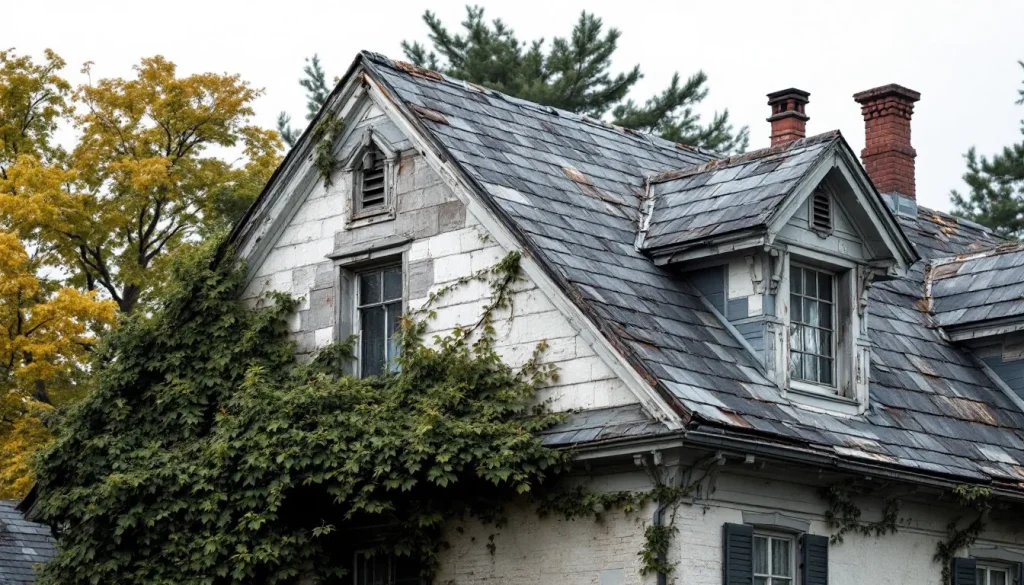
How long does a roof last depends almost entirely on the material: a 3-tab asphalt roof lasts 15 to 20 years, an architectural asphalt roof 20 to 30 years, a standing seam metal roof 40 to 70 years, concrete tile about 50 years, clay tile 100 years or more, slate 75 to 200 years, and wood shake 20 to 40 years. The single biggest factor inside that range is whether the roof was installed correctly and whether it has been ventilated and maintained. A poorly ventilated architectural shingle roof in a hot climate can fail at year 14. A well-installed one in a moderate climate routinely hits 28.
The short version
- Asphalt shingles dominate the market and last 15 to 30 years depending on grade.
- Metal, tile, and slate are 2x to 5x more durable but cost 2x to 4x upfront.
- Ventilation, attic insulation, and slope drive the difference between minimum and maximum lifespan more than brand does.
- Hot, sunny climates cut asphalt lifespan by 20 to 30 percent. Coastal salt air cuts metal lifespan slightly. Hail belts cut every material.
- Most roofs are replaced around year 80 to 85 percent of their rated life, not at the catastrophic-failure point.
The Short Answer: Roof Lifespan by Material
Here is the consolidated 2026 lifespan table, drawn from NRCA, ASTM testing standards, manufacturer warranties, and field data from independent home (see our mobile home roof replacement) inspector associations.
| Material | Typical Lifespan | Best-Case Lifespan | Worst-Case Lifespan |
|---|---|---|---|
| 3-tab asphalt shingle | 15 to 20 years | 25 years | 10 years |
| Architectural asphalt | 20 to 30 years | 35 years | 14 years |
| Premium designer asphalt | 30 to 50 years | 50 years | 22 years |
| Standing seam metal | 40 to 70 years | 75 years | 30 years |
| Stone-coated steel | 40 to 50 years | 60 years | 30 years |
| Aluminum shingle | 50 years | 80 years | 40 years |
| Copper | 100+ years | 200 years | 70 years |
| Concrete tile | 50 years | 75 years | 30 years |
| Clay tile | 100+ years | 150 years | 50 years |
| Slate | 75 to 200 years | 200 years | 60 years |
| Wood shake | 20 to 40 years | 50 years | 15 years |
| TPO (single-ply) | 20 to 30 years | 30 years | 15 years |
| EPDM (rubber) | 20 to 25 years | 30 years | 15 years |
| Modified bitumen | 15 to 20 years | 25 years | 12 years |
Asphalt Shingle Roof Lifespan
Asphalt shingles cover about 80 percent of US homes, according to the Asphalt Roofing Manufacturers Association. There are three grades.
3-tab shingles (15 to 20 years)
The original budget shingle. Single-layer, flat, no shadow line. Carries a 20- to 25-year manufacturer warranty but real-world lifespan tops out at 20 years and often comes in closer to 15 in hot climates. Wind rating is typically 60 mph. Newer installs are increasingly rare because architectural shingles cost only marginally more and last 30 to 50 percent longer.
Architectural (dimensional) shingles (20 to 30 years)
The default product since 2010. Two layers laminated together, varied tab profile, deeper shadow line. Manufacturer warranties run 30 to 50 years but actual replacement happens around year 22 to 26 for most homes. Wind rating typically 110 to 130 mph with proper installation. Major brands include GAF Timberline HDZ, CertainTeed Landmark, Owens Corning Duration.
Premium designer shingles (30 to 50 years)
Heavier, thicker, often three-piece laminated to mimic slate or shake. GAF Grand Sequoia, CertainTeed Presidential Shake, Owens Corning Berkshire. Carry lifetime warranties and routinely deliver 35-plus years if installed and ventilated correctly. Cost is 50 to 100 percent above standard architectural.
Metal Roof Lifespan
Metal is the fastest-growing residential roofing category in the US, with the Metal Roofing Alliance reporting double-digit annual share gains since 2020. Lifespan depends on the metal and the panel system.
Standing seam steel and aluminum (40 to 70 years)
The premium metal option. Concealed fasteners (the seams snap or mechanically lock together, no exposed screws), heavy-gauge metal (24-gauge steel or 0.032 aluminum), and high-performance Kynar 500/PVDF paint systems that hold color for 30-plus years. A well-installed standing seam roof routinely outlasts the homeowner. See metal roof cost for the upfront math.
Stone-coated steel (40 to 50 years)
Steel pans pressed into a shingle, tile, or shake profile and topped with stone granules. Brands include DECRA, Boral, Westlake Royal. Looks like asphalt or tile, behaves like metal. 50-year warranties are standard. Hail-rated UL 2218 Class 4.
Exposed-fastener metal panels (30 to 40 years)
The screw-down ag-panel and R-panel systems common on barns and budget residential. Cheaper to install but the rubber gasket on each fastener degrades and needs replacement every 15 to 20 years, or the roof leaks. Lifespan is rated 30 to 40 years but functional life often ends sooner because of fastener failure.
Copper (100+ years)
Premium and rare on residential. Patinas to that distinctive green over 10 to 30 years. Cathedrals in Europe still have functional copper roofs from the 1600s. On a residential install, expect to spend $20 to $35 per square foot.
Tile Roof Lifespan
Tile is the dominant material across the Southwest, Florida, and California, where the heat and UV punish asphalt.
Concrete tile (50 years)
Heavy, durable, fire-resistant. Often the structure (rafters, deck) gives out before the tile does. The underlayment below the tile is the limiting factor: it must be replaced every 30 to 50 years even though the tile itself is still functional. A “concrete tile replacement” is often actually an underlayment replacement with the original tiles reused.
Clay tile (100+ years)
The longest-lasting common residential material. Mission and Spanish-style clay tiles routinely hit 100 years. Color is fired into the clay so UV cannot fade it. Same underlayment caveat as concrete: replace the underlay every 40 to 60 years.
Slate Roof Lifespan
Slate is the longest-lived residential roofing material. Hard slate from quarries in Vermont, New York, and Pennsylvania can deliver 150 to 200 years. Soft slate from cheaper imports may give only 60 to 80. Slate roofs on Northeast US homes built in the 1880s are still on the original roof.
Limitations: slate weighs 800 to 1,500 pounds per square (100 sq ft) and most homes need engineered structural support to carry it. Installation requires a specialized contractor and costs $15 to $30 per square foot. The math only works if you plan to stay or if you are restoring a historic property.
Wood Shake Lifespan
Cedar shake roofs last 20 to 40 years if maintained. Maintenance is non-optional: annual cleaning to remove moss and debris, replacement of split shakes every 5 to 10 years, and a preservative treatment every 5 years. Without maintenance, cedar fails in 15 years. With maintenance, well-installed western red cedar shake can hit 50.
Class A fire ratings require treated shake and a fire-resistant underlayment, and many wildfire-zone jurisdictions in California, Colorado, and Oregon have banned new wood shake installations entirely.
TPO Lifespan
Thermoplastic polyolefin (TPO) is the dominant low-slope commercial roof and is gaining residential market share for modern flat-roof homes. Lifespan is 20 to 30 years. The variation depends on membrane thickness (60-mil minimum for residential, 80-mil for longer life) and UV exposure. White TPO reflects heat and lasts longer than dark colors. The seams (heat-welded) are the failure point: they last as long as the membrane only if welded correctly during install.
EPDM Lifespan
Ethylene propylene diene monomer (EPDM, also known as rubber roofing) is the older single-ply standard. 20 to 25 years is typical. Comes in 45-mil and 60-mil thicknesses. Black EPDM absorbs heat and runs hotter than TPO, which shortens lifespan slightly. Seams use adhesive tape rather than heat-welding, which is more forgiving on install but more failure-prone over decades.
Modified Bitumen Lifespan
Mod-bit is asphalt with rubber or plastic modifiers, applied in rolls and torched or peel-and-stick installed. 15 to 20 years is the realistic lifespan, with 25 possible for premium SBS-modified product. Common on residential garage roofs, sunrooms, and additions with flat sections.
Why Your Roof Won’t Reach Its Max Lifespan
Manufacturer warranties and lifespan tables assume ideal conditions. Few real roofs see them. Here are the five factors that bring your roof in below the max.
1. Ventilation
This is the single biggest under-discussed factor. A roof needs balanced intake (soffit) and exhaust (ridge or gable) ventilation to keep attic temperatures within roughly 10 degrees of outdoor ambient. Without it, summer attic temperatures hit 150 degrees F, which cooks the asphalt binder out of shingles from the underside. An asphalt roof with poor ventilation routinely loses 5 to 10 years of life.
2. Installation quality
Nails too high (above the nailing strip), nails too low (penetrating the visible face), nails over-driven (breaking the mat), or nails under-driven (creating a high spot that lifts the next shingle) are all common failures. A poorly nailed roof can lose half its rated life. Pull permits and check that your installer is using the manufacturer-specified fastening pattern.
3. Climate severity
Hot, sunny climates cut asphalt life. Coastal salt air slightly degrades unprotected metal. Hail belts (the central plains, Texas Panhandle, Front Range Colorado) damage every material. Snow load is hard on shallow-pitch roofs. Most products are rated for moderate conditions, and harsh climate will cut 15 to 30 percent off rated life.
4. Slope
Low-slope roofs (3:12 pitch or less) shed water and snow slower than steep roofs, which means water sits longer on the shingles. Low-slope asphalt roofs routinely deliver 70 to 80 percent of the lifespan a steep version of the same material would.
5. Tree cover and debris
Overhanging branches drop debris that holds moisture against the shingles. Pine needles and oak tannins are particularly aggressive. Trim back to at least 10 feet of clearance, and clean the roof annually if you have heavy tree cover.
Maintenance That Extends Roof Life
Five maintenance items deliver 90 percent of the lifespan-extension benefit:
- Clear gutters twice a year (spring and fall). Backed-up gutters cause water to wick under the drip edge and rot the fascia and roof deck.
- Trim overhanging branches to at least 10 feet of clearance.
- Clean debris off the roof annually. Leaves, pine needles, and twigs trap moisture.
- Inspect flashing every 2 to 3 years and re-seal as needed. Failed flashing is the #1 cause of premature roof leaks.
- Verify attic ventilation is open at least annually. Blocked soffit vents from blown-in insulation are extremely common.
A maintained roof routinely delivers 20 to 30 percent more life than an unmaintained one. On a 25-year architectural shingle roof, that is 5 to 7 extra years for about $200 to $400 per year in maintenance.
Regional Factors That Affect Roof Lifespan
Hot, sunny climates (AZ, NV, NM, TX, FL)
UV is the primary enemy. Asphalt dries out faster, granules shed earlier, and curling shows up 5 to 8 years sooner than the same shingle in a moderate climate. Light-colored shingles, tile, and metal hold up best. Expect to take 5 to 7 years off the typical asphalt lifespan.
Hail belts (CO, NE, KS, OK, TX, MO)
Hail damage can shorten any roof at any age. Class 4 impact-rated (UL 2218) shingles and stone-coated steel are the standard play in these regions. Insurance carriers in these states often require impact-rated products to keep premiums reasonable.
Snow load (Northern tier, mountains)
Steep pitches shed snow. Low-slope sections accumulate it and stress the structure. Ice dam formation around eaves damages shingles. Metal roofs and proper ice-and-water shield underlayment at the eaves are the standard solutions.
Coastal salt air (FL, Gulf Coast, CA, NE seaboard)
Salt mist degrades exposed metal (galvanized steel especially). Aluminum and stainless steel handle salt air well. Asphalt shingles are largely unaffected by salt but suffer from the hurricane and wind exposure that come with coastal living.
When to Replace vs Repair an Old Roof
Use the percentage-of-life test. If your roof is past 80 percent of its rated lifespan AND showing 2 or more functional damage signs, replacement is cheaper per-year-of-life than repairs.
Example: a 24-year-old architectural shingle roof (24 of 27 expected years = 89 percent of life) showing curling shingles and granule loss. Repair patches cost $2,500 and buy maybe 2 years. Replacement at $14,000 buys 25 years. Cost per remaining year: $1,250 to repair, $560 to replace. Replace wins. Detail on the cost side at how much does a new roof cost.
Signs Your Roof Is Near End of Life
You will rarely see one dramatic failure. You will see a cluster of these:
- Curling shingle edges on south or west slopes
- Visible granules in gutters and downspouts
- Black streaks (cosmetic, but indicate an aging roof)
- Shingles that crack when stepped on
- Loss of color uniformity (mottled appearance)
- Multiple repair calls in a 2- to 3-year window
- Increased energy bills (failing roof system + degraded attic envelope)
Cost Per Year of Life: The Most Honest Comparison
The single most honest way to compare roofing materials is cost per year of expected life. Sticker price favors asphalt by a large margin. Cost per year of life is much closer across materials, and premium products often come out ahead over long ownership periods.
Here is the calculation framework most independent inspectors and builders use when advising long-term owners:
- Take the all-in installed cost for a typical home (2,000 sq ft of roof area)
- Divide by the realistic expected lifespan (not the warranty number)
- Add an annual maintenance budget (about $200 to $400 for most materials, $400 to $800 for cedar shake, $0 to $100 for slate)
- Compare across materials for the actual long-run economics
If you plan to own the home for 10 years, asphalt usually wins because you only pay for the years you use. If you plan to own for 30 years or pass the home to family, premium materials usually win because they outlast at least one and often two asphalt replacements you would otherwise pay for. Asphalt at $14,500 every 25 years over 75 years is three roofs and roughly $50,000 in 2026 dollars (more once you add inflation). One slate roof at $60,000 covers the same 75 years with no replacements.
What This All Means for Buying Your Next Roof
Roof lifespan math matters most when you are choosing material. The cheap option saves money this decade. The premium option saves money over the next 50 years. Run the cost-per-year math:
| Material | Avg. Install Cost (2,000 sq ft) | Avg. Lifespan | Cost per Year |
|---|---|---|---|
| Architectural asphalt | $14,500 | 25 years | $580 |
| Standing seam metal | $32,000 | 55 years | $582 |
| Concrete tile | $28,000 | 50 years | $560 |
| Clay tile | $45,000 | 100 years | $450 |
| Slate | $60,000 | 150 years | $400 |
Cost per year converges across materials, which is why your choice should be driven by climate, aesthetics, and how long you plan to own the home. For the head-to-head, see metal vs asphalt shingle roof.
FAQs
How long does a 30-year shingle actually last?
A “30-year” shingle (the manufacturer warranty term) typically delivers 22 to 28 years of real-world service in moderate climates. In hot, sunny climates, expect 18 to 22. The 30-year warranty is heavily prorated and rarely pays out on aging-related failure. Treat the warranty number as marketing and the cost-per-year math as reality.
What is the longest-lasting roof material?
Slate, with 75 to 200 years of service from quality hard slate. Clay tile is second at 100-plus years. Copper metal comes third at 100-plus. The functional limit on slate and clay tile is often the underlayment beneath them, not the surface material.
Does a darker roof last shorter than a lighter roof?
Yes, modestly. Dark shingles absorb more heat and run 10 to 20 degrees hotter than light shingles, which accelerates asphalt binder oxidation. Real-world impact is roughly 1 to 3 years of lifespan in hot climates. Cool-roof asphalt shingles use reflective granules to mitigate this.
Will my roof last 50 years?
If it is asphalt, almost certainly not. If it is metal, possibly. If it is tile, likely. If it is slate, almost certainly. Match material to how long you plan to need a roof.
Does adding more attic ventilation extend roof life?
Yes. Adding ridge vent and verifying open soffit vents to bring attic temperature within 10 degrees of outdoor ambient can add 5 to 10 years to asphalt shingle lifespan. The retrofit cost is usually $400 to $1,200 and pays back many times over.
How long does a roof last in Florida?
Florida is a hot, humid, hurricane-exposed climate. Asphalt lifespan runs 15 to 22 years (not the 25 to 30 you would see in Pennsylvania). Tile lifespan is excellent at 50 to 75 years. Metal is increasingly popular at 40 to 50 years. Insurance carrier requirements push many Florida homeowners toward impact-rated materials.
How do I know when to replace my roof vs just repair it?
Run the cost-per-remaining-year calculation. If your roof is past 75 percent of its rated lifespan AND showing 2+ functional damage signs, the cost-per-year math almost always favors replacement. Get written quotes for both options.