
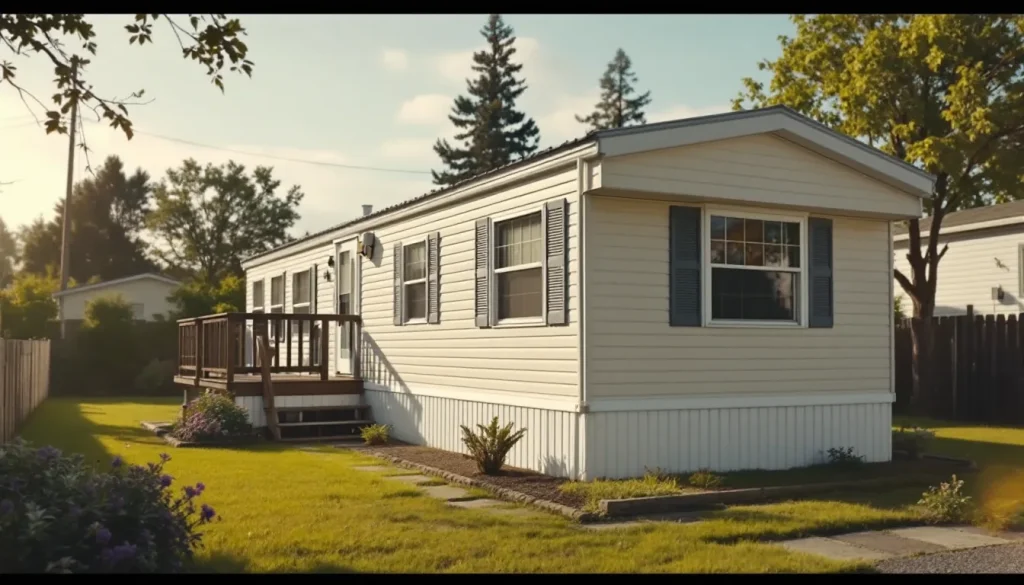
Last reviewed: September 2026.
A mobile home roof in 2026 has three replacement paths: full reroofing with asphalt shingles or rolled roofing ($3,000 to $7,500 for a single-wide, $5,500 to $11,000 for a double-wide), elastomeric coating system ($500 to $2,000 single-wide, $1,200 to $3,500 double-wide), or metal roof-over installation ($4,500 to $8,500 single-wide, $7,500 to $14,000 double-wide). The right choice depends on the existing roof condition (flat metal vs. peaked shingled vs. flat asphalt), the age of the home (pre-1976 HUD code vs. post-1976), and whether you plan to stay long-term or sell within 5 years. Here is the breakdown of each path, the HUD code requirements that govern any manufactured home roof work (24 CFR 3280), the insurance considerations, and when to walk away from the roof entirely.
The short version
- Three credible paths for a leaking or aging mobile home roof: coating (cheapest, 5 to 10 year lifespan), full reroof (mid-cost, 18 to 25 year), or metal roof-over (highest cost, 40+ year).
- Mobile homes built before June 15, 1976 (pre-HUD code) often have low-slope or “flat” metal roofs that work best with elastomeric coating or metal roof-over. Post-HUD homes are usually peaked and accept shingles.
- HUD code 24 CFR 3280.305 governs roof loads and roof covering on manufactured homes. Modifications must respect the original design loads.
- Elastomeric coating systems run $0.50 to $1.50 per sq ft DIY, $1.50 to $3.50 per sq ft pro installed.
- Insurance often raises rates or refuses to renew on mobile homes with original roofs over 20 years old. A documented reroof or coating reset triggers a coverage review.
- A new roof typically returns 40 to 70 percent of cost in mobile home resale value, less than the 60 to 90 percent recovery on conventional homes.
Short answer: the three paths and which to pick
A mobile home roof is not a regular roof. The structure is lighter (often using thin-gauge metal rafters and roof skin instead of dimensional lumber and sheathing). The slope is often very low (1/12 to 3/12 on older homes, 3/12 to 5/12 on newer manufactured housing). The original roofing material is usually one of three things: rolled asphalt, low-slope metal (flat or barely sloped), or asphalt shingles on a peaked roof. Each existing condition opens up a different replacement path.
| Path | Single-wide cost | Double-wide cost | Lifespan | Best for |
|---|---|---|---|---|
| Elastomeric coating | $500 to $2,000 | $1,200 to $3,500 | 5 to 10 years (recoat needed) | Existing low-slope metal or modified bitumen roof in fair condition; budget-constrained |
| Full reroof (asphalt shingles) | $3,000 to $7,500 | $5,500 to $11,000 | 18 to 25 years | Peaked roof homes; long-term ownership |
| Full reroof (rolled asphalt) | $1,800 to $4,500 | $3,200 to $6,500 | 8 to 12 years | Low-slope homes; budget mid-range |
| Metal roof-over kit | $4,500 to $8,500 | $7,500 to $14,000 | 40 to 60 years | Any condition; long-term ownership; insurance issues |
| TPO membrane | $3,500 to $6,500 | $6,000 to $10,500 | 20 to 30 years | Park-model homes; low-slope; resale prep |
The right choice depends on three questions. How long do you plan to own the home? What is the existing roof type? What is your cash budget vs. credit options? If you plan to sell within 3 years, a coating is usually the right call. If you plan to own for 10+ years, a metal roof-over is almost always the lowest cost per year. The full reroof in asphalt is the middle path: better than coating for resale, cheaper upfront than metal.
Mobile home roof types: peaked vs. flat (low-slope)
Manufactured housing roof construction falls into two structural categories: “peaked” (also called “sloped” or “pitched”) and “flat” (also called “low-slope” or “minimal-slope”).
Peaked mobile home roofs have a recognizable ridge running the length of the home, with rafters sloping down to the eaves on both sides. The slope is typically 3/12 to 5/12 on post-1990 homes, occasionally up to 6/12 on premium manufactured housing. The structure is closer to a conventional home roof: wood or metal rafters, sheathing (sometimes OSB, sometimes a structural metal panel), underlayment, and asphalt shingles. These roofs accept any conventional reroof material that meets slope minimums per IRC R905. Most newer manufactured homes (post-1996 in most states) ship with peaked roofs because the FHA financing standards require it.
Flat (low-slope) mobile home roofs are common on older homes (pre-1990) and on park-model units. The slope is 1/12 to 3/12. The original roofing material is usually rolled asphalt, low-slope metal sheets bonded with seam sealant, or a single-ply membrane. The structure underneath is lighter (often a metal panel skin glued to ceiling joists, with no separate sheathing). Repair and reroof options are restricted to low-slope materials: rolled asphalt, modified bitumen, EPDM membrane, TPO, or coating systems. Shingles are not an option without a structural slope conversion (which is rarely cost-effective).
Identify your roof type before pricing options. A peaked roof on a 1995 double-wide is a different project than a flat metal roof on a 1978 single-wide.
HUD code 24 CFR 3280: what governs mobile home roof work
The Manufactured Home Construction and Safety Standards (24 CFR 3280) apply to all manufactured homes built after June 15, 1976. The roof-relevant sections:
- 3280.305: structural design loads. Roof live load (snow), dead load (the weight of the roof itself), wind uplift. The original engineering of your home is sized for specific loads in your wind and snow zones.
- 3280.307: roof load testing. The factory test results document what the roof structure can carry.
- 3280.405: roof covering. Material requirements for the original roof.
The practical impact for a homeowner doing a reroof or coating: any modification that significantly adds to the dead load of the roof (heavy tile, additional structural framing, snow-load increase) needs to be evaluated against the original design loads. A coating system adds negligible weight. A roll-on asphalt reroof adds about 1 lb per sq ft. An asphalt shingle reroof adds 2 to 4 lb per sq ft. A metal roof-over kit adds 0.5 to 1.5 lb per sq ft.
Most mobile home roof replacements stay within the original design loads as long as you do not pile shingles over existing shingles (which doubles the dead load and is generally prohibited on manufactured homes regardless of state code). Old material comes off; new material goes on.
Wind zone matters too. HUD Zone 1 covers most of the inland United States (60 mph design winds). Zone 2 covers coastal areas (100 mph). Zone 3 covers hurricane zones (110 mph plus). Your home’s data plate (usually inside a kitchen cabinet door) lists the wind zone. Reroof materials and fastening must match.
Roof coating path: elastomeric and silicone systems
Elastomeric and silicone roof coatings are liquid-applied membrane systems that bond to an existing roof surface and create a continuous waterproof layer with no joints. They are the lowest-cost legitimate path for a leaking or aging flat mobile home roof. They are also the most common DIY mobile home roof repair project.
The product categories:
- Asphalt-based coatings (aluminum roof coating, fibered aluminum, fibered asphalt). $25 to $50 per 5-gallon bucket. Cheapest. Lifespan 3 to 5 years. Used for budget patches.
- Acrylic elastomeric. $50 to $90 per 5-gallon bucket. Better adhesion, longer life. Lifespan 5 to 10 years. The most common pro-installed coating. See elastomeric roof coating for the full product breakdown.
- Silicone roof coating. $90 to $160 per 5-gallon bucket. Best ponding-water resistance. Lifespan 10 to 15 years on a properly prepped substrate. See silicone roof coating.
- Urethane and polyurea. Niche, specialty install only.
Material coverage runs 1 gallon per 100 sq ft for a one-coat application, 1.5 gallons per 100 sq ft for a recommended two-coat application. A single-wide mobile home has 600 to 1,000 sq ft of roof area. A double-wide has 1,200 to 1,800 sq ft. Cost breakdown for an acrylic elastomeric on a 12 by 60 single-wide (720 sq ft of roof):
- 11 to 13 gallons of acrylic at $50 to $90 per 5-gallon = $130 to $260 in material (cheaper 5-gallon math)
- 1 gallon of bleed-blocking primer (for asphalt staining): $30 to $60
- 1 quart of seam sealant or polyurethane caulk for penetrations: $15 to $40
- Roller frames, extension pole, brush, gloves: $30 to $60
- Total DIY material: $200 to $420
For pro install, expect $1.50 to $3.50 per sq ft installed, putting the same 720 sq ft single-wide at $1,080 to $2,520. Most quotes for a complete elastomeric coating system on a single-wide land in the $1,200 to $2,000 range.
The coating process:
- Power wash or stiff-broom the existing roof. Remove loose material, debris, and bird droppings.
- Repair any visible damage. Patch holes with seam tape, polyurethane sealant, or rubberized cement.
- Treat rust spots (on metal roofs) with rust-converting primer.
- Apply bleed-blocking primer if recoating over asphalt-based products (prevents brown staining from leaching through the white topcoat).
- Roll on first coat. Allow to cure (typically 24 hours for acrylic, 12 hours for silicone).
- Roll on second coat at right angles to the first.
- Inspect for thin spots, pinholes, missed seams. Touch up.
Coatings work. They do not solve a structural problem; they buy time on an aging waterproof layer. If your mobile home roof has rotten decking, sagging joists, or major structural damage, no coating will fix it. Coating is a maintenance tool for a roof that is “tired but intact.”
Full reroof path: tearing off and replacing
A full reroof tears off the existing roofing material down to the substrate (sheathing on peaked roofs, the metal skin or roof joists on flat low-slope homes) and installs new material. This is the path for homes with peaked roofs and shingle-style original construction, or for flat-roof homes where the existing roofing is too deteriorated for coating.
On a peaked mobile home roof, the project looks almost identical to a conventional home reroof. Tear off old shingles, inspect and replace damaged sheathing, install drip edge and underlayment, install new shingles. The pricing per square (100 sq ft) is similar to conventional residential, but the smaller roof area means the total cost is lower. A typical post-1996 double-wide has 1,400 to 1,800 sq ft of roof area, or 14 to 18 squares.
At $4 to $6.50 per sq ft installed for mid-grade architectural asphalt (mobile home reroofs sometimes get slight discounts because of the smaller crew load), a 14-square roof runs $5,600 to $11,000 installed. A 10-square single-wide roof runs $4,000 to $7,500.
On a flat low-slope mobile home roof, the reroof uses rolled asphalt or a membrane system. Tear off old rolled asphalt or coating, inspect and reseal the metal substrate or replace damaged sections, install new rolled asphalt or membrane. The cost runs lower because the material is cheaper:
- Rolled asphalt reroof, 12×60 single-wide (720 sq ft): $1,800 to $3,800 installed
- Modified bitumen reroof, same: $2,400 to $4,500 installed. See modified bitumen roof.
- EPDM rubber reroof, same: $2,800 to $4,800 installed
- TPO membrane reroof, same: $3,200 to $5,500 installed. See TPO vs EPDM roofing.
For double-wides, multiply the above by approximately 1.7 to 2.0x.
Reroof is the right path when you plan to own the home 8+ more years and want a long warranty. Most mobile home reroofs come with the same 25 to 50 year manufacturer warranty as conventional residential, provided the install meets manufacturer specs and the home meets HUD code minimums.
Metal roof-over installation
A metal roof-over installs a new metal roof (either a converted peaked structure or a low-slope metal panel system) directly over the existing roof. This is the premium path for mobile homes and the most common upgrade for owners who plan to stay long-term.
The two variants:
- Peaked-style metal roof-over: a kit creates a new sloped roof above the existing flat or low-slope roof. The new roof is supported by a perimeter beam and intermediate trusses, with metal panels on top. The original roof becomes a sealed-in attic space. This is the dramatic visual upgrade for an old single-wide or double-wide and adds an insulated attic dead-air space that improves energy performance. Kit cost: $4,500 to $9,500 for a single-wide, $7,500 to $14,000 for a double-wide. Lifespan: 40+ years.
- Low-slope metal panel: corrugated metal or standing seam panels installed over the existing low-slope roof, typically on purlins or directly to the metal substrate. No structural change. Cost: $3,200 to $5,800 for a single-wide, $5,500 to $9,800 for a double-wide. Lifespan: 35 to 50 years. See standing seam metal roof cost and corrugated metal roofing.
The peaked roof-over is what most mobile home owners mean when they say “metal roof-over.” It is sold as a kit by companies like Mobile Home Depot, Mobile Home Outfitters, and Roofover. The kit includes the structural framing, panels, fasteners, ridge caps, and trim. Installation takes 3 to 5 days for a crew of 2 to 3. DIY is possible for an experienced builder but the kits are heavy and the geometry is unforgiving.
The structural addition of a peaked roof-over is what makes the project complicated. The added weight (typically 1 to 2 lb per sq ft beyond the original design) needs to be evaluated against the original HUD-engineered loads. Most kit manufacturers provide engineering letters certifying compliance for specific home sizes and wind zones. Get the letter in writing before install. Without it, your insurance may not cover claims related to the new roof structure.
For metal roof installation on conventional homes, see our full install guide; the same principles apply at smaller scale.
Cost comparison: choosing the path
| Path | Single-wide (12×60, ~720 sq ft) | Double-wide (28×60, ~1,680 sq ft) | Cost per year of life |
|---|---|---|---|
| Acrylic coating (DIY) | $200 to $420 | $420 to $880 | $30 to $80 per year |
| Acrylic coating (pro) | $1,200 to $2,000 | $2,800 to $4,200 | $140 to $300 per year |
| Silicone coating (pro) | $1,500 to $3,000 | $3,500 to $5,500 | $100 to $300 per year |
| Rolled asphalt reroof | $1,800 to $3,800 | $3,200 to $6,500 | $200 to $450 per year |
| Asphalt shingle reroof | $3,000 to $7,500 | $5,500 to $11,000 | $130 to $400 per year |
| Metal roof-over (low-slope panel) | $3,200 to $5,800 | $5,500 to $9,800 | $70 to $170 per year |
| Metal roof-over (peaked kit) | $4,500 to $8,500 | $7,500 to $14,000 | $100 to $200 per year |
The cheapest path per year of life is DIY acrylic coating, followed closely by peaked metal roof-over. The most expensive per year is rolled asphalt (short life, high install cost per year). Asphalt shingle reroof is the middle path that balances upfront cost with lifespan.
Climate-matched mobile home roof picks
Mobile home roofs face wind, snow, and UV load patterns that often hit harder than conventional roofs of the same age because of the lighter structure underneath. Climate match drives material reliability.
| Climate | Best path | Avoid | HUD wind zone match |
|---|---|---|---|
| Hot, sunny (Southwest, Florida) | White elastomeric or silicone coating, peaked metal roof-over with cool coating | Black EPDM, dark asphalt shingles | Verify Zone 2 or 3 fastener pattern |
| Cold, snowy (Upper Midwest, Mountain West) | Peaked metal roof-over, architectural asphalt on peaked roofs | Acrylic coating (cracks in deep cold), rolled asphalt | Zone 1 standard; check snow load addendum |
| Coastal (Gulf Coast, Atlantic) | Peaked aluminum roof-over with stainless fasteners | Galvanized steel without coastal coating | Zone 2 or 3 fastener pattern mandatory |
| Hurricane (FL, TX, LA, MS, AL) | Engineered peaked metal roof-over with hurricane-rated fasteners | Any unrated reroof, original rolled asphalt | Zone 3 fastener pattern mandatory |
| Tornado alley (OK, KS, NE, TX panhandle) | Impact-rated metal roof-over | Polycarbonate, lightweight coatings as primary system | Zone 1 or 2 depending on location |
| Temperate (Mid-Atlantic, Pacific NW) | Any properly installed path | Material mismatched to existing substrate | Zone 1 standard |
Maintenance schedule for mobile home roofs
A mobile home roof needs more attention than a conventional roof of the same age because of the lighter substrate and the marriage line on double-wides. A regular maintenance cycle catches small problems before they become reroofing decisions.
| Frequency | Task | Time | Cost (DIY) |
|---|---|---|---|
| Quarterly | Visual inspection from ground, photos of any visible change | 15 minutes | $0 |
| Twice yearly (spring, fall) | Clear debris, leaves, branches from roof surface | 30 to 60 minutes | $0 |
| Annually | Inspect marriage line seal (double-wides), penetration flashings | 1 hour | $0 to $40 (sealant) |
| Every 2 years | Power wash coated roofs to remove algae and oxidation | 2 to 4 hours | $30 to $80 (cleaner) |
| Every 5 to 7 years (coated roofs) | Recoat with one-coat refresh of compatible product | 1 day | $200 to $500 material |
| Every 8 to 12 years (coated roofs) | Full inspection and decision on full recoat or reroof | Inspector visit | $150 to $400 |
Single-wide vs. double-wide cost differences
Double-wide mobile homes are not just twice the cost of single-wides for roof work. The math comes in around 1.7 to 2.2x because:
- Larger roof area means more material (linear scaling)
- Fixed costs (mobilization, dump, permit) spread across more area
- The marriage line between the two halves of a double-wide is a recurring leak point that requires special attention
- Double-wides often have peaked roofs where the ridge runs perpendicular to the marriage line, creating a complex hip or valley at the joint
The marriage line is the seam where the two halves of a double-wide connect on site. It is the most common leak location on a double-wide and the first place to inspect when investigating a roof problem. Any coating or reroof must seal this seam aggressively, ideally with seam tape and a flexible sealant that can handle the slight movement between the two halves over time.
DIY vs. pro: what HUD code allows
HUD code does not prohibit homeowner DIY roof work, but several practical constraints push most reroofs toward licensed contractors:
- Manufacturer warranty: most coating and roof-over products require professional installation for warranty coverage
- Insurance: many homeowner’s insurance policies require licensed contractor work for roof claims
- Lender requirements: if the home has a mortgage, the lender may require licensed contractor roof work as a condition of insurance compliance
- Wind zone compliance: matching the original HUD wind zone fastening pattern requires familiarity with the home’s data plate and original specs
What is realistic DIY:
- Acrylic or silicone coating on a low-slope flat roof: very realistic. 1 to 2 weekend project. See coating instructions above.
- Patches and minor repair: realistic with seam tape and polyurethane sealant.
- Rolled asphalt reroof on a small low-slope roof: realistic for experienced DIYer.
- Full asphalt shingle reroof: stretch goal. Requires 2 to 3 people, scaffolding or ladders, knowledge of shingle install patterns and wind zone fastening.
- Metal roof-over kit: not realistic for most DIYers. Kit weight, panel handling, and structural integration require crew labor.
For pro install, vet contractors specifically experienced with manufactured housing. A residential roofer who has never worked on a mobile home may not know HUD code constraints or the specific issues at the marriage line. See how to choose a roofing contractor and ask specifically about mobile home experience.
Insurance considerations
Mobile home insurance treats roof condition as a primary underwriting factor. Older roofs trigger higher premiums and sometimes outright refusal to renew. The specifics vary by carrier and state, but common patterns:
- Original roof over 15 years old: premium increase of 10 to 25 percent
- Original roof over 20 years old: refusal to renew at most carriers; specialty carriers offer at premium
- Visible roof damage (sagging, missing shingles, exposed substrate): immediate inspection trigger
- Documented reroof or coating with receipts and contractor warranty: typically resets the underwriting clock
- Metal roof-over: best impact on rates due to long life and wind resistance
A coating system documented with a contractor warranty often passes insurance underwriting at the same rate as a full reroof, despite the shorter coating lifespan. Insurance underwriting looks at “current roof condition” more than “remaining material life,” so a freshly coated roof reads as “good.”
For high-risk areas (Florida, Gulf Coast, tornado alley), some insurance carriers require specific roof types or coating brands. Check with your carrier before choosing the path. A metal roof-over is the most insurance-friendly choice in hurricane and tornado zones because of wind resistance.
Resale value impact
A new roof on a mobile home returns less of its cost in resale than the equivalent project on a conventional home. NAHB data suggests conventional reroofs return 60 to 90 percent in resale value. Mobile home reroofs return 40 to 70 percent. The reason: mobile home buyers price the home primarily on age, size, and lot rent (for park homes) or land value (for owned land). The roof condition becomes a “must be acceptable” pass/fail rather than a “premium adjustment.”
What this means in practice:
- If the existing roof is leaking or near end-of-life and you are selling within 2 years, an acrylic coating ($1,200 to $2,000) often returns 80 to 120 percent of cost because it removes a deal-killing inspection issue.
- If the existing roof is functional but cosmetically tired and you are selling within 2 years, no reroof is usually justified.
- If you plan to own 5+ more years, choose the path based on cost per year of life (see comparison table above) rather than resale optics.
- A metal roof-over often does not pay back at sale time on its full cost but can shorten time-on-market by 30 to 50 percent.
When to walk away
Some mobile home roofs are not worth fixing. Sign that the roof is beyond reasonable repair:
- Structural sag visible from the ground: rafters or joists have failed. Repair requires opening the ceiling and re-engineering the structure. Often costs more than the home is worth.
- Interior ceiling stains across multiple rooms with no clear single leak source: indicates widespread substrate failure. The decking or metal skin is rotted through in multiple locations.
- Pre-1976 home (no HUD code) with original roof: structural integrity uncertain. Even a successful reroof may not protect a home with framing issues.
- Insurance denial: if no carrier will write a policy because of roof condition or age, the home is functionally uninsurable.
- Cost of work exceeds 25 percent of home market value: at this ratio, replacement (new manufactured home, new modular home, or relocation) often outperforms repair.
For homes in this category, consider selling as-is to a manufactured home investor (typical 30 to 50 percent of fair value), demolishing and replacing if you own the land, or coordinating with the park owner if applicable.
Common mobile home roof mistakes
- Layering shingles over existing shingles. Most mobile home roofs cannot carry the dead load. HUD code violation in most cases. Always tear off before reroof.
- Skipping the marriage line seal on a double-wide. Recurring leak through year 3 to 5. Use seam tape plus flexible sealant.
- Wrong coating type for the substrate. Silicone over fresh asphalt without primer leads to delamination. Acrylic over silicone fails fast. Read the manufacturer compatibility chart.
- Coating ponding water without prep. Acrylic fails in standing water. Use silicone or fix the ponding first (slope correction, drain add).
- No engineering letter for a peaked roof-over. Insurance does not cover claims; HUD code violation possible.
- Cheap fasteners on a coastal install. Standard galvanized fasteners corrode in salt air within 5 years. Use stainless or coastal-rated fasteners in zones 2 and 3.
- Ignoring the data plate wind zone. Fastening pattern must match. Standard residential nail patterns may not meet HUD Zone 2 or 3 requirements.
- Trusting a “lifetime” coating claim. No coating lasts forever. Recoat cycles are 5 to 15 years depending on product.
Inspection: what to check before pricing the work
Before getting bids, inspect (or have a contractor inspect) these items. Document with photos.
- Existing roof material and condition (is it metal, rolled asphalt, shingles, coated, or layered?)
- Visible damage: holes, soft spots, blisters, peeling, separated seams, exposed substrate
- Ridge or marriage line condition
- Penetrations (vents, pipes, skylights) and their flashing condition
- Drip edge / fascia condition
- Interior ceiling: stains, sagging, mold
- Data plate location and wind zone designation
- Year of manufacture and HUD code status (pre or post 1976)
Photos of all of the above help contractors price accurately and prevent surprise change orders. For deeper background, see signs you need a new roof.
Compared to a conventional home roof
A mobile home roof differs from a conventional home roof in several ways that matter for material and contractor choice:
- Lighter structure: lower dead load capacity. No piling on heavy material.
- Lower slope: many mobile home roofs are below 3/12, restricting material options.
- Smaller area: most jobs are 600 to 1,800 sq ft vs. 2,000 to 3,500 sq ft for conventional homes. Mobilization and fixed costs become a larger percentage of total bid.
- Marriage line on double-wides: unique to manufactured housing.
- HUD code constraints: in addition to or instead of local IRC code, depending on state.
- Different buyer pool: mobile home buyers are more price-sensitive and less willing to pay premium for roof upgrades.
For conventional roof pricing benchmarks see how much does a new roof cost. Most numbers there scale to mobile homes at roughly 0.7 to 1.1x the conventional rate per sq ft, depending on access and complexity.
Frequently asked questions
How long does a mobile home roof last?
Depends on material. Original rolled asphalt typically lasts 10 to 15 years. Original asphalt shingles on a peaked roof last 18 to 25 years. Metal roof-over kits last 40 to 60 years. Elastomeric coatings buy 5 to 10 years per application before needing recoating. The home’s age and ventilation also matter.
Can I put asphalt shingles on a flat mobile home roof?
No, not without converting to a peaked structure. Asphalt shingles require 2/12 slope minimum (with double underlayment) per IRC R905.2.2. Most flat mobile home roofs are 1/12 to 2/12, below the shingle minimum. Use a low-slope material (rolled asphalt, modified bitumen, EPDM, TPO) or install a peaked roof-over kit.
Will a roof coating fix a leaking mobile home roof?
Often yes for small leaks and surface deterioration. A properly applied elastomeric or silicone coating seals existing pinholes and small cracks. It will not fix structural problems (rotted decking, failed rafters) or major holes. Inspect the substrate first.
How much does a peaked metal roof-over cost?
Single-wide kit installed: $4,500 to $8,500. Double-wide: $7,500 to $14,000. DIY kit purchase is roughly 60 percent of those numbers. The peaked design adds attic dead-air space that often pays back in heating and cooling savings.
Do I need a permit to reroof a mobile home?
Varies by jurisdiction. Coating systems are usually exempt as maintenance. Reroofs and roof-overs often require permits, especially the peaked roof-over kit because it adds structure. Some states delegate manufactured home oversight to a separate state agency rather than local building departments.
Does insurance cover a mobile home roof replacement?
Only for damage from a covered event (wind, hail, fallen tree). Age-related deterioration and normal wear are not covered. A roof claim requires documented event date, damage assessment, and a contractor estimate. Insurance often pays actual cash value (depreciated) rather than replacement cost on older mobile home roofs.
What is the cheapest way to fix a leaking mobile home roof?
DIY elastomeric coating runs $200 to $880 in material for a single-wide or double-wide. Spot patches with seam tape and polyurethane sealant can be under $100 for a few small leaks. For widespread deterioration, full coating gives the most cost-effective coverage.
Can I install a metal roof over my mobile home myself?
A peaked roof-over kit is generally too heavy and structurally complex for DIY. A low-slope metal panel installation over existing metal or coated substrate is realistic for an experienced DIYer who can handle panel layout, fastener placement, and ridge sealing. Always verify the manufacturer wind zone rating matches your home’s HUD data plate before purchasing.