
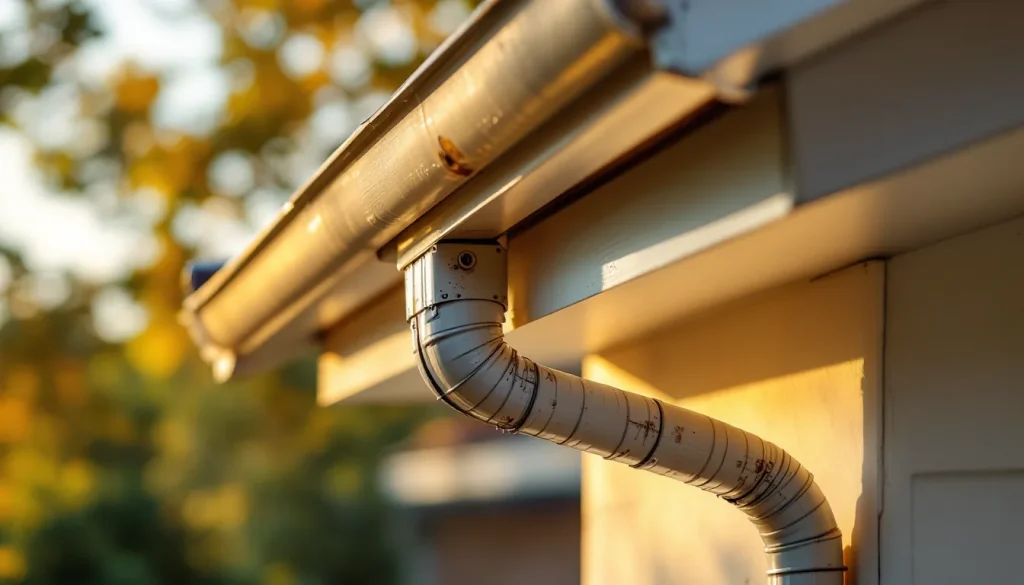
A fascia (see our soffit and fascia replacement cost) board is the long vertical board running along the eave of a roof, mounted to the ends of the rafters or trusses, and it carries two structural jobs: it provides a finished edge to the roof, and it is the substrate that the gutter system attaches to. In 2026, fascia board replacement costs $6 to $20 per linear foot installed depending on material and accessibility, with PVC and composite running at the high end and basic painted pine running at the low end. Unaddressed fascia rot is the single most common reason gutters detach, lean, or leak, and NAHB cost data 2025 puts fascia repair at the top of the list of cascading repair triggers in older homes: one section of rot uncovered during a gutter clean often grows into a $1,200 to $4,500 multi-side replacement once the full extent is visible.
The short version
- Fascia board replacement costs $6 to $20 per linear foot installed in 2026, with painted pine cheapest and PVC or composite most expensive.
- The fascia is what gutters screw into. A failing fascia means failing gutters, every time.
- Wood fascia needs paint every 5 to 7 years. PVC fascia is maintenance-free for 30+ years and is the right choice on homes with chronic gutter overflow history.
- The five signs of fascia damage are peeling paint, soft spots when probed with a screwdriver, visible rot at the corners, sagging gutters, and dark streaks running down from the gutter line.
- The root cause is almost always water: overflowing gutters, ice dams, or a roof edge missing a drip edge. Fix the cause first, then replace the fascia.
- Plan on the replacement project triggering soffit work too. Once the fascia is off, exposed soffit damage is typically the next surprise.
The Short Answer: What Fascia Does + 2026 Cost
The fascia has two jobs and one consequence. Job one: it caps the rafter or truss ends with a clean, paintable finished edge. Job two: it provides the structural anchor for the gutter system. The consequence: when the fascia goes soft, everything attached to it (gutters, soffit panels, sometimes the lowest course of shingles) goes soft with it.
Replacement pricing in 2026 runs roughly:
| Material | Cost/LF installed | Cost for 150 LF average home | Lifespan |
|---|---|---|---|
| Painted pine 1×6 or 1×8 | $6-$10 | $900-$1,500 | 15-25 years |
| Cedar 1×6 or 1×8 | $8-$13 | $1,200-$1,950 | 20-30 years |
| Composite (LP SmartSide, James Hardie) | $10-$16 | $1,500-$2,400 | 30-40 years |
| PVC (Azek, Versatex) | $12-$20 | $1,800-$3,000 | 40-50+ years |
| Aluminum wrap over existing wood | $5-$10 | $750-$1,500 | 20-25 years (cosmetic only) |
Add $300 to $1,500 for soffit work that surfaces once the fascia is removed. Add 15 to 30 percent for two-story or steep-pitch homes. Subtract about 10 to 20 percent for spot repairs (one corner or one elevation) versus a full house replacement.
Fascia vs Soffit: The Eave Anatomy
Confusion between fascia and soffit is one of the most common mix-ups in homeowner repair calls. The fascia is the vertical board you see when you look at the house from the side at gutter height. The soffit is the horizontal underside of the eave overhang that you see when you stand under the eave and look up. Together they enclose the underside of the rafter tails and create the finished eave.
Both serve specific functions. The fascia anchors the gutter. The soffit (when vented) provides intake air for the attic ventilation system. They almost always need to be considered together: a fascia that has rotted from gutter overflow has almost certainly let water travel back into the soffit cavity, where it can rot the soffit panel, the rafter tails, and the lowest course of roof sheathing. See soffit vents for the ventilation function and parts of a roof for the full anatomy reference.
Material Options: Wood, PVC, Composite, Aluminum
| Material | Maintenance | Paint cycle | Rot resistance | Hold for screws/nails | Best for |
|---|---|---|---|---|---|
| Painted pine | Repaint 5-7 yr | 5-7 years | Low | Excellent | Tight budget, dry climates |
| Cedar | Repaint or oil 7-10 yr | 7-10 years | Medium-high | Excellent | Premium wood, traditional look |
| Composite (LP SmartSide) | Repaint 10-15 yr | 10-15 years | High | Good | Most homes, middle ground |
| PVC (Azek) | Wipe clean | Never required | Total (will not rot) | Good with self-tap screws | Coastal, ice-dam zones, fix-and-forget |
| Fiber cement (Hardie) | Repaint 15-20 yr | 15-20 years | High | Good with predrilling | Fire zones, color retention |
| Aluminum wrap | Wipe clean | Never required | Wrap only (substrate still rots) | Cosmetic, no load | Cosmetic refresh on sound wood |
The material choice has cascading effects. PVC fascia will hold a gutter for 50 years without paint, but it expands and contracts more than wood, which can wallow out fastener holes over time if the installer does not use the right slotted-hole technique. Composite fascia paints beautifully and lasts 30-plus years but costs roughly 50 percent more than pine. Painted pine is still the right answer on a tight budget in a dry climate where the homeowner accepts a paint cycle every 5 to 7 years.
Wood Fascia: Pros, Cons, Lifespan
Wood is still the most-installed fascia material on U.S. homes built before 2010, and it remains common on new construction in price-sensitive markets. Painted pine (typically 1×6 or 1×8 nominal dimensions) is the default. Cedar is the premium wood option, with natural rot resistance from the wood’s own oils.
The wood fascia lifespan is almost entirely a function of paint maintenance. A pine fascia that gets a fresh coat every 5 to 7 years can last 25 to 30 years. The same pine fascia that goes 12 to 15 years without paint is usually rotting at the corners by year 12 and needs at least partial replacement by year 18. Cedar buys an extra 5 to 10 years on the same maintenance schedule.
The most-replaced fascia situations are homes where the previous owner skipped one paint cycle and overflowing gutters did the rest. Once moisture penetrates the paint film and reaches raw wood, the rot accelerates because the back side of the fascia (against the rafter tails) has no paint protection and stays damp for days after a rain event.
PVC Fascia: The Maintenance-Free Premium Option
PVC fascia (Azek, Versatex, Kleer) has captured a growing share of replacement work, especially in coastal and ice-dam regions where wood fascia struggles. PVC is a closed-cell vinyl product that will not rot, will not warp, and does not need paint. The off-the-shelf white finish is UV-stable and stays clean with an occasional wipe.
The trade-offs are cost and thermal movement. PVC runs about 50 to 80 percent more than painted pine and roughly 20 to 30 percent more than composite. The thermal expansion coefficient is roughly 3x that of wood, which means a 16-foot run of PVC can expand and contract by 1/4 to 3/8 inch across the temperature range from a January morning to a July afternoon. The installation has to account for this with slotted fastener holes, stainless screws, and either gapped or shiplapped end joints.
For homes with chronic gutter overflow history, ice dam problems, or owners who plan to age in place and do not want to climb a ladder to paint trim, PVC is the right answer. The 40 to 50 year lifespan amortizes the upfront cost easily.
Composite Fascia: The Middle Ground
Composite fascia, principally LP SmartSide (an engineered wood product treated with zinc borate against rot) and to a lesser extent James Hardie HardieTrim (a fiber cement product), splits the difference between wood and PVC. Both are heavier than wood, both paint well, and both resist rot and pest damage far better than untreated pine.
LP SmartSide is the more popular composite for fascia because it cuts and fastens like wood and accepts standard fasteners. James Hardie products require carbide blades and predrilling, which slows installation. The composite paint cycle stretches to 10 to 20 years depending on exposure, and the substrate underneath does not degrade even when the paint film fails.
For most homes, composite is the highest-value choice: lasts twice as long as pine, costs 30 to 50 percent less than PVC, and paints to match any color trend the homeowner wants.
Aluminum Fascia Wrap (Covers Existing Wood)
Aluminum fascia wrap is the cosmetic refresh option. It is a coil-stock aluminum sheet, color-matched to the gutter, bent on-site or in the shop to wrap around the existing wood fascia and protect it from UV and water. The aluminum is fastened with color-matched nails through the front face.
Aluminum wrap is appropriate in one specific situation: the underlying wood fascia is structurally sound but the paint is failing and the homeowner does not want to repaint. The wrap eliminates the paint cycle and gives a clean, low-maintenance finish.
Aluminum wrap is the wrong answer in two situations. First, when the wood underneath is already soft or rotten, the wrap traps moisture against the failing substrate and accelerates the decay invisibly. Second, when there are gutter problems that have not been diagnosed: the wrap masks the visible signs of fascia distress and the homeowner loses the early warning system.
Signs of Fascia Damage
| Sign | What it indicates | Urgency |
|---|---|---|
| Peeling or blistering paint | Moisture moving through paint film; early-stage damage | Schedule within 1-2 years |
| Soft spots when probed with a screwdriver | Active rot in the wood substrate | Plan replacement this season |
| Visible black streaks below gutter line | Gutter overflow running behind gutter onto fascia | Fix gutter slope/cleaning first, then fascia |
| Sagging or pulled-away gutter | Fascia no longer holding fasteners | Immediate; gutter could fall |
| Holes from woodpeckers or pests | Soft wood is attracting them, or wasps/bees nesting | Inspect and replace soon |
| Visible corner rot or open seams | Late-stage failure | Replace immediately, expect soffit work |
The diagnostic gold standard is the screwdriver probe. From a ladder, gently press the tip of a flathead screwdriver into the bottom edge of the fascia at multiple points along the run. Sound wood pushes back firmly. Compromised wood gives way with little pressure, and rotten wood collapses entirely. Probe every 4 to 6 feet along the run and pay special attention to the corners and the areas directly below gutter joints.
Causes of Fascia Damage
Almost all fascia damage traces back to one of four root causes:
- Gutter overflow. The most common cause. Clogged or undersized gutters spill water over the front lip, run behind the gutter, and saturate the fascia from the back. Fascia rotted from this cause is always worse on the back side than the front, which is why visual inspection from the ground often understates the damage.
- Missing drip edge. Pre-2018 homes (before IRC R905.2.8.5 made drip edge mandatory) often have no metal flashing at the roof edge. Water wicks under the lowest shingle course and rolls back onto the fascia top edge. See our drip edge guide for the code change and retrofit cost.
- Ice dams. In cold climates, ice forms at the eave, traps meltwater behind it, and forces water back up under the shingles and down behind the fascia. Repeated cycles destroy fascia in 5 to 10 years on homes with poor attic insulation.
- Pest damage. Carpenter ants, termites, and woodpeckers all attack fascia. Carpenter ants and termites prefer wood already softened by moisture; woodpeckers attack fascia that has carpenter ants in it. The cycle compounds.
Fixing the fascia without fixing the cause is a 3 to 5 year stopgap. The new fascia will follow the old fascia into rot if the gutter still overflows, the drip edge is still missing, or the ice dams still form. Always pair fascia replacement with diagnosis of the underlying cause.
Inspection: How to Check Your Fascia
A homeowner inspection covers four steps:
- Visual scan from the ground. Walk the perimeter of the house with binoculars on an overcast day. Look for paint failure, sagging gutters, black streaks, or visible gaps where the fascia meets the soffit or the gutter pulls away.
- Ladder check at suspect points. Set the ladder at each corner and at the midpoint of long runs. Probe with a screwdriver. Take photos for comparison year over year.
- Gutter back inspection. While on the ladder, look behind the gutter at the top edge of the fascia. This is the most-rotten part of any fascia and the part you cannot see from the ground.
- Attic check from inside. Look at the underside of the roof sheathing where it meets the rafter tails. Water staining on the inside surface of the sheathing at the eave is a strong indicator that water has been entering at the fascia line.
Schedule the inspection in the fall (before winter weather makes ladder work dangerous) and again in spring (after winter damage shows). For homes over 25 years old, schedule a professional roofer or gutter specialist inspection every 3 to 5 years even when nothing visible is wrong. See how to get a roof inspection for the broader inspection framework.
Repair vs Replace Decision Framework
| Damage extent | Approach | Cost | Lifespan of fix |
|---|---|---|---|
| Surface paint failure only, wood sound | Scrape, prime, repaint | $200-$600 for full perimeter | 5-7 years |
| One or two soft spots, less than 2 feet total | Cut out damaged section, scarf in new wood | $150-$400 per spot | 10-15 years if cause fixed |
| One full elevation rotted (1 side of house) | Replace fascia on that elevation | $500-$1,500 per side | 15-25+ years |
| Multiple elevations rotted | Full perimeter replacement | $900-$3,000 for 150 LF | 15-50+ years (by material) |
| Fascia rot plus soffit rot plus sheathing damage | Eave reconstruction (pair with reroof) | $2,500-$7,500 | 30+ years |
The two thresholds that flip the decision: 30 percent of the perimeter affected (move from spot repair to full replacement), and any sheathing damage at the eave (the project is no longer just a fascia project; it is part of an eave reconstruction that should be paired with a reroof or partial reroof). See how much does a new roof cost for the broader roof cost framework when fascia and roof work bundle.
Replacement Cost by Material
| Material | Cost/LF installed (2026) | 1-story 150 LF home | 2-story 220 LF home | Add for soffit |
|---|---|---|---|---|
| Painted pine | $6-$10 | $900-$1,500 | $1,400-$2,400 | $300-$1,200 |
| Cedar | $8-$13 | $1,200-$1,950 | $1,800-$3,000 | $300-$1,200 |
| Composite (SmartSide) | $10-$16 | $1,500-$2,400 | $2,250-$3,800 | $400-$1,500 |
| PVC (Azek) | $12-$20 | $1,800-$3,000 | $2,700-$4,800 | $500-$1,800 |
| Aluminum wrap | $5-$10 | $750-$1,500 | $1,200-$2,400 | No reuse on damaged soffit |
Regional variation is significant. Coastal Florida pricing trends 20 to 35 percent higher than the national median due to hurricane code requirements and the higher demand on contractor labor. Upper Midwest pricing trends 10 to 15 percent higher in winter (when fascia projects are urgent due to ice dam season) and lower in summer.
DIY vs Pro Fascia Replacement
Spot fascia repair is a realistic DIY project for an experienced homeowner. Cutting out a 2 to 4 foot rotten section, scarfing in a new piece, priming, and painting is a half-day job with $50 to $150 in materials. Full perimeter fascia replacement is a different scale: 100 to 200 linear feet of working at 8 to 20 feet above ground, removing and reinstalling gutters, and matching paint or material to existing trim.
The pro install is worth the price in three situations: when the fascia replacement requires gutter removal and reinstallation (almost always), when the home is two stories or taller, and when any sign of soffit or sheathing damage shows up during the tear-off. The labor portion of the pro price (typically 50 to 65 percent of the total) buys access to the safe ladder work, the right tools for the gutter removal and reinstallation, and the eye for diagnosing what is hiding behind the fascia.
Painting and Maintenance (Every 5 to 7 Years for Wood)
Wood fascia maintenance is straightforward: paint every 5 to 7 years in moderate climates, every 3 to 5 years in coastal or high-UV exposure. The paint cycle preserves the wood from moisture penetration, which is the trigger for rot.
The right paint system is two coats of acrylic exterior over a fully sanded surface that has been spot-primed at any bare wood. Oil-based primers and paints last longer but are increasingly hard to source under current VOC regulations. Acrylic systems are nearly as durable when applied correctly and are widely available.
The most-skipped step is the back-priming. Most painters paint only the visible front and bottom edges of the fascia. The back side, which faces the rafter tails and stays damp longer after every rain, almost never gets paint. Back-priming during installation (before the fascia goes up) doubles the practical lifespan of wood fascia and is the single highest-value maintenance step for new installations.
Gutter Hanger Compatibility
The fascia material affects which gutter hangers work. Wood fascia accepts every common hanger type: hidden hangers, spikes-and-ferrules, strap hangers. PVC fascia requires hidden hangers with self-tapping screws that grip the PVC without pulling through (because PVC does not hold screws under load the way wood does). Composite fascia accepts hidden hangers with standard wood screws.
The fastener length matters too. Hidden hangers should grab at least 1 to 1.5 inches of solid material behind the fascia: either the rafter tail, a backer board, or a structural sub-fascia. Hangers that grab only the 3/4 inch fascia board will pull through under ice load within a few seasons. Quality installers use longer screws (2 to 2.5 inches) and time the hanger placement to coincide with rafter tails when possible. See gutter installation for the full hanger spacing rules.
If you are installing new gutters on a home, address fascia issues first. Hanging a new gutter on a marginal fascia gets you 3 to 5 years before the gutter starts to pull free. Hanging the same gutter on a sound or freshly replaced fascia gets you the full 20 to 25 year lifespan the material is rated for. See also roof flashing for the related water management systems and roof sheathing for what sits behind the eave.
Frequently asked questions
What does a fascia board do?
A fascia board is the long vertical board running along the eave of a roof. It provides a finished edge to the roof at the rafter or truss tails and serves as the structural anchor for the gutter system.
How much does fascia board replacement cost in 2026?
Replacement runs $6 to $20 per linear foot installed depending on material. Painted pine is cheapest, PVC and fiber cement are most expensive. A typical 150 linear foot single-story home runs $900 to $3,000 fully installed.
How do I tell if my fascia is rotten?
The screwdriver probe is the diagnostic standard. Gently press a flathead screwdriver into the bottom edge of the fascia. Sound wood pushes back firmly; rotten wood gives way easily. Also look for peeling paint, dark streaks, and any sagging in the attached gutter.
How long does wood fascia last?
Painted pine fascia lasts 15 to 25 years with a paint cycle every 5 to 7 years. Cedar lasts 20 to 30 years on the same paint cycle. Without paint maintenance, both materials shorten to 10 to 15 years before significant rot.
Is PVC fascia worth the extra cost?
PVC fascia costs 50 to 80 percent more than painted pine but lasts 40 to 50 years without paint maintenance. For homes with a history of gutter overflow, ice dam problems, or owners planning to age in place, PVC is the better long-term value.
Can I replace fascia myself?
Spot repair (2 to 4 feet of fascia) is a realistic DIY project for an experienced homeowner with ladder skills. Full perimeter replacement is generally a pro job because it requires gutter removal, ladder work at scale, and a diagnostic eye for hidden soffit and sheathing damage.
What causes fascia rot?
The four root causes are gutter overflow (most common), missing drip edge at the roof eave, ice dams in cold climates, and pest damage. Fixing the fascia without fixing the cause buys 3 to 5 years before the new fascia follows the old one into rot.