
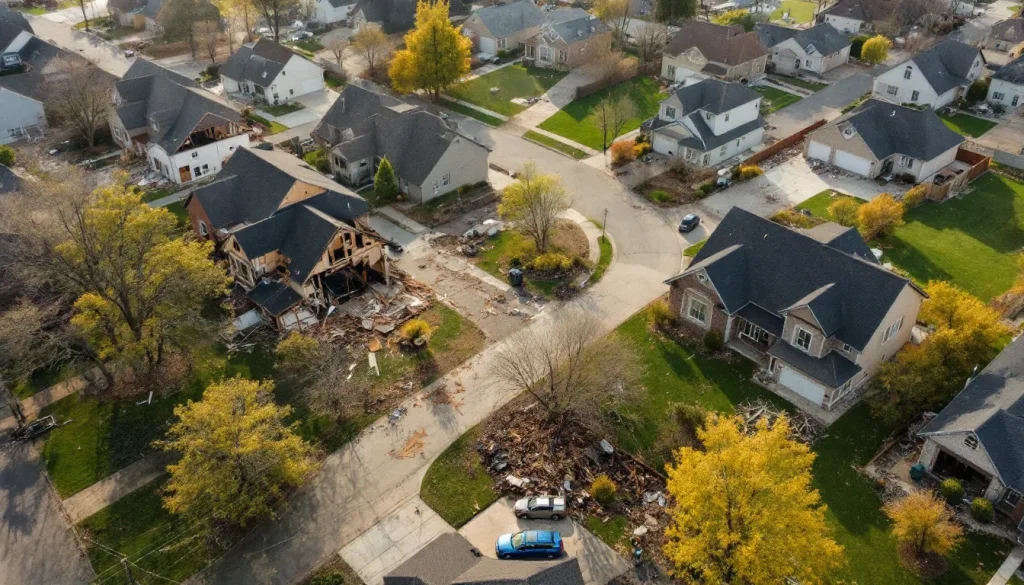
The midwest storm (for the full data set, see our the 2026 Severe Weather Roof Damage Report) roof damage june 2026 outbreak that swept the Midwest, Great Lakes, and Ohio Valley between June 12 and June 14 produced 2,392 storm reports across 41 states, with a tornado emergency declared in Streator, Illinois, where multiple homes lost entire roofs as twisters and damaging straight-line winds tracked across the region, according to CNN and storm spotter compilations published by iAlert.
What happened
The three-day severe weather episode began Thursday, June 12, as a strong upper-level disturbance interacted with a stalled warm front draped from the central Plains into the lower Ohio Valley. By Friday afternoon, supercells were dropping tornadoes across northern and central Illinois, with the National Weather Service issuing a tornado emergency for Streator, Illinois, after a confirmed large and destructive tornado moved through residential (see our Florida residential roofing market shift) neighborhoods. Local fire officials reported homes with full roof loss, debris fields stretching several blocks, and downed power lines that delayed initial damage assessments.
By the time the squall line exited the Appalachians on Sunday, June 14, storm (for the full data set, see the full 2026 Hail and Storm Loss Database) spotters had logged 7 hail reports, 295 wind reports, and 6 additional tornado reports across 8 states for that single day, capping a 72-hour total of 2,392 reports across 41 states. The hardest-hit corridor ran from eastern Iowa through central Illinois and northern Indiana, with secondary damage clusters in southern Michigan, Ohio, and western Pennsylvania.
The National Weather Service confirmed wind gusts above 90 mph in several rural counties and golf-ball to baseball-sized hail in pockets of Iowa and Illinois. Damage assessment teams from NOAA were dispatched Monday morning to verify tornado ratings on the Enhanced Fujita scale.
Why it matters
For homeowners in the damage corridor, the next 48 hours are decisive. Insurance (for the full data set, see our the 2026 State of Roofing Insurance report) carriers including Allstate, State Farm, Travelers, and USAA are already reporting elevated claim volumes, and adjuster scheduling backlogs typically stretch from a few days to several weeks after a multi-state outbreak. Filing fast, documenting thoroughly, and locking in a reputable contractor before storm chasers arrive is the difference between a clean claim and a denied or underpaid one.
For roofing contractors operating in the affected states, the outbreak will compress demand into a 60 to 120 day window. Local crews already booked through summer face a tradeoff: take on storm work at premium pricing, or hold capacity for the maintenance and reroof pipeline they planned around. Out-of-state storm-chaser crews are expected to flood the area within a week.
For roofing suppliers, expect shingle, underlayment, and ice and water shield demand to spike across IKO, GAF, Owens Corning, and CertainTeed product lines. Distributors with regional warehouses in Joliet, Indianapolis, and Columbus are best positioned to fulfill emergency orders.
Affected areas
Streator, Illinois, takes the headline damage from the outbreak, with the LaSalle County tornado tracking through dense residential blocks. Neighborhoods on the east side of town reported partial and full roof loss on dozens of homes, with debris carried more than a quarter mile in some cases. Local utility crews were still restoring power to outlying customers on Monday.
Secondary damage clusters were reported in Davenport and Cedar Rapids, Iowa, where straight-line winds peeled back metal roofs on light commercial buildings; in Fort Wayne, Indiana, where hail damage to asphalt shingles is widespread; and in Toledo, Ohio, where downed trees damaged roof decking and gutters on hundreds of homes. Homeowners across these corridors should review the typical hail damage thresholds insurers use to total a roof before scheduling an adjuster visit.
What homeowners should do now
Document first, repair second. Photograph every elevation of the roof from the ground using a phone with location and timestamp metadata enabled. If safe access is possible, photograph the deck, underlayment, and any visible structural damage. Save weather reports for your zip code from the National Weather Service and any hail size reports from local meteorologists. Adjusters and engineers reference ASCE 7-22 wind pressure tables when calculating expected damage; matching documented wind speeds to the standard helps establish the loss.
Call the insurance carrier within 24 hours and request the claim number in writing. The first 48 hours matter because most policies require prompt notice and reasonable mitigation. Document any interior water stains from active leaks before they spread.
For emergency tarping, expect to pay $300 to $1,500 depending on roof pitch, story height, and tarp size. Many carriers reimburse temporary repairs when receipts are submitted with the claim. Keep all receipts. If shingles have blown off in scattered patches, tarp the worst exposures first.
If the claim is denied or the offer is below the cost of replacement, a licensed public adjuster can renegotiate. Florida and Texas cap public adjuster fees at 10 percent of the claim payout for residential losses. Review the step-by-step claim filing process and know what to do if your claim is denied. Confirm whether your policy pays actual cash value or replacement cost before signing any contractor estimate.
Avoiding storm chasers and contractor fraud
Out-of-state storm-chaser crews follow severe weather outbreaks and typically arrive within 5 to 10 days. The legitimate ones do real work. The fraudulent ones collect insurance deductibles, do partial or substandard work, and disappear. Common roofing scam patterns include door-to-door pitches with no local address, contracts that assign insurance benefits to the contractor, and demands for full payment upfront. Watch for the red flags every homeowner should know before signing anything.
For commercial property owners, the damage profile is different. Commercial roof storm damage often shows up as membrane punctures, lifted edge metal, and clogged drains rather than missing shingles. Get a qualified commercial inspector on the roof within the first week.
Sources and further reading
CNN coverage of the outbreak forecast and damage is at cnn.com/2026/06/11/weather/thunderstorm-tornadoes-forecast-midwest-climate. The full storm spotter compilation with state-by-state breakdowns is published by iAlert. National Weather Service damage surveys for Streator and surrounding counties will be posted to local NWS office pages over the coming week, with NOAA Storm Prediction Center daily reports available at spc.noaa.gov.
For deeper TRB guidance on what comes next, see the guides to filing a roof insurance claim, how much hail damage qualifies for a full roof replacement, and the best roof systems for high-wind regions for homeowners weighing an upgrade during the rebuild.