
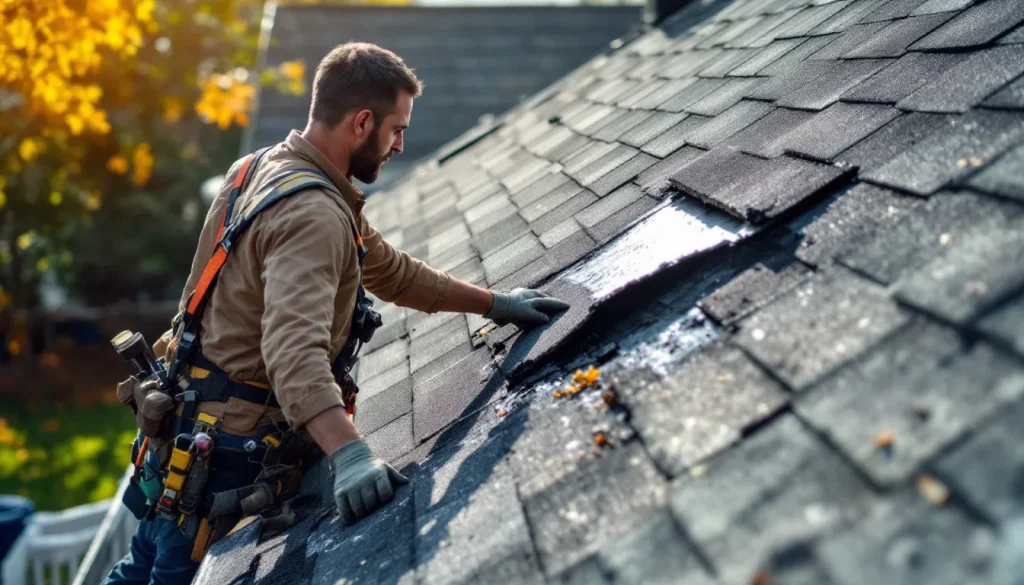
Shingle replacement in 2026 covers three different scenarios: DIY spot replacement of 1 to 3 damaged shingles ($50 to $150 in materials), professional partial-section replacement of 10+ damaged shingles ($200 to $800), and full roof replacement when underlying issues compound (see our full new roof cost guide). Here is how to know which scenario you are in, what tools and materials you need, and when to call a professional instead of climbing up there yourself. The decision tree below cuts the right answer from a few key questions: how many shingles, how old the roof, where on the roof, and whether the underlying deck is dry.
The short version
- 1 to 3 damaged shingles in an accessible location, roof under 12 years old: DIY for $50 to $150.
- 4 to 10 damaged shingles on a roof under 15 years old: pro partial replacement, $200 to $800.
- 10+ damaged shingles, or any damage on a 18+ year old roof, or visible deck damage: get full replacement quotes.
- Color match degrades after year 3; partial replacements on aged roofs will be visible.
- Insurance may pay for repair after a storm, but only if you file before the policy deadline (60 to 365 days depending on carrier).
- Spot repairs on roofs nearing end of life waste money you should put toward replacement.
The short answer and decision tree
| Situation | Recommended approach | Typical cost |
|---|---|---|
| 1 to 3 shingles, roof < 12 yrs, accessible | DIY spot replacement | $50 to $150 materials |
| 4 to 10 shingles, roof < 15 yrs | Pro partial replacement | $200 to $800 |
| 10 to 30 shingles, roof < 18 yrs | Pro section replacement | $800 to $2,500 |
| 30+ shingles, or roof 18+ yrs, or deck damage | Full replacement quotes | $10,000 to $35,000 |
| Storm damage covered by insurance | File claim first, then decide | Deductible only |
When DIY shingle replacement is safe
DIY shingle replacement (see our shingle roofing services) is reasonable when four conditions stack: the roof pitch is under 7:12 (about 30 degrees), the damaged shingles are within 6 feet of the eave or accessible from a ridge ladder, the weather is dry and 50 to 80 degrees Fahrenheit (so the asphalt sealant strips activate without overheating), and you have a stable ladder with a second person holding the base.
Steep roofs above 7:12 require roof-jacks, harnesses, and OSHA-style fall protection, which crosses the line from DIY to professional. Slate, tile, and metal are also off the DIY table because the underlying material requires specialty tools and one wrong step cracks adjacent units. Asphalt three-tab and architectural shingles are the only materials where DIY makes practical sense.
The hidden risk of DIY is not the work itself but missing related damage. If a shingle blew off, the underlying felt or synthetic underlayment may be torn, the deck may be wet, or the surrounding shingles may have broken sealant bonds. A pro will probe the surrounding 4 to 6 feet; a DIYer typically just slaps a new shingle in the visible gap.
Tools and materials
| Tool / material | Cost | Purpose |
|---|---|---|
| Replacement shingles (matching brand + color) | $25 to $45 per bundle | One bundle covers 33 sq ft, enough for 8 to 20 shingles |
| Flat pry bar | $12 to $18 | Lift adjacent shingles to access nails |
| Hammer (16 to 20 oz) | $20 to $30 | Drive new roofing nails |
| Roofing nails (1.25 inch galvanized) | $5 to $8 per pound | 4 nails per shingle, hot-dip galvanized for corrosion resistance |
| Asphalt roof cement (caulk tube) | $5 to $9 | Hand-seal new shingles in cool weather |
| Utility knife with hook blade | $15 to $22 | Trim shingles to fit at ridge or rake |
| Soft-soled work boots | $60 to $120 | Grip on warm asphalt without damaging granules |
| Extension ladder (24 to 28 ft) | $200 to $400 | Reach a typical 2-story eave |
Buy shingles from the same manufacturer and product line as your existing roof. GAF, Owens Corning, CertainTeed, and Atlas all stock current production runs at home centers and roofing supply houses. Color-match by taking a damaged shingle to the supply house and comparing in natural light. Production color batches vary, so even an exact product match will show some color variance against aged shingles.
Step-by-step DIY for 6 to 8 shingles or fewer
Step 1: Time it right. Pick a calm, dry day with temperatures 55 to 75 degrees Fahrenheit. Cold shingles crack when bent; hot shingles soften and tear under foot pressure. Morning shadow side of the roof is ideal.
Step 2: Stage materials below. Open the new shingle bundle and let it warm to ambient. Carry up only what you can hold in one hand while climbing.
Step 3: Loosen the damaged shingle. Slide the flat pry bar under the shingle above the damaged one. Lift gently to break the sealant bond. The factory-applied sealant strip will release with steady pressure.
Step 4: Expose and pull the nails. Each shingle is fastened with 4 to 6 nails along the top edge, hidden by the shingle above. Slide the pry bar under each nail head and lift. Pull the damaged shingle out.
Step 5: Inspect the deck. Look for wet OSB or plywood, torn underlayment, or rusted nail holes. If you find any of these, stop and call a pro. The damage you can see is the tip; what is under it determines the right fix.
Step 6: Slide in the new shingle. Align with the existing course (the bottom edge should line up with adjacent shingles). The new shingle slides up under the course above.
Step 7: Nail in 4 places. Drive new galvanized roofing nails through the nail line marked on the shingle (typically 5/8 inch above the cutout). Nails must penetrate the deck by at least 3/4 inch. Drive flush, not over-driven (over-driving cuts the shingle mat and creates a future tear point).
Step 8: Hand-seal in cool weather. If temperatures are below 65 degrees, the factory sealant strip will not activate on its own. Apply 4 to 6 dabs of asphalt roof cement under the new shingle to hold it down through the next windstorm.
Step 9: Reseal the shingle above. The shingle you lifted to access nails has a broken sealant bond. Apply 4 dabs of asphalt cement under it as well.
When to call a pro: 10+ shingles, hidden damage, steep pitch
The line between DIY and pro work falls at roughly 10 shingles or any sign of hidden damage. A pro brings three things you cannot: a fall arrest system rated to OSHA standards, the experience to spot a torn underlayment or wet deck on inspection, and a license that satisfies your homeowner’s insurance if a claim becomes necessary.
Hidden damage signs that should stop a DIY job: water staining on the attic ceiling below the damaged area, granule loss in gutters concentrated near the damage, lifted shingles 6 to 10 feet from the visible damage (indicating broader wind damage), or any shingle damage at a valley or chimney flashing (the flashing itself is almost certainly compromised). For flashing-specific repair work, see our roof flashing repair guide.
Pro partial replacement runs $200 to $800 depending on shingle count, access difficulty, and travel time. Most roofers have a $300 to $500 minimum service call.
Color matching aging shingles
Color match degrades on a predictable curve. Year 0 to 2: a current-production shingle will match a new roof essentially perfectly. Year 3 to 6: minor difference visible up close, invisible from the curb. Year 7 to 12: meaningful difference visible from 20 to 40 feet. Year 13+: the new shingles will read as a distinct patch.
Three tactics help. First, source attic-stored leftover shingles from the original install if any survived (these will match perfectly). Second, swap shingles from a less-visible roof plane (the back side of the house) for the visible patch, then put the new shingles on the back where the mismatch will not be seen. Third, accept the mismatch on roofs in the 13+ year range and start thinking about full replacement timing.
For color and product selection thinking on a future full replacement, the existing roof’s brand and shadowline matter for replacement planning.
Cost per shingle replacement scenarios
| Scenario | Shingle count | Materials cost | Labor (pro) | Total (DIY) | Total (pro) |
|---|---|---|---|---|---|
| Single blown shingle | 1 | $10 to $20 | $250 to $400 (min service call) | $50 to $80 (with tools amortized) | $250 to $400 |
| Small wind damage | 2 to 5 | $25 to $55 | $300 to $500 | $60 to $120 | $300 to $500 |
| Branch impact | 6 to 12 | $45 to $110 | $400 to $850 | $80 to $180 | $400 to $850 |
| Storm damage, one slope | 15 to 40 | $135 to $360 | $650 to $1,800 | not recommended | $650 to $1,800 |
| Multi-slope storm damage | 50+ | insurance / full replace | full replacement quote | n/a | $10K to $35K |
When partial replacement makes sense
Partial replacement is the right answer when the damaged area is concentrated (one slope, one valley, around one penetration), the rest of the roof is in good condition with 10+ years of remaining life, and the cost is under 25 percent of a full replacement. A $1,500 partial on a roof where full replacement would cost $14,000 makes sense; a $4,500 partial on the same roof does not, because you are halfway to a full replacement that resets the lifespan clock.
Partial replacement also makes sense after isolated impact events: a tree branch, a hail dent zone limited to the windward slope, or a contractor-caused damage during HVAC or solar install. Insurance carriers will generally approve partial replacement in these cases without forcing a full replacement debate.
When full replacement is the better call
Full replacement wins on five triggers. First, the roof is 18+ years old (asphalt nearing end of life across the whole field). Second, more than 30 percent of shingles show damage, curling, or granule loss. Third, the deck shows multiple soft spots or visible rot. Fourth, multiple leaks have appeared in different locations within 24 months. Fifth, the partial replacement quote exceeds 30 percent of a full replacement.
The cost gap is real. Partial at $2,500 buys you 3 to 5 years of remaining life if the rest of the roof is at end of life. Full at $14,000 buys you 20 to 30 years. On a per-year basis, full replacement is cheaper above the 30 percent partial threshold.
For lifespan benchmarks to confirm your roof’s age and condition, see asphalt shingle roof lifespan. For the full replacement cost framework, see how much does a new roof cost. For signs the roof is at end of life, see signs you need a new roof.
Insurance considerations for shingle replacement
Homeowner’s insurance covers storm and wind damage to shingles in most policies, subject to a deductible (typically $1,000 to $2,500 for standard policies, 1 to 5 percent of dwelling coverage for wind/hail in coastal and tornado-alley states). The carrier will dispatch an adjuster to confirm the damage was caused by a covered event (wind, hail, falling object) rather than wear or maintenance neglect.
Two important deadlines: most carriers require notice of loss within 60 to 365 days of the damaging event (check your policy schedule), and most carriers require completed repairs within 1 to 2 years of approved claim. Missing either deadline can void the claim.
Roof age also matters. Many carriers depreciate roof claims using actual cash value (ACV) on roofs over 10 to 15 years old rather than replacement cost value (RCV), which can cut the payout by 30 to 70 percent. Florida, Texas, and Oklahoma have additional carrier-specific rules. For the full process from inspection through claim payment, see filing an insurance claim for roof damage and how much hail damage to replace roof.
Hand-sealing in cold weather
The factory sealant strip on a new asphalt shingle activates at roughly 65 to 90 degrees Fahrenheit ambient. If you install shingles below that threshold (replacement after a fall or winter storm), the strip will not activate until next spring. In the meantime, the shingles can lift in windstorms.
The fix is hand-sealing: apply 4 to 6 dime-size dabs of ASTM D4586 asphalt roof cement under each new shingle, plus reseal the shingles you lifted to access nail heads. Hand-sealing adds 10 to 20 minutes of work per shingle but eliminates the cold-weather lift risk.
Shingle warranty and the replacement question
| Shingle line | Material warranty | Wind warranty (with proper install) | Partial-roof replacement allowed? |
|---|---|---|---|
| GAF Timberline HDZ | Lifetime limited | 130 mph (LayerLock + StrikeZone) | Yes, with system warranty intact |
| Owens Corning Duration | Lifetime limited | 130 mph (with SureNail strip) | Yes |
| CertainTeed Landmark | Lifetime limited | 110 mph (130 with StormFlex install) | Yes, manufacturer-approved |
| Atlas Pinnacle Pristine | Lifetime limited | 130 mph | Yes |
| IKO Cambridge | Limited Lifetime | 110 mph | Yes |
All major shingle manufacturers allow partial replacement (some shingles or some courses) without voiding the system warranty, as long as the replacement shingles match the original product line and are installed by a manufacturer-approved roofer. DIY replacement is a gray area: the manufacturer warranty on the new shingles themselves is preserved, but if a leak develops in the replaced area, the manufacturer may decline coverage on the workmanship claim.
For roofs covered by an enhanced workmanship warranty (GAF Golden Pledge, Owens Corning Platinum, CertainTeed SureStart Plus), partial replacement typically must be performed by the original installing contractor or another approved contractor to preserve the workmanship coverage. DIY work voids the workmanship side while preserving the material side.
Wind rating considerations
Modern architectural shingles carry ASTM D3161 or D7158 wind ratings ranging from 60 mph (Class A) to 130 mph (Class H). Replacement shingles in hurricane and tornado zones should match or exceed the existing rating, and proper nailing pattern matters more than the shingle itself. Six nails per shingle (high-wind nailing) versus four nails per shingle (standard) is the difference between 110 mph and 130 mph rated wind resistance.
The Asphalt Roofing Manufacturers Association (ARMA) and the National Roofing Contractors Association (NRCA) publish nailing guidelines. The short version: in any coastal, Gulf, or tornado-prone region, use six-nail high-wind pattern on every shingle including replacements.
Common DIY mistakes that turn into bigger problems
Three mistakes account for most DIY shingle replacement failures. First, nail placement: nails driven below the manufacturer’s marked nail line miss the structural mat and the shingle can tear loose in the next wind event. Nails driven too high pierce the shingle above and create a leak path. The marked nail line is there for a reason; hit it.
Second, over-driving nails: a nail gun set at high pressure can drive nails through the shingle mat, cutting the shingle and reducing wind resistance. Hand-nailing is more controllable for DIY; if using a pneumatic nailer, set pressure low and verify nail heads sit flush with the shingle surface, not below.
Third, broken sealant bonds left unrepaired: lifting a shingle to access nails breaks the factory sealant strip beneath it. In cold weather (below 65 degrees), that bond will not reseal on its own. Always hand-seal the lifted shingle with asphalt cement after the replacement is complete.
Granule loss and color matching tips
New shingles have a full granule load that gives them their original color depth. Aged shingles have lost some granules to weather, which lightens the color and exposes the asphalt mat beneath. A new shingle next to a 10-year-old shingle will read as darker and richer in tone.
One trick to soften the visible difference: wash the new shingle area with a garden hose to settle the granules, then let the patch weather for 6 to 12 months. The new shingles will lose a small fraction of their granules during that period, narrowing the visible difference. For homes on the market within 12 months, this trick is too slow; for long-term owners, it works.
For a more aggressive blending approach, some roofers apply a thin coat of asphalt emulsion to the new shingles to mute the granule shine. This is a controversial technique because it can void the manufacturer warranty on the new shingles. Only consider it if you have written approval from the shingle manufacturer.
Frequently asked questions
How much does it cost to replace one shingle?
DIY: $10 to $20 in materials (you have to buy a full bundle to get one matching shingle). Pro: $250 to $400 because of minimum service call rates. The math heavily favors DIY for single-shingle work if you can safely access the roof.
Can I replace shingles myself?
Yes for 1 to 3 shingles on a roof under 7:12 pitch with safe ladder access, if you have basic tools and choose a calm dry day. No for steep roofs, complex valley or flashing work, or any sign of underlying damage. Always work with a second person at the ladder base.
How long do replacement shingles last?
The replacement shingles themselves carry the full manufacturer warranty (typically 30 to 50 years). However, they will only last as long as the rest of the roof system around them. Replacing shingles on a 20-year-old roof gives you 3 to 8 more years before the rest of the field fails.
Will new shingles match my old roof?
Within 0 to 3 years of original install: yes. Years 3 to 7: close match with minor color difference. Years 8 to 15: visible patch from 20 feet. After year 15: the patch will be obvious. Color match is the strongest argument for prompt repair after damage.
Does insurance cover shingle replacement?
Yes if the damage was caused by a covered event (wind, hail, fallen branch, fire). No if the damage is wear, age, or maintenance neglect. Most policies have a $1,000 to $2,500 standard deductible and 1 to 5 percent wind/hail deductibles in coastal and tornado-alley states.
How long does a shingle replacement take?
DIY for 1 to 3 shingles: 30 minutes to 2 hours including setup and cleanup. Pro for 10 to 20 shingles: half a day. Pro for full-slope replacement: 1 to 2 days. For full roof replacement timing, see our coverage of how long does a roof replacement take.
What if the deck is damaged under the shingles?
Stop the DIY immediately and call a pro. A damaged deck (soft spots, rot, wet OSB) means water has penetrated past the underlayment, and the repair needs to address that water path. Replacing shingles over a wet deck traps moisture and accelerates rot.
Should I replace shingles or get a full new roof?
Replace if damage is isolated to under 30 percent of the field and the roof is under 15 years old. Get full replacement quotes if the roof is 18+ years old, if damage spans multiple slopes, or if the partial repair quote exceeds 30 percent of full replacement cost. The break-even math favors full replacement above that threshold.