
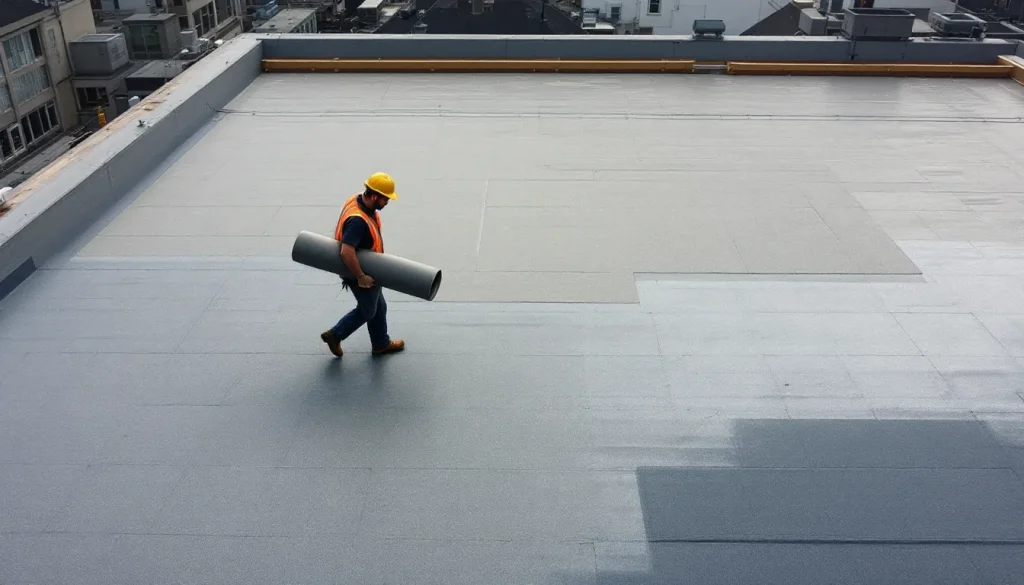
Felt vs synthetic underlayment is the most-asked roofing question among homeowners and operators, and the answer in 2026 is unambiguous: synthetic wins on 6 of 8 evaluation criteria. The single advantage felt retains is lower upfront cost (roughly $0.05 per square foot for felt versus $0.20 to $0.40 per square foot for synthetic). The tradeoffs in tear resistance, water resistance, walkability, UV exposure, and lifespan all favor synthetic underlayment. Most premium shingle warranties (GAF Golden Pledge, Owens Corning Platinum, CertainTeed Integrity Roof System) now require synthetic underlayment as a condition of top-tier warranty coverage. The math, the brand-by-brand comparison, and the cases where felt still makes sense are all below.
The short version
- Synthetic wins on 6 of 8 criteria: tear strength, water resistance, walkability, UV exposure, lifespan, and weight.
- Felt wins on upfront cost ($0.05/sf vs $0.20-0.40/sf) and on hot-climate flexibility (asphalt-saturated felt handles 140 degree decks).
- Code minimum: IRC R905.1.1 permits both. The choice is performance and warranty, not legality.
- Top-tier manufacturer warranties (GAF Golden Pledge, OC Platinum) require synthetic. Felt voids those tiers.
- On a typical 2,000 sq ft reroof, synthetic adds $300 to $700 to the total job. The lifespan extension is 10 to 25 years.
- Ice and water shield is a separate product. Use it at eaves, valleys, and penetrations regardless of which underlayment you choose.
The short answer: 8-criteria comparison
Here is the head-to-head. Felt comes in two grades: #15 (lighter, cheaper, shorter-lived) and #30 (heavier, sturdier, longer-lived). Synthetic underlayment is sold by a dozen+ brands but the major ones in the U.S. residential market are GAF FeltBuster, Owens Corning Deck Defense, CertainTeed RoofRunner, IKO StormShield, Atlas Summit60, and Tamko TW Tile.
| Criterion | #15 felt | #30 felt | Synthetic | Winner |
|---|---|---|---|---|
| Cost per sq ft (material) | $0.04-0.06 | $0.06-0.10 | $0.20-0.40 | Felt |
| Tear strength | 20-30 lb | 40-60 lb | 150-300 lb | Synthetic |
| Water resistance | Water-resistant | Water-resistant | Waterproof | Synthetic |
| Walkability/slip | Slippery when wet | Slippery when wet | Non-slip surface | Synthetic |
| UV exposure | 30 days max | 30 days max | 90-180 days | Synthetic |
| Lifespan (under shingles) | 12-15 years | 15-20 years | 25-50 years | Synthetic |
| Weight per square | ~15 lb | ~30 lb | ~3-6 lb | Synthetic |
| Hot-climate flexibility | Excellent | Excellent | Good | Felt |
What underlayment does (and why it matters)
Underlayment is the layer between the roof deck (typically OSB or plywood sheathing) and the finished roofing material (shingles, tiles, metal panels). It serves four functions:
- Secondary water barrier. If a shingle is missing, wind-driven, or damaged, underlayment is what keeps water from reaching the deck.
- Wind uplift resistance. Underlayment is fastened to the deck and resists wind getting under shingles.
- Surface for shingle nailing. Especially important on OSB decks where nail holding is marginal.
- Temporary dry-in during construction. The deck is exposed between tear-off and re-shingle. Underlayment provides a few days to weeks of water resistance during that window.
The choice between felt and synthetic affects all four. Synthetic does the construction-dry-in job better (90 to 180 days UV exposure rated vs 30 days for felt) and is materially more wind-resistant. Felt is cheaper but with shorter service life.
#15 felt vs #30 felt (the two felt grades)
“Felt” in roofing means asphalt-saturated felt, a paper-and-fiber base soaked in asphalt to make it water-resistant. The two grades you’ll see in 2026 are:
#15 felt
- Weight: about 15 pounds per 432 square feet (one roll covers 4 squares).
- Cost: $0.04 to $0.06 per square foot material; $0.07 to $0.10 installed.
- Use case: budget reroofs, code-minimum installs, rental properties, outbuildings.
- Tear strength: 20 to 30 pounds per inch (tears easily).
- Service life under shingles: 12 to 15 years.
#30 felt
- Weight: about 30 pounds per 216 square feet (one roll covers 2 squares).
- Cost: $0.06 to $0.10 per square foot material; $0.10 to $0.15 installed.
- Use case: better residential installs where synthetic isn’t budgeted, hot climates with deck flex concerns, tile roofs.
- Tear strength: 40 to 60 pounds per inch.
- Service life under shingles: 15 to 20 years.
Why #30 over #15
If felt is the chosen material, #30 is almost always the right grade. The cost premium is small ($0.02 to $0.04 per square foot) and the lifespan and tear resistance gains are significant. #15 is essentially obsolete for serious residential installs in 2026; it remains in use mostly for budget jobs and code-minimum compliance.
Synthetic underlayment construction
Synthetic underlayment is a polypropylene or polyethylene woven or non-woven sheet, often with a non-slip coated surface. The manufacturing process produces a material that is dramatically stronger, lighter, and more water-resistant than felt.
Common synthetic constructions
- Woven polypropylene with non-slip coating. The dominant construction. Examples: GAF FeltBuster, Owens Corning Deck Defense, Atlas Summit60.
- Spunbond polyethylene. Lighter, used in some economy synthetics.
- Reinforced multi-layer. Premium products with woven scrim between polymer layers for extreme tear resistance. Examples: CertainTeed RoofRunner, GAF Tiger Paw.
- Self-adhering synthetic. Combines synthetic backing with adhesive. Used in high-wind and ice-and-water-shield applications.
Cost comparison ($0.05/sf for felt vs $0.20-0.40/sf for synthetic)
The price gap between felt and synthetic is real but smaller in context than it sounds. Underlayment is roughly 3% to 8% of the total reroof cost. Going from #30 felt to mid-grade synthetic on a 2,000-square-foot roof adds $300 to $700 to a job that runs $14,000 to $22,000 total. The percentage uplift is 2% to 4% on the total cost.
| Underlayment | Material per sq ft | Installed per sq ft | 2,000 sq ft total |
|---|---|---|---|
| #15 felt | $0.04-0.06 | $0.07-0.10 | $140-200 |
| #30 felt | $0.06-0.10 | $0.10-0.15 | $200-300 |
| Economy synthetic | $0.10-0.18 | $0.18-0.28 | $360-560 |
| Mid-grade synthetic (FeltBuster, Deck Defense) | $0.18-0.28 | $0.25-0.40 | $500-800 |
| Premium synthetic (RoofRunner, Tiger Paw) | $0.28-0.45 | $0.40-0.60 | $800-1,200 |
| Self-adhering synthetic | $0.45-0.75 | $0.65-1.10 | $1,300-2,200 |
Tear resistance (synthetic wins 5 to 10x)
Tear resistance is the single biggest practical difference between felt and synthetic. Synthetic tear strength runs 150 to 300 pounds per inch versus 20 to 60 for felt. In practice:
- Felt rips around nail holes in moderate wind.
- Felt tears on contractor boots during install.
- Synthetic resists rips, supports walking traffic, and stays intact through moderate exposure.
For wind-prone regions, this difference translates directly to functional life: when a shingle blows off, synthetic underneath holds and prevents water entry; felt underneath rips and lets water through.
Water resistance (synthetic is fully waterproof, felt is water-resistant)
Felt is asphalt-saturated paper. It resists water but absorbs it over time. Extended wet exposure during construction (rain between tear-off and shingle install) causes felt to wrinkle, soften, and lose function. Synthetic underlayment is polymer-based, fully waterproof, and unaffected by water exposure.
The practical consequence: if your reroof gets rained on during construction (common during spring storms or in fast-changing fall weather), felt may need to be torn off and replaced before shingles can be installed. Synthetic typically just gets dried off and the work continues.
Walkability and slip resistance
Felt has no surface treatment. When wet (rain, dew, frost), it becomes extremely slippery. Roofer injuries from slipping on wet felt are common enough that OSHA and NRCA both warn about it.
Synthetic underlayment is manufactured with a non-slip coating or texture. The improvement is dramatic: contractors can walk safely on wet synthetic where they cannot on wet felt. This is a workplace safety advantage that crew leads and roofing companies value highly. Better safety = faster installs and lower crew turnover.
UV exposure (synthetic 90 to 180 days, felt 30 days)
UV exposure tolerance matters during the construction window between tear-off and final shingle install. Felt is rated for 30 days of UV exposure before degradation begins. Synthetic underlayments are typically rated for 90 to 180 days.
For most residential reroofs the entire job is completed in days, so 30 vs 180 doesn’t matter in normal conditions. But weather delays, supply chain issues, or staged reroofs can stretch the dry-in window. In those cases the longer UV tolerance of synthetic is the difference between completing the job intact and tearing off underlayment that’s started to degrade.
Lifespan (synthetic 25 to 50 years, felt 12 to 20)
This is the gain that matters most for homeowners. Underlayment under shingles is mostly invisible, but its lifespan affects the entire roof system. When underlayment fails, water can reach the deck even if shingles look intact. Symptoms include staining on attic insulation, slow leaks at penetrations, and premature deck rot.
| Underlayment | Service life under shingles | Failure mode |
|---|---|---|
| #15 felt | 12-15 years | Embrittlement, cracking, tear at fasteners |
| #30 felt | 15-20 years | Same as above, slower onset |
| Synthetic (mid-grade) | 25-40 years | Generally outlasts the shingles |
| Synthetic (premium) | 40-50 years | Generally outlasts the shingles |
The synthetic-outlasts-the-shingles dynamic is the cleanest case for the upgrade. On a 25 to 30 year architectural shingle install, the underlayment ideally lasts at least that long so it isn’t the limiting factor. See our asphalt shingle roof lifespan guide for the shingle-side math.
Code requirements (IRC R905.1.1)
The International Residential Code Section R905.1.1 (Underlayment Application) sets the legal minimum. The current code permits both felt (ASTM D226 Type I or II) and synthetic underlayment (ASTM D4869, ASTM D8257, or evaluated under acceptance criteria).
Code requirements summary
- Roof slope 2:12 to 4:12: two layers of underlayment required (felt or synthetic).
- Roof slope 4:12 or greater: one layer of underlayment required.
- Ice and water shield: required in northern climate zones at eaves, extending at least 24 inches inside the exterior wall line.
- Fasteners: cap nails or plastic-cap fasteners required (ring-shank or smooth depending on application).
Code is the floor, not the ceiling. Manufacturer warranties typically require more than code minimum, especially for top-tier warranty coverage.
Brand comparison
The major synthetic underlayment products in the 2026 U.S. market:
| Product | Manufacturer | Tear strength | UV rating | Cost per sf | Notes |
|---|---|---|---|---|---|
| FeltBuster | GAF | ~150 lb | 90 days | $0.20-0.28 | Mid-grade, qualifies for Golden Pledge |
| Tiger Paw | GAF | ~250 lb | 180 days | $0.30-0.40 | Premium, contractor favorite |
| Deck Defense | Owens Corning | ~180 lb | 90 days | $0.22-0.32 | Mid-grade, qualifies for Platinum |
| ProArmor | Owens Corning | ~250 lb | 180 days | $0.30-0.42 | Premium tier |
| RoofRunner | CertainTeed | ~200 lb | 180 days | $0.28-0.40 | Multi-layer, premium |
| DiamondDeck | CertainTeed | ~150 lb | 90 days | $0.20-0.30 | Mid-grade |
| StormShield | IKO | ~180 lb | 120 days | $0.22-0.32 | Mid-grade |
| Summit60 | Atlas | ~200 lb | 120 days | $0.25-0.35 | Mid-to-premium |
| TW Tile | Tamko | ~150 lb | 90 days | $0.20-0.30 | Tile-roof specific |
System matching
To qualify for the top-tier warranty on any major brand, the underlayment must be from the same manufacturer’s roofing system. GAF Golden Pledge requires GAF underlayment (FeltBuster or Tiger Paw). Owens Corning Platinum requires Deck Defense or ProArmor. CertainTeed Integrity Roof System requires CertainTeed underlayment (DiamondDeck or RoofRunner). Mixing brands voids the system warranty.
For brand-specific shingle reviews, see our GAF Timberline HDZ review, Owens Corning Duration review, and CertainTeed Landmark review.
Ice and water shield (a different product, often used with both)
Ice and water shield (also called peel-and-stick underlayment) is a self-adhering modified bitumen product. It’s NOT a substitute for felt or synthetic underlayment, but a supplemental product used in high-risk areas of the roof.
Where to use ice and water shield
- Eaves: minimum 24 inches inside the exterior wall line (code requirement in northern zones).
- Valleys: full length, 36 inches wide minimum.
- Penetrations: around skylights, chimneys, vent stacks (12 to 18 inches around each).
- Roof-to-wall transitions: 6 to 12 inches up the wall.
- Low-slope sections: full coverage if slope is under 4:12.
Cost
Ice and water shield costs $0.50 to $1.20 per square foot installed. A typical install uses 100 to 300 square feet (eaves and valleys only), adding $50 to $350 to a reroof job. In northern climates with code-required coverage, this can run higher.
Installation differences (felt vs synthetic)
The two materials install differently. Felt uses smooth nails or staples driven through the underlayment into the deck. Synthetic underlayment requires cap nails or plastic-cap fasteners (the orange or blue plastic discs you see on construction sites). The cap holds the synthetic more securely against wind uplift during construction.
Felt install
- Rolled out horizontally starting at the eave.
- Each row overlaps the row below by 2 inches (4 inches in high-wind zones).
- Fastened with smooth or ring-shank nails every 12 to 18 inches.
- End laps overlap by 4 inches.
- Crew can typically install 4 to 6 squares per hour on a simple roof.
Synthetic install
- Rolled out horizontally starting at the eave.
- Overlap markings printed on the material (typically 4 inches).
- Fastened with plastic cap nails every 8 to 12 inches per manufacturer spec.
- End laps overlap by 6 inches.
- Crew can install 8 to 12 squares per hour because rolls are longer and the material is lighter.
The faster install with synthetic offsets some of the higher material cost on the contractor’s labor line. Crews that switch from felt to synthetic typically see 20% to 30% productivity gain on the underlayment step.
Fastener selection
Underlayment fasteners are a small line item with outsized impact on performance. The four common types:
| Fastener | Cost per square | Used with | Notes |
|---|---|---|---|
| Roofing staples | $0.50-1.00 | Felt only | Cheap but pull through in wind |
| Smooth roofing nails | $0.80-1.50 | Felt only | Better than staples |
| Ring-shank roofing nails | $1.20-2.00 | Felt or synthetic | Best holding power |
| Plastic cap nails | $2.50-4.50 | Synthetic required | Cap distributes load, prevents tear-through |
| Plastic cap staples | $2.00-3.50 | Synthetic only | Faster install, slightly weaker than nails |
Manufacturer warranty requirements typically specify cap fasteners for synthetic and ring-shank nails for felt. Smooth nails and staples are often what gets used on cheap installs and is the most common defect found during inspection.
Synthetic vs felt in specific applications
Steep slopes (over 12:12)
Steep slopes need exceptional underlayment because shingle slip risk is higher. Synthetic’s non-slip surface is a significant safety advantage for crews. The lighter weight also reduces wind uplift potential during construction.
Low slopes (2:12 to 4:12)
Low slopes require two layers of underlayment per IRC R905.1.1, regardless of material. Synthetic is preferred here because the doubled material weighs less and installs faster. Some contractors use ice and water shield as the bottom layer and synthetic as the top.
Metal roofing
Standing seam metal roofs require underlayment compatible with the metal panels. Synthetic high-temperature underlayments (rated to 250+ degrees F) are the standard. Felt softens and bleeds asphalt onto metal panels in hot climates. See our standing seam metal roof cost guide.
Tile and slate
Concrete tile, clay tile, and slate are heavy and long-lived. Underlayment under these materials often becomes the lifespan-limiting factor (the tiles themselves last 50 to 100 years, the underlayment lasts 20 to 30). Premium synthetics or self-adhering underlayments are the right call. Felt is sometimes still used on tile in hot dry climates.
When felt still makes sense
Felt isn’t obsolete. There are three scenarios where felt is the right choice:
1. Budget-constrained reroofs
When the homeowner has a hard budget cap and the choice is felt-with-quality-shingles or synthetic-with-cheap-shingles, the felt+quality-shingles option usually wins. The shingles do more of the long-term performance work than the underlayment.
2. Low-slope sections with full ice and water shield coverage
When the entire low-slope section gets ice and water shield (which is fully waterproof), the underlayment role is essentially backup. #30 felt is fine here.
3. Tile roof applications in hot climates
Concrete and clay tile roofs in hot climates (Phoenix, Tucson) sometimes use heavyweight asphalt felt (#30 or even #43 cap sheet) because the heat tolerance is excellent and the tile profile means the underlayment is the primary water barrier. The math here favors felt in some specifications.
Manufacturer warranty requirements
The warranty math is what tips the scale toward synthetic for most owner-occupied installs. Top-tier warranties from GAF, Owens Corning, and CertainTeed all require synthetic underlayment as part of a complete system.
GAF Golden Pledge
Requires GAF synthetic underlayment (FeltBuster or Tiger Paw), GAF starter strip, GAF leak barriers (StormGuard or WeatherWatch ice and water shield), and GAF cap shingles. Workmanship coverage 25 years. Material coverage 50 years non-prorated.
Owens Corning Platinum Preferred
Requires Owens Corning synthetic underlayment (Deck Defense or ProArmor) and Owens Corning leak barriers (WeatherLock). Workmanship coverage 50 years. Material non-prorated coverage 50 years.
CertainTeed Integrity Roof System
Requires CertainTeed synthetic underlayment (DiamondDeck or RoofRunner) plus CertainTeed leak barriers (WinterGuard). SureStart Plus warranty extends shingle coverage and adds workmanship coverage.
The pattern: top-tier warranties from all three majors require synthetic underlayment. Felt-based installs are limited to base-tier warranties.
Frequently asked questions
Is synthetic underlayment worth the extra cost?
Yes for nearly all owner-occupied homes. The cost premium of $300 to $700 on a typical reroof is 2% to 4% of the total. The lifespan extension, warranty qualification, and tear/water/walkability advantages are all material. The one exception is hard-budget reroofs where the homeowner is choosing felt-with-quality-shingles over synthetic-with-cheap-shingles.
Does code require synthetic underlayment?
No. IRC R905.1.1 permits both felt and synthetic underlayment. The choice is performance and warranty, not legality. Some manufacturer warranties effectively require synthetic, but code does not.
Can I use felt and ice and water shield together?
Yes. The typical install uses ice and water shield at eaves, valleys, and penetrations, then felt (or synthetic) across the rest of the field. The ice and water shield is the primary water barrier in high-risk areas; the field underlayment is the secondary barrier elsewhere.
How long does synthetic underlayment last?
Mid-grade synthetic lasts 25 to 40 years under shingles. Premium products like Tiger Paw and RoofRunner last 40 to 50 years. In both cases the synthetic typically outlasts the shingles above it, so it isn’t the limiting factor in the roof system.
Why is my old roof underlayment falling apart?
If you have felt underlayment older than 15 to 20 years, it’s at end of life and embrittling. This is normal for felt. Synthetic underlayment installed in the past 10 to 15 years should still be in good condition; if it’s not, suspect installation defects or extreme UV exposure.
Do all contractors use synthetic now?
Most reputable residential contractors now default to synthetic. Some still use #30 felt on budget jobs or when the homeowner requests it. Ask explicitly in the contract: “synthetic underlayment, brand and model specified.” Avoid contracts that just say “code-compliant underlayment.”
Does color matter on synthetic underlayment?
Not for performance. Most products are gray, black, or green. The non-slip surface texture matters more than color. Some contractors prefer lighter colors for visibility during install; some prefer darker colors for UV resistance during long exposure windows.