
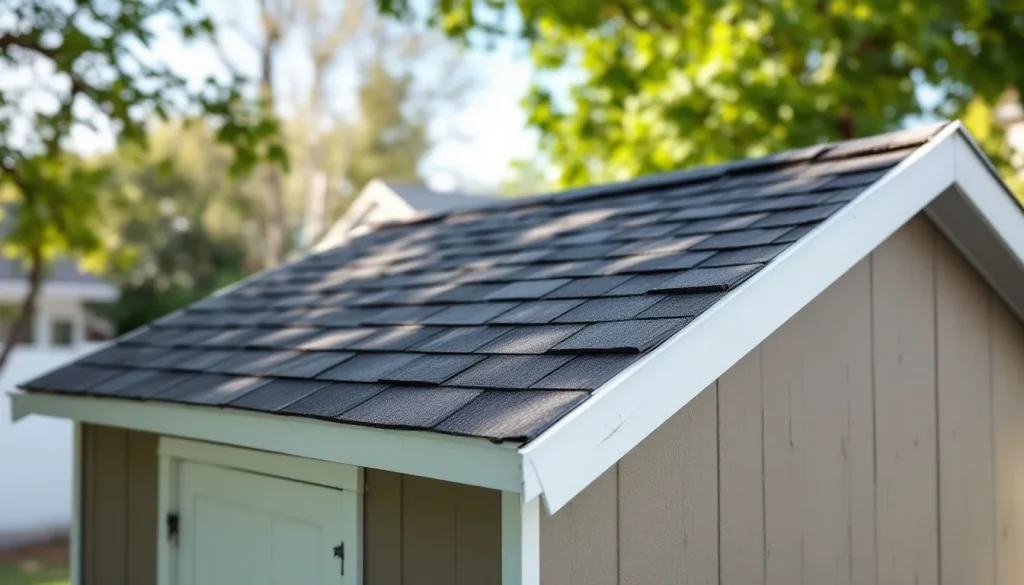
The total shed roof cost in 2026 runs from $60 for a basic 10 by 10 DIY roll-roofing job to over $1,200 for a 12 by 16 metal-roofed shed installed by a contractor. Three material paths dominate: roll asphalt at $0.40 to $0.80 per square foot (see our roof cost per square foot guide) (cheapest, 7 to 10 year life), 3-tab or architectural shingles at $1.00 to $2.50 per square foot installed DIY (longest 15 to 25 year life on a shed), and corrugated metal at $1.50 to $3.50 per square foot (best wind resistance, 30+ year life). The choice is rarely about the shingles themselves; it’s about whether the shed is on a permanent foundation, whether you want to match the house, and how much weekend time you’re willing to spend climbing the ladder. Below is the actual material math, contractor pricing, and the install gotchas that drop a $200 DIY shed roof to a leaking $400 do-over.
The short version
- 10×10 shed DIY: roll roofing $60 to $120, 3-tab shingles $150 to $300, corrugated metal $200 to $500.
- 12×16 shed DIY: roll roofing $120 to $230, architectural shingles $260 to $500, corrugated metal $400 to $900.
- Contractor charges typically 2x to 3x DIY material cost. Most pros won’t touch a small shed; expect handyman pricing.
- Roll roofing is the cheapest but the shortest-life and weakest-looking option. Last resort for visible sheds.
- 3-tab shingles are the sweet spot for cost-to-life on a typical shed. Architectural is overkill but lasts longer.
- Corrugated metal is the easiest DIY install on shallow-slope sheds (2:12+) and the best for high-wind areas.
- Don’t skip drip edge, underlayment, and pre-formed pipe boots, even on a $200 shed roof. They’re 10% of cost and 50% of waterproofing.
The short answer: cost by material and shed size
Shed roof cost (for the full data set, see our the full 2026 Roofing Cost Report) depends on three variables: the roof area (a function of shed footprint and pitch), the material chosen, and whether you DIY or hire out. For most backyard sheds, the roof area is small (60 to 250 square feet) which means even premium materials remain affordable, while contractor minimum-job pricing makes labor the dominant cost.
| Shed size | Roof area | Roll roofing | 3-tab shingles | Architectural shingles | Corrugated metal |
|---|---|---|---|---|---|
| 8×10 (small) | ~90 sf | $50-100 | $120-250 | $160-300 | $180-450 |
| 10×10 (standard) | ~115 sf | $60-120 | $150-300 | $200-380 | $200-500 |
| 10×12 | ~135 sf | $70-140 | $170-340 | $240-450 | $260-600 |
| 12×16 (large) | ~220 sf | $120-230 | $220-440 | $260-500 | $400-900 |
| 14×20 (workshop) | ~320 sf | $170-340 | $310-620 | $400-750 | $580-1,300 |
DIY cost ranges above include shingles or panels, underlayment, drip edge (see our drip edge install detail guide), ridge cap or closure strips, basic fasteners, and one pipe boot. They assume a single-slope or simple gable roof with no skylights, dormers, or complex flashing.
Roll roofing: cheapest path, shortest life
Mineral-surfaced roll roofing (often called 90-pound roll) is the budget shed material. Buy in 36-inch-wide, 36-foot-long rolls (108 square feet per roll) at $30 to $55 per roll from Home Depot, Lowe’s, or Menards. GAF, CertainTeed, Tamko, and Owens Corning all make a comparable product.
What it costs
- 1 roll covers ~95 sf with overlaps: $30 to $55
- Plastic roofing cement (1 gallon): $15 to $25
- Roofing nails (1 pound): $5
- Drip edge (10 ft pieces, 4 needed for a 10×10): $25
Total for a 10×10 shed: $75 to $110 DIY. About 2 hours of work.
What you get
A black or dark-brown rolled sheet that looks like a flat asphalt blanket. Wind resistance is poor (typically 50 mph rated, lower in practice because exposed-fastener attachments fatigue). Lifespan 7 to 10 years in most climates. UV degradation is fast in Sun Belt states.
When it makes sense
Low-slope sheds (1:12 to 4:12) that are out of sight, where appearance doesn’t matter, and where the owner is willing to replace in 8 years. Common on lean-to sheds attached to barns or garages.
For broader context on small-structure roofing, see our shed roof overview.
3-tab asphalt shingles: the sweet spot
3-tab asphalt shingles from GAF (Royal Sovereign), Owens Corning (Supreme), CertainTeed (XT 25), and Tamko (Heritage Vintage) are the practical default for most backyard sheds. Cost is roughly 2x roll roofing, lifespan is roughly 2x to 3x, and the appearance is what most homeowners expect.
What it costs
- 1 bundle covers ~33 sf, retails for $30 to $40. A 10×10 shed (115 sf with overhangs) needs 4 bundles: $120 to $160.
- Synthetic underlayment (1 roll covers 1,000 sf, way more than needed): $80 to $120, or buy a small roll for $30
- Drip edge (4 pieces): $25
- Plastic cap nails or roofing nails (1 lb): $8
- Pipe boots (if you have a vent): $12 to $25
- Ridge cap shingles (1 bundle): $30 to $50
Total for a 10×10 shed: $200 to $300 DIY. About 4 to 6 hours of work.
What you get
3-tab shingles look like residential roofing because they are residential roofing, just the entry-level tier. Wind rating is typically 60 mph. Lifespan on a backyard shed is 15 to 22 years (longer than on a house because there’s no foot traffic and shed roofs are usually small enough to drain quickly).
Architectural shingles instead
Spend an extra $50 to $80 and step up to architectural shingles (GAF Timberline HDZ, Owens Corning Duration, CertainTeed Landmark). The lifespan jump is 5 to 10 more years, the wind rating goes to 110 to 130 mph, and the appearance matches what’s probably on your house. For any shed that’s visible from the street, this is the path most homeowners take in 2026.
For shingle product specifics, see our ridge cap shingles overview, which also covers the matching ridge products for the major brands.
Corrugated metal: best for low-slope, high-wind, or rural sheds
Corrugated and R-panel metal roofing is a strong choice for sheds with lower slopes (2:12 to 3:12), high-wind exposure, or barn-style aesthetics. Common products: 26-gauge or 29-gauge painted Galvalume from MBCI, ABC Metal Roofing, McElroy Metal, or the no-name corrugated panels at any home center. For a lean-to specifically, see our metal roof on a lean-to walkthrough.
What it costs
- Painted corrugated 3-ft wide panels: $1.20 to $2.00 per square foot. A 10×10 shed needs ~115 sf: $140 to $230.
- Underlayment (synthetic or 30# felt): $30 to $50
- Metal roofing screws with EPDM washers (about 100 needed): $30 to $50
- Closure strips at eave and ridge: $20 to $35
- Ridge cap (3 ft pieces): $25 to $40
- Drip edge or J-channel: $25 to $35
Total for a 10×10 shed: $270 to $440 DIY. About 4 to 6 hours of work for a first-timer.
What you get
30 to 35 year panel life on Galvalume, with painted finishes adding UV protection. Wind rating depends on screw pattern and shed framing but typically 100+ mph when properly installed. Exposed-fastener gaskets need replacement at year 15 to 20 (about $50 in parts).
Standing-seam alternative
Standing-seam panels (no exposed fasteners) cost about 2x to 2.5x corrugated and require specialty tools (panel-bender clamps, hand-seamer). Typically not a realistic DIY install on a shed unless you’re already a metal-roofing pro. Skip for sheds.
The slanted shed roof: how to build it
Most DIY sheds use a slanted (single-slope or “shed-style”) roof: one plane sloping from a high wall to a low wall. It’s the easiest framing pattern and the most forgiving install for first-timers.
Pitch and headroom
Minimum recommended pitch:
- Roll roofing: 1:12
- Standing-seam metal: 1:12
- Corrugated metal: 2:12
- 3-tab or architectural shingles: 4:12 (or 2:12 with double underlayment, but not ideal)
For a 10 ft deep shed with shingle roofing, plan a 3 ft 4 in vertical drop from the high wall to the low wall (4:12 pitch over 10 ft). Build the high wall taller than the low wall by that amount, plus headroom inside.
Rafter framing
For a 10 ft deep shed with 30 psf snow load, use 2×6 rafters at 24-inch on-center. For 12 ft depth, use 2×8 at 24-inch on-center. Cut a plumb cut at the high wall and a birdsmouth notch at the low wall. Nail or screw the rafters into the top plates with hurricane ties (Simpson H2.5A) for wind uplift resistance.
Sheathing and underlayment
1/2-inch CDX plywood or 7/16 OSB over the rafters. 8d nails at 6-inch edge spacing, 12-inch field. Synthetic underlayment (see our peel-and-stick underlayment guide) over the sheathing. Drip edge first at the eave, then underlayment, then drip edge at the rake (in that order on the eaves; reverse the order on the rake side).
Installing 3-tab shingles on a shed (step by step)
The sequence for a 10×10 shed with a 4:12 single-slope (shed-style) roof:
- Install drip edge at the eave. 10 ft length, nail every 8 inches.
- Roll out synthetic underlayment. Overlap horizontal seams by 4 inches. Cap-nail every 12 inches.
- Install drip edge at the rakes (over the underlayment).
- Cut starter strip. Use a manufacturer starter strip (~$30) or cut 5-inch strips from a regular shingle (tabs removed). Nail along the eave with the adhesive strip out.
- Install the first course of shingles. Flush with the starter strip at the eave, overhanging the drip edge by 1/4 to 3/8 inch.
- Stagger each subsequent course by half a tab so vertical seams don’t align. Use 5-inch exposure on 3-tab.
- Use 4 nails per shingle on a shed (6 nails is only needed on the house). Place nails along the manufacturer nail line.
- Install ridge cap at the high end (if it’s a gable, peak) or wrap the shingle around the top of the high wall under the trim.
- Install pipe boot over any vents. Use Oatey or Perma-Boot rubber boots.
For broader leak-prevention info, see our how to fix a roof leak guide. The most common shed-roof leak source is a poorly installed pipe boot.
Installing corrugated metal on a shed (step by step)
For a 10×10 shed with a 3:12 single-slope roof:
- Install drip edge at the eave (some metal panel systems use J-channel instead).
- Roll out synthetic underlayment. Overlap 4 inches at seams.
- Install foam closure strips at the eave (these fit the corrugation profile and prevent water and pest entry).
- Position the first panel at one corner with a 2-inch overhang past the drip edge. Square it to the eave (not the wall, which may be out of square).
- Drive metal roofing screws with EPDM washers at every other corrugation low point, into the rafters or sheathing. Don’t over-tighten (gasket compression should be visible but not crushed).
- Install adjacent panels with a 1-corrugation overlap, fastened through both panels at the overlap.
- Install closure strips at the high end, then ridge cap (or wrap over high wall).
- Use a self-tapping screw at any roof penetration, with a metal-roof pipe boot designed for corrugated profiles (Dektite or Oatey Master Flash).
Contractor pricing on small sheds
Most roofing contractors avoid sheds because the setup-to-revenue ratio is bad. The contractors who will quote sheds are usually handymen or small-crew operations. Expect:
- Minimum job pricing: $400 to $800, even for a 10×10 shed
- Hourly handyman rates: $60 to $120 per hour, plus materials at 1.3x to 1.5x retail
- Roofing contractors: $4 to $7 per square foot installed for shingles, $5 to $9 per sf for metal
- For a 10×12 shed, contractor pricing ranges from $500 (handyman with cheap shingles) to $1,800 (roofing contractor with architectural shingles or metal)
For a small shed where DIY is feasible, the labor cost gap is 3x to 6x the material cost. Almost everyone DIYs a 10×12 shed roof.
Permits and HOA gotchas
Most jurisdictions exempt sheds under 100 to 200 square feet of footprint from building permits. Anything bigger or anything on a permanent foundation typically requires a permit.
HOA review is a separate concern. Many HOAs require shed roof materials to match the house. A house with architectural shingles and a shed with cheap roll roofing or barn-style metal can trigger violations and fines. Check the HOA covenants before buying materials.
The mistakes that turn a $200 shed roof into a $400 do-over
- Skipping underlayment. Saves $30 but reduces life by 3 to 5 years and causes leaks at any minor shingle damage.
- Skipping drip edge. Saves $25 but causes fascia rot within 5 years and lets water wick back under the shingles.
- Using too few nails per shingle. 4 nails minimum. Wind takes shingles off in year one.
- Skipping a pipe boot on vents. Tar caulk around a pipe fails in 2 to 3 years. Get the $15 boot.
- Going below the material’s minimum pitch. 2:12 with shingles leaks in storms. Use metal or switch shed design.
- Mismatched ridge cap. Chopped-up field shingles don’t seal at the peak. Use manufacturer ridge cap.
- Over-tightening metal panel screws. Crushed gaskets leak. Drive until the gasket compresses about 1/16 inch, then stop.
Cost-to-life math: which material wins per dollar
Annualized cost per square foot of roof, assuming proper install and typical lifespan:
| Material | Installed cost per sf | Lifespan (years) | Cost per year per sf |
|---|---|---|---|
| Roll roofing | $0.60 | 8 | $0.075 |
| 3-tab shingles | $1.30 | 18 | $0.072 |
| Architectural shingles | $1.80 | 25 | $0.072 |
| Corrugated metal | $2.40 | 30 | $0.080 |
| Standing-seam metal | $5.00 | 40 | $0.125 |
The 3-tab, architectural, and roll-roofing tiers are nearly identical on cost per year per square foot. The deciders are aesthetics, climate, and how often you want to climb up there to redo the roof.
FAQ
What’s the cheapest way to roof a 10×10 shed?
Roll roofing at $60 to $120 in materials. 7 to 10 year life. Looks like a dark blanket but doesn’t leak if installed right. Use it for hidden sheds or short-term outbuildings.
How many bundles of shingles do I need for a 10×10 shed?
About 4 bundles (see our shingle bundle math guide) for the field plus 1 bundle of ridge cap (or use cut field shingles for the ridge if you want to save the $30). One bundle covers about 33 square feet. A 10×10 shed roof with overhangs is roughly 115 to 125 square feet.
Can I put shingles directly over the old shed roof?
Yes if the existing roof is one layer of asphalt shingles and the deck is sound. Roof-overs save tear-off labor but reduce new-roof life by about 20%. For a small shed where total cost is already low, tear-off is usually worth the extra hour.
Do I need to use ice and water shield on a shed?
Not typically. Sheds are unheated, so ice dams (the failure mode that ice and water shield prevents) don’t form. Synthetic underlayment is enough. Exception: if the shed is heated and used as a workshop, treat it like a house and add ice and water shield at the eaves in freeze climates.
What’s the minimum pitch for a shingle shed roof?
4:12 is the standard minimum for asphalt shingles. Below that, water can back up under the shingles in heavy rain. If you’ve already framed a 2:12 shed, switch to metal (corrugated at 2:12 minimum, standing seam at 1:12 minimum) instead of trying to make shingles work.
Can I use leftover house shingles on my shed?
Absolutely, and it’s a great choice if the color matches the house. Make sure you have enough for ridge cap too (or buy a matching ridge bundle separately). Leftover-shingle shed roofs typically run the full house-life because they’re installed once and never walked on.
Bottom line
Shed roof cost in 2026 ranges from $60 (10×10 roll roofing) to $1,300 (14×20 corrugated metal). For most homeowners with a typical 10×12 backyard shed, 3-tab or architectural shingles at $200 to $400 in materials is the sweet spot: 20+ year life, residential look, easy DIY install in 4 to 6 hours. Roll roofing wins on price but loses on appearance and lifespan. Metal wins on durability and is the right answer for low-slope sheds (2:12 to 3:12). The mistakes that ruin a cheap shed roof are universal: skipping underlayment, skipping drip edge, using too few nails, and going below the material’s minimum pitch. Spend the extra $30 on the parts that prevent leaks, match the house if your HOA cares, and pull a permit if your shed is bigger than 200 square feet. Most homeowners DIY this in a weekend.