
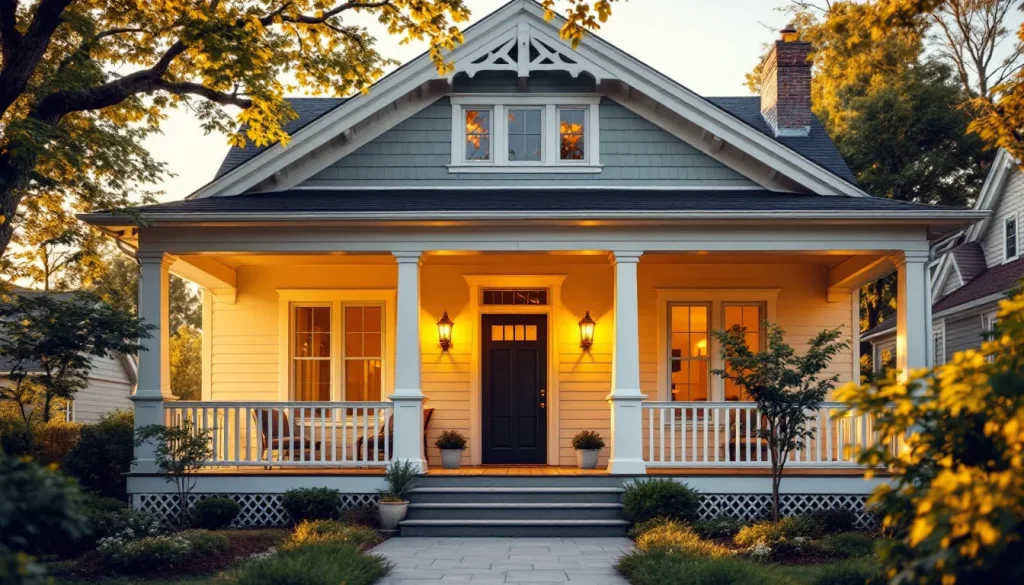
A porch roof in 2026 costs $2,000 to $15,000 to build depending on size (50 to 250 sq ft), material choice, and whether you are adding to existing framing or building independent posts. The right design depends on the architectural style of the main house, the porch’s primary use (shade, weather protection, or outdoor living), and the local snow and wind loads from IRC R301.2. A 100 sq ft gable porch roof in asphalt shingles runs $3,500 to $5,500 installed. The same footprint in standing seam metal climbs to $7,000 to $9,500. Polycarbonate panel kits drop the bill to $1,200 to $2,400 but trade life expectancy for upfront savings. Here is every porch roof style with real costs, code references, and the framing details that separate a permitted, permanent build from a teardown waiting to happen.
The short version
- Budget $25 to $60 per sq ft installed for a permanent porch roof, $10 to $20 per sq ft for polycarbonate or metal kits.
- Gable porch roofs match the most house styles and shed snow best; shed-style (single slope) is the cheapest to frame.
- Tying into an existing roof requires kickout flashing and proper step flashing per IRC R903.2, or you will get a wall leak within 2 years.
- Asphalt shingles need a 2/12 minimum slope (with double underlayment from 2/12 to 4/12) per IRC R905.2.2; below 2/12 you must use membrane.
- Most jurisdictions require a permit for any porch roof over 200 sq ft or any roof attached to the dwelling, regardless of size.
- Independent post-and-beam porches are simpler to permit but cost 15 to 25 percent more in framing labor than ledger-attached builds.
Short answer: what a porch roof costs and which style to pick
A porch roof falls into one of four structural categories: gable, shed (single-slope), hip, or flat. The structural category drives 60 percent of the cost. The material choice (asphalt, metal, polycarbonate, wood shake) drives another 25 percent. Permit, framing complexity, and whether you tie into the existing roof or set independent posts cover the rest.
For a 100 sq ft porch (a typical 10 by 10 front entry), expect these all-in installed numbers from a licensed contractor using 2025 RSMeans labor and material data:
- Polycarbonate panel kit on aluminum frame: $1,200 to $2,400
- Shed-style asphalt shingle roof on wood framing: $2,800 to $4,200
- Gable asphalt shingle roof on wood framing: $3,500 to $5,500
- Hip asphalt shingle roof on wood framing: $4,200 to $6,500
- Gable standing seam metal: $7,000 to $9,500
- Gable cedar shake: $8,500 to $12,000
If your porch is bigger (a 12 by 20 wraparound at 240 sq ft) multiply by roughly 2.2x, not 2.4x, since fixed costs like permit, dump fees, and mobilization spread across the larger area.
Gable porch roof: the default for most American houses
A gable porch roof has two sloped planes meeting at a ridge, with a triangular gable end facing out toward the yard. It is the most common porch roof in the United States because it works on Craftsman, Colonial, Farmhouse, Cape Cod, and most Traditional house styles. The gable end creates visual weight that anchors the entry, and the symmetrical slopes shed snow and water predictably to both sides.
Framing a gable porch is straightforward: two opposing rafters meet at a ridge board, with collar ties or a structural ridge beam handling the outward thrust. For a 10-foot span, 2×6 rafters at 16 inches on center are typical in most snow loads. For 12-foot or longer spans, jump to 2×8 or 2×10 and confirm the size with a structural calculator that accounts for your ground snow load (you can pull yours from IRC Table R301.2(1) for your county). Learn more in our breakdown of roof trusses if you want the engineered alternative.
Slope matters here. A gable porch roof typically runs 6/12 to 9/12 pitch to mirror the main house. Below 4/12, asphalt shingles need special underlayment and the look starts to feel commercial. Above 9/12, you create a steep visual that fights most one-story homes. Check our roof pitch chart for slope conversions and material minimums.
Shed-style porch roof: single slope, cheapest to frame
A shed porch roof is one flat plane sloping down from the house wall to the outer porch posts. It is the cheapest porch roof to build because there is no ridge, no opposing rafters, and no gable end to side. It also works architecturally on Modern, Mid-Century, Ranch, and Farmhouse-style homes where a low-profile entry is intentional.
The structural setup uses a ledger board lag-bolted to the house wall band joist (carrying the upper end of the rafters) and a beam supported by posts at the outer edge (carrying the lower end). Rafters span between. The slope is set by the height difference between the ledger and the outer beam: a 10-foot porch dropping 30 inches from house to beam yields a 3/12 slope.
Watch the slope minimum. A shed porch at 3/12 is below the 4/12 threshold for standard asphalt architectural shingles. You will need double underlayment per IRC R905.2.2 (an additional layer of underlayment cemented to the deck) or pivot to a membrane material like modified bitumen. If you want shingles, raise the ledger and force a 4/12 minimum, even if it cuts into your headroom.
Hip porch roof: cleanest looking, most expensive to frame
A hip porch roof slopes to all four sides instead of two. It eliminates the gable triangle and creates a more refined, lower-profile look that suits Colonial Revival, Italianate, and Craftsman bungalow styles. It also handles wind better than a gable because there are no exposed gable ends to catch uplift, which is why coastal builders prefer hip framing on porches in IRC R301.2.1 wind zones.
The cost penalty is real. Hip framing requires hip rafters running corner-to-ridge plus jack rafters infilling the planes, and the cut list is more complex than a gable. Expect 20 to 35 percent more framing labor than the gable equivalent. For wraparound porches that turn 90 degrees, hip framing is structurally simpler than trying to gable a corner, so the math sometimes flips.
See our full hip roof guide for framing geometry and snow load behavior.
Flat porch roof: only for warm climates and modern designs
A flat porch roof is not actually flat. It has a 1/4 inch per foot minimum slope (2 percent) for drainage per IRC R905.10. Below that, you get ponding water that breaks down most membrane materials. The visual effect, though, reads as flat from below and creates a clean modern line that works on Mid-Century, Contemporary, and Desert Modern homes.
Material is restricted to membrane systems: TPO, EPDM, modified bitumen, or built-up roofing. Asphalt shingles are prohibited below 2/12 per IRC R905.2.2, and even at 2/12 they require enhanced underlayment. For a residential porch this small, EPDM is the most common pick (one-piece rubber, no seams to fail) at roughly $8 to $12 per sq ft installed. TPO heat-welds cleanly and reflects more solar heat, useful if the porch has a sun-facing exposure.
Skip flat porches in snow country. Anything north of Zone 3 (per IRC Table R301.2(1)) is a maintenance liability because snow accumulates and freeze-thaw cycles attack the membrane edges.
Tying into an existing roof: the kickout flashing problem
The single most common porch roof failure in the field is water intrusion at the connection where a new porch roof meets the existing house wall. The failure point is almost always the bottom of that wall intersection, where the porch roof slope ends and water needs to be directed away from the wall and into the gutter.
The fix is a kickout flashing (sometimes called a diverter flashing): a small piece of bent metal flashing installed at the bottom of the step flashing course that physically deflects water out into the gutter instead of letting it run down behind the siding. IRC R903.2.1 requires step flashing at all sidewall intersections; the kickout is the termination piece. Most contractors who do not specialize in roofing skip it. The result is a hidden wall rot pattern that shows up 18 to 36 months later as siding bubbling, paint failure, or interior wall staining.
Demand a kickout in writing on any porch roof tying into the house. See our roof flashing guide for the full sidewall flashing sequence.
Independent posts vs. ledger board attachment
You have two ways to anchor the house side of a porch roof: a ledger board lag-bolted into the house band joist, or independent posts that carry the porch roof on its own structure with no load transferred to the house. Each has tradeoffs.
The ledger-attached approach is cheaper (fewer posts, less framing) and creates a tighter visual connection to the house. The risk is connection failure: a ledger that pulls out or rots compromises the house wall too. IRC R507 governs deck ledgers and most jurisdictions apply the same connection rules to porch roof ledgers: structural screws or lag bolts at 16 to 24 inches on center into solid blocking, with proper flashing between the ledger and the house siding.
The independent post approach uses 4 to 8 additional posts (typically 6×6 PT or cedar) carrying a header beam at the house wall plus a matching beam at the outer edge. There is no structural load on the house. Permitting is usually simpler because the roof is a freestanding accessory structure not modifying the dwelling envelope. The cost penalty is 15 to 25 percent in framing materials and labor.
Material choice: asphalt vs. metal vs. polycarbonate
Most porch roofs in the United States use the same material as the main house, both for visual consistency and because the leftover material from the main roof can sometimes be repurposed (if it was reroofed recently). The three credible options are asphalt shingles, metal, and polycarbonate panels.
| Material | Cost / sq ft installed | Life expectancy | Min slope | Best for |
|---|---|---|---|---|
| 3-tab asphalt shingles | $4.50 to $7.00 | 15 to 18 years | 2/12 (with double underlayment) | Budget, matches older houses |
| Architectural asphalt | $6.50 to $9.50 | 22 to 28 years | 2/12 (with double underlayment) | Mid-range, matches new houses |
| Corrugated metal panels | $8.50 to $13.50 | 40 to 60 years | 3/12 | Farmhouse, modern, modern rustic |
| Standing seam metal | $14.00 to $22.00 | 50 to 70 years | 1/4:12 (per manufacturer) | Premium, modern, contemporary |
| Polycarbonate panels | $8.00 to $14.00 | 10 to 15 years | 5 degrees (about 1/12) | Light transmission, sunrooms, kits |
| Cedar shake | $14.00 to $20.00 | 25 to 35 years | 4/12 | Historic, Craftsman, Cape Cod |
| Clay tile | $18.00 to $28.00 | 50+ years | 2.5/12 | Spanish, Mediterranean, Mission |
Polycarbonate is the wildcard. Twin-wall polycarbonate panels from manufacturers like Suntuf or Palram run about $3.50 to $6.00 per sq ft for material and they let in 60 to 80 percent of light, which is useful for plant porches, breakfast porches, or sun-shy entries. The downsides: UV yellowing at year 8 to 12, expansion-contraction movement that loosens fasteners over time, and a visual look that reads “kit” not “custom.” For comparison shopping, see metal vs asphalt shingle roof and corrugated metal roofing.
Permit requirements: when you need one
Permit requirements vary by jurisdiction, but the typical thresholds in the 2024 IRC adoption cycles are:
- Any new structure attached to the dwelling envelope: permit required, regardless of size
- Detached accessory structures over 200 sq ft of roof area: permit required
- Detached accessory structures under 200 sq ft: typically exempt, but verify with your AHJ
- Replacing an existing porch roof with the same footprint and slope: often a simple over-the-counter permit; sometimes exempt as repair
- Any structure in a flood zone, historic district, or HOA-controlled area: additional review required
Skipping a required permit on a porch roof attached to the house creates two real problems: the work shows up on resale title searches and triggers a buyer’s request for a retroactive permit (which can fail inspection and require demolition), and your homeowner’s insurance may deny coverage for damage related to unpermitted construction. The permit fee on a porch roof is usually $150 to $450 and a one-visit framing inspection. Skip it at your own risk.
DIY framing and slope: what you can do, what you should hire out
A confident DIY builder with intermediate carpentry skills and the right slope can frame a shed-style porch roof in 2 to 3 weekends. Gable framing is harder because the rafter cuts (birdsmouth, plumb cut, ridge cut) require either rafter tables or a framing square skill set most casual DIYers do not have. Hip framing is professional-only for almost everyone.
Where DIY makes sense:
- Shed roof on 10 by 10 or smaller porch with no electrical, no ceiling fans, no recessed lights
- Porch roof replacement (same footprint, same slope) where existing framing stays
- Material installation (asphalt shingles) once a pro has done the framing
Where DIY does not make sense:
- Anything tying into the house wall (kickout flashing failures are expensive)
- Gable or hip framing without a structural plan
- Porch roofs in snow loads above 30 psf or wind zones above 110 mph (IRC R301.2.1)
- Anything with overhead electrical or ceiling lighting
If you are going pro, our guide on how to choose a roofing contractor covers vetting, contracts, and pay schedules.
Insulated vs. uninsulated porch ceiling
The decision to insulate a porch roof depends on what the porch is used for. An open porch (no walls, just posts and a roof) gets no benefit from ceiling insulation because the ambient air below the porch is outdoor air. An enclosed porch (screened, glassed, or wall-enclosed) is essentially a low-grade conditioned space and benefits from R-19 to R-30 batt insulation in the rafter bays.
The middle case is the screened porch with a finished bead-board or vinyl plank ceiling. Here insulation is optional. The argument for: lower radiant heat in summer, quieter rain noise, and a more finished aesthetic. The argument against: traps moisture without proper ventilation, raises material cost by $1.50 to $3.00 per sq ft, and you still get the outdoor temperature inside the porch.
If you insulate, install soffit vents and a ridge vent (or upper sidewall vent on shed-style roofs) to ventilate the rafter bays per IRC R806.2 (1:150 net free area to ceiling area). See attic ventilation for ventilation calc.
Cost by size: 50 to 250 sq ft
| Porch size | Footprint | Shed asphalt | Gable asphalt | Gable metal (standing seam) | Polycarbonate kit |
|---|---|---|---|---|---|
| 50 sq ft | 5×10 stoop cover | $1,800 to $2,800 | $2,400 to $3,600 | $4,200 to $5,800 | $900 to $1,600 |
| 100 sq ft | 10×10 entry | $2,800 to $4,200 | $3,500 to $5,500 | $7,000 to $9,500 | $1,200 to $2,400 |
| 150 sq ft | 10×15 | $3,800 to $5,600 | $4,800 to $7,200 | $9,000 to $12,500 | $1,700 to $3,200 |
| 200 sq ft | 10×20 | $4,800 to $7,000 | $6,000 to $9,000 | $11,500 to $15,500 | $2,200 to $4,100 |
| 240 sq ft | 12×20 wraparound | $5,800 to $8,400 | $7,500 to $11,000 | $13,500 to $18,500 | $2,700 to $5,000 |
Costs above include framing, decking, underlayment, drip edge, flashing, shingles or panels, and labor. They exclude posts and footings (add $250 to $600 per post depending on depth and frost line), gutters (add $8 to $14 per linear foot), and ceiling finish (add $4 to $7 per sq ft for bead-board, $2 to $4 per sq ft for vinyl). Permit fees and dump charges typically add $300 to $700.
Climate-matched porch roof picks
Where the porch sits geographically narrows the credible material list. Snow loads, hurricane wind, salt air, and intense UV each push the answer in a different direction.
| Climate zone | Top porch roof material pick | Slope target | Avoid |
|---|---|---|---|
| Northeast / Upper Midwest (heavy snow) | Standing seam metal or architectural asphalt | 6/12 or steeper | Flat polycarbonate (snow collapse risk) |
| Coastal Southeast (hurricane) | Hip-framed standing seam metal with enhanced fasteners | 4/12 to 7/12 | Cedar shake, exposed-fastener corrugated |
| Gulf Coast (humidity, hurricane) | Standing seam aluminum (salt resistant) | 4/12 to 7/12 | Galvanized steel without coastal coating |
| Desert Southwest (UV, monsoon) | Clay tile or cool-coated standing seam | 3/12 to 6/12 | 3-tab asphalt (UV degrades fast) |
| Pacific Northwest (rain, moss) | Architectural asphalt or standing seam metal | 5/12 or steeper | Flat polycarbonate (moss buildup) |
| Mountain West (snow plus solar) | Standing seam metal with snow guards | 7/12 or steeper | Cedar shake (fire risk) |
| Midwest / Plains (tornado, hail) | Impact-rated Class 4 architectural asphalt or standing seam | 5/12 or steeper | Polycarbonate (hail destroys it) |
| Temperate / mild (Mid-Atlantic) | Any properly installed material | 4/12 or steeper | None specific |
Common porch roof mistakes
From inspector reports and the field, these are the failure patterns that cost real money to fix later:
- No kickout flashing. Water runs behind the siding at the wall-roof intersection. Hidden rot. Cost to fix at year 3: $2,500 to $6,000 in siding and sheathing replacement.
- Shingles below their slope minimum. A 2/12 porch with standard architectural shingles and single underlayment will leak. The fix is a full reroof in a membrane material.
- Undersized rafters for the snow load. Common on DIY shed porches with 2×4 or 2×6 rafters at 24 inches on center in moderate snow loads. The roof sags and ponds water. See sagging roof repair.
- Ledger lag-bolted into siding, not band joist. Pullout failure. The whole porch roof comes down in a storm. IRC R507 specifies lag connection into solid framing.
- Missing drip edge. Water wicks up under the shingles at the eave and rots the deck and fascia. IRC R905.2.8.5 requires drip edge at eaves and rakes. See drip edge.
- Skipping the permit on an attached porch. Costs you on resale and insurance claims.
- Polycarbonate panels fastened too tight. They cannot expand and contract. The panels crack or pop loose by year 3. Manufacturer specs always require oversized fastener holes and neoprene washers.
- Cedar shake on a low-slope porch. Below 4/12 cedar fails fast because water lingers between courses. Use cedar only at 4/12 or steeper.
Building code: R301 wind and snow, R905 material slope minimums
The IRC sections that govern a porch roof:
- R301.2.1: wind speed, wind exposure category (B, C, or D), uplift design
- R301.2(1): ground snow load by location
- R602: wood wall framing, including post and beam
- R802: wood roof framing (rafter span tables)
- R903: weather protection (flashing, drainage)
- R905: roof covering requirements by material (slope minimums)
- R507: deck ledger connection (applied analogously to porch ledger connection in most jurisdictions)
A licensed builder pulling a permit will handle all of the above. A DIYer needs to confirm rafter sizes against R802 rafter tables for their species, grade, span, snow load, and spacing. The IRC publishes free tables; your local building official may also accept span calcs from a structural engineer if you go outside the tables.
Tying a porch roof to your house style
The aesthetic choice usually narrows quickly once you look at the house. Some patterns from the field:
- Craftsman / Bungalow: low-pitch hip or gable, deep eaves, exposed rafter tails, cedar shake or architectural asphalt
- Colonial / Cape Cod: medium-pitch gable matching the main roof pitch, asphalt shingles
- Farmhouse: shed or gable, often standing seam metal or corrugated metal, sometimes mixed with the main asphalt roof
- Victorian / Queen Anne: complex hip with decorative trim, architectural asphalt or slate-look composite
- Mid-Century Modern: flat or very low slope, membrane material, clean fascia line
- Ranch: shed style at low pitch, asphalt or metal
- Spanish / Mission: low-slope hip with clay tile (typically S-tile)
For house style references and roof shape definitions, see our gable roof, mansard roof, and gambrel roof guides.
What it costs to add a porch roof to an existing porch deck
The cheapest porch roof project is adding a roof over an existing open porch deck. The framing burden drops because the posts (or post locations) and deck footprint are already there. The work becomes: structural verification of existing posts, beam installation, rafter installation, decking, underlayment, roofing.
For a 10 by 12 existing porch deck, expect $4,500 to $7,500 for a gable asphalt roof, including a permit, materials, and 4 to 6 days of crew labor. If the existing posts cannot carry the new roof load (common with 4×4 PT posts on older decks), add $1,200 to $2,400 for post replacement and new footings.
How long a porch roof lasts
Lifespan depends on material and exposure. From manufacturer warranty data and field surveys:
| Material | Manufacturer warranty | Realistic life (good ventilation) | Realistic life (poor ventilation) |
|---|---|---|---|
| 3-tab asphalt | 20 to 25 years | 15 to 18 years | 10 to 14 years |
| Architectural asphalt | 30 to 50 years | 22 to 28 years | 16 to 22 years |
| Corrugated metal (G90 galvanized) | 30 to 40 years | 40 to 55 years | 30 to 40 years |
| Standing seam metal | 30 to 50 years (paint) | 50 to 70 years | 40 to 55 years |
| Cedar shake | 20 to 30 years | 25 to 35 years | 15 to 20 years |
| Polycarbonate | 10 years | 10 to 15 years | 8 to 12 years |
| Clay tile | 50 years (tile) | 50+ years | 40+ years (underlayment fails first) |
Porch roofs often outlive their main roof counterparts because they get less foot traffic, less solar exposure (often shaded by overhangs), and fewer penetrations. The exception is when porch roofs are unventilated, which traps heat and shortens shingle life. See how long does a roof last for the full lifespan analysis.
Frequently asked questions
Do I need a permit to add a porch roof?
In most jurisdictions, yes, if the roof attaches to the dwelling. Detached porch roofs (no structural connection to the house) under 200 sq ft are often exempt, but you should verify with your local building official before starting. Permits typically cost $150 to $450 and require one framing inspection.
What is the minimum slope for a porch roof?
Per IRC R905, asphalt shingles require 2/12 minimum (with double underlayment from 2/12 to 4/12, single underlayment at 4/12 and above). Metal panels can go to 3/12 for exposed-fastener corrugated and as low as 1/4 per foot for standing seam. Below 2/12 you must use a membrane (TPO, EPDM, or modified bitumen).
Can I tie a new porch roof into my existing roof?
Yes, with proper step flashing and a kickout flashing at the bottom of the sidewall. This is the most common porch roof type in the United States. The connection must be made by someone who understands flashing details, because the failure mode is hidden wall rot that shows up years later.
How much does a 10×10 porch roof cost?
Expect $2,800 to $4,200 for shed-style asphalt, $3,500 to $5,500 for gable asphalt, $7,000 to $9,500 for gable standing seam metal, and $1,200 to $2,400 for a polycarbonate kit. Add $300 to $700 for permit and dump fees, and $250 to $600 per post if new footings are needed.
What is the best material for a porch roof?
For most homeowners, architectural asphalt shingles match the main house and cost less than alternatives. Standing seam metal lasts longer and looks cleaner on modern or farmhouse styles. Polycarbonate is the only choice when you want light transmission (plant porches, shaded entries). Cedar shake fits Craftsman and historic homes but requires steep slope and is the highest maintenance.
Should the porch roof match the main house roof?
Usually yes for resale value and visual cohesion. The exception is intentional contrast: a metal porch roof on an asphalt-shingled farmhouse, or a copper porch roof on a brick Colonial. Mixing materials works when it reads as intentional. Random material mismatch looks like a budget shortfall, not a design choice.
Can I install a porch roof myself?
A shed-style porch roof on a 10×10 or smaller footprint is within reach for an intermediate DIY builder, especially if it does not tie into the house wall. Gable framing and any sidewall flashing connection should go to a licensed contractor. The flashing detail is the most common failure point and the most expensive to fix later.
What is the difference between a porch roof and a covered patio?
Functionally none. A porch roof typically covers a built-up wood or composite deck attached to or adjacent to the house, while a covered patio covers a concrete or paver slab at grade. Both follow the same structural and material codes. A porch may be screened or partially enclosed; a patio cover is usually open.