
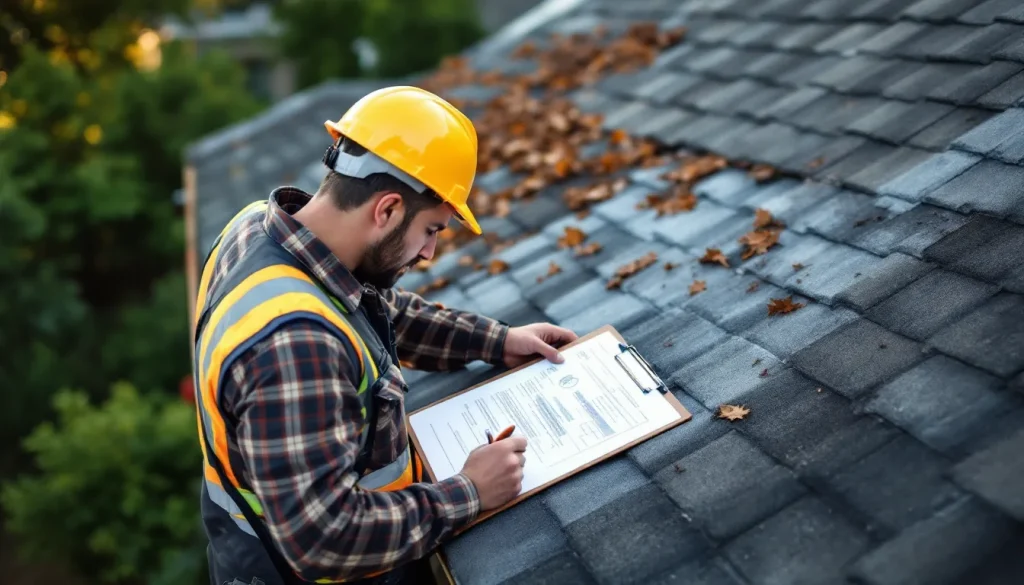
A roof certification in 2026 is a written document from a licensed roofing contractor or home inspector certifying the roof’s remaining usable lifespan, typically 2 to 5 years. The 2026 cost ranges from $75 to $300, and it is most commonly required for real estate transactions or by insurance carriers refusing to renew a policy on an older roof. The certification is not a warranty or guarantee; it is a professional opinion that the roof is watertight today and is expected to remain so for the stated certification period (most commonly 2 years for older roofs and 5 years for roofs in better condition). Buyers, sellers, and lenders use the document to close real estate transactions; homeowners use it to maintain insurance coverage that would otherwise lapse. Here is exactly what a roof certification covers, who can issue one, and how it differs from a standard roof inspection.
The short version
- Roof certification costs $75 to $300 in 2026, depending on certification length and roof complexity.
- Typical certification periods are 2 years (most common for older roofs), 3 years (middle of the road), or 5 years (newer roofs in good condition).
- Required most often for real estate transactions and insurance non-renewal scenarios.
- Issued by licensed roofing contractors or certified home inspectors (varies by state).
- Not a warranty: the certification only states the roof is watertight today and expected to remain so for the period.
- Voided immediately by major weather events, third-party work on the roof, or visible new damage.
The short answer plus when needed and cost
| Certification length | Typical use case | 2026 cost range |
|---|---|---|
| 2 years | Real estate sale of home with older roof (15+ years) | $75 to $150 |
| 3 years | Insurance renewal or mid-life real estate transaction | $125 to $200 |
| 5 years | Insurance non-renewal recovery or real estate with newer roof | $175 to $300 |
| Repair-and-certify combo | Roof with minor issues that pass certification after fixes | $350 to $1,500 (repairs + cert) |
The certification length you can get is bounded by what the certifying professional is willing to put their license behind. A 22-year-old asphalt roof at end of life will generally not get a 5-year certification; the certifier knows the roof may fail before the certification expires, which exposes them to liability. Conversely, a 7-year-old roof in good shape typically qualifies for a 5-year certification with minimal scrutiny.
Roof certification vs roof inspection
A roof inspection and a roof certification are different products with different audiences and liability profiles. An inspection is a diagnostic walkthrough that documents current condition, photographs damage or wear, and recommends repairs. The inspector’s deliverable is a report; the report does not commit the inspector to anything beyond the accuracy of observations at the time of the inspection.
A certification is a forward-looking attestation. The certifier states that the roof is watertight today AND that the certifier expects it to remain watertight for the certification period. That forward-looking statement carries professional liability: if the roof fails within the certification window without a major intervening event, the certifier can be on the hook for the cost of repair or replacement.
Because of the liability difference, certifications are more expensive than inspections, more selective about which roofs they will issue against, and almost always include any minor repairs needed to make the certification stand up. Many certifiers will not issue a certification without first inspecting and (if needed) repairing the roof. For inspection-only context, see how to get a roof inspection and roof inspection cost.
| Attribute | Roof inspection | Roof certification |
|---|---|---|
| Cost | $150 to $600 | $75 to $300 (often after repairs) |
| Time on site | 45 to 120 minutes | 30 to 90 minutes (after any repairs) |
| Deliverable | Detailed report with photos | One-page attestation letter |
| Forward-looking | No | Yes (2 to 5 year period) |
| Certifier liability | Accuracy of observations only | Roof performance during cert period |
| Used for | Information, repair planning, due diligence | Real estate closing, insurance renewal |
What the certification documents
A typical roof certification letter includes the property address, the date of certification, the certifier’s name, license number, and contact information, a brief description of the roof system (material, approximate age, square footage), a statement of current condition (free of active leaks, all flashings sealed, no missing or damaged shingles, etc.), the certification period start and end dates, and any limitations or exclusions.
The certification typically excludes pre-existing latent defects not visible at inspection, damage caused by weather events with wind speeds above 50 mph or hail above 1 inch in diameter, damage caused by third-party work on the roof (HVAC service, solar install, satellite dish mounting), and damage caused by structural movement or settlement of the building.
Some certifiers also include a schematic showing roof planes and noting any specific repaired areas, the underlayment type if visible at penetrations, and the ventilation configuration (ridge vent, box vents, soffit vents). A more detailed certification reduces post-closing disputes about what was actually covered.
Who can issue a certification
The certifying professional must be licensed and insured to install or repair roofs in the jurisdiction of the property. The two most common issuers are licensed roofing contractors (state-issued contractor license, in California a C-39 license, in Florida a CCC license, in Texas roofing-specific licensing varies by city) and certified home inspectors with roofing endorsements (typically InterNACHI or ASHI certified).
In some states, only a licensed contractor can issue a certification because the certification requires the certifier to make and stand behind repairs needed to bring the roof to certifiable condition. Home inspectors in those states can produce inspection reports but not certifications. The inverse is true in other states where home inspectors with the right credentials can certify roofs they did not install.
Check your state’s department of consumer affairs (or equivalent licensing body) for the local rule. In California, the Contractors State License Board confirms C-39 license validity; in Florida, the Department of Business and Professional Regulation tracks roofing licenses. NRCA-member contractors are generally accepted by insurance carriers and real estate transaction parties as competent certifiers.
Real estate transaction requirements
Roof certification is most commonly requested by buyers’ lenders, buyers’ insurance underwriters, and buyers’ agents during real estate transactions. Three trigger scenarios are most common.
First, the home is 15+ years old and the buyer’s lender or insurer wants documentation that the roof is not at imminent end of life. Second, the standard home inspection flagged roof concerns that the listing agent wants resolved before closing. Third, the property is being financed by a government-backed loan (FHA, VA, USDA) where the underwriting includes a roof lifespan check.
The negotiation typically follows a pattern: buyer’s inspector flags roof condition concerns, buyer’s agent requests certification at seller’s cost, seller’s agent pushes back if the roof is older, parties land at either a seller-paid certification or a buyer credit at closing in lieu of certification. Sellers should expect a certification request on any home with a roof over 12 to 15 years old.
Insurance carrier requirements
Insurance carriers are the second major source of certification requests. The pattern: carrier sends a non-renewal notice citing the age or condition of the roof; homeowner requests a certification; certifier evaluates and either issues a certification (renewing the carrier’s appetite for the risk) or recommends repairs or full replacement before certification can be issued.
The push for roof certifications has intensified in three states in particular. Florida carriers tightened underwriting standards in 2022-2024 after AOB (assignment of benefits) claim fraud and major hurricane losses. Texas carriers tightened after the May 2024 derecho events. California carriers tightened in WUI zones after major wildfire seasons.
The certifier’s letter typically gets submitted directly to the insurance carrier via the homeowner’s agent. The carrier reviews and either reinstates coverage or maintains the non-renewal. A 2 or 3 year certification is usually sufficient for renewal; a 5-year certification may earn a better rate tier.
What a 2-year, 3-year, 5-year certification means in practice
The certification period reflects how confident the certifier is that the roof will perform. A 2-year cert says “this roof is watertight today and I expect it to stay that way for 2 years under normal conditions.” A 5-year cert says the same thing with a longer commitment. Beyond 5 years is rare because roofing materials evolve, the certifier cannot reasonably predict 7 or 10 years of performance, and the liability exposure stretches the certifier’s professional comfort.
For an older roof (18+ years for asphalt, 35+ years for tile), a 2-year cert is often the maximum a certifier will issue, and only after minor repairs. For a roof in the 8 to 14 year range with good maintenance history, a 3 or 5 year cert is typical. Roofs under 8 years old usually do not need certification at all because their installation paperwork and manufacturer warranty serve the same documentation purpose.
For lifespan benchmarks that align with certification periods, see how long does a roof last and asphalt shingle roof lifespan.
What voids the certification
Every certification letter includes voiding events that release the certifier from liability if they occur after issuance. The standard list includes major weather events (high wind, hail, hurricane, tornado), third-party work on the roof (solar install, satellite dish mount, HVAC technician walking on the roof), changes to the structure (additions, framing modifications, attic ventilation changes), and major mechanical damage (fallen tree, fire, falling debris).
Practical implication for buyers: a roof certification at closing does not survive a hailstorm three months later. If a covered weather event damages the certified roof, the homeowner files an insurance claim like any other property damage; the certification becomes moot. The certification’s value is in establishing that the roof was in good condition at the closing date, which forecloses post-closing disputes about disclosure.
For solar install timing in particular: if a roof certification will be needed for a real estate sale, complete the solar install with all flashing photographed and the solar installer’s separate warranty in hand. The roof certifier will exclude the solar penetrations from the certification but can certify the rest of the roof.
Cost by certification length and roof condition
| Scenario | Inspection portion | Repair portion | Certification fee | Total cost |
|---|---|---|---|---|
| 5-year cert, 8 yr roof, no repairs needed | included | $0 | $175 to $250 | $175 to $250 |
| 3-year cert, 14 yr roof, minor repairs | included | $350 to $750 | $125 to $175 | $475 to $925 |
| 2-year cert, 19 yr roof, moderate repairs | included | $800 to $2,200 | $100 to $150 | $900 to $2,350 |
| Cert refused, roof too old | $150 to $400 | n/a (full replacement quoted) | $0 | inspection only |
The total cost almost always splits between inspection/certification fees (the cheaper side) and repair costs needed to bring the roof to certifiable condition (the bigger side). Sellers planning a sale of an older home should budget $500 to $2,500 for the combined inspection, repair, and certification rather than the headline $75 to $300 certification-only number.
State-by-state certifier credentials
| State | Who can certify | License authority |
|---|---|---|
| California | C-39 licensed roofing contractor | Contractors State License Board (CSLB) |
| Florida | CCC licensed roofing contractor | Dept of Business and Professional Regulation |
| Texas | City-issued roofing license (varies) or RCAT credential | Roofing Contractors Association of Texas |
| Arizona | R-42 licensed roofing contractor | Registrar of Contractors (ROC) |
| Georgia | State-licensed roofing contractor or NACHI-certified inspector | State Licensing Board for Residential Contractors |
| Illinois | State-licensed roofing contractor | Dept of Financial and Professional Regulation |
| New York | County or municipal license, plus NACHI/ASHI for inspectors | varies by county |
| North Carolina | State-licensed general or roofing contractor | NC Licensing Board for General Contractors |
License lookup is a free public service in every state. Before paying for a certification, verify the certifier’s license is active, in good standing, and covers roofing work. An expired or suspended license invalidates the certification for insurance and real estate transaction use.
Sample certification letter format
A typical certification letter runs one page and includes the following sections. Property address and parcel identification. Date of inspection and certification issuance. Certifier name, license number, and contact information. Roof system description (asphalt 30-year architectural shingle, approximately 11 years old, approximately 2,400 sq ft). Current condition statement (free of active leaks, all flashings and penetrations sealed, no missing or damaged shingles, gutters and downspouts functional). Certification period (3 years from date of issuance). Exclusions (weather events with wind above 50 mph or hail above 1 inch, third-party work on the roof, structural changes to the property). Certifier signature and license stamp.
The letter is typically delivered as a signed PDF and a hard copy at the property closing. Real estate transaction parties keep the certification in the property file alongside the inspection report and seller’s disclosure.
When a certification is not enough
Two scenarios where a certification will not solve the problem: the roof is genuinely at end of life, in which case the right answer is full replacement before sale or insurance renewal, not a certification that no certifier will issue. And the carrier has declined to renew not because of roof condition but because of regional risk (wildfire, hurricane, hail), in which case certification of the roof does not address the underlying risk and the homeowner needs to shop other carriers or accept FAIR Plan or surplus lines coverage.
For honest assessment of whether the roof is at end of life, see signs you need a new roof. For the full replacement cost framework, see how much does a new roof cost.
Renewing the certification
Most certifications can be renewed before expiration with a fresh inspection and (if needed) a fresh round of minor repairs. The renewal cost is typically the same as the original certification. The roof condition at renewal determines the new certification length, and roofs that supported a 5-year cert at year 8 will typically still support a 3-year cert at year 13.
Some homeowners chain certifications across a roof’s full life: 5-year cert at year 8, 3-year cert at year 13, 2-year cert at year 16, and then full replacement at year 18 to 20. The cumulative cost of certification chaining is $500 to $1,500 across the cycle, which is generally cheaper than the alternative (insurance carrier non-renewal or buyer credit at sale).
Frequently asked questions
What is the difference between a roof certification and a roof warranty?
A certification is a one-page professional attestation that the roof is currently watertight and expected to remain so for 2 to 5 years; the certifier carries professional liability if the roof fails within that period without a major event. A warranty is a much longer contractual obligation (typically 20 to 50 years) from the shingle manufacturer or installing contractor, with specific coverage terms for materials and workmanship.
How long does it take to get a roof certification?
The on-site inspection takes 30 to 90 minutes. Any required repairs add 0.5 to 2 days. The certification letter is typically delivered within 1 to 3 business days of the final inspection (after repairs). Same-week turnaround is standard; rush certifications for time-sensitive real estate closings are usually available for a $100 to $250 expedite fee.
Does a roof certification cover hail damage?
No. Certifications universally exclude weather events with hail above 1 inch in diameter or wind above 50 mph. A hailstorm that damages a certified roof is handled by the homeowner’s property insurance claim process, not the certification. For the insurance claim process, see how much hail damage to replace roof and filing an insurance claim for roof damage.
Can I get a roof certification on a roof I just bought?
Yes, as long as a licensed roofing contractor or qualified home inspector in your jurisdiction is willing to issue it. The certifier will inspect the roof, identify any repairs needed, complete those repairs, and issue the certification. The certification is then valid for 2 to 5 years from the date of issuance, not from the date you purchased the home.
Will insurance accept a certification from any roofer?
Most carriers accept certifications from any state-licensed roofing contractor or certified home inspector with active credentials. A few carriers maintain approved lists of certifiers; check with the underwriter or agent before paying for a certification to confirm the certifier is acceptable to the specific carrier.
How is roof certification different from a moisture test?
A moisture test (typically thermal imaging or capacitance meters) detects current water intrusion in the deck or underlayment. A certification is a broader assessment that may include moisture testing as one of several diagnostics, plus a forward-looking attestation about the roof’s expected performance. Moisture testing alone is a diagnostic; certification is a transaction document.
Does roof certification add value to my home at sale?
Indirectly, yes. The certification does not raise the appraisal, but it forecloses buyer concerns about roof condition that would otherwise drive a credit request or a deal-breaker. For homes over 12 to 15 years old, a current certification typically removes $1,500 to $5,000 of buyer-credit pressure during negotiation, which is significantly more than the certification’s cost.